
Global buyers are actively diversifying away from full reliance on Alibaba due to rising supply chain risk, longer fulfillment cycles, and stricter compliance requirements in the USA.
At the same time, companies are shifting toward domestic or hybrid sourcing. More than 70% of US manufacturers are considering reshoring or nearshoring to improve supply chain resilience and reduce disruption risk. As a result, US-based sourcing platforms are becoming critical tools for procurement teams.
Below are the top 7 best Alibaba alternatives in the USA, each aligned with different sourcing models and business needs.
Why Look for Alibaba Alternatives in the USA?
Common challenges when sourcing on Alibaba
Global buyers who sell in the USA often face a set of operational challenges that directly affect cost, speed, and customer experience.
- Long and unpredictable lead times: The vast majority of Alibaba suppliers are based in Asia. Production can take 15-45 days, depending on the product. Shipping adds another 20 to 40 days by sea. During peak seasons, delays are common due to port congestion and container shortages. This makes it hard to maintain stable inventory levels.
- High exposure to supply chain disruptions: International logistics is vulnerable to disruption. Events such as port congestion, container shortages, or geopolitical tensions can delay shipments for weeks. Delays can lead to stockouts or missed sales windows.
- High minimum order quantities: Many manufacturers on Alibaba require large MOQs to start production. This creates inventory risk, especially for small businesses or new product launches. Unsold inventory directly impacts cash flow.
- Tariffs and rising landed costs: The initial price in Asia may be low, but total landed costs can sometimes be much higher. Buyers must account for import duties, tariffs, insurance, inland transport, and warehousing. This can significantly increase the final cost.
- Returns and reverse logistics challenges: Handling returns for products sourced from Asia is complex and expensive. Most returned items cannot be sent back to the original factory due to high shipping costs. This forces businesses to absorb losses or manage local liquidation, which impacts profitability.
Benefits of sourcing from US-based platforms
- Shorter lead times and faster delivery: Domestic suppliers can deliver within a few days to one week. This allows businesses to reduce inventory levels and improve cash flow. Faster turnaround also supports rapid response to market demand.
- Simplified compliance and lower regulatory risk: US suppliers are already aligned with local regulations such as safety standards and labeling requirements. This reduces the risk of customs delays or product recalls.
- Better communication and faster execution: Working in the same time zone improves coordination. Product changes, negotiations, and issue resolution happen faster.
Top 7 Best Alibaba Alternatives in the USA
1. ThomasNet for Industrial Sourcing
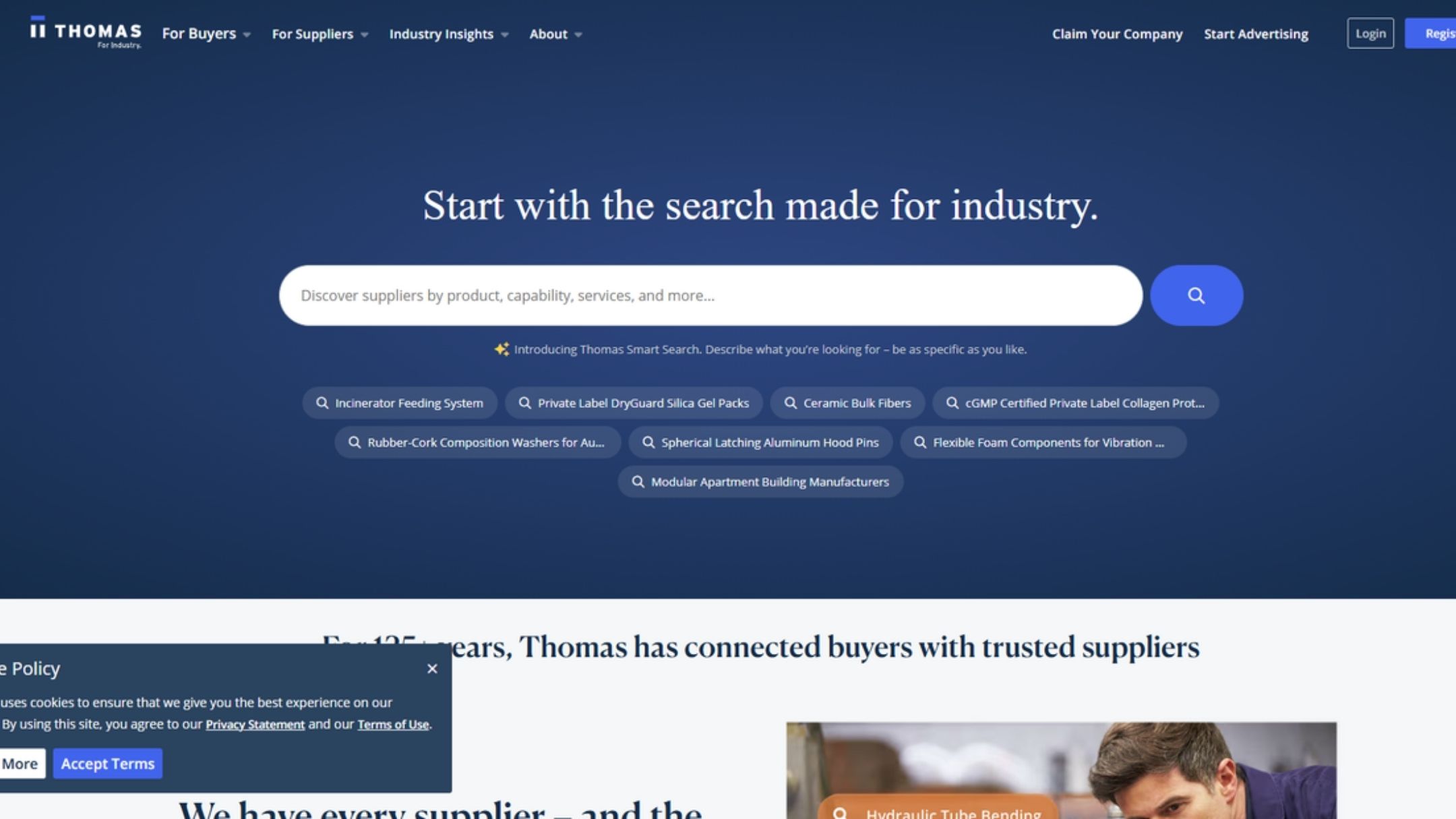
ThomasNet is a US-based B2B sourcing platform focused on connecting buyers with industrial suppliers and manufacturers across North America. It operates primarily as a supplier discovery and request for quote platform rather than a direct transaction marketplace.
It acts as a primary bridge between procurement managers, engineers, and over 500,000 North American manufacturers and distributors. The platform is particularly dominant in high-compliance sectors like aerospace, defense, medical devices, and heavy machinery.
Key features:
- Verified North American Database: Users can access profiles for over 500,000 suppliers, each vetted by a dedicated content team to ensure data accuracy.
- Advanced search and filtering system: Buyers can filter suppliers by location, company type, industry, quality certifications such as ISO, origin declaration, and product details. This is useful for technical sourcing where specifications are strict.
- Industrial content and insights: The platform publishes 300,000+ industry news, product updates, and sourcing guides. This helps buyers stay informed about trends and supplier capabilities.
- White Paper & Technical Knowledge Base: Buyers can utilize an extensive library of technical content to assist in specifying materials and complex industrial services.
Pros
- Buyers can source from domestic suppliers to reduce shipping times from 8 weeks to 3–10 days.
- The platform provides specialized filters for high-compliance certifications required in the defense and medical industries.
Cons
- Buyers and suppliers must manage contracts, payments, and procurement agreements independently.
- Communication must be managed manually via email or phone after the initial RFI is sent through the site.
- The selection of consumer goods is very limited compared to generalist marketplaces like Alibaba or Amazon.
Best for: industrial sourcing and custom manufacturing.
2. Amazon Business for Fast Procurement
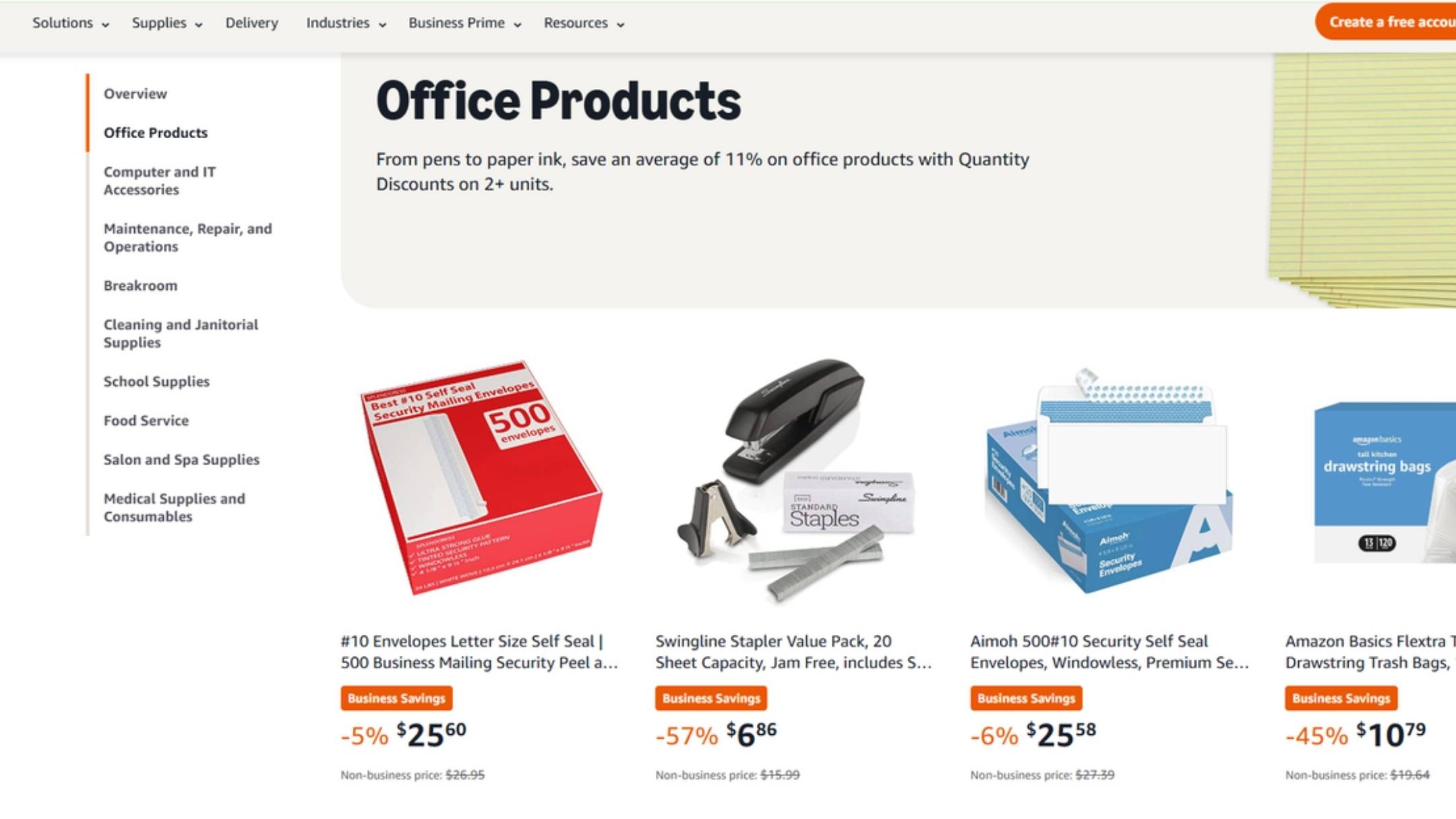
Amazon Business is a massive B2B sourcing platform that applies the power of the global Amazon infrastructure to the specific needs of professional procurement. It is designed to support procurement for companies of all sizes, from small businesses to large enterprises and public sector organizations.
The platform provides access to hundreds of millions of products across categories such as office supplies, industrial equipment, electronics, and maintenance items.
Key features
- Massive Product Catalog Access: Businesses can source hundreds of millions of products across multiple procurement categories from one centralized platform.
- Fast and reliable logistics network: Amazon’s fulfillment network allows shipping products on the same day or two days in some regions.
- Provide a centralized procurement platform: The platform allows buyers to manage sourcing, ordering, payment, and tracking orders in a single dashboard, which helps reduce operational complexity.
- System Integration: The platform provides punchout integration with over 100 leading e-procurement systems like SAP Ariba, Coupa, and Oracle.
Pros
- Buyers can leverage the Amazon fulfillment network (FBA) for fast and predictable shipping, which is essential for maintaining lean inventory levels.
- The platform offers significantly lower minimum order quantities (MOQs), allowing procurement teams to test new products with minimal capital risk.
- Users benefit from the immediate availability of finished goods, bypassing the long lead times and complex negotiations required for custom manufacturing.
Cons
- Users often face higher per-unit costs because they are buying from resellers rather than sourcing directly from a factory.
- The platform does not support product customization or private labeling, as it is designed for purchasing finished, branded goods.
- Procurement teams cannot engage directly with manufacturers to develop new products, which limits the potential for product differentiation.
- High-volume wholesalers may encounter limited stock levels or purchase caps on popular items compared to factory-direct bulk orders.
Best for: fast procurement and ready-to-ship products.
3. Faire for Retail Ready Products
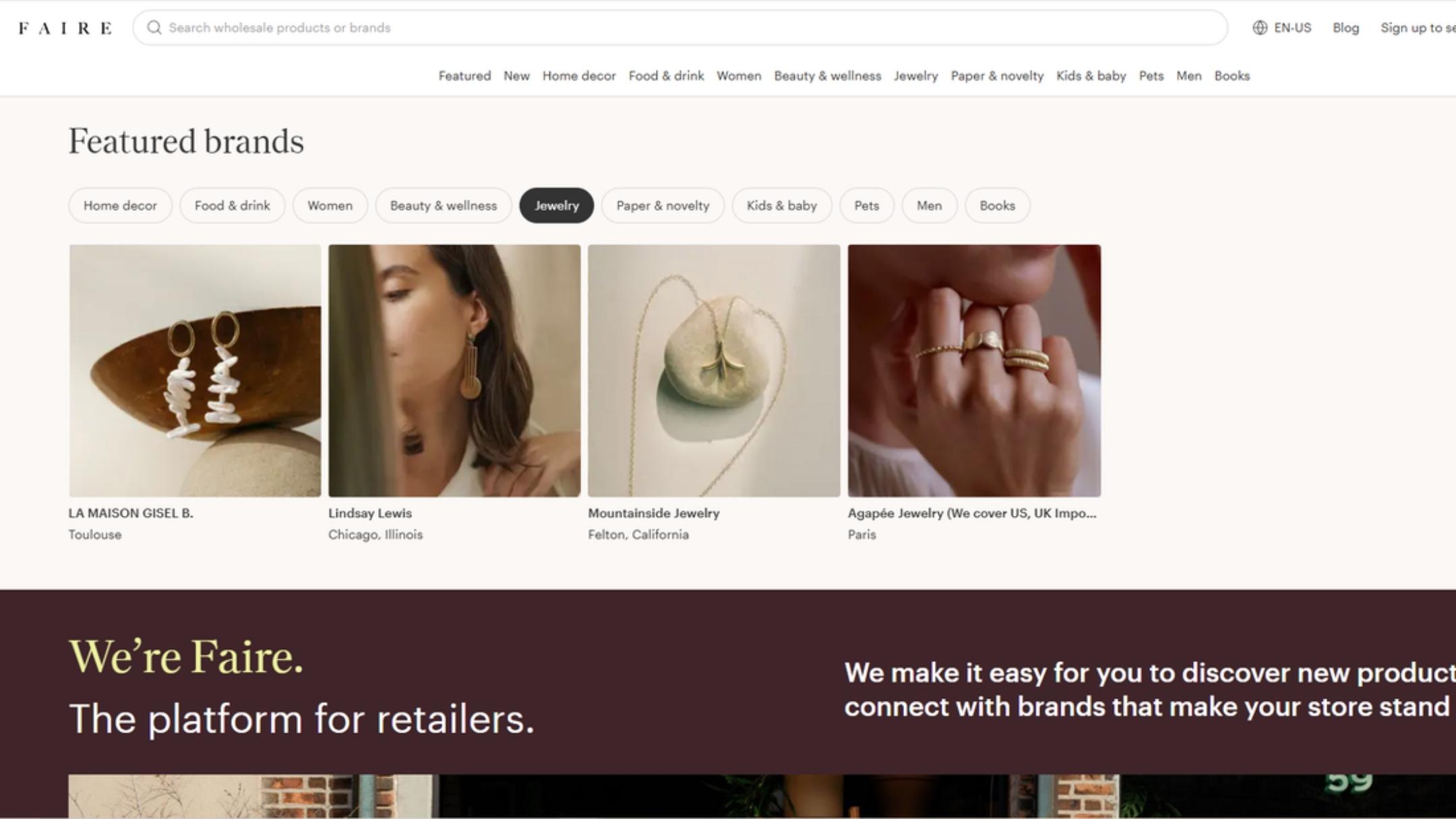
Faire is a US-based B2B wholesale marketplace that connects independent brands with retailers. Unlike other sourcing platforms, Fair does not connect buyers with factories. It connects retailers directly with brands that already have finished products ready for resale.
Faire is particularly strong in lifestyle sectors, including home decor, independent fashion, jewelry, beauty, and specialty food and beverage.
By 2026, the platform will have surpassed $600 million in annual revenue, connecting over 14,000 brands with a massive network of hundreds of thousands of retailers worldwide.
Key features:
- Net 60 Payment Terms: Users can buy inventory today and pay for it 60 days later, which significantly improves cash flow for small retailers.
- Risk-Free Opening Orders: Faire provides free returns on a retailer’s first order with any new brand, allowing buyers to test products without financial penalty.
- Top Shop Recognition Program: Users can easily identify high-performing suppliers through a data-backed “Top Shop” badge that signals reliable fulfillment and high product quality.
- Integrated Inventory Sync: Users can connect Faire directly to POS systems like Shopify or Square to keep their wholesale and retail stock levels accurate in real-time.
- Global Brand Discovery: The platform provides access to unique makers from over 150 countries, serving as a comprehensive international sourcing platform.
Pros
- Retailers can test new and trendy products with zero risk thanks to the free return policy on first orders.
- The platform integrates ordering, invoicing, and payment management, which helps reduce operational complexity for retail buyers.
- Fair allows small order quantities, making the platform more accessible for startups and small businesses.
- Users gain access to unique, curated brands that help differentiate their store from competitors selling mass-produced items.
Cons
- Users typically pay higher wholesale prices because the platform charges brands high commissions that are often passed on to the buyer.
- The marketplace is strictly for finished, branded goods and does not allow for any custom manufacturing or private labeling.
- All communications are restricted to the internal messenger, preventing buyers from building direct, off-platform relationships with suppliers.
Best for: Retail-ready products and curated wholesale sourcing of home decor, apparel, beauty, gifts, and lifestyle products.
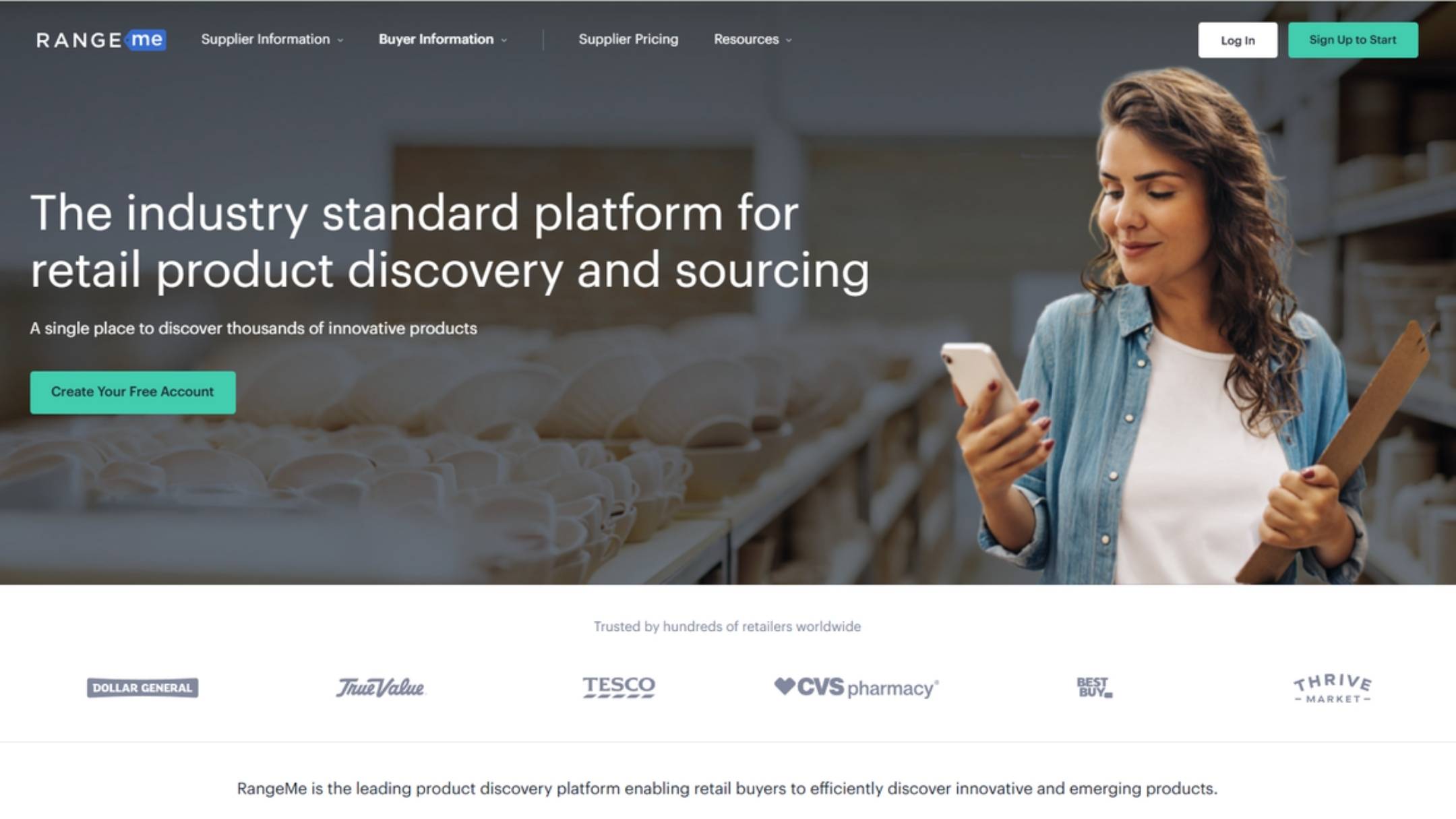
4. RangeMe for Retail-ready CPG discovery
RangeMe is a specialized B2B supplier discovery platform that streamlines the product submission and discovery process specifically for the retail and consumer packaged goods (CPG) sectors.
Unlike broad marketplaces, RangeMe acts as a digital bridge between emerging brands and large-scale retail buyers, focusing on shelf-ready innovation and high-growth trends.
RangeMe is particularly dominant in food and beverage, health and beauty, and household product sectors.
With over 200,000 suppliers and 15,000+ retail buyers (including giants like CVS, Dollar General, and Walmart), it is the standard for retail-bound sourcing research.
Key features
- Standardized Digital Sell Sheets: Suppliers upload structured product information, including pricing, packaging, certifications, ingredients, and retail readiness data. This helps retailers evaluate products more efficiently.
- RangeMe Verified™ Status: The platform provides an auditing service to confirm that brands meet retail-ready requirements, such as insurance and barcode standards.
- AI-Powered Summaries: RangeMe provides buyers with automated summaries of product submissions, allowing B2B sourcing teams to review thousands of applications in 90% less time.
- Analytics and Buyer Engagement Tracking: Suppliers can monitor profile views, buyer interactions, and sourcing engagement metrics. This helps brands optimize product positioning strategies.
- Advanced Product Filtering Tools: Retail buyers can search products by category, price point, certifications, dietary claims, sustainability attributes, and consumer trends.
Pros
- Buyers can filter thousands of brands instantly using standardized criteria and verified industry data.
- The platform provides access to innovative, emerging brands that are often not found on mass-market sites like Alibaba.
- Verified status reduces the administrative burden of checking a supplier’s insurance and compliance certificates manually.
Cons
- Users cannot complete transactions or manage payments on the platform, as it functions strictly as a discovery tool.
- The platform does not support custom manufacturing or “factory-direct” white labeling for unbranded industrial parts.
- Buyers must manage all shipping, logistics, and quality inspections externally since the platform offers no fulfillment support.
- High-volume wholesale buyers may find that many emerging brands on the site lack the capacity for massive, global-scale orders.
Best for: Retail buyers, CPG brands, procurement managers, distributors, and sourcing teams.
5. JOOR for Fashion and Premium Lifestyle
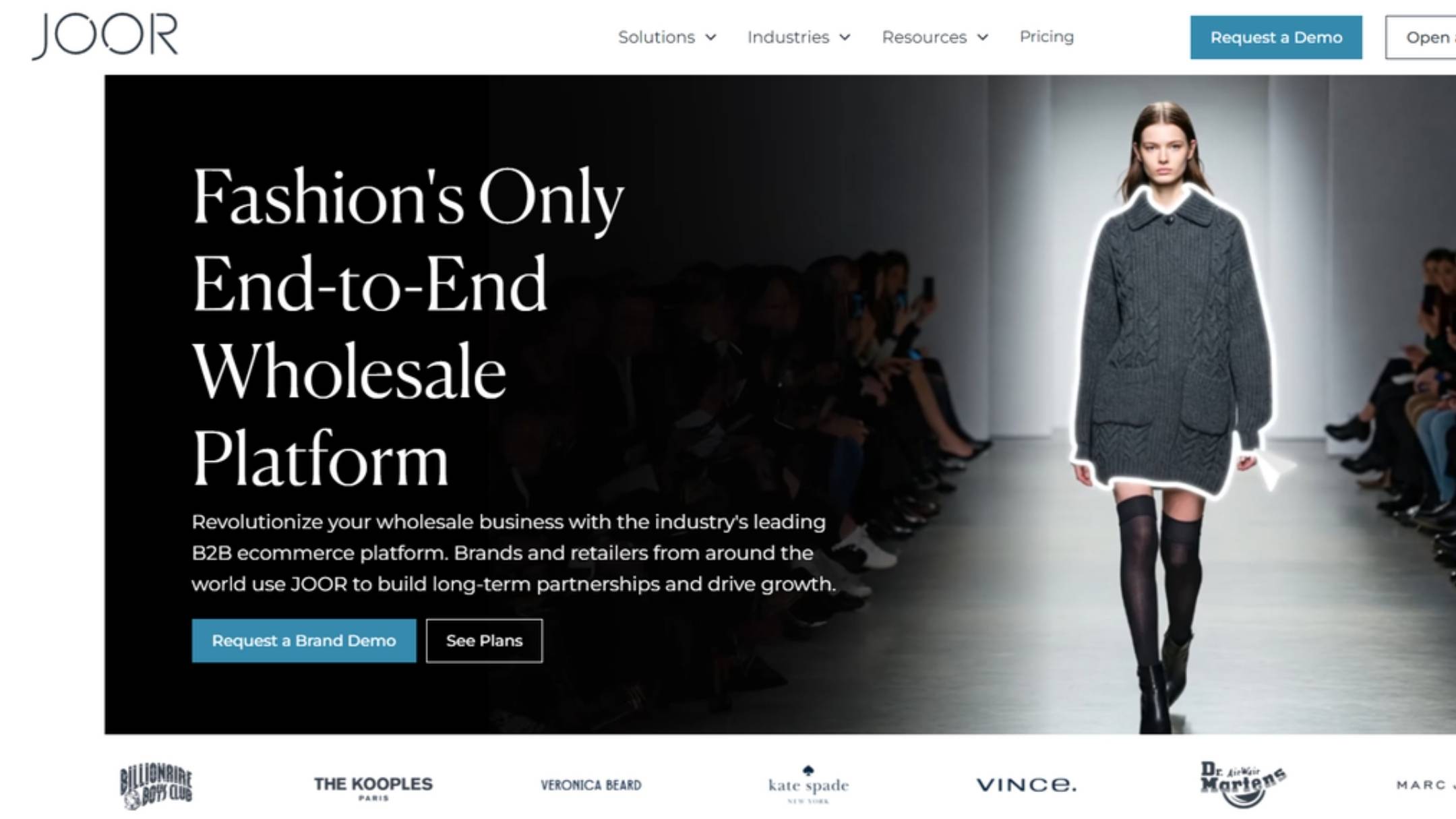
JOOR operates as the world’s leading digital wholesale management and sourcing platform, specifically optimized for the fashion, beauty, and home decor industries.
Unlike generic B2B directories, JOOR serves as a specialized ecosystem that connects luxury brands with premium wholesale buyers and major retailers through a digital showroom interface.
JOOR is dominant in the high-end apparel and luxury goods sectors, hosting prestigious fashion houses and independent designers globally.
The platform boasts a massive network, including over 14,000 brands and more than 600,000 curated retailers across 150 countries.
Key features:
- JOOR pay: JOOR supports invoicing and payment workflows, which simplifies wholesale transactions between brands and retailers.
- Virtual showrooms: Brands can present collections in a structured, interactive format like high-resolution imagery, 360-degree views, and dynamic video content.
- JOOR Discover: JOOR offers a matchmaking tool that allows brands to identify and connect with new, vetted retail partners within JOOR’s extensive global network.
- Real-Time Data Analytics: JOOR provides brands and buyers with live performance data, helping wholesale buyers make data-driven decisions on which styles will perform best.
- Interactive and shoppable experience: JOOR offers digital, interactive, and shoppable line sheets that feature customizable fields (e.g., fabric, sizing), 360° images, and videos.
- Automated Order Entry: JOOR provides seamless integration with ERP and POS systems, allowing for the automatic sync of orders and inventory levels.
Pros
- The platform provides access to exclusive luxury brands that are not available on any other B2B directory or marketplace.
- Digital showrooms allow procurement teams to source globally without the high costs and carbon footprint of international travel.
- Integrated analytics help buyers reduce the risk of overstocking by identifying trending items in real-time.
- The unified payment system simplifies the complexity of international wire transfers and currency conversion.
- Standardized digital line sheets make it much faster to compare different brands and collections in a single view.
Cons
- Access to the platform is restricted, as retailers must be vetted and approved before they can browse many premium brands.
- The high-end nature of the platform means minimum order quantities (MOQs) are often much higher than in generic marketplaces.
- Brands must pay significant subscription fees, which can sometimes lead to higher wholesale prices for the buyer.
Best for: fashion retailers, department store buyers, boutique chains, and lifestyle distributors
6. Wholesale Central (US) for US-based wholesale sourcing
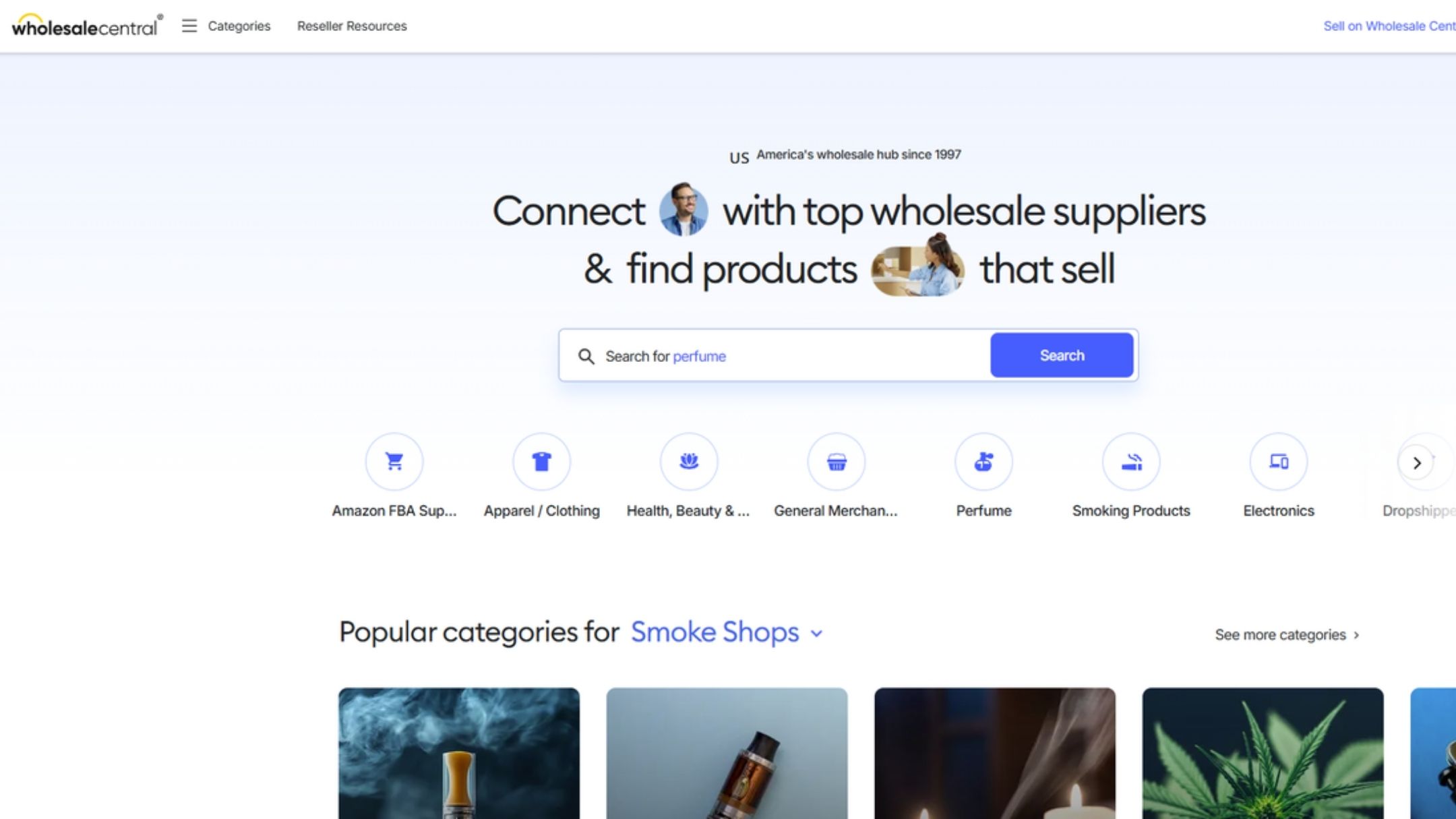
Wholesale Central is one of the oldest and largest B2B wholesale directories designed primarily for the North American market. It serves as a comprehensive, free-to-use platform that connects retailers with wholesale suppliers, dropshippers, and distributors.
It provides access to over 1,400 active wholesale companies and features more than 300,000 products specifically for the USA resale market.
Wholesale Central is particularly strong in consumer goods sectors such as apparel, electronics, jewelry, and general merchandise.
In reality, the platform is the primary tool for distributors, eBay/Amazon sellers, and small boutique owners who need to source domestic inventory.
Key features
- Vetted Supplier Directory: Wholesale Central provides a list of wholesalers that have been manually screened to filter out retail sites posing as wholesale companies.
- Direct Contact Information: The platform provides verified phone numbers, email, external websites, and physical addresses, enabling direct, one-on-one communication with the supplier, reducing intermediaries.
- Trade Show Calendar: Wholesale Central provides a comprehensive schedule of upcoming US trade shows, helping procurement teams plan their in-person sourcing research.
Pros
- Buyers can access the entire database and contact suppliers for free without any registration or membership fees.
- The platform focuses on US-based inventory, which ensures significantly faster shipping times for North American customers.
- Buyers can access suppliers across many retail segments, including clothing, accessories, electronics, hardware, pet suppliers, automotive accessories, and seasonal goods from one platform.
Cons
- The platform does not provide an integrated payment system or escrow protection for buyers.
- Users must conduct their own supplier verification regarding product quality and shipping reliability.
- There are no built-in tools for tracking orders or managing multi-vendor logistics within the platform.
- Buyers must manage all dispute resolutions directly with the supplier without any platform-level mediation.
- Supplier profiles are simpler and contain less operational data
Best for: US wholesale inventory sourcing and dropshipping suppliers
7. Kompass for Supplier Discovery
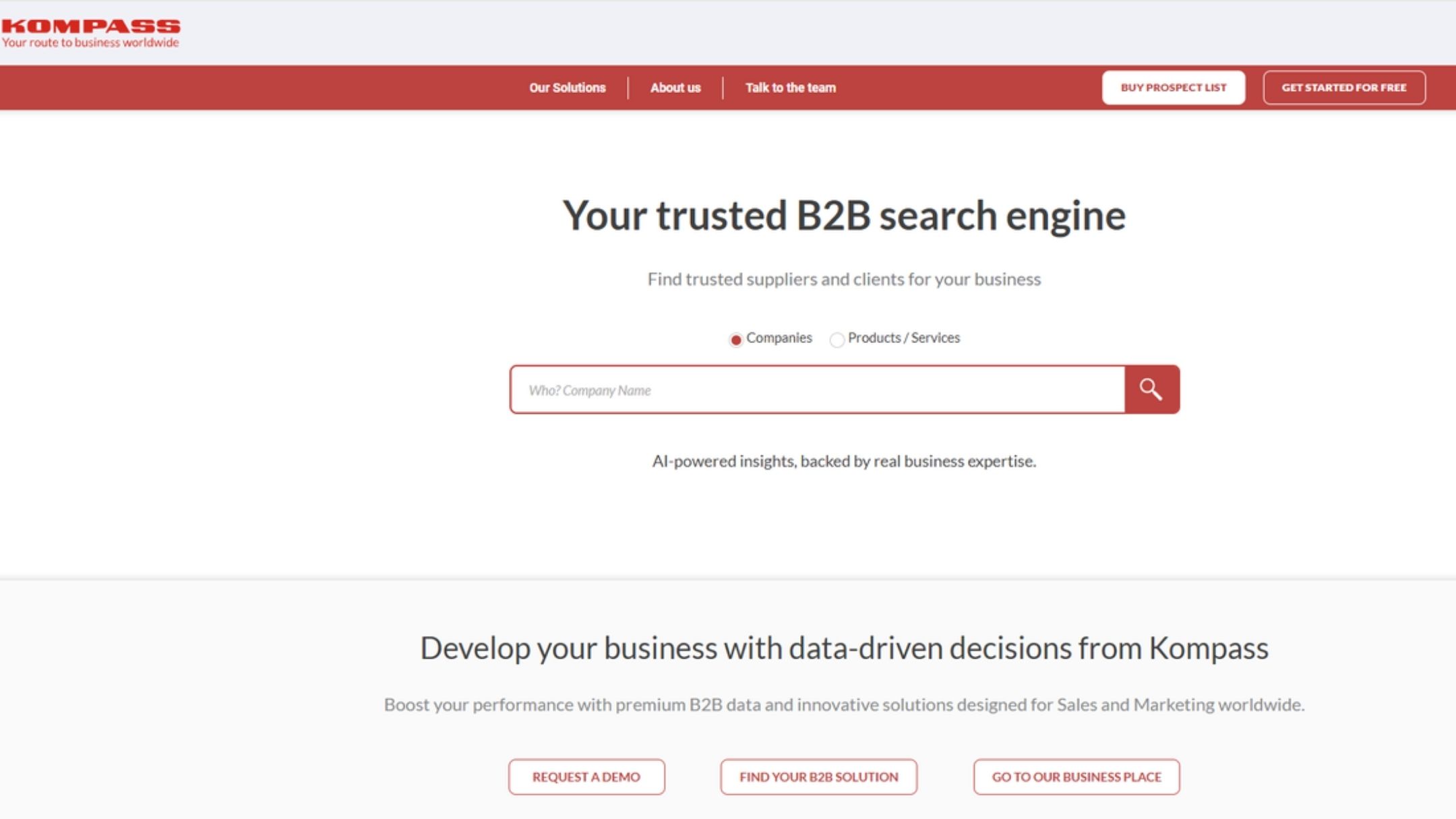
Kompass is a global B2B supplier discovery platform that functions as a business directory and intelligence tool.
Unlike transactional marketplaces that focus on individual product listings, Kompass operates on a data-as-a-service (DaaS) model. Its core purpose in a sourcing workflow is to provide verified company intelligence and facilitate B2B networking between professional buyers and legitimate manufacturers.
The platform is particularly strong in industrial sectors, including manufacturing, mechanical engineering, chemicals, and specialized B2B services.
With a presence in over 70 countries and a supplier database of 60 million companies, it offers one of the largest verified firmographic datasets in the world.
Key features
- Global Supplier Database Access: Users can access over 60 million B2B company profiles across 70+ countries
- Advanced Easy Business Filtering: Procurement teams can segment the industrial supplier database using 60+ criteria, including financial turnover, employee count, and specific ISO certifications.
- Company Profile Transparency: Users can view detailed firmographic data, including executive names, legal status, and historical export activity, to facilitate thorough supplier verification.
- Sourcing Research Tools: Kompass provides access to international public tenders and market signals, helping buyers identify new procurement opportunities globally.
Pros
- Local verification teams ensure all company intelligence is accurate and physically validated.
- Detailed profiles allow buyers to check a supplier’s financial health before starting negotiations.
- Kompass is particularly valuable for industrial procurement, manufacturing sourcing, and technical supplier discovery.
Cons
- Users cannot pay for goods or place orders directly through the platform.
- The platform lacks escrow or trade assurance services to protect financial transactions.
- Buyers must handle all communication and negotiations through their own external channels.
- The database does not include built-in tools for tracking shipping or managing customs.
- Accessing the most valuable sourcing data requires a significant subscription fee.
- Compared to transactional marketplaces like Alibaba, Kompass requires more manual sourcing effort and is less efficient for immediate product purchasing.
Best for: global supplier discovery with strong US and European coverage.
Comparison of Alibaba Alternatives in the USA
The comparison below highlights the core positioning, supplier verification level, and typical MOQ structure of each platform.
| Platform | Main focus | Verification Level | MOQ |
| ThomasNet | Industrial supplier discovery and custom manufacturing sourcing across North America | High | Medium to High |
| Amazon Business | Fast procurement of ready-to-ship business supplies. | Medium | Low to Medium |
| Faire | Unique boutique goods and independent brands. | Medium to High | Low to Medium |
| RangeMe | Retail product discovery platform connecting brands with large US buyers | Medium to High | Medium |
| JOOR | Digital wholesale platform for fashion and lifestyle brand distribution | Medium to High | Medium |
| Wholesale Central (US) | Directory of wholesalers, distributors, and dropshipping suppliers | Low to Medium | Low, flexible, and varied by supplier |
| Kompass | Global B2B directory and supplier intelligence database | Medium to High | Varies significantly by supplier and industry |
Conclusion
Choosing the right sourcing platform in the USA depends on how you plan to build and scale your supply chain. While Alibaba remains a dominant global option, many US-based alternatives offer stronger advantages in faster delivery, easier communication, and better alignment with local regulations.
Each platform serves a different purpose. Some are better for small batch orders and quick turnaround, while others are designed for bulk sourcing and long-term supplier relationships. The key is to match the platform with your business model, product type, and growth stage.
By understanding the strengths and limitations of each option, you can build a more flexible sourcing strategy, reduce operational risks, and improve overall efficiency in your procurement process.