
Many buyers want unique home decor with stable pricing and consistent quality. Vietnam has become a strong sourcing option, but the process can feel complex at first.
This guide explains how to import home decor from Vietnam with clear steps, realistic expectations, and data-driven insights so you can make confident decisions.
Why import home decor from Vietnam?
Vietnam has become one of the most strategic sourcing destinations for home decor, especially for buyers who prioritize cost efficiency, product uniqueness, and sustainable materials.
Below are the key advantages of sourcing home decor from Vietnam:
Long-standing artisan heritage and skilled workforce
Vietnam has a deep artisan heritage built over hundreds of years. The country is home to 5,400 traditional craft villages. Each village focuses on a specific skill, which creates deep expertise and consistent product quality.
Some well-known examples show how craftsmanship directly impacts product quality:
- Bat Trang village is known for ceramic bowls, vases, and tableware with stable glaze and fine finishing.
- Van Phuc village is famous for silk scarves, fabrics, and home textiles
- Kim Bong village specializes in wooden furniture, carved cabinets, and decorative panels
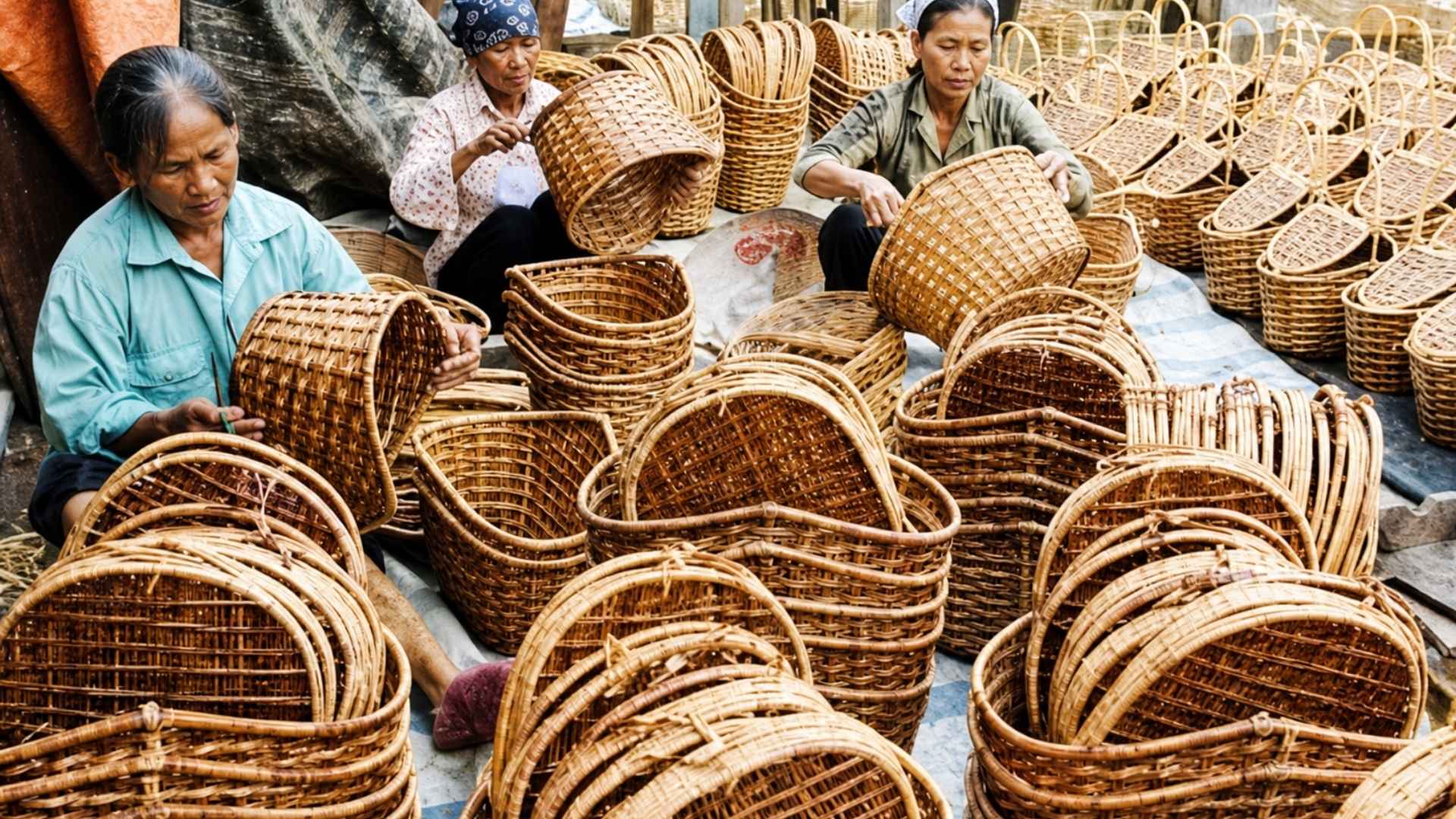
- Phu Vinh village focuses on rattan baskets, trays, and woven home decor
- Ha Thai village produces lacquer trays, wall art, and decorative boxes
Competitive pricing and labor advantages
Vietnam offers a potential combination of competitive labor costs and a large young workforce. Manufacturing wages in Vietnam are often around $250-$350 per month, which is just about half compared to China. The workforce is also relatively young. The median age in Vietnam is about 32 years. Over 60% of the population is under 35 years old. This supports a stable and abundant supply workforce for manufacturing.
Domestic material availability reduces cost and supply risk
Vietnam has a strong local supply of wood, bamboo, and natural fibers. This local availability reduces dependency on imports and stabilizes production costs.
Trade agreements that reduce import barriers
Vietnam has a wide trade agreement network that lowers tariffs and compliance barriers for importers. Currently, the country has participated in 18 free trade agreements. This broad network gives buyers better market access and more predictable trade rules.
For example, the EVFTA (EU-Vietnam Free Trade Agreement) has eliminated 99% of tariffs on Vietnamese products and reduced overlapping red tape.
In contrast, Chinese exports to Western markets often face higher trade barriers. In the United States, many furniture and home decor items from China are subject to Section 301 tariffs of up to 25%, depending on product classification.
This gap has a direct impact on the sourcing strategy. Many global buyers have shifted part of their supply chain from China to Vietnam to reduce tariff exposure and improve price competitiveness, especially in large volume categories like furniture and decorative items.

Flexible production model for OEM and ODM buyers
Chinese manufacturers often require high MOQs; however, many Vietnamese factories accept smaller order quantities and support customized designs, which is essential for private label brands and niche product lines.
Top home decor products to source from Vietnam
- Wooden Furniture & Decor: Large-scale export category with durable materials like acacia and rubberwood, including tables, shelves, and carved decorative pieces with stable finishing quality.
- Rattan, Bamboo & Woven Products: Lightweight and eco-friendly items made from natural fibers, such as baskets, lampshades, and storage decor, known for tight weaving patterns and cost efficiency.
- Ceramics & Pottery: High-quality ceramics from traditional villages like Bat Trang, featuring stable glaze techniques, vases, planters, and decorative tableware.
- Textile Home Decor: Labor-intensive products such as cushion covers, rugs, and curtains, with strong embroidery and stitching quality.
- Lacquerware & Decorative Accessories: Premium handcrafted items using multi-layer coating techniques, including trays, bowls, boxes, and wall art with high durability and glossy finish.
- Stone & Cement Decor: Modern style products such as terrazzo planters, concrete decor, and stone sculptures, offering strong durability and consistent shape production.
- Metal & Mixed Material Decor: Contemporary designs combining metal with wood or glass, including wall art and decorative frames, known for flexible design and scalable production.
How to import home decor from Vietnam
1. Identify reliable suppliers
Start by building a shortlist of export-ready manufacturers. Focus on suppliers that already sell to the US or EU, since they understand packaging, labeling, and compliance requirements.
Validate supplier credibility before moving forward. You should:
- Check business licenses and export records
- Review certifications such as FSC for wood or ISO quality systems
- Ask for factory photos, production lines, and client references
2. Request samples and verify quality
Sampling is a critical step to avoid quality issues at scale. Always request production-level samples, not display items. Evaluate the product under real use conditions.
For home decor, focus on:
- Material quality, such as wood dryness, bamboo flexibility, or ceramic density
- Finishing details such as smooth edges, uniform color, and coating durability
- Structural integrity for items like furniture or woven baskets
You should also compare samples from multiple suppliers to benchmark quality and pricing. For larger orders, consider hiring third-party inspection services to check production during and after manufacturing. This reduces the risk of receiving inconsistent batches.
3. Negotiate pricing and payment terms
Pricing in Vietnam is often quoted under FOB terms. This means the supplier covers production and delivery to the export port, while you handle international shipping.
When negotiating, focus on total cost, not just unit price:
- Minimum order quantity affects pricing significantly
- Packaging type can increase cost, especially for fragile decor
- Customization, such as size or finish, may add extra charges
Standard payment terms are 30 percent deposit and 70% before shipment. For new suppliers, avoid paying up front. If possible, use secure payment methods or work with platforms that offer buyer protection.
A clear contract should define specifications, delivery timeline, quality standards, and penalties for defects or delays.
4. Arrange logistics and shipping
Shipping cost is a major part of the total landed cost, especially for bulky home decor. Sea freight is the most common option because it offers a lower cost per unit. Air freight is only suitable for small or urgent shipments.
Key logistics decisions include:
- FCL or LCL shipping, depending on order volume
- Incoterms such as FOB, CIF, or DDP, based on your control level
- Packaging optimization to reduce volume and damage risk
Work with experienced freight forwarders to manage booking, consolidation, and delivery. Many buyers also use integrated sourcing platforms that connect suppliers with logistics providers. This reduces coordination errors and improves delivery visibility.
5. Handle customs and documentation
Proper documentation is essential to avoid delays and penalties. The basic documents include:
- Commercial invoice with accurate product description and value
- Packing list with quantity and dimensions
- Bill of lading issued by the shipping carrier
- Certificate of origin to qualify for tariff benefits under trade agreements
You also need to comply with import regulations in your market. For example:
- Wood products may require proof of legal sourcing or sustainability certification
- Certain materials must meet safety or chemical standards
Working with experienced suppliers or sourcing platforms helps ensure documents are correct and aligned with regulations. This reduces the risk of customs delays or unexpected costs.
Where to find reliable home decor suppliers in Vietnam?
Finding reliable suppliers is the most important step when importing home decor from Vietnam. You can use multiple sourcing channels, including online platforms, trade shows, and local verification. This helps you compare suppliers, validate quality, and reduce risk before placing orders.
Visit trade shows
Visiting trade shows is one of the most effective ways to find reliable home decor suppliers in Vietnam. These events gather hundreds of manufacturers in one place, allowing you to evaluate product quality, materials, and finishing face-to-face. Direct discussions often lead to better pricing, clearer MOQ conditions, and faster sample arrangements.
Major trade shows for discovering home decor suppliers in 2026:
| Event | Date | Location | Focus |
| HawaExpo 2026 | March 4 – 7 | SECC, Ho Chi Minh City | Furniture, gifts, and handicrafts, including bamboo, rattan, and lacquerware. |
| VIFA EXPO 2026 | March 8 – 11 | SKY EXPO & WTC EXPO, HCMC | Vietnam’s largest export furniture fair; heavy focus on wood and home accessories. |
| Houseware & Gift Fair | June 24 – 26 | SECC, Ho Chi Minh City | Interior decoration, tableware, and porcelain products. |
| VIFA ASEAN | Sept 2 – 5 | SECC, Ho Chi Minh City | Regional focus on Southeast Asian design and interior trends. |
Use B2B sourcing platforms
B2B online sourcing platforms are the fastest way to access a large pool of manufacturers in Vietnam. They allow global buyers to access large supplier databases, compare products, and request quotations in a short time.
There are some sourcing B2B platforms to find home decor suppliers:
- Alibaba: The world’s largest B2B e-commerce marketplace. It serves as a digital directory connecting global business buyers with manufacturers and wholesalers, primarily based in China but increasingly across Southeast Asia and other regions.
- Global Sources: A platform that focuses on export-ready and verified suppliers, primarily from China, Vietnam, South Korea, and India. It is strong in home decor and connects online sourcing with trade shows.
- VinaSources: A specialized Vietnam-focused B2B sourcing platform that connects global buyers with pre-verified Vietnamese manufacturers, particularly in agriculture, textiles, handicrafts, and furniture.
Partner with sourcing agents
When you are new to the market, working with sourcing agents is an effective way to find reliable home decor suppliers in Vietnam. They understand local business practices and manufacturing processes, which help reduce sourcing risks, hidden costs, and communication issues.
Sourcing agents can speed up supplier screening and quality control by using their existing network. They often have access to pre-vetted suppliers that are not widely listed online. They also support negotiation in the local language, which can help you secure better pricing and clearer contract terms.
Below are well-known audit and inspection service providers operating in Vietnam.
- SGS: A global inspection company that offers expert laboratory testing, auditing, and verification to ensure quality, safety, and compliance across numerous industries, with over 600 specialists. SGS operates in more than 140 countries and is heavily involved in compliance verification for imports, exports, and local production.
- QIMA: A leading global provider of supply chain compliance and quality control solutions. The firm offers various services in factory audits, product inspections, and compliance services, especially for consumer goods.
- Pro QC International: A global third-party quality assurance firm that focuses on providing inspection, audit, and engineering solutions to mitigate supply chain risks.
How much does it cost to import home decor from Vietnam?
The cost to import home decor from Vietnam depends on several factors. To calculate the total landed cost, you must account for product manufacturing, international logistics, and the specific duty framework:
1. Manufacturing and Unit Costs
Product cost is the foundation of the sourcing budget. It mainly depends on material, labor, and order volume.
Manufacturing costs in Vietnam are highly competitive, driven by cost-effective labor costs of around $3 per hour, which is 50% lower than in China. Lower labor costs reduce the price of labor-intensive products such as woven baskets, ceramics, and carved wood decor.
In addition, Vietnam has abundant local, natural materials like wood, bamboo, and natural fibers that reduce the input costs and shorten production lead time.
Moreover, export-oriented manufacturing and government incentives allow for lower production costs, making Vietnam an attractive option for large-volume, high-quality manufacturing.
2. Local Logistics and Port Fees
Local logistics includes transportation from the factory to the port and handling at export terminals. Inland trucking costs depend on distance and cargo size.
Inland trucking typically costs around $50-$120 per 20 ft container, depending on distance and fuel prices.
Additionally, exporters must pay port-related charges, including terminal handling charges and container loading fees, which usually range from $80-$120 per container.
3. Inspection and Compliance Fees
B2B buyers should budget for quality control (QC) to avoid the high cost of returns. Third-party inspection services like QIMA or SGS typically charge $200 to $350 per man-day, depending on scope and location.
Compliance costs vary by market. For example, wood products may require phytosanitary certification, while textiles may require safety labeling.
4. Export Customs Declaration Fee
Export customs clearance is required for all shipments leaving Vietnam. Typical export declaration fees range from USD 20 to 50 per shipment, depending on service provider and documentation complexity.
5. International Shipping and Logistics Cost
Shipping rates have stabilized but remain subject to fuel surcharges due to geopolitical shifts. Sea freight is the most common method due to lower cost for bulky goods. As of early 2026, estimated ocean freight rates for full container loads (FCL) from Ho Chi Minh City or Hai Phong are as follows:
| Container Type | To the US West Coast | To the US East Coast | To Europe (Main Ports) |
| 20ft Container (FCL) | $1,800 – $3,900 | $4,800 – $5,200 | $2,100 – $3,500 |
| 40ft Container (FCL) | $3,200 – $4,800 | $5,800 – $6,500 | $3,800 – $5,500 |
Air freight can cost 5 to 10 times more than sea freight, making it suitable only for urgent shipments.
6. Import Duties and Tariffs
Import duties depend on product category and destination market. Rates vary based on HS code and trade agreements. For example,
- To the United States: Most home decor items have reverted to standard Most-Favored-Nation (MFN) rates. For wood decor and furniture, this typically ranges from 0% to 15% depending on the specific HS code. However, products suspected of transshipment (made in third countries but labeled “Made in Vietnam”) may still face penalties as high as 40%.
- To the European Union: Under the EVFTA (EU-Vietnam Free Trade Agreement), duties on most Vietnamese home decor and furniture items have been eliminated or are in the final stages of being phased out to 0% by 2027.
VinaSources – A Trusted Platform for Connecting Reliable Home Decor Suppliers
VinaSources is designed to help global buyers import home decor from Vietnam with lower risk and better efficiency. The platform connects buyers directly with verified Vietnamese manufacturers. This direct linkage reduces intermediary layers and improves pricing transparency.
The platform also integrates supply chain services. Buyers can manage sourcing, logistics, warehousing, and compliance within a single system. This reduces coordination complexity and shortens lead time.
If you are planning to import home decor from Vietnam, you can connect directly with verified suppliers and simplify your sourcing process today:
- Website: https://vinasources.com
- Email: [email protected]
- Hotline: 19004356