
Choosing between Alibaba and Temu is where many buyers get stuck. At first glance, both seem similar, but they are built for very different use cases.
This article explains how each platform actually works, key differences between them, and when to use each one. The goal is to help you choose the option that fits your needs.
What is Alibaba?
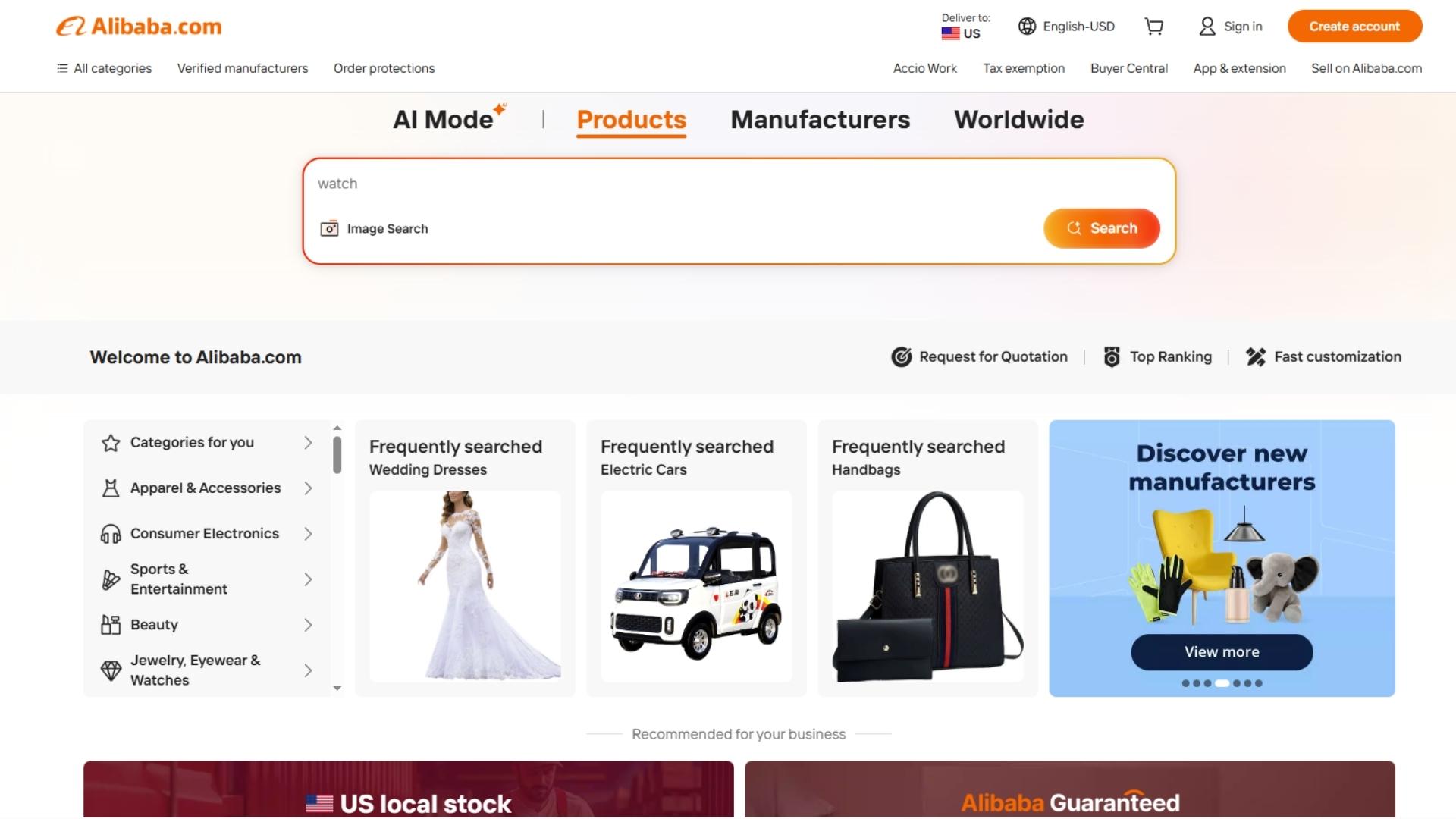
Alibaba is a B2B sourcing platform where buyers connect directly with suppliers, primarily from China, as well as Southeast Asia and South Asia. The platform serves 40 million buyers across more than 190 countries and hosts millions of product listings across categories such as apparel, electronics, packaging, and industrial goods.
Alibaba functions more as a supplier discovery and communication tool rather than a full marketplace. Buyers use Alibaba to search for products, contact multiple suppliers, request quotations, and negotiate terms such as MOQ, pricing, and customization.
| Pros | Cons |
| Large global supplier base across many categories: Alibaba hosts millions of product listings and serves over 40 million active buyers from 190+ countries | Supplier quality and type are inconsistent: Alibaba includes both manufacturers and trading companies, with an estimated 30 to 50% being intermediaries. This can lead to higher prices, less control over production, and increase risk of quality inconsistency. |
| Lower unit cost at scale: Alibaba is designed for wholesale pricing. Unit cost typically decreases as order quantity increases. | Listed prices are often not final: Product pages show price ranges that depend on quantity and specifications. Final quotes can be 20 to 50% higher after confirming materials, customization, and packaging. |
| Supports customization and private label production: Many suppliers offer OEM and ODM services. Buyers can customize product specifications, packaging, and branding. | The platform does not fully control transactions or production: Alibaba provides tools like Trade Assurance, but it does not manage production directly. Buyers still need to handle contracts, inspections, and supplier management to reduce risk. |
| RFQ system enables supplier comparison at scale: Alibaba allows buyers to submit RFQs and receive multiple quotations. | Platform protection has limitations: Trade Assurance helps with basic disputes, but it depends on clearly defined terms. If specifications are vague, it is difficult to claim. |
| Flexible MOQ in some categories: Some suppliers allow MOQ as low as 50 to 100 units for simple products. This makes it possible to test products before scaling. | Complex logistics and shipping management: Alibaba does not standardize shipping. Buyers are responsible for selecting the appropriate Incoterms (FOB, CIF, or DDP) and managing freight forwarders |
What is Temu?
Temu is a cross-border e-commerce platform that connects Chinese suppliers directly to international consumers. It was launched in 2022 and targets international markets such as the United States, Europe, and Southeast Asia.
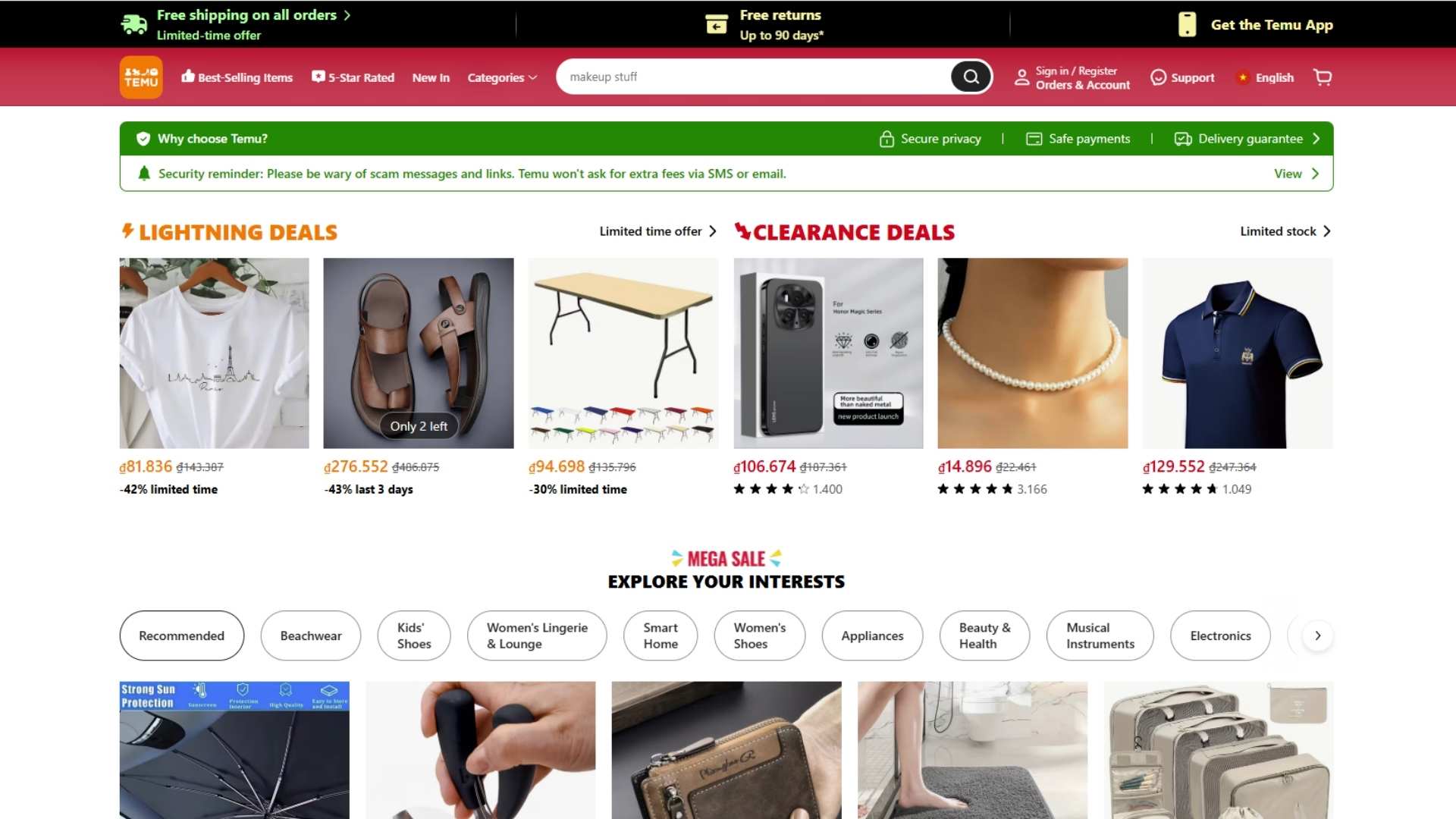
The platform offers a wide range of ready-to-buy products across 100+ categories, including apparel, home goods, electronics, and accessories. Unlike B2B platforms like Alibaba, Temu allows users to purchase single items without needing to meet Minimum Order Quantities (MOQ) or negotiate with suppliers.
While Alibaba is a B2B platform focused on bulk orders, negotiation, and customization, Temu operates as a direct-to-consumer platform. It handles product listing, payment, and fulfillment within the platform. This makes it easy to use, especially for personal buyers or those testing products.
| Pros | Cons |
| No MOQ and simple purchasing process: Buyers can order single items without negotiation. | Higher cost per unit for scaling: Temu pricing is retail-based. Even if prices appear low, they are usually higher than bulk sourcing costs. |
| Fast and easy buying experience: The platform handles payment and fulfillment. Buyers can complete purchases within minutes | No customization or private label options: Products are sold as ready-made items. Buyers cannot request changes to design, materials, or packaging. |
| Wide range of ready-to-buy products: Temu offers many consumer products across categories. This makes it easy to explore product ideas and trends. | Limited visibility into suppliers and production: Buyers do not interact directly with manufacturers. There is little transparency about factory capability or sourcing origin. This reduces control over quality and the supply chain. |
| The platform manages logistics and payment: Shipping and payment are handled within the system. | Not suitable for long-term sourcing: Temu focuses on direct-to-consumer transactions. It does not support bulk negotiation, supplier development, or production management. This limits its use for long-term sourcing strategies. |
| Useful for small-scale product testing: Buyers can order small quantities to test product quality or market demand. This helps reduce upfront risk before committing to bulk sourcing. | Thin margins for business: Temu prices are optimized for retail. When reselling, margins are often thin due to limited room for negotiation. |
Key differences between Alibaba and Temu
Below are 7 key differences between Alibaba and Temu:
1. Product range and sourcing
Alibaba
Alibaba hosts millions of products across over 40 major categories, including industrial machinery, consumer electronics, apparel, and packaging. Suppliers on the platform frequently provide OEM and ODM services, allowing buyers to customize products, branding, and packaging.
Temu
Temu focuses on ready-to-buy consumer products like apparel, home goods, and accessories. Products are standardized and ready to ship, with no customization. Buyers simply choose from available options. This limits flexibility in product selection.
2. Pricing and value
Alibaba
Pricing is not fixed and depends on factors such as negotiation, order quantity, and customization. The unit cost typically decreases as order volume increases. Buyers usually contact suppliers to negotiate specific quantities, requirements, and pricing. In addition, buyers need to calculate costs related to customization, packaging, and shipping.
Temu
Temu sets fixed prices with no negotiation between buyers and sellers. Buyers typically pay the same price regardless of whether they purchase a single unit or multiple units. This transparent pricing model allows consumers to know exactly what they are paying upfront. However, it also limits opportunities for bulk discounts, making the platform more suitable for casual shoppers rather than bulk purchasers.
3. Quality assurance and product authenticity
Alibaba
Alibaba does not control product quality. Buyers need to verify through samples or hire third-party inspection agencies to check goods before shipment. This gives more product quality control but requires effort.
Temu
Temu provides limited visibility to suppliers. Buyers cannot directly verify manufacturers before purchase. They can only rely on product images, descriptions, and previous user reviews before ordering. Product quality can vary significantly among different suppliers.
4. Shipping & delivery
Alibaba
Alibaba does not handle shipping directly. In practice, after production is completed, logistics are managed through supplier-arranged shipping or by the buyer hiring their own freight forwarder. Common methods include sea freight for bulk orders, air freight for urgent shipments, and sometimes express courier for small quantities.
Shipping time is affected by several factors, including shipping options, customs clearance, peak seasons, etc.
This means buyers need to actively manage timelines, choose the right shipping method, and coordinate logistics. Poor planning can lead to delays that affect inventory and sales cycles.
Temu
Temu manages shipping through its own logistics network and partner carriers. Products are usually shipped from centralized warehouses or supplier stock that is already prepared for export.
Delivery times can vary depending on the seller’s location and the chosen shipping method. Orders are typically consolidated and shipped via cross-border logistics, then handed over to local carriers. Delivery usually takes 8 to 25 days.
5. Returns & Refunds
Alibaba
Return and refund policies on Alibaba can be more complex. If issues arise, buyers typically open a dispute through Trade Assurance or negotiate directly with the supplier, often providing evidence such as inspection reports, photos, or videos.
Outcomes may vary. Buyers may receive partial refunds, discounts on future orders, or may need to absorb the loss if the evidence is insufficient. Therefore, buyers must conduct rigorous quality control before shipment.
Temu
With Temu, buyers can request a return or refund directly through the app without contacting the supplier. Specific terms may vary by seller and product, so it is essential to review the seller’s policies before making a purchase.
6. Buyer protection and policies
Alibaba
Alibaba uses Trade Assurance as its primary buyer protection mechanism. When an order is placed through Trade Assurance, the payment is held in escrow and only released to the supplier after the buyer confirms receipt and that the goods meet the agreed specifications.
In the event of a dispute, buyers must submit supporting evidence such as contracts, product specifications, chat history, and third-party inspection reports. Alibaba will then review the case and mediate between both parties.
However, Trade Assurance coverage depends heavily on how clearly the terms are defined in the order. If specifications are vague or agreements are not properly documented, the protection may be limited. In many real-world cases, buyers receive partial compensation rather than full refunds.
Temu
The platform applies consistent protection policies across orders. Buyers pay the platform directly, and the platform handles fulfillment, refunds, and dispute resolution. If products are not delivered, damaged, or not as described, buyers can request refunds or returns through standardized policies.
7. Payment methods & security
Alibaba
The platform supports bank transfer, credit card, and AliPay. Payments often follow a 30 percent deposit and 70 percent balance before shipment, which is common in international trade.
Temu
The platform supports standard e-commerce payment methods such as credit cards and digital wallets. Full payment is made at checkout.
Both Alibaba and Temu prioritize payment security by using encryption technologies and secure payment gateways to protect user data and transaction details. This helps reduce the risk of fraud and enhances buyer confidence when making online purchases.
Which platform is better for product sourcing?
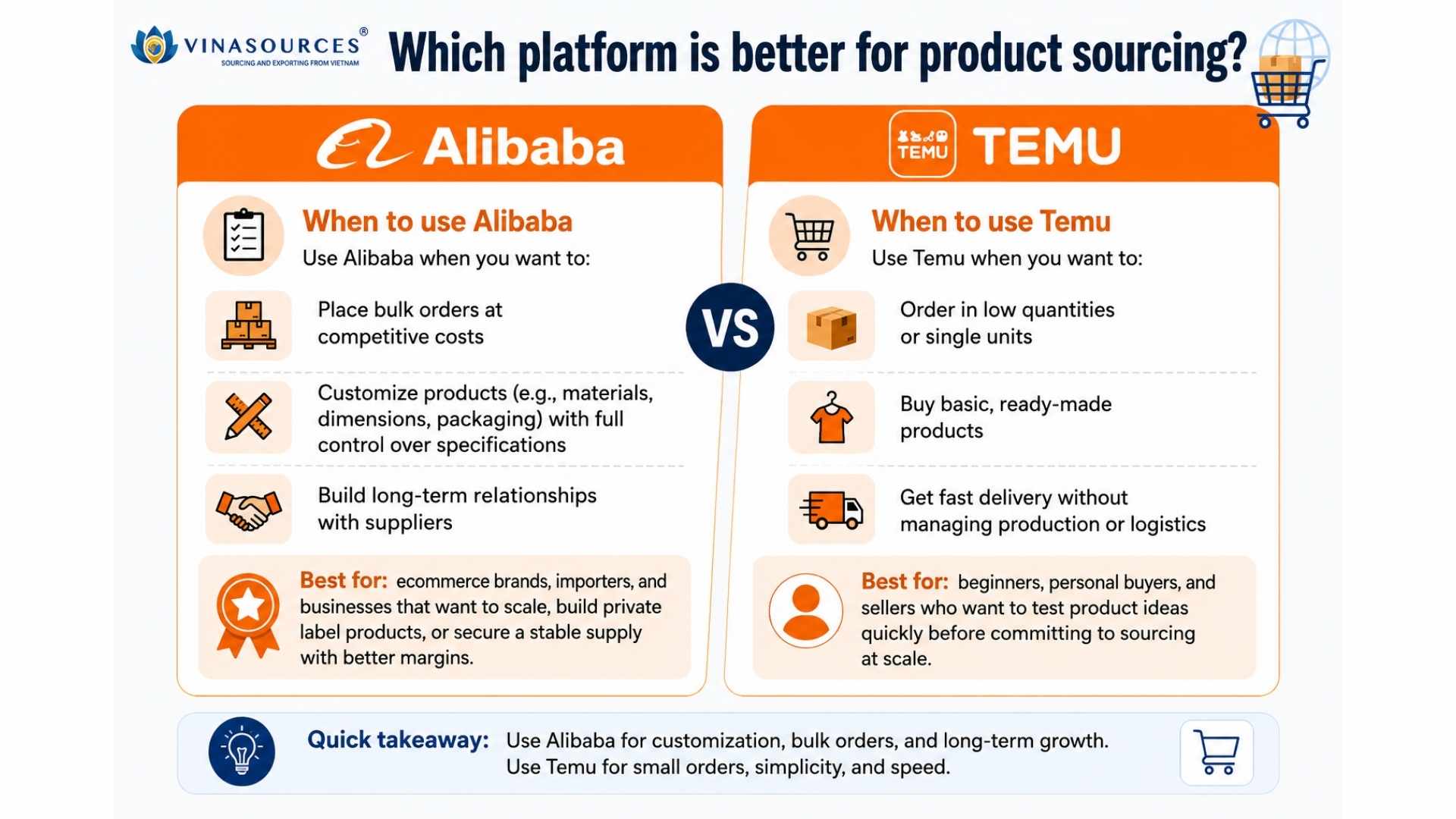
When to use Alibaba
Use Alibaba when you want to:
- Place bulk orders at competitive costs
- Customize products (e.g., materials, dimensions, packaging) with full control over specifications
- Build long-term relationships with suppliers
Best for: ecommerce brands, importers, and businesses that want to scale, build private label products, or secure a stable supply with better margins.
When to use Temu
Use Temu when you want to:
- Order in low quantities or single units
- Buy basic, ready-made products
- Get fast delivery without managing production or logistics
Best for: beginners, personal buyers, and sellers who want to test product ideas quickly before committing to sourcing at scale.
Conclusion
Both Alibaba and Temu serve different types of buyers and use cases. If your goal is to test products quickly with minimal effort, Temu is often sufficient. If you need customization, supplier control, and the ability to scale, Alibaba is the more suitable option.
Understanding how each platform works in practice will help you make a decision that aligns with your specific sourcing needs.