
Choosing a sourcing platform is often where most buyers get stuck. Alibaba, Global Sources, IndiaMART, and Made-in-China may look similar at first, but they work very differently in practice.
This guide breaks down how each platform really works, along with its strengths and limitations. The goal is to help you understand the differences clearly and choose the platform that fits your sourcing needs.
Quick comparison of Alibaba, Global Sources, IndiaMART, and Made-in-China
Before diving into the details, it’s helpful to take a quick look at these four platforms. Each one serves a different sourcing purpose, depending on your order size, experience level, and product type.
| Platform | Alibaba | Global Sources | IndiaMART | Made-in-China |
| Supplier base | Large global base, mainly China | Curated suppliers, export-focused | Large India-focused SME base | Medium-sized, manufacturer-focused |
| Main product categories | Apparel, electronics, furniture, and industrial goods | Electronics, hardware, consumer goods | Industrial goods, textiles, raw materials | Machinery, electrical, construction, tools |
| MOQ level | Flexible, can be low depending on the supplier | Medium to high MOQ | Varies widely by supplier | Medium to high |
| Verification level | Medium, requires buyer validation | Medium to high | Low to medium | Medium to high |
| Best for | Product discovery and supplier comparison | Verified suppliers, bulk sourcing | Domestic sourcing in India | Industrial and technical sourcing |
Overview of Alibaba
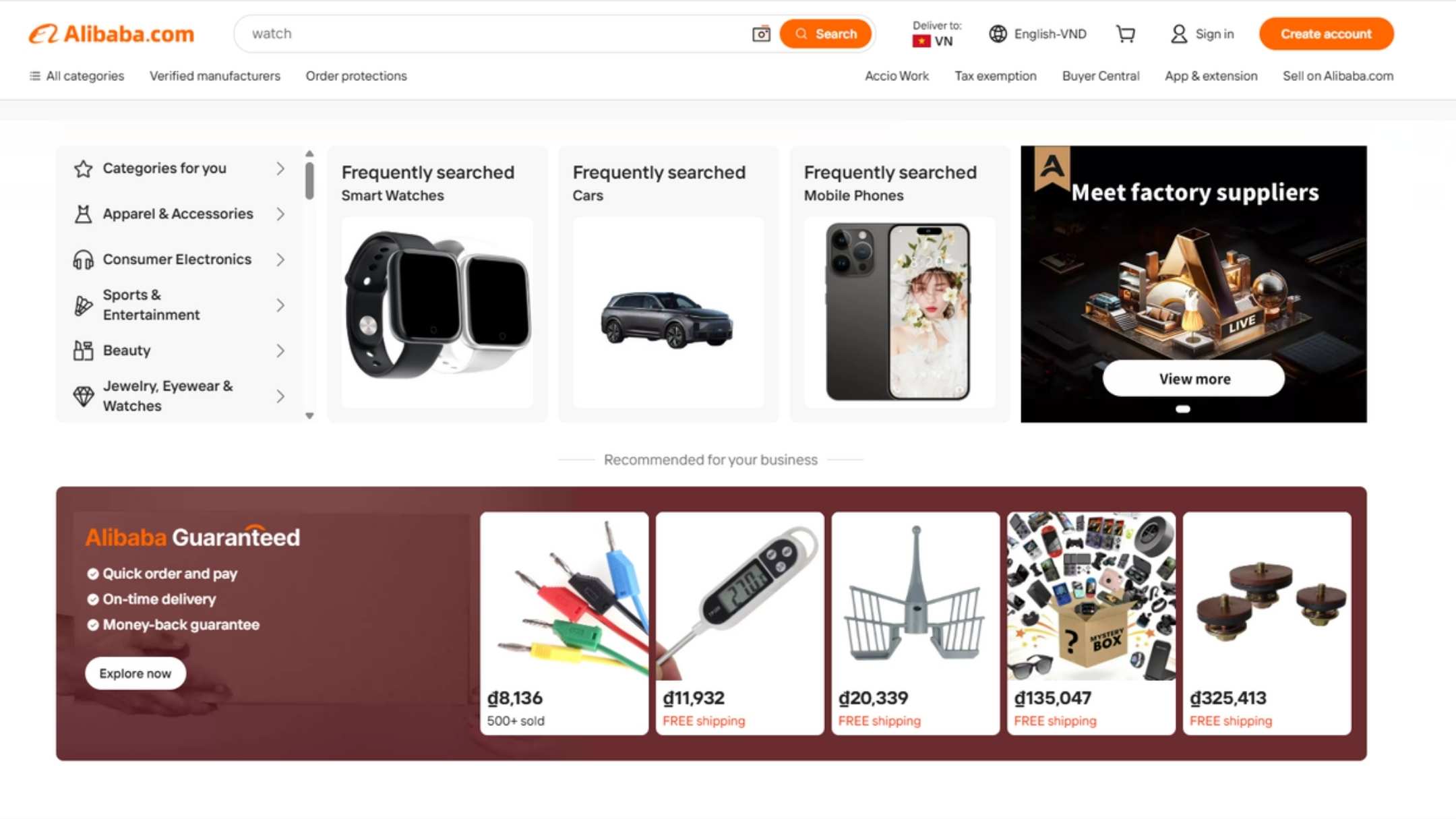
Alibaba is a global B2B sourcing platform that connects buyers with suppliers. Most suppliers are based in China, but also across Southeast Asia, South Asia, and North America. The platform operates as an intermediary where suppliers list products and buyers initiate contact directly.
The platform serves over 40 million active buyers from more than 190 countries. This scale makes it one of the most widely used sourcing tools globally, especially for small and medium businesses entering import or e-commerce.
Alibaba hosts millions of products across hundreds of categories, including apparel, electronics, furniture, and industrial goods. This large supply base makes it a common starting point for importers, especially small and medium businesses.
Alibaba functions more like a supplier discovery and communication platform than a fully managed marketplace. Buyers typically search for products, contact multiple suppliers, request quotations, and negotiate terms directly. The platform also offers tools such as RFQ (Request for Quotation), messaging, and Trade Assurance for basic transaction support.
Key industries
Alibaba covers a wide range of industries due to its large supplier base:
- Consumer electronics
- Apparel and textiles
- Home and garden products
- Machinery and industrial equipment
- Packaging and printing
- Beauty and personal care
- Automotive parts and accessories
- Gifts and crafts
Pros of using Alibaba
- Massive product variety: Alibaba covers a wide range of products, including consumer goods, raw materials, and industrial equipment. The platform hosts over 200 million product listings across categories. This makes it easier to explore options and benchmark suppliers quickly.
- High supplier density enables comparison: For most products, you can find dozens or even hundreds of suppliers in one search. This allows you to compare pricing, MOQ, and capabilities side by side.
- Large global buyer and supplier network: Alibaba serves over 40 million active buyers from more than 190 countries. This scale attracts a high number of suppliers competing for orders. As a result, buyers can compare multiple offers and negotiate more effectively.
- Built-in RFQ system for bulk inquiries: Alibaba allows buyers to submit RFQs and receive multiple quotations from suppliers. This feature helps generate supplier leads without searching manually.
- Flexible MOQ structure across suppliers: MOQ varies widely depending on product type and supplier capability. This flexibility helps small buyers test products before scaling.
- Integrated communication and transaction tools: The platform includes messaging, quotation, and payment systems in one place. Buyers can manage conversations with multiple suppliers without switching channels. This reduces friction, especially when handling 10 to 20 suppliers at the same time.
Cons of using Alibaba
- Mixed supplier types with limited transparency: Alibaba includes both manufacturers and trading companies, but they are not always clearly distinguished. A significant portion of Alibaba suppliers are indeed intermediaries, often adding markups of 20–40% over factory gate prices.
- Platform badges do not guarantee reliability: Labels such as “Gold Supplier” or “Verified Supplier” indicate paid membership or basic verification checks. They do not guarantee product quality or delivery performance. In practice, buyers still need to request samples and conduct inspections.
- Limited control over production: Alibaba does not manage production or quality control. Once you place an order, execution depends entirely on the supplier. Without third-party inspection or clear agreements, issues like defects or delays can occur.
- Limited accountability in disputes: Alibaba acts as a platform, not a direct party in the transaction. Even with Trade Assurance, dispute resolution can take time and depends on the submitted evidence. In complex cases, outcomes are not always in favor of the buyer.
Who should use Alibaba?
Alibaba is not suitable for everyone. Alibaba is suitable for:
- E-commerce sellers and private label brands: Sellers use it to find suppliers for custom products and branding
- Small and medium businesses start sourcing: Businesses that are new to importing often start with Alibaba because it is easy to access. They can contact multiple suppliers without existing networks or travel.
- Access to a wide supplier base: Alibaba hosts millions of product listings and suppliers across categories. This is useful for price benchmarking and supplier comparison.
- Dropshippers who want to find stable suppliers, improve product quality, and source products at lower costs.
It may not be ideal if you:
- Need strict quality control: Alibaba does not manage production or enforce quality standards. You should add extra verification steps, like factory audits or third-party inspections.
- Prefer pre-vetted suppliers only: The platform provides basic verification, but it does not fully screen or guarantee supplier reliability. If you want ready-to-use, pre-qualified suppliers, Alibaba may not meet that expectation.
- Have no experience in sourcing and negotiation: Novices are more vulnerable to “bait-and-switch” scams (receiving a great sample, but poor bulk quality).
Overview of Global Sources
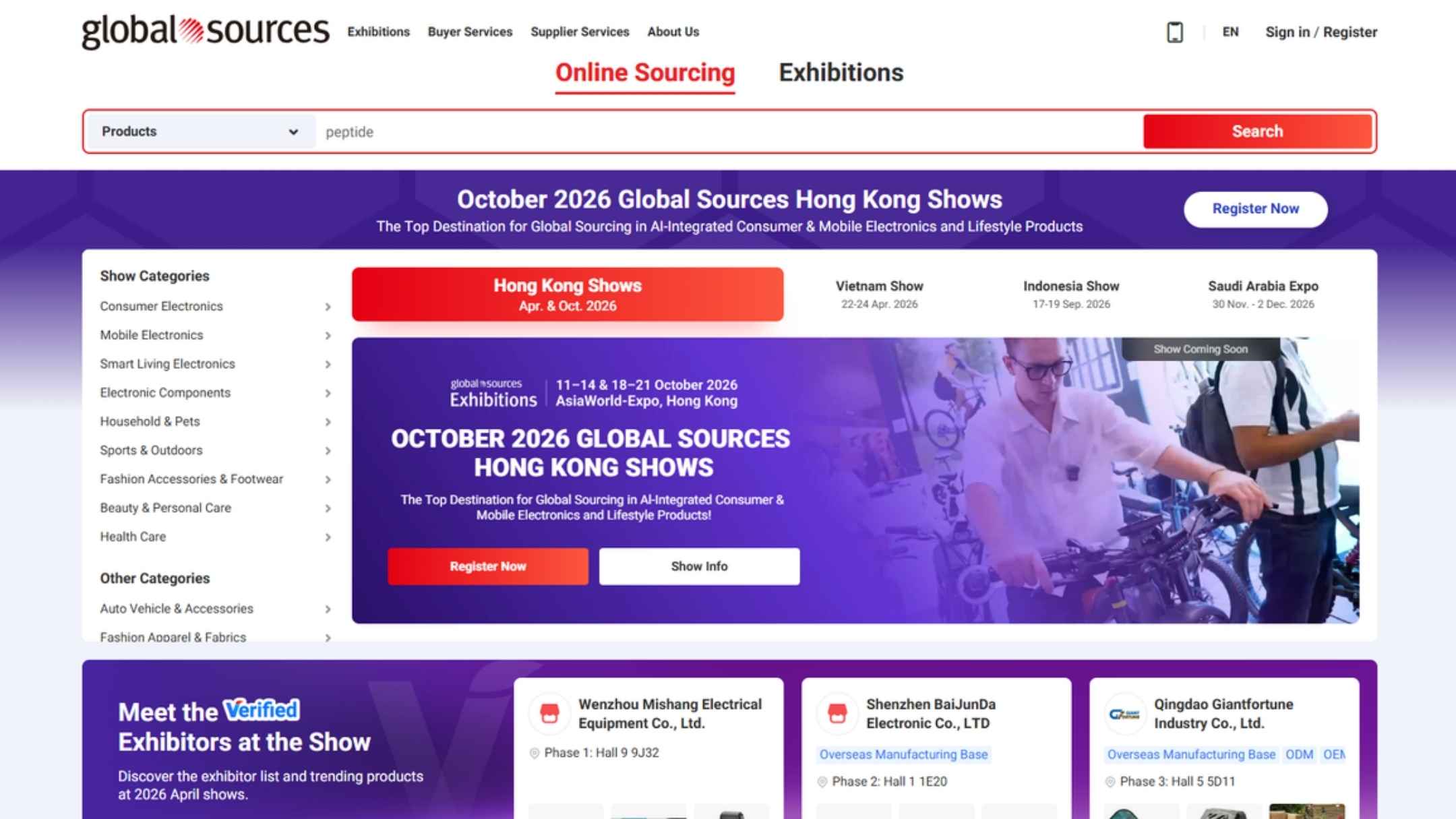
Global Sources is a premier, 50-year-old B2B sourcing platform facilitating international trade, mainly connecting global buyers with verified, export-oriented manufacturers, with a major concentration on Asian manufacturing hubs like China, Vietnam, and India. It operates a hybrid model, combining an extensive online marketplace with major offline trade shows in Hong Kong, attracting thousands of international buyers each year.
Global Sources focuses on a more curated supplier base rather than maximizing the number of listings. Suppliers are typically required to go through verification steps before being listed. This may include third-party on-site audits and business registration checks, which help improve reliability for buyers.
As a result, the number of suppliers per product category is more limited. However, supplier profiles tend to be more detailed, with clearer information about export markets, certifications, and production capabilities.
The platform is particularly active in categories such as consumer electronics, mobile accessories, and hardware products. Many suppliers have experience with OEM and ODM production, and are familiar with requirements like packaging standards, labeling, and compliance for markets like the US and EU.
Key industries
Here are the key industries Global Sources focuses on:
- Consumer electronics: Bluetooth speakers, wireless earbuds, smartwatches, power banks, and smart home devices like security cameras.
- Mobile accessories: Phone cases, screen protectors, charging cables, fast chargers, wireless charging pads, and car phone holders.
- Computer and IT products: Keyboards, computer mice, USB hubs, external hard drives, webcams, and office equipment like monitors and docking stations.
- Home and kitchen products: Air fryers, blenders, cookware sets, storage containers, electric kettles, and kitchen utensils.
- Fashion and apparel: T-shirts, hoodies, sportswear, bags, hats, and fashion accessories like belts and scarves.
- Gifts and premium products: Custom mugs, notebooks, tote bags, keychains, and seasonal products such as holiday decorations.
- Automotive electronics and accessories: Dash cameras, car chargers, LED lighting, tire pressure monitors, and infotainment accessories.
Pros of using Global Sources
- Curated supplier base: Global Sources focuses on a smaller but more structured supplier pool. Many suppliers go through verification steps such as business registration checks and on-site audits. This reduces the number of low-quality or non-serious suppliers at the initial stage.
- More detailed and structured supplier information: The platform features highly detailed supplier profiles. This can include production capacity, quality certifications such as ISO 9001 or ISO 14001, and compliance standards like CE, UL, or RoHS where relevant. Some suppliers also show export history, which helps buyers assess their experience in international markets.
- Strong focus on export-ready manufacturers: Suppliers are generally familiar with international requirements such as labeling, packaging, and compliance standards.
- Integration with offline trade shows: Global Sources organizes large trade shows in Hong Kong that attract thousands of suppliers and buyers. For example, a 2026 event included: Over 2,000 suppliers, around 150,000 products showcased, and more than 60,000 international buyers attending. This allows buyers to verify products and meet suppliers face-to-face, which is difficult to achieve on purely online platforms.
Cons of using Global Sources
- Smaller supplier pool limits options: Compared to larger marketplaces, the number of suppliers is more limited. This can reduce flexibility when comparing pricing or finding niche product variations.
- MOQ tends to be higher: Many suppliers target medium to large buyers. MOQ commonly starts from 300 to 1000 units, depending on the product. This makes it less suitable for small-scale testing.
- Higher pricing: Global Sources emphasizes verified manufacturers and quality production, so prices may sometimes be slightly higher than those found on Alibaba.
Who should use Global Sources?
Global Sources works best for buyers who value structure, supplier readiness, and export experience.
Global Sources is suitable for:
- Mid to large businesses with stable demand
- Buyers who prioritize verified and export-ready suppliers
- Importers sourcing electronics and technical products
It may not be ideal if you are:
- Small businesses testing new products
- Buyers looking for the lowest possible price
- Dropshippers or low-volume buyers
Overview of Indiamart
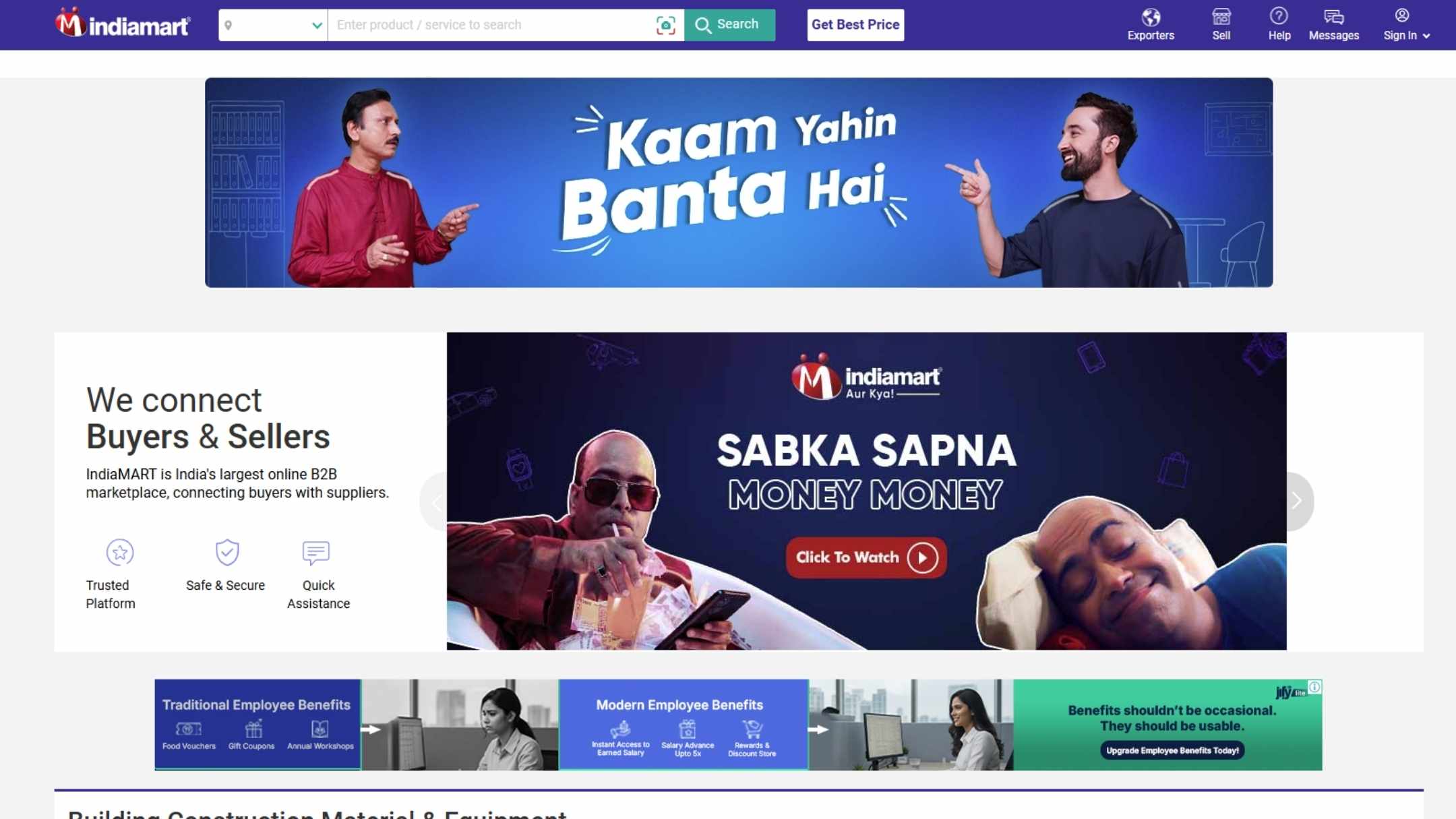
IndiaMART, founded in 1996, is one of the largest B2B marketplaces in India. It acts as a platform that connects buyers with suppliers, primarily within India. It has over 7.7 million suppliers and more than 190 million registered buyers.
IndiaMART operates more like a lead generation platform than a full transaction marketplace. Buyers typically submit inquiries and receive responses via phone calls, WhatsApp, or email.
One key characteristic of IndiaMART is its strong presence in small and medium enterprises. A large portion of suppliers are local manufacturers, wholesalers, or distributors. This creates a wide range of pricing options.
The platform covers a broad range of industries, with over 100 million product listings across more than 50 industry categories. It is particularly strong in categories where India has manufacturing advantages, such as textiles, handicrafts, and certain raw materials.
IndiaMART is useful for startups and SMEs to find suppliers quickly, especially within India, but requires rigorous, active filtering.
Key industries
IndiaMART covers a wide range of industries, with a strong focus on domestic manufacturing, industrial supply, and SME driven sectors in India.
Key industries on IndiaMART include:
- Industrial machinery and equipment: Includes CNC machines, packaging machines, compressors, generators, and manufacturing equipment used in factories
- Construction and building materials: Covers cement, steel, tiles, pipes, sanitary ware, and infrastructure-related materials
- Textiles and apparel: Includes fabrics, yarn, garments, uniforms, and traditional Indian textile products
- Chemicals and raw materials: Covers industrial chemicals, dyes, solvents, adhesives, and raw inputs for manufacturing
- Agriculture and food products: Includes grains, spices, animal feed, fertilizers, and processed food products
- Electronics and electrical equipment: Covers transformers, cables, batteries, lighting products, and basic electronic components
- Packaging and printing: Includes packaging materials, cartons, labels, flexible packaging, and printing services
- Medical and healthcare products: Covers hospital equipment, diagnostic tools, surgical instruments, and basic medical supplies
- Home, furniture, and decor: Includes wooden furniture, home decor items, handicrafts, and interior products
- Metals, minerals, and metallurgy: Covers steel products, aluminum, copper, scrap materials, and industrial metals
Pros of using IndiaMart
- Massive supplier base in India: IndiaMART has over 7.7 million suppliers and over 190 million registered buyers. This makes it one of the largest B2B platforms focused on the Indian market. It is useful when you want broad access to local manufacturers and distributors.
- Strong coverage of SME and local manufacturers: A large portion of suppliers are small and medium enterprises across India. This allows for a wide range of choices, competitive pricing, and local sourcing.
- Competitive pricing in certain categories: India has cost advantages in sectors like textiles, handicrafts, and some raw materials. Prices can be lower than those on global platforms in these categories, especially when dealing directly with small manufacturers.
- Wide range of product categories: IndiaMART lists over 100 million products across 50+ industries and ~98,000 categories.
Cons of using IndiaMart
- Inconsistent supplier quality and professionalism: Because of the large SME base, supplier capability varies widely. Some suppliers are well organized, while others lack clear processes or documentation. Buyers often need to filter heavily before finding reliable partners.
- Limited export readiness for many suppliers: IndiaMART is primarily designed for domestic trade. Many suppliers are not familiar with export procedures, international packaging, or compliance requirements.
- Platform functions mainly as a lead generation tool: IndiaMART serves as a directory to connect buyers with sellers rather than a complete transactional platform. Communication often moves off the platform. Buyers need to manage negotiations and payments independently.
- Limited buyer protection and dispute support: IndiaMART does not offer a strong escrow or protection system similar to some global platforms. In case of disputes, resolution depends largely on direct negotiation with the supplier. This increases risk, especially for new buyers.
Who should use IndiaMart?
IndiaMART works best for buyers who want access to the Indian supplier network.
IndiaMart is suitable for:
- Buyers sourcing from India
- Businesses looking for cost-competitive suppliers in sectors like textiles, handicrafts, and basic manufacturing
- Experienced sourcing agents or traders
- Small to Medium Enterprises (SMEs)
It may not be ideal if you are:
- Buyers who need export-ready suppliers
- Beginners with no sourcing experience
- Buyers need consistent quality and strict standards
- Dropshippers or low-volume buyers
Overview of Made-in-China
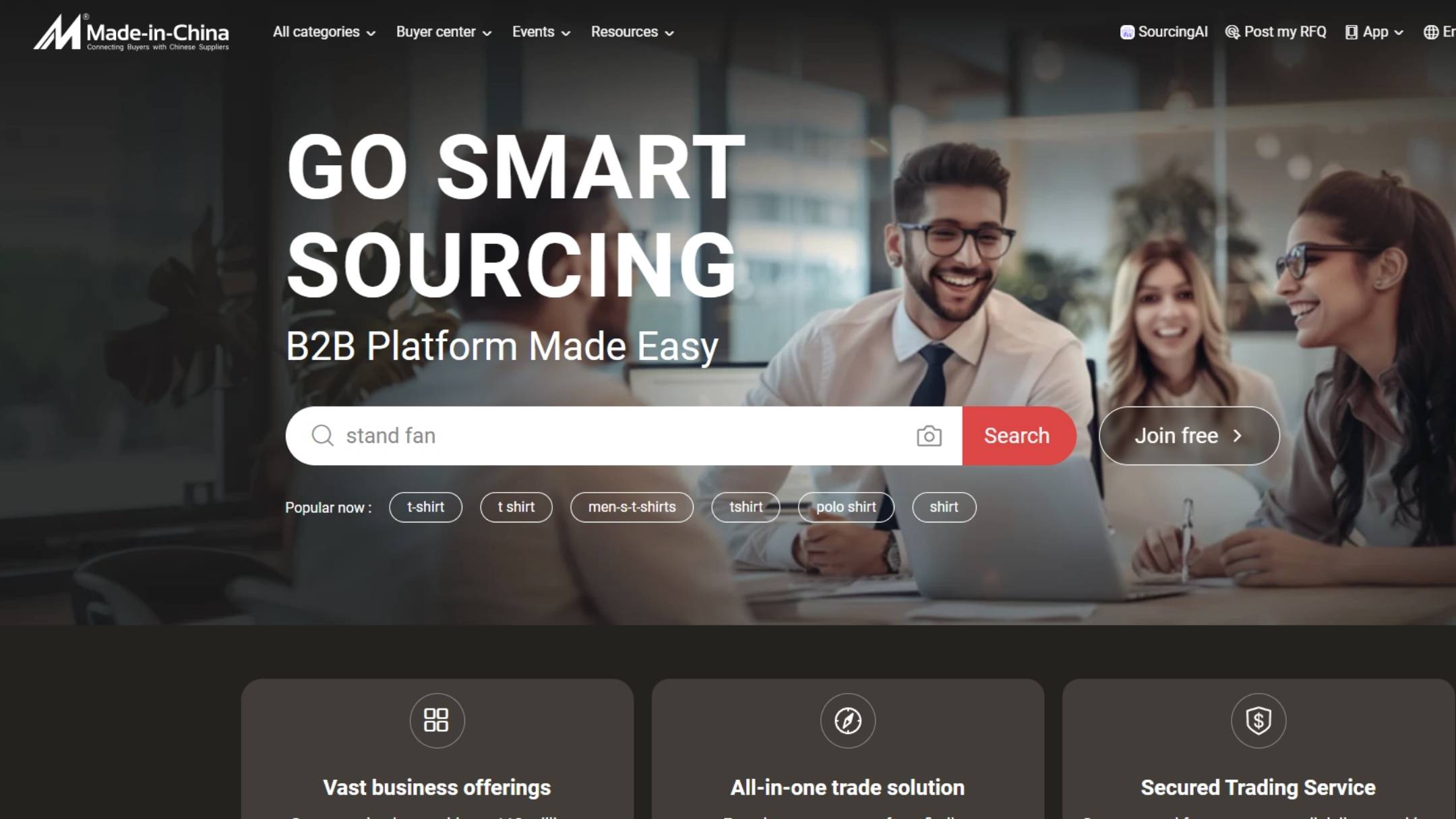
Made-in-China.com, established in 1998, is a B2B sourcing platform that connects international buyers with Chinese suppliers. It is particularly strong in industrial categories such as machinery, manufacturing equipment, electrical components, construction materials, and tools. Moreover, many suppliers support OEM and ODM production.
The platform acts primarily as a B2B directory and connection tool rather than a fully controlled, integrated transactional marketplace. Transactions are usually handled directly between the buyer and the supplier, so buyers need to actively verify suppliers and monitor production quality. They are also responsible for drafting, signing, and enforcing contracts with suppliers.
Key industries
Made-in-China focuses strongly on industrial and manufacturing-driven sectors, including:
- Industrial machinery and manufacturing equipment
- Electrical equipment and components
- Construction and building materials
- Tools and hardware
- Consumer electronics and electronic components
- Auto parts and accessories
- Chemicals and raw materials
- Textiles and industrial fabrics
- Energy and power equipment
Pros of using Made-in-China
- Strong focus on manufacturers and industrial sourcing: Made-in-China is structured around manufacturing and industrial supply chains. It performs well in categories like machinery, electrical equipment, and construction materials.
- Supplier classification and audit visibility: Made-in-China categorizes suppliers as “Audited Suppliers” or “Verified Suppliers” to enhance trust, with many audits conducted on-site by reputable third-party organizations like SGS or Bureau Veritas. This improves initial transparency.
Cons of using Made-in-China
- Smaller supplier base limits comparison: The platform has fewer listings than high-volume marketplaces like Alibaba. This reduces flexibility in comparing pricing and finding niche variations.
- Less suitable for low MOQ or product testing: Many suppliers focus on OEM and bulk production, requiring higher MOQs. This makes it less suitable for small-scale testing.
- Limited transaction control: Made-in-China mainly acts as a connection platform. Payments and contracts are handled directly between buyer and supplier. This means buyers must manage risk, verification, and dispute resolution themselves.
Who should use Made-in-China?
Made-in-China is suitable for:
- Industrial buyers and technical sourcing teams
- Mid to large businesses sourcing in bulk
- Experienced sourcing teams or agents
It may not be ideal if you are:
- Beginners without sourcing experience
- Buyers looking for low MOQ or product testing
- Low-volume buyers
When to use each platform?
Choosing the right platform depends on where you are in your sourcing process and how clearly you define your product. Below is a quick guide to help you match each platform with the right use case.
- Alibaba – best for product discovery and early-stage sourcing: Use it when you are testing products, comparing multiple suppliers, or need a flexible MOQ to validate demand.
- Global Sources – best for working with more structured and export-ready suppliers: Use it when you already have a product and want more consistent supplier quality for repeat orders.
- IndiaMART – best for sourcing within India: Use it when you need access to local Indian suppliers, especially for industrial goods, raw materials, or SME manufacturers.
- Made-in-China – best for technical and manufacturing-driven sourcing: Use it when you have clear specifications and need suppliers with real production capability for industrial or OEM products.
Conclusion
Choosing between Alibaba, Global Sources, IndiaMART, and Made-in-China depends on your sourcing goals, order size, and risk tolerance. Each platform is built around a different sourcing approach, so the right choice depends more on your buying strategy.
There is no single “best” platform. Some are better for discovering suppliers and testing products, while others are designed for verified sourcing or industrial procurement.
Start with one platform, test suppliers, and build a repeatable sourcing process!