
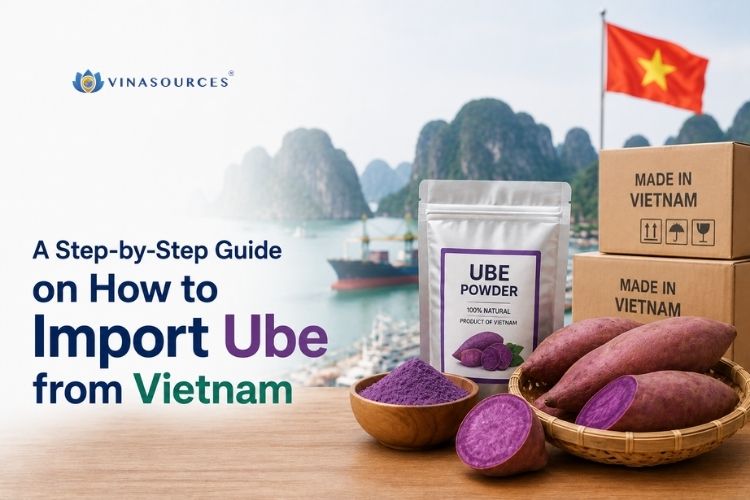
Vietnam has become a global leader in agricultural exports, known for high quality and competitive pricing. Among its diverse range of produce, root crops like ube (purple yam) are gaining significant international attention. For global B2B buyers, understanding how to import ube from Vietnam is essential to expanding product lines with unique, high-demand ingredients.
This guide provides a practical roadmap for sourcing, verifying suppliers, and navigating customs.
Overview of Vietnam’s Export of Ube
Vietnam’s agricultural export industry is a major pillar of the national economy, with a total export turnover reaching 36 billion USD in the first half of 2026, up 6% year-on-year. The country is currently the second-largest trade partner within ASEAN and a top exporter to the US and EU. While Vietnam is world-famous for rice and coffee, its root crop sector, which includes ube and sweet potatoes, is seeing rapid growth driven by global demand for natural food colorings and healthy ingredients.
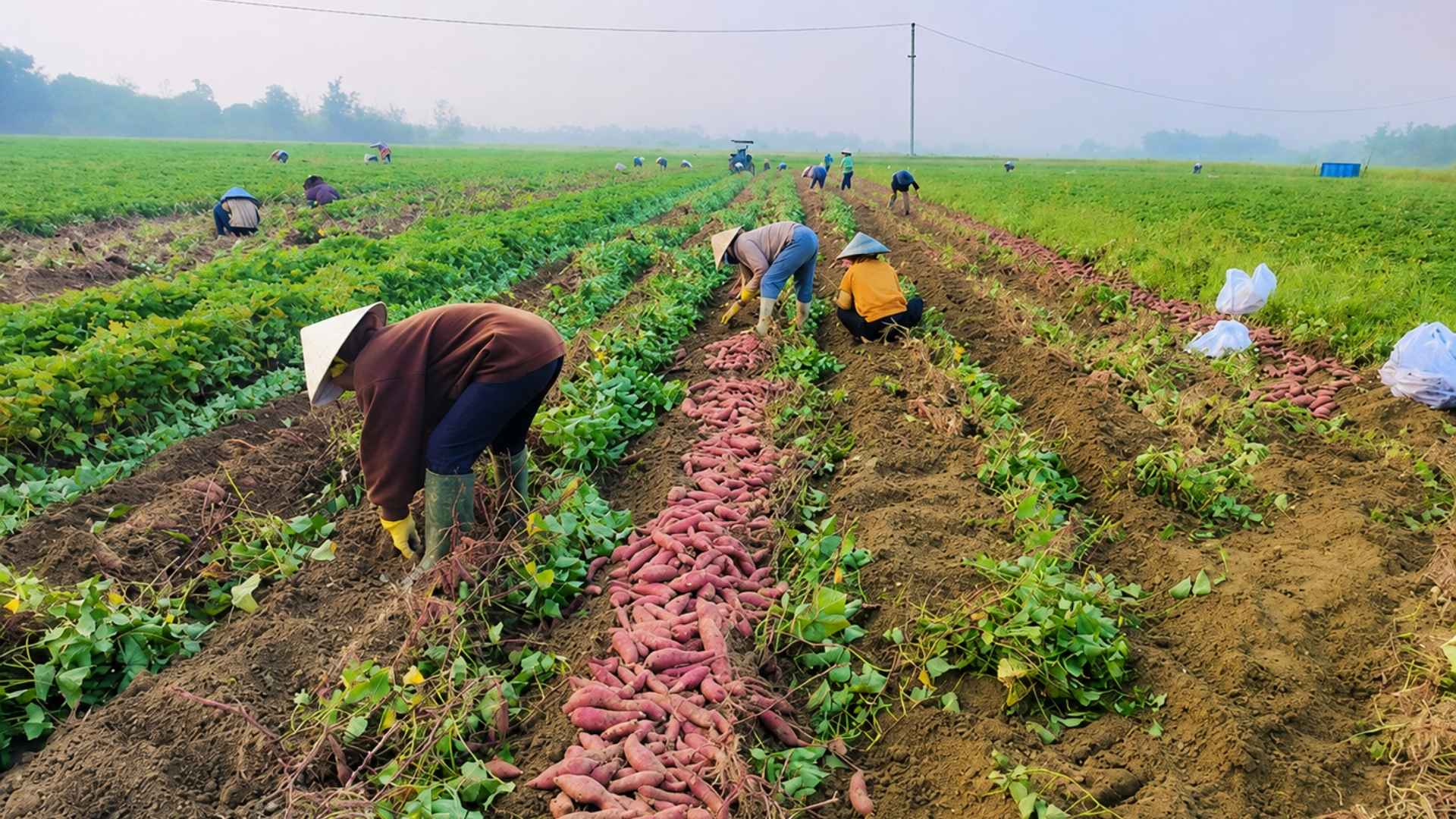
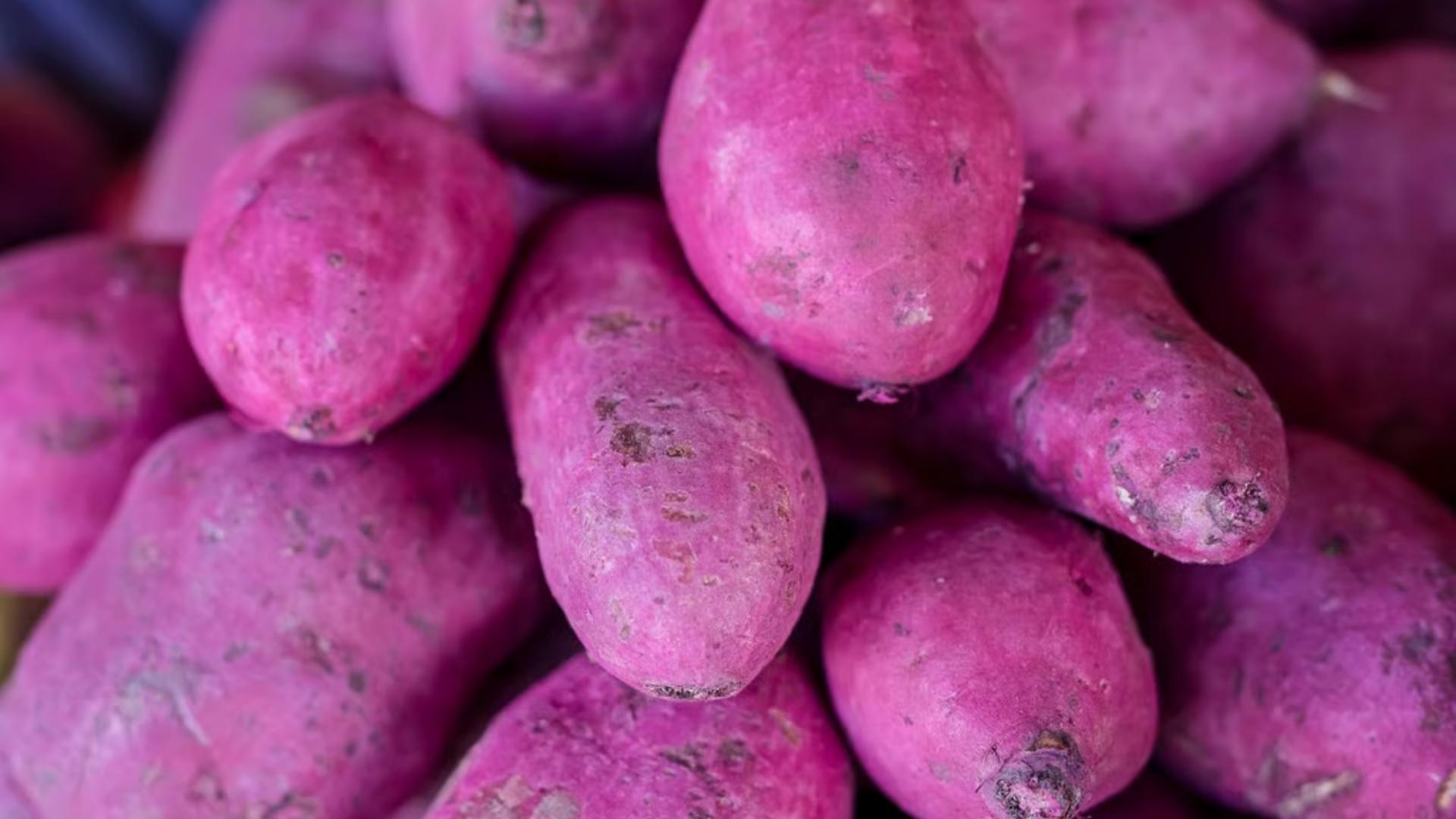
Vietnamese ube is primarily grown in fertile regions like the Mekong Delta and the Central Highlands. Suppliers now offer ube in various forms to meet industrial needs, including fresh, frozen, and concentrated juices. To stay competitive, many Vietnamese manufacturers have upgraded their facilities to meet international standards such as ISO 22000, HACCP, and GlobalGAP.
Strategic Reasons to Source Ube from Vietnam
Vietnam has established itself as a global agricultural powerhouse, providing high-quality products to markets like the US, EU, and Japan. For B2B buyers looking for ube, the country offers a unique combination of cost-efficiency, quality, and trade accessibility.
Access to Preferential Tariffs via Free Trade Agreements
Vietnam is a member of numerous Free Trade Agreements (FTAs) that significantly lower the cost for international buyers. Under the EVFTA (with the EU), approximately 94% of tax lines for fresh and processed vegetables were cut to 0%. Other agreements like the CPTPP, RCEP, and AFTA provide similar tax advantages for buyers in the Asia-Pacific and beyond.
Highly Competitive Production and Labor Costs
Vietnam offers a major cost advantage compared to its neighbors. Labor costs in Vietnam are roughly one-third of the average in China, and the country has a large, skilled labor pool. These lower overheads allow Vietnamese manufacturers to offer premium purple yam products at highly competitive wholesale prices.
Favorable Natural Conditions and Diverse Product Forms
The tropical climate and fertile soil in regions like the Mekong Delta and Central Highlands create ideal conditions for root crops. Manufacturers can supply ube in various industrial forms to meet different business needs.
Strategic Logistics and Modern Port Infrastructure
Vietnam’s geography is a strategic advantage for global trade. With over 1,900 miles of coastline and 44 international seaports, the country provides efficient shipping routes to all major continents. Key logistics hubs include:
- Ho Chi Minh Port (Cat Lai): Serving the southern agricultural regions.
- Hai Phong Port: The primary gateway for northern exports.
- Da Nang Port: Supporting central Vietnam.
International Quality and Food Safety Certifications
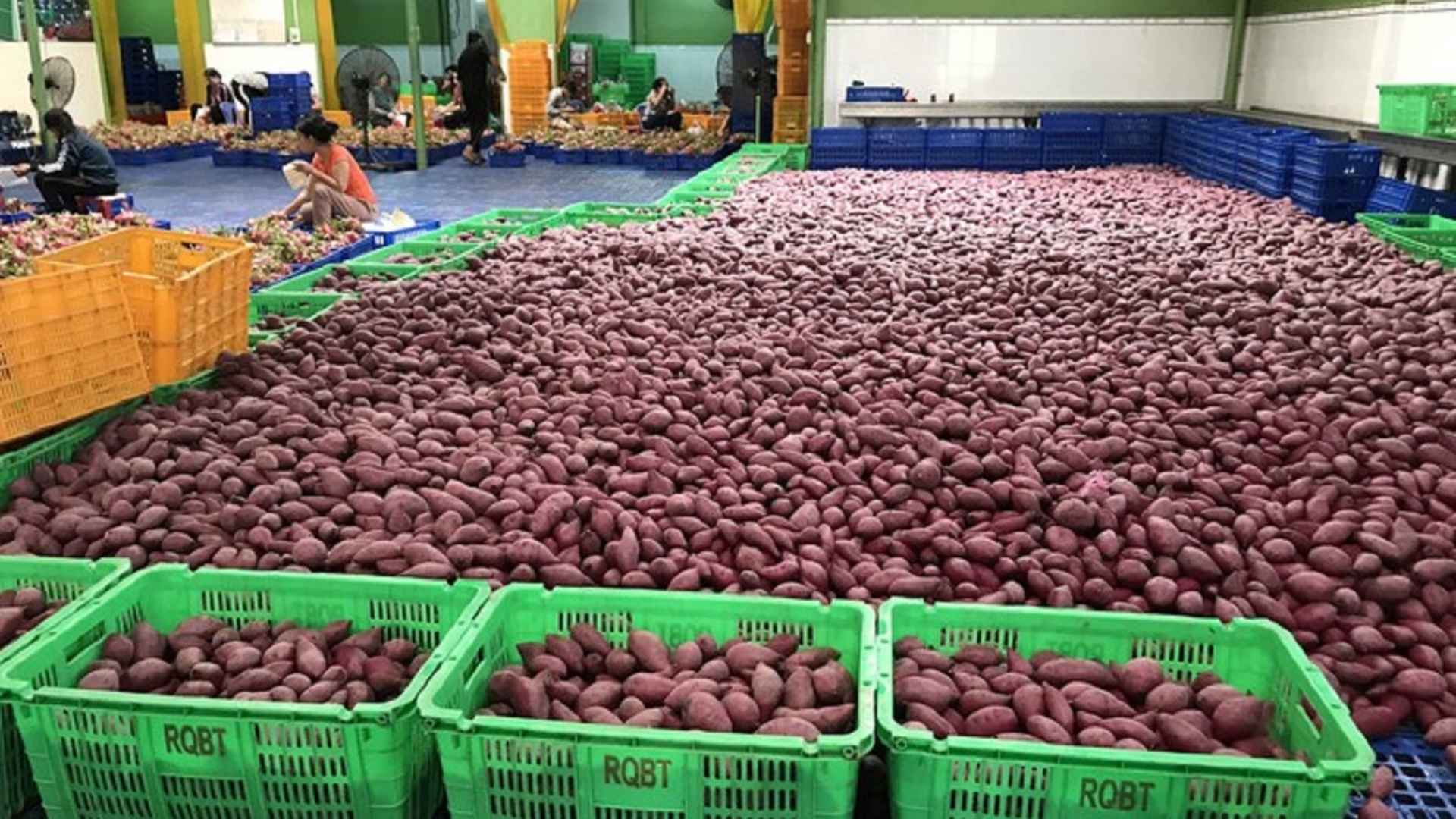
Vietnamese ube exporters prioritize food safety to meet the requirements of “fastidious” markets like the US and Japan. Many facilities are equipped with modern cold storage and vacuum packaging technologies. Buyers can easily find suppliers holding recognized certifications, including: ISO 22000, HACCP, GlobalGAP, VietGAP, and FDA registration.
Ways to Find Reliable Suppliers in Vietnam
Below are several reliable ways to connect with suppliers
1. Visit Trade Shows
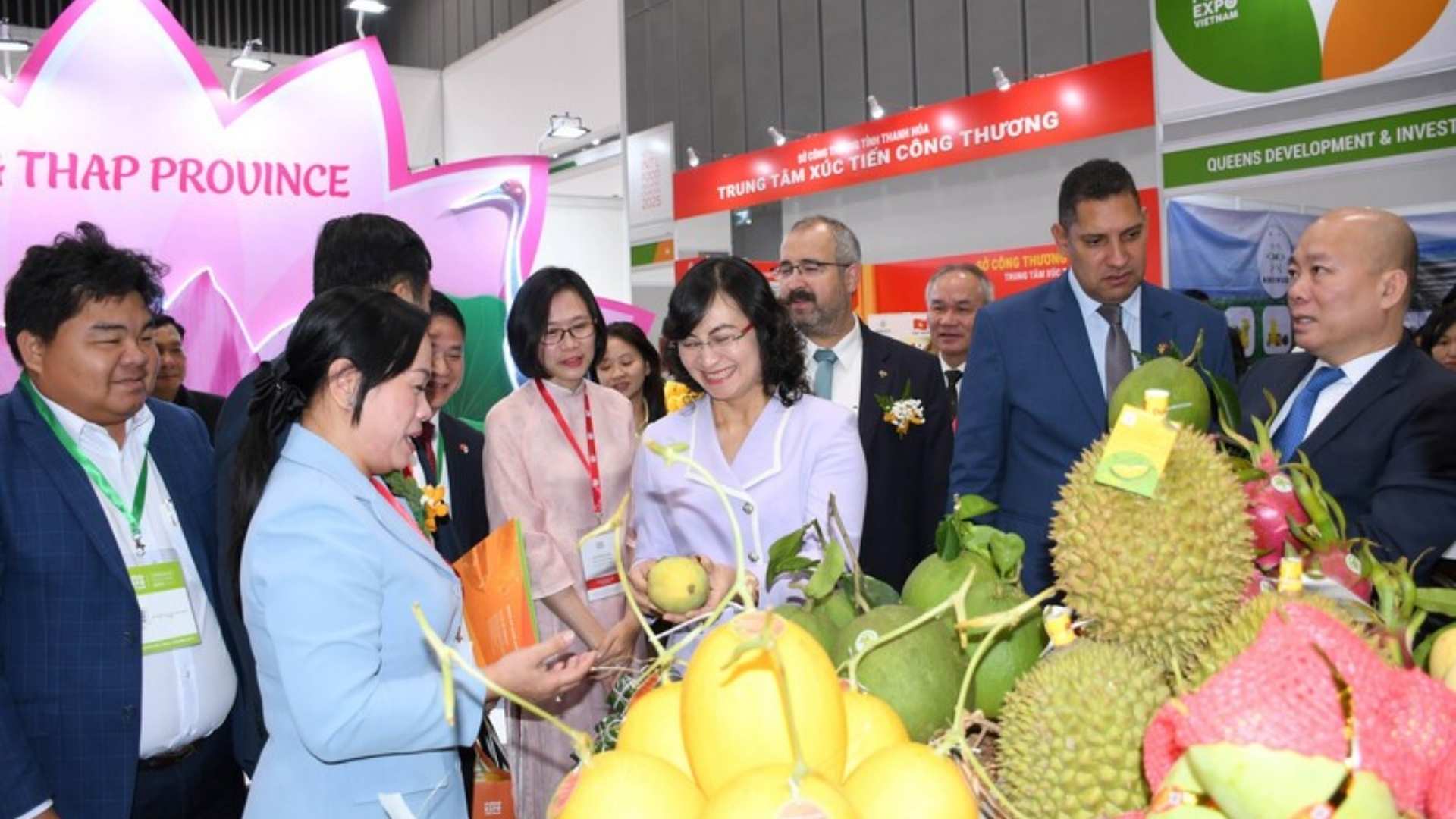
Attending a trade show is one of the best ways to vet a supplier. Meeting a team face-to-face and seeing their product samples tells you more than an online profile ever could.
- Vietnam International Sourcing Expo: Took place from April 22-24, 2027, at the SECC in Ho Chi Minh City. This is a “one-stop” event for global supply chain connections. It features a dedicated Food & Beverage Exhibition where you can source certified agricultural produce.
- Vietnam Foodexpo: Typically held annually in November at the Saigon Exhibition and Convention Center (SECC) in Ho Chi Minh City. This is the country’s largest exhibition for the food industry. It is an excellent place to find suppliers who meet international quality standards.
2. Use B2B Sourcing Platforms
VinaSources is a specialized B2B platform designed to connect global buyers directly with reliable Vietnamese manufacturers and suppliers. Using a dedicated local platform helps you find partners who are already experienced in exporting from Vietnam. You can also use global platforms like Alibaba or Tridge.
3. Partner with Local Sourcing Agents
If you cannot travel to Vietnam, hiring a local sourcing agent can be a smart move. Agencies like Seditex, AGS Vietnam, or Sourcing Agent Vietnam act as your local office on the ground. These experts provide several valuable services:
- Business Matching: Connecting you with suppliers that fit your specific needs.
- Factory Audits: Personally visiting facilities to check production capacity and labor conditions.
- Due Diligence: Verifying business licenses and certifications to ensure the company is legitimate.
| # | Sourcing Method | Advantages | Disadvantages |
| 1 | Visit trade shows |
|
|
| 2 | Utilize B2B Sourcing Platforms |
|
|
| 3 | Partner with Sourcing Agents |
|
|
How to Import Purple Yam from Vietnam
Importing ube from Vietnam requires a structured approach to ensure you receive high-quality products that meet your local safety standards. Following these steps will help you reduce trade risks and build a stable supply chain.
1. Verify Suppliers
Before sending any money, you must confirm that the supplier is a legitimate business and is legally allowed to export goods.
- Check Business Licenses: Ask for a color scan of their business registration certificate (including their Tax Code).
- Verify Certifications: Ensure the supplier holds international standards like ISO 22000, HACCP, or GlobalGAP, which are essential for food safety.
- Check Export History: Look for a proven track record of shipping to your region (such as the US, EU, or Japan).
If possible, hire a third-party service like SGS or Bureau Veritas to conduct a factory audit. This confirms the factory has the real capacity to produce your order and is not just a middleman.
2. Request Samples
Once you find potential partners, request product samples. Since ube can come in fresh, frozen, or powder forms, samples are necessary to test for quality, color, and moisture levels before placing a bulk order.
3. Negotiate Pricing and Trade Terms
When signing an International Sales Contract with a Vietnamese supplier, it is vital to have clear terms to protect your money and ensure product quality.
- Detailed Product Quality and Specifications:You should not just write the name of the product. Your contract must include every detail, such as the grade, moisture level, size, and color.
- Incoterms:Incoterms decide who pays for shipping and who is responsible if the goods are damaged during the journey. The most common terms are: FOB (The supplier puts the goods on the ship, and you handle the rest) and CIF (The supplier pays for shipping and insurance to your home port).
- Payment Terms:To reduce risk, never pay 100% of the money at the start. Most professional buyers use the 30/70 rule. Pay a 30% deposit to start production and pay the remaining 70% only after the goods have passed a quality inspection.
- Lead Times and Delay Penalties:Clearly state the production timeline and the ship date. To avoid business losses, you can include a “penalty clause.” This means the supplier must give you a discount (for example, 1% of the total price) for every week the shipment is late.
4. Confirm Import Requirements in Your Country
Before you start importing, you must check the specific rules in your own country. Agricultural products like ube are strictly controlled to prevent pests and ensure food safety. Requirements can change depending on whether the ube is fresh, frozen, or in powder form.
The following table shows the general requirements for some major markets:
| # | Country | Key Import Requirements |
| 1 | European Union (EU) | Must have a Phytosanitary Certificate and meet strict Maximum Residue Limits (MRLs) for pesticides. Full traceability from the farm is mandatory. |
| 2 | United States | Requires FDA registration for the supplier. Must meet high food safety standards and pass inspections by U.S. customs. |
| 3 | Japan | Very strict on quality and quarantine. Physical inspection is common to check for pests. |
| 4 | China | Often requires specific Plantation and Packing Facility Codes approved by Chinese authorities for fresh items. |
| 5 | Australia | Strict biosecurity rules. Must prove the ube is free from specific soil-borne diseases. |
5. Prepare Export Documentation
To clear customs smoothly in both Vietnam and your own country, your supplier must provide a complete set of documents.
Key documents include:
- Commercial Invoice
- Packing List
- Bill of Lading (B/L)
Mandatory Agricultural Documents:
- Phytosanitary Certificate: This is the most critical document. It is issued by the Vietnamese Ministry of Agriculture and Rural Development to prove the ube is free from harmful pests.
- Certificate of Origin (C/O): This proves the goods are from Vietnam. It allows you to claim lower or 0% import taxes under Free Trade Agreements like the EVFTA or CPTPP.
- Health Certificate (HC): Often required for processed or frozen ube to confirm it is safe for human consumption.
6. Arrange Shipping and Logistics
Choosing the right shipping method and protecting the ube during transit is the final step in a successful sourcing journey.
Sea freight is the most cost-effective for bulk shipments, while air freight is faster for sensitive samples or smaller ube powder orders.
Most shipments will depart from Ho Chi Minh Port (Cat Lai), Hai Phong Port, or Da Nang Port.
If you are importing fresh or frozen ube, it is critical to use refrigerated containers (Reefers). For fresh produce, the temperature is usually kept between 2–12°C to prevent spoilage.
Challenges and Risks of Importing Ube from Vietnam
While Vietnam is a top-tier sourcing destination, global trade always involves potential dangers
Supplier Fraud and Fake Profiles
One of the most significant fears for importers is wiring a deposit only for the supplier to disappear. Risks include fake supplier profiles on marketplaces or professional-looking websites that have no real factory behind them. To avoid this, you must always verify business licenses and cross-check their history of real exports.
Product Quality and Safety Risks
Agricultural products like ube face risks of inconsistent quality or failing to meet international food safety standards. This can result in goods being rejected at your border. A specific risk is exceeding the Maximum Residue Limits (MRLs) for pesticides allowed in your country. Using a third-party inspection service is the best way to verify quality before the goods ship.
Logistics and Preservation Challenges
Ube is a sensitive root crop. Fresh or frozen shipments face risks of spoilage if the cold chain is broken. Furthermore, if you export to a country without checking if they allow Vietnamese ube, your goods may be turned back or destroyed at the port. Choosing an experienced carrier who understands the shelf-life and temperature requirements of agricultural goods is vital.
Partnering with VinaSources for Reliable Ube Supply
Finding a trustworthy supplier in a foreign market is often the biggest challenge for international importers. VinaSources acts as a professional bridge, connecting global buyers directly with reliable Vietnamese manufacturers and suppliers. Here is why VinaSources is the ideal partner for your ube sourcing needs:
- Access to a Verified Supplier Network:
- Direct Manufacturer Connections
- Expert Support at Every Step
- Local Expertise with a Global Presence
By choosing VinaSources, you gain a strategic partner dedicated to making your import journey for Vietnamese ube simple, safe, and highly efficient.
Are you ready to find the best ube suppliers in Vietnam? Contact our team for professional assistance or submit your specific requirements to receive tailored quotes from our verified network.
Leave a Request for Quotation or contact us
- Switchboard: 19004356
- Hotline: 0329725268
- Email: [email protected]