
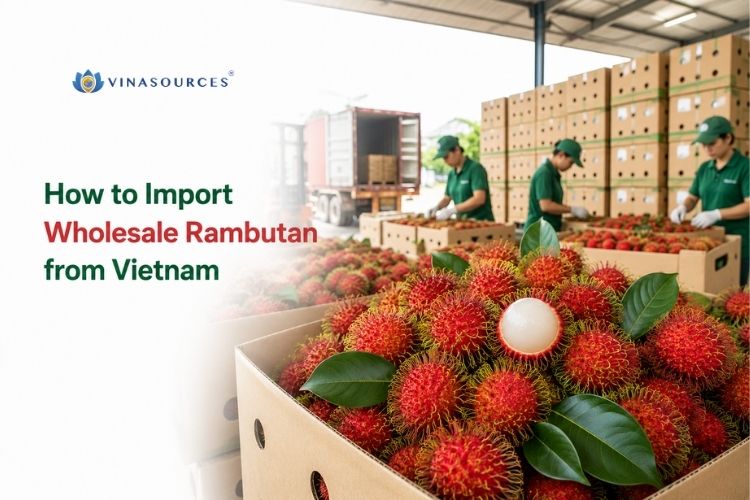
Vietnam has become one of Southeast Asia’s leading tropical fruit exporters, with rambutan emerging as an increasingly important product in regional and international fresh fruit trade. For global buyers, the country offers a combination of competitive pricing, expanding export infrastructure, and access to large rambutan-growing regions concentrated in Southern Vietnam.
This guide explains how to import rambutan from Vietnam, including supplier sourcing, export procedures, contract negotiation, cold chain logistics, and key rambutan varieties commonly traded in international markets.
Introduction to Vietnam’s Rambutan Export Market
Vietnam is one of the major rambutan producers in Southeast Asia, with annual production estimated at more than 300,000 tons depending on seasonal conditions.
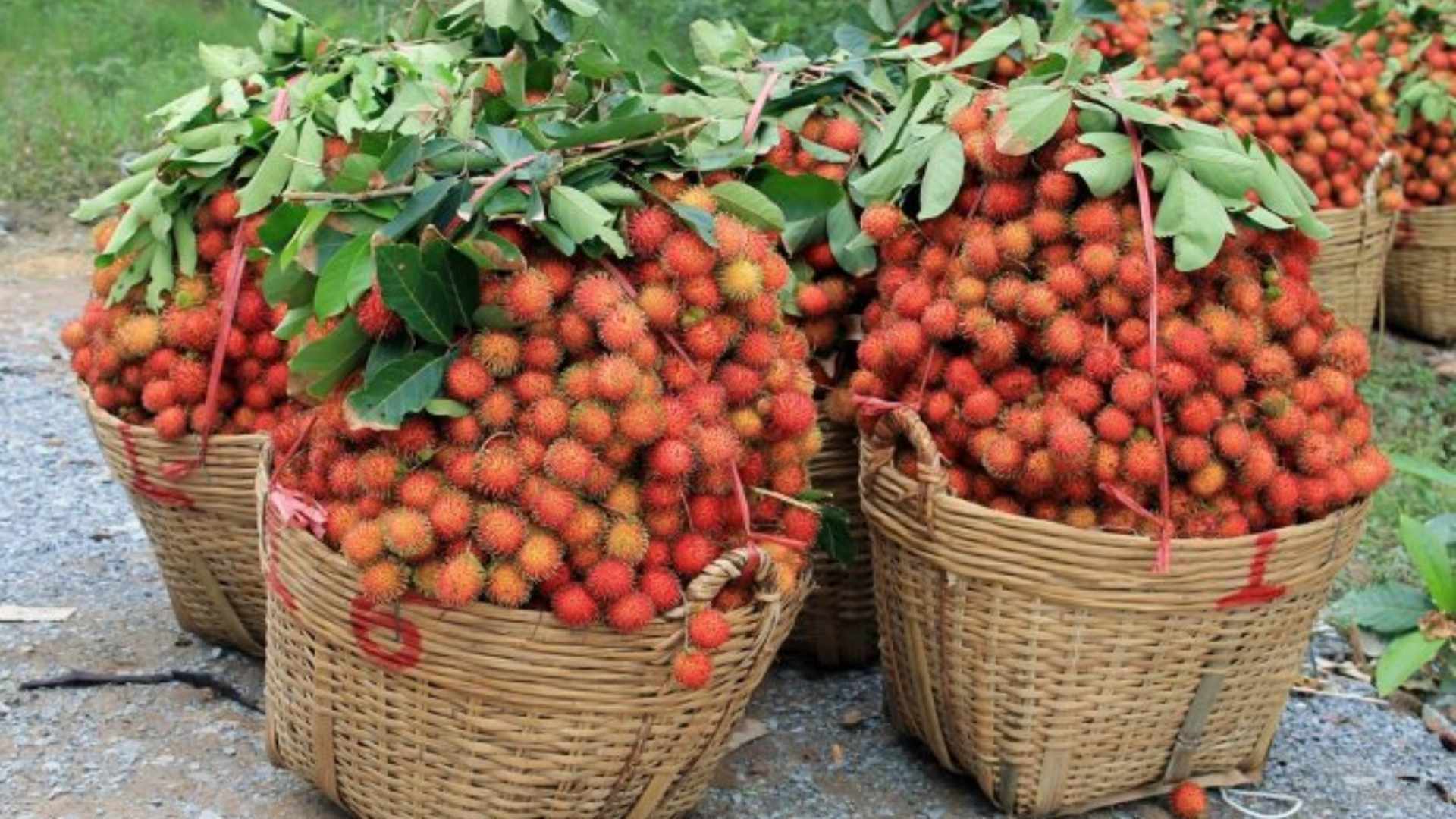
Most rambutan farms are located in the Southern part of Vietnam. The three biggest areas for this fruit are Dong Nai, Ben Tre, Vinh Long. While farmers can harvest rambutan almost all year round, the main harvest season happens from May to August. During these months, the fruit has the best flavor, the largest size, and the lowest price.
Vietnam exports both fresh and processed rambutan products to regional and international markets. China remains the largest export destination due to strong regional demand and short transportation distance, while exports to Thailand, Singapore, the Middle East, the EU, Australia, and the United States have also expanded steadily in recent years.
Two commercial varieties dominate Vietnam’s export industry: Java rambutan and Rongrien rambutan. Java rambutan is widely cultivated because of its strong sweetness and large production volume, while Rongrien rambutan is preferred in some premium retail channels because of its firmer flesh and better seed separation.
Key Advantages of Importing Rambutan from Vietnam
More and more international buyers are choosing Vietnam as their main source for fresh rambutan. Here are the reasons why importing rambutan from Vietnam can give your business a strong advantage:
| # | Factor | Brief analysis |
| Large Supply & Many Varieties | Vietnam has many large rambutan farms in the South. You can easily buy popular varieties like Java, Thai, and Longan rambutan to fit your customers’ tastes. | |
| 1 | Competitive Pricing | Production and labor costs in Vietnam are very reasonable. This allows local exporters to offer lower wholesale prices compared to other countries, helping you get better profits. |
| 2 | All-Year Availability | While the main harvest season is from May to August, farmers can now use smart techniques to grow rambutan almost all year round. This ensures you always have stock to sell. |
| 3 | Strong Flavor Profile | Vietnamese rambutan is widely recognized for its sweetness, juicy flesh, and tropical aroma. Premium varieties are increasingly popular in Asian retail channels. |
| 4 | Strategic Location | Vietnam is located in the heart of Southeast Asia with major airports and deep-sea ports. This makes shipping by both plane and sea very fast and easy to any region in the world. |
| 5 | Expanding Cold Chain Infrastructure | Exporters have increased investment in pre-cooling systems, cold storage, and reefer transportation to improve shelf life during long-distance export shipments. |
| 6 | Growing Export Compliance | More Vietnamese rambutan exporters are adopting GlobalG.A.P., VietGAP, HACCP, and traceability systems to meet stricter import requirements in premium markets. |
| 7 | Broad FTA Network | Vietnam participates in trade agreements such as RCEP, CPTPP, and EVFTA, helping improve tariff competitiveness and market access in several importing markets. |
Key Export Rambutan Varieties in Vietnam
Vietnam exports several rambutan varieties serving different retail, wholesale, and food service markets. Each variety has a unique look, taste, and shelf life.
The table below compares the three most popular varieties used for international export:
| Variety | Main Growing Regions | Key Characteristics | Harvest Season | Commercial Advantages |
| Java Rambutan | Dong Nai, Ben Tre, Vinh Long |
|
May to August |
|
| Thai Rambutan | Dong Nai, Ben Tre |
|
June to September |
|
| Longan Rambutan | Vinh Long, Ben Tre |
|
May to July |
|
Step-by-Step Guide to Importing Rambutan from Vietnam
Importing rambutan from Vietnam requires careful supplier selection, strong cold chain management, and close coordination with export documentation and logistics providers.
The steps below outline a practical workflow commonly used by international fruit buyers.
1. Confirm Import Requirements in Your Country
Every government has different laws for fresh tropical fruits:
- The US Market: Requires rambutan to come from farms with a specific FDA code and the fruit must go through irradiation treatment (using safe radiation to kill pests) before shipping.
- The European Market: Requires GlobalGAP certificates. The fruit must have zero chemical residues.
- The Australian Market: Requires hot water dipping treatment to destroy fruit flies.
Ask your local customs broker what certificates you need so your shipment does not get rejected at your home port.
2. Negotiate Pricing and Contract Terms
Rambutan prices change every week depending on the weather and the market. When you negotiate, do not just talk about the price per kilogram. You must write a clear contract with the supplier and agree on these important terms:
1. Fruit Size and Weight: You must choose the exact size standard for your market. For example, a common export standard is 28 to 32 pieces of rambutan per kilogram.
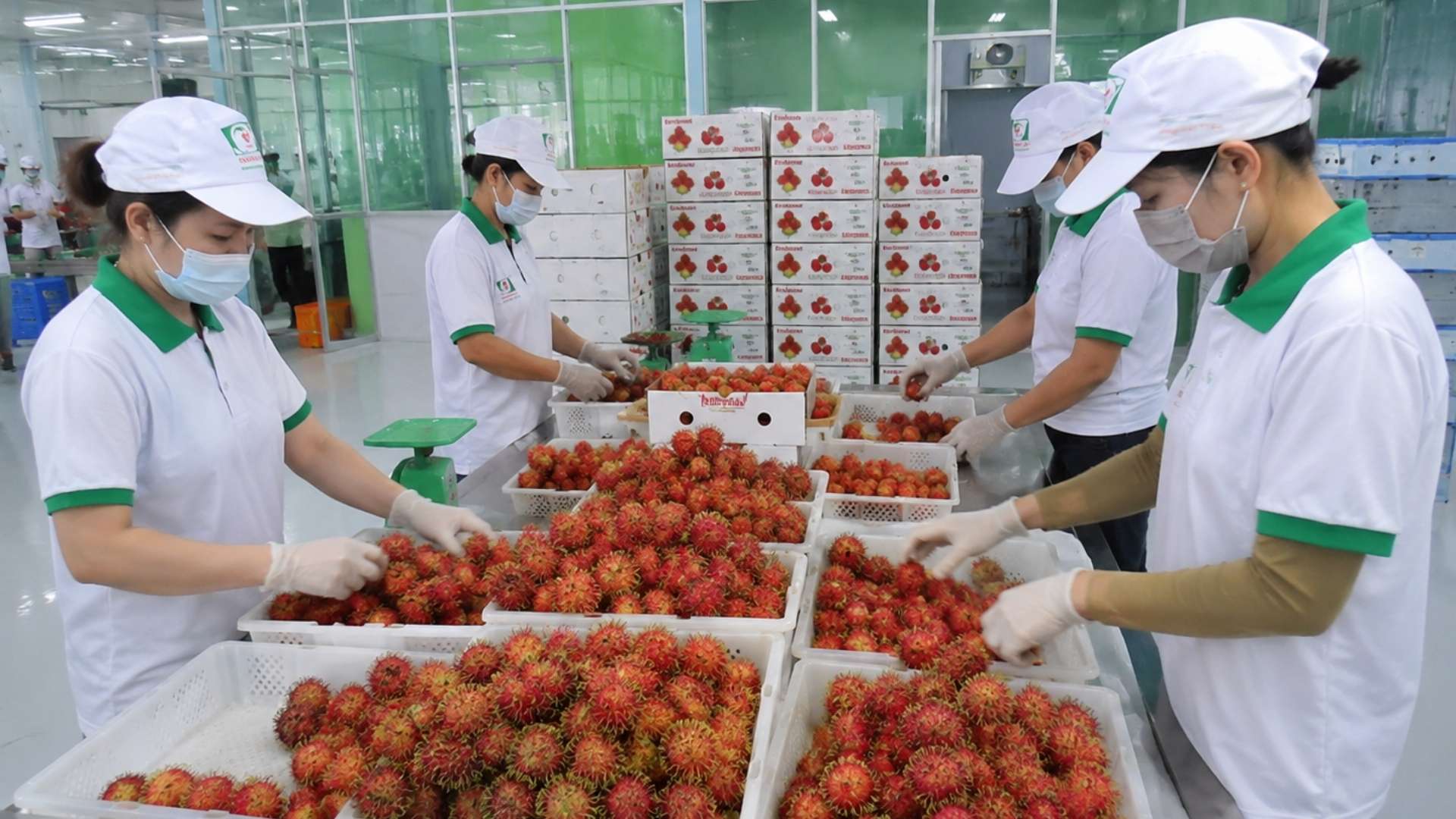
2. Packaging Rules: Rambutan needs good airflow so it does not rot. The contract should state that the fruit must be packed in 2 kg, 4 kg, or 5 kg clean cardboard boxes with small air holes and plastic liners to keep the humidity high.
3. Incoterms (Delivery Terms): You must agree on who pays for the shipping and who takes the risk. The two most common options for fresh fruit are:
- FOB (Free on Board): The Vietnamese supplier takes care of the fruit until it passes the ship or plane in Vietnam. You pay for the international transport.
- CIF (Cost, Insurance, and Freight): The supplier pays to ship the fruit all the way to your destination port and buys transport insurance for the goods.
4. Payment Terms: Do not pay 100% upfront. A safe setup for new buyers is a 30% deposit before harvest, and the remaining 70% payment after the supplier sends you a scan of the official Bill of Lading (B/L) or Air Waybill (AWB).
5. Quality Claim Terms: Fresh fruit can spoil during transport. Your contract must have a clear rule for problems. For example, you can agree that if more than 5% or 10% of the rambutan arrives brown or rotten, the supplier must refund your money or deduct the cost from your next order. You must send proof (like photos or an inspection report) within 24 to 48 hours after the shipment arrives.
Important Contract Precautions
- Avoid vague quality descriptions
- Keep all agreements in written form
- Verify bank account ownership carefully
- Avoid paying 100% upfront for first transactions
- Attach approved product photos when possible
3. Conduct Pre-shipment Inspection and Quality Control
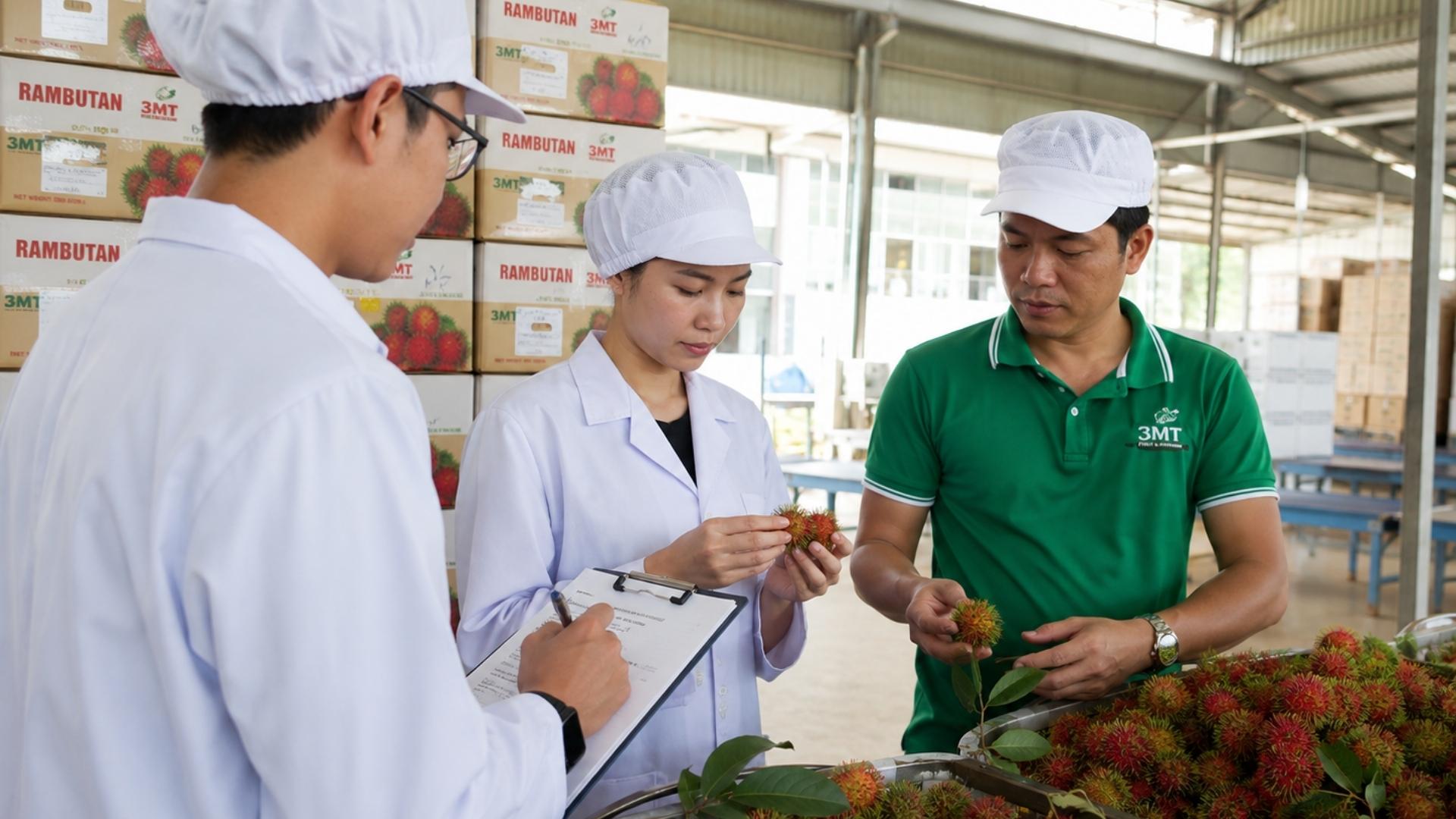
You should never skip this step. Fresh rambutan can spoil easily if workers handle it poorly during harvest. Small mistakes can cause the fruit to turn brown or rot during transport.
Many smart buyers hire independent inspection companies in Vietnam, like SGS Vietnam, Bureau Veritas, or QIMA. These inspectors will go directly to the packing house before the fruit is loaded into the container. They will count the boxes, weigh the fruit, test the sweetness, and check for tiny insects.
4. Complete Customs Clearance and Documentation
To export rambutan out of Vietnam smoothly, your supplier must prepare a specific set of documents. You will need these papers to clear customs in your own country, too:
- Phytosanitary Certificate: Issued by the Vietnamese Ministry of Agriculture, proving the fruit is clean and pest-free.
- Certificate of Origin (Form B or Form EUR.1): Proves the fruit grows in Vietnam, which helps you get lower import tax rates.
- Commercial Invoice & Packing List: Shows the price, quantity, and weight of the shipment.
- Bill of Lading (B/L) or Air Waybill (AWB): The official transport document from the shipping line or airline.
5. Arrange Shipping and Logistics
Rambutan has soft hairs on the skin that lose water and turn black very quickly. You must choose a fast shipping method and keep the fruit cold from the farm to your warehouse:
- By Plane (Air Freight): This is the best way for rambutan. Trucks take the fruit from Southern farms directly to Tan Son Nhat Airport (SGN) in Ho Chi Minh City. The plane carries the fruit to your country in 1 or 2 days, so the hair stays green and the skin stays red.
- By Ship (Sea Freight): This way is cheaper but takes 10 to 20 days. Containers leave from Cat Lai Port or Cai Mep Port. You must use refrigerated containers (Reefers). Unlike other fruits, rambutan needs a warmer temperature between 10°C and 12°C with high humidity (around 90%) so the skin does not dry out.
Estimated Transit Times
- China: 3–7 days
- Singapore: 5–8 days
- Middle East: 15–25 days
- EU: 25–35 days
- U.S. West Coast: 20–30 days
If you choose sea freight, Java Rambutan is the safest option because its thick skin protects it from bruising.
If you choose air freight for premium supermarkets, Thai Rambutan will attract the most customers because of its bright red-and-green color.
Top Trade Shows for Rambutan Sourcing in Vietnam
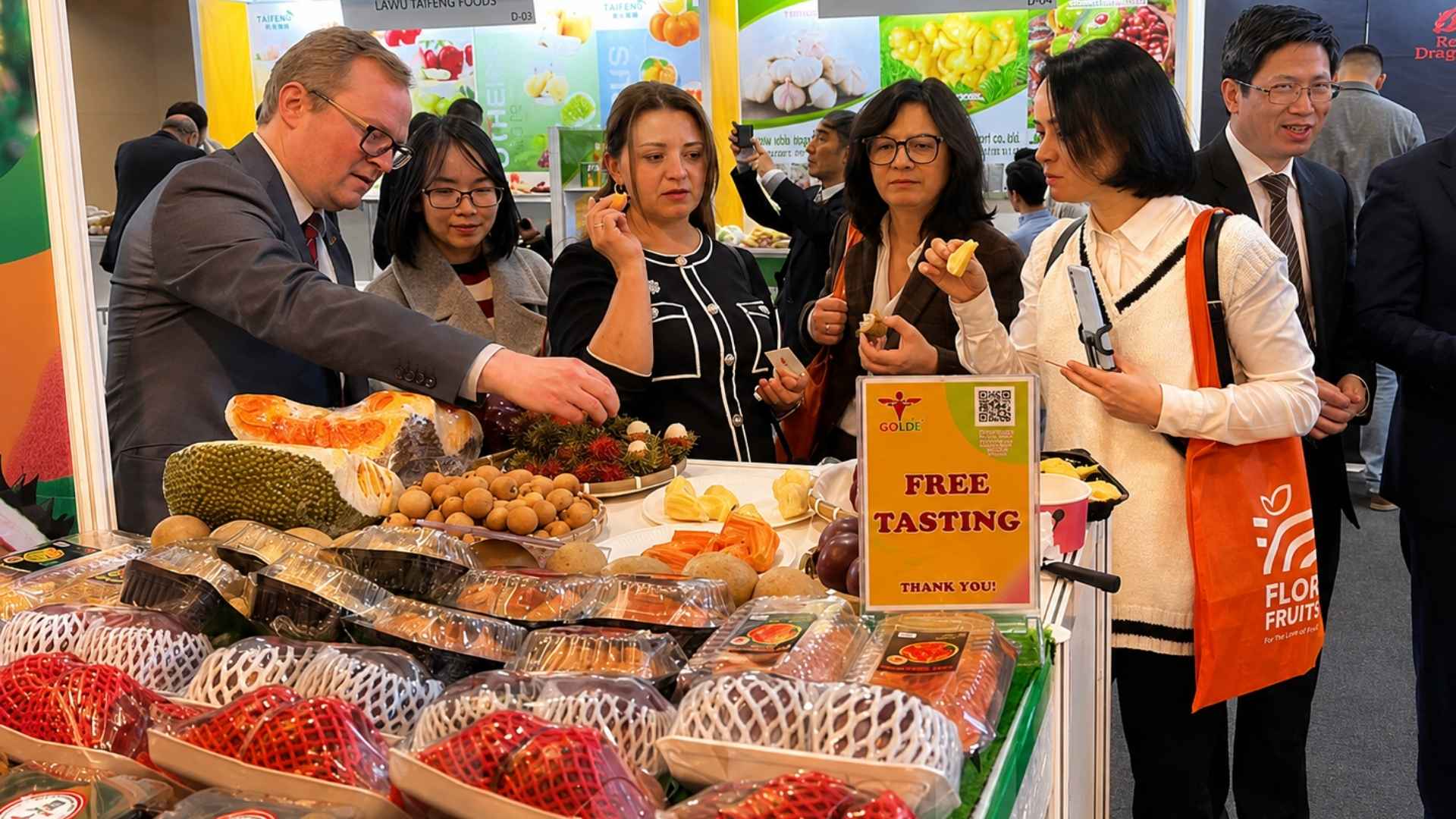
Attending trade shows is one of the best ways to meet real fruit exporters in person, check fruit samples, and visit packaging factories. Here are the three best agricultural exhibitions in Vietnam:
Vietnam Foodexpo 2026
This is the biggest food and agricultural trade show in the country. It is organized and supported directly by the Vietnamese Ministry of Industry and Trade, making it highly trustworthy for international buyers.
- Venue: SECC, Ho Chi Minh City.
- 2026 Dates: November 11-14, 2026.
- Main Focus: Fresh agricultural products, clean organic foods, fruit processing machines, and large fruit export manufacturers.
Agri Vietnam 2026
Agri Vietnam focuses on modern farming technologies, agricultural products, and food export supply chains. This show is perfect if you want to connect directly with big farm owners, farming cooperatives, and fresh fruit growers.
- Venue: SECC, Ho Chi Minh City.
- 2026 Dates: June 10-12, 2026.
- Main Focus: Agriculture machinery, chemical-free fertilizers, farming systems, and fresh fruit export industries.
AgroViet 2026
AgroViet is a long-running international agricultural exhibition organized by the Ministry of Agriculture and Rural Development. It brings together local farmers and businesses from many different provinces across Vietnam to display their best regional fruits.
- Venue: Vietnam Agriculture Exhibition Center, Cau Giay District, Hanoi.
- 2026 Dates: November 12-15, 2026.
- Main Focus: High-tech agricultural products, regional fresh fruits, clean, safe foods, and local export supply chains.
Best B2B Platforms for Finding Vietnamese Rambutan Suppliers
If you cannot visit Vietnam in person, you can use these top four B2B websites to find and contact rambutan suppliers online:
| Platform | Main Focus | Advantages | Limitations |
| Alibaba | Global multi-industry sourcing | Large supplier database and MOQ flexibility | Difficult to identify direct exporters |
| VinaSources | Vietnam manufacturers and exporters | Get fast and direct access to verified, real factories based in Vietnam | The total number of suppliers is smaller than that of a global site like Alibaba. |
| Global Sources | Verified B2B sourcing | Strong supplier vetting | Fewer fresh fruit suppliers compared to other platforms. |
| Tridge | Agricultural supply chains | Market insights and sourcing support | Less optimized for small orders |
What to Check When Verifying Suppliers
Before you send any money or sign a contract with a Vietnamese rambutan supplier, you should carefully check these six important items to make sure they are a real, professional company:
- Business registration and export licenses
- Growing area codes and packing house codes
- GlobalG.A.P., VietGAP, HACCP certifications
- Cold storage and reefer handling capability
- Export history and shipment records
- Traceability systems and packaging standards
Common Warning Signs of Scam Suppliers
Stop talking to a supplier immediately if you see any of these dangerous red flags:
- Prices Significantly Below Market Level: If a supplier offers you a price that is 30% or 50% cheaper than all other exporters, be very careful. Scammers use fake low prices to trick you into sending a deposit.
- Fake or Newly Created Websites: Bad sellers often create beautiful websites with fake pictures stolen from other companies. Check the age of their website domain; if it was created just a few weeks ago, it is highly risky.
- Free Email Domains Instead of Company Domains: Professional export companies use official business emails (like [email protected]). Be careful if the supplier only uses free personal emails like @gmail.com or @yahoo.com.
- Unclear Factory or Office Addresses: If their website does not list a clear address, or if the address points to a random residential house instead of an agricultural packing facility, they are likely a fake business.
- Pressure to Transfer Deposits Urgently: Scammers will often rush you. They might say the fruit will sell out today or that prices will double tomorrow to force you to send deposit money quickly without thinking.
- Refusal of Inspections or Live Video Calls: If a supplier makes excuses to avoid standard quality inspections, or if they refuse to show you their packing house through a quick live WhatsApp video call, they are hiding something.
Partner with VinaSources for a Smooth Rambutan Import Journey
Finding a trustworthy supplier in a foreign country can be stressful. If you want to save time and keep your money safe, VinaSources is ready to help you.
To protect your business from scams and low-quality products, every single rambutan supplier listed on our platform is 100% pre-verified and checked by our local experts. We review their business licenses, farm codes, and packing house standards before they can join our network. This means you can talk directly to real, professional exporters without any worries.
Also, VinaSources is more than just a website. Our team lives in Vietnam and will help you with every step of the import process. We will help you:
- Negotiate safe contract terms and wholesale prices with the factories.
- Prepare all necessary export paperwork, including Phytosanitary Certificates and Certificates of Origin.
- Connect with trusted logistics companies to handle fast air freight or refrigerated sea containers (Reefers) smoothly.
With VinaSources, you get a safe online platform and a helpful partner in Vietnam. We make sure your fruit arrives fresh and on time.
To receive an accurate quotation, please submit your required quantity, target market, preferred packaging specifications, and shipping method through the RFQ form on VinaSources.
You can also contact our team directly:
- Phone: 19004356
- Email: [email protected]