
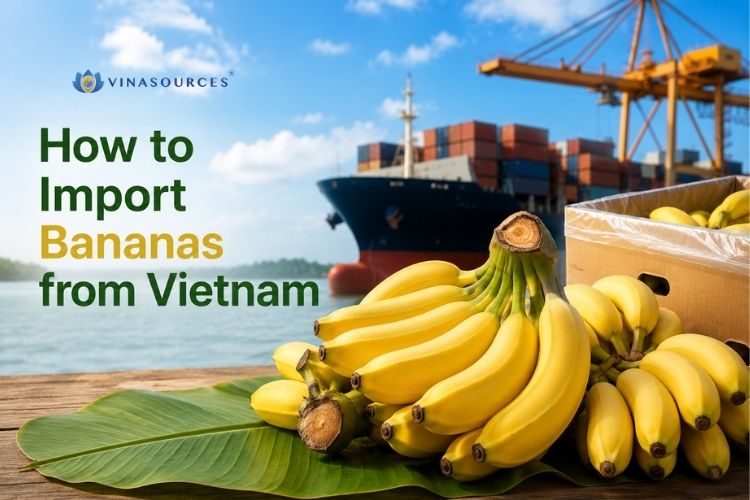
Bananas are no longer viewed simply as a low-cost tropical fruit. Today, they have become one of the world’s most important agricultural commodities, generating hundreds of millions of dollars in global trade every year. As global buyers look for alternatives to traditional sourcing markets, Vietnam is attracting increasing attention for its large-scale production, stable quality, and competitive export pricing.
This guide covers the key sourcing, logistics, and import considerations buyers should know before importing Vietnamese bananas.
Overview of Vietnam’s Export of Bananas
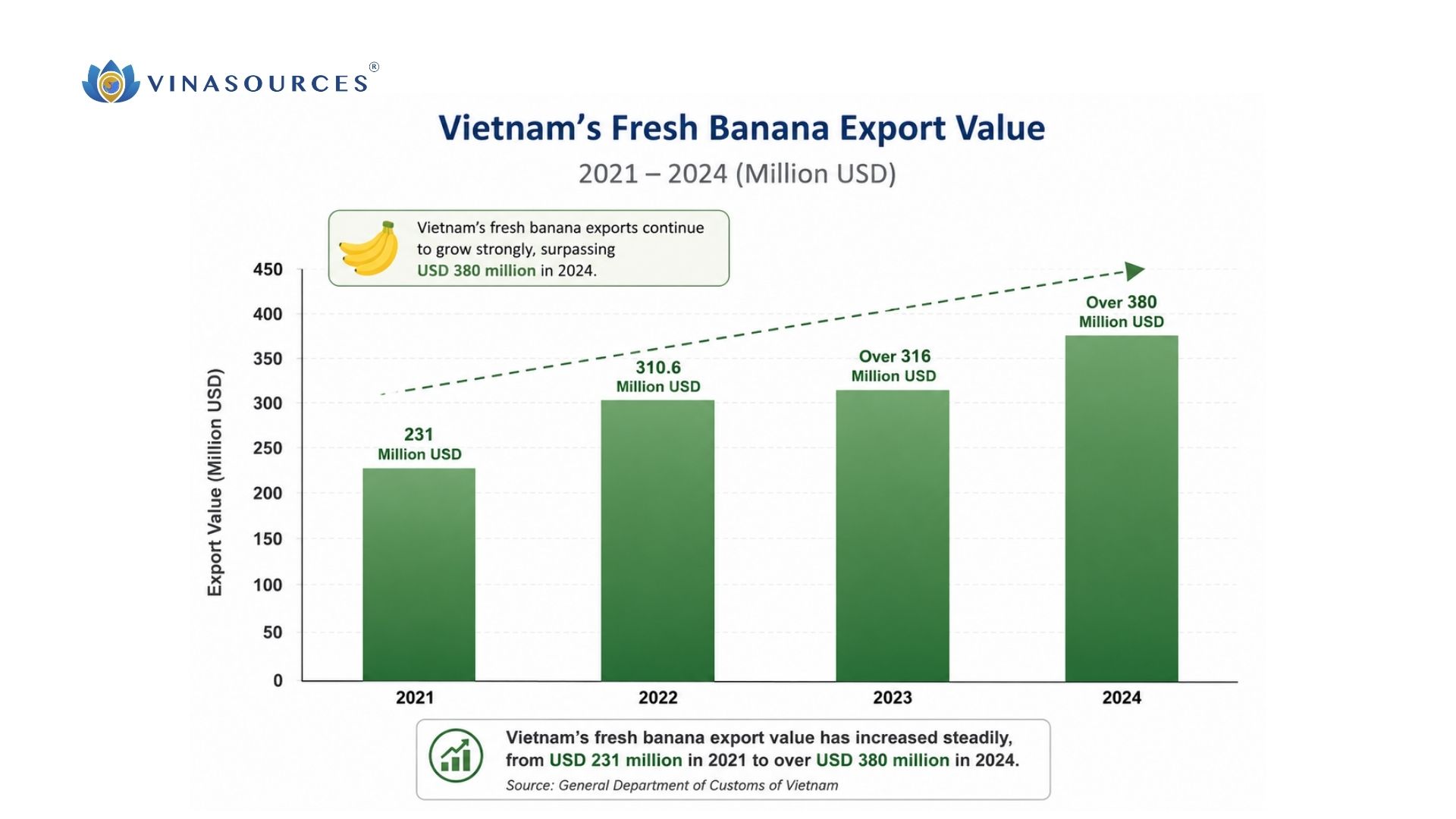
Vietnam has become one of the fastest-growing banana exporters in Southeast Asia, leveraging its tropical climate and fertile land to grow high-quality bananas. In 2024, Vietnam’s banana export value was estimated at approximately USD 378 million, making it the 6th largest exporter of Bananas in the world.
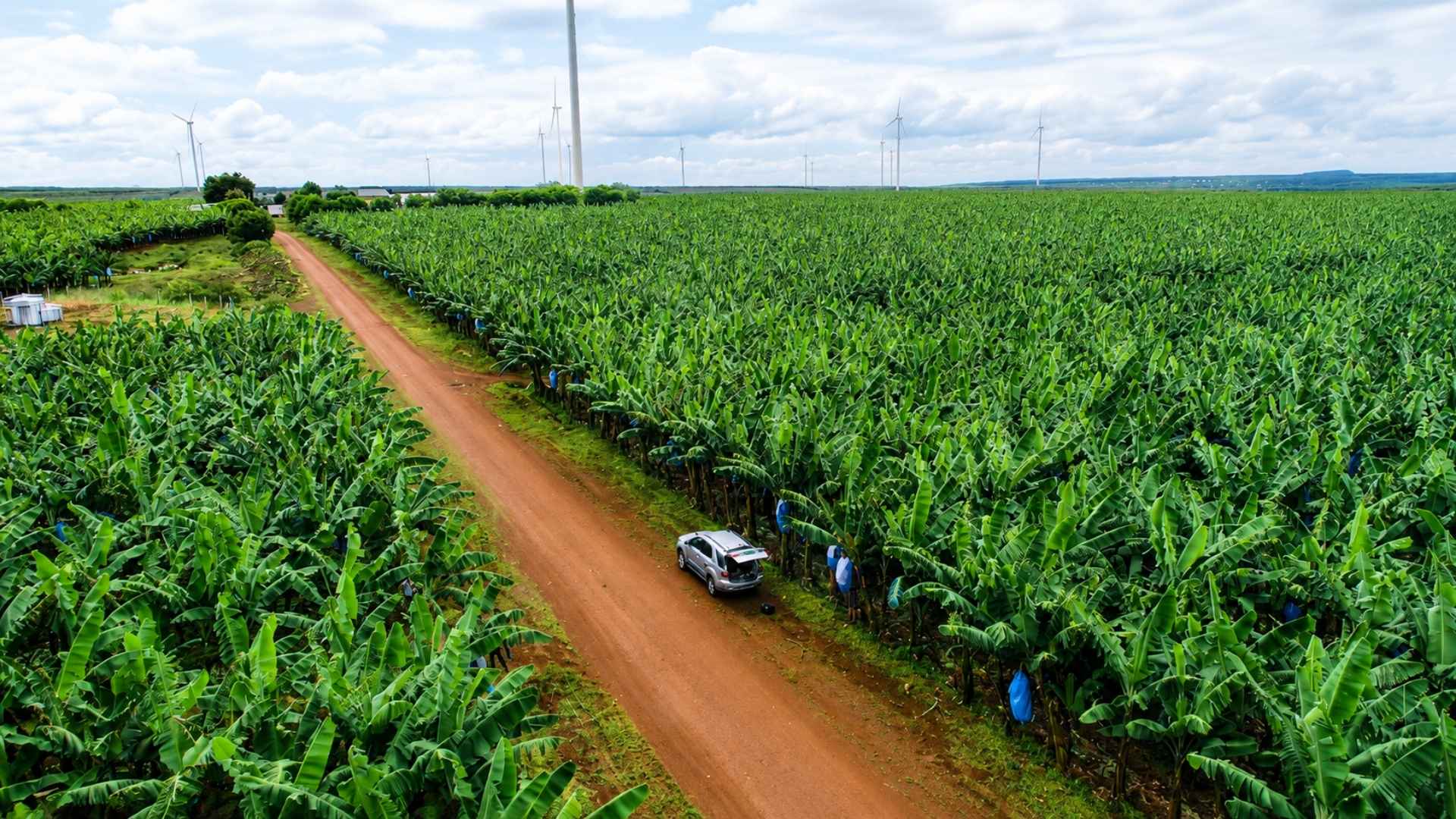
The country currently cultivates bananas across more than 160,000 hectares, with major growing regions concentrated in Dong Nai, Binh Duong, Gia Lai, Son La, Lao Cai, and the Mekong Delta (Tien Giang, Ben Tre, Long An). This widespread production yields up to 2.75 million tons annually.
China remains the largest export destination for Vietnamese bananas, followed by South Korea, Japan, and several Middle Eastern markets. Improved quality control under VietGAP and GlobalG.A.P. standards is also helping Vietnamese bananas expand further into higher-end international markets.
Why Vietnam Is Becoming a Major Banana Exporter?
International buyers are increasingly turning to Vietnam as a primary banana sourcing hub due to its unique combination of competitive pricing, year-round supply, and high-tech agricultural practices.
Below are the key advantages of importing bananas from Vietnam:
Competitive Cost and High Quality
Vietnam offers a distinct pricing advantage rooted in optimized labor costs and the rapid expansion of large-scale, professionalized plantations. Large plantation development in provinces such as Dong Nai, Long An, Tay Ninh, and Lao Cai has improved production efficiency and export scalability.
Superior Variety and Flavor Profiles
Vietnam cultivates several export banana varieties, including Cavendish bananas, Namwa bananas, and specialty local varieties. These varieties are characterized by consistent content and a creamy texture, making them equally suitable for fresh retail display or high-value industrial processing into purees and snacks.
Disease-Resistant Varieties
Vietnam’s banana industry has increasingly focused on disease management and plantation modernization, especially as Fusarium Wilt Tropical Race 4 (TR4).
To reduce long-term supply disruptions, the industry has widely adopted the use of tissue-cultured seedlings and strictly controlled farming systems. These significantly reduce the risk of crop failure.
Stable Year-Round Supply
Unlike many seasonal fruit producers, Vietnam’s tropical geography allows for a continuous, year-round harvest cycle. Major production zones in the Mekong Delta, Central Highlands, and Northern provinces operate on staggered planting schedules, effectively eliminating “off-season” gaps. This helps exporters maintain a stable supply availability for international buyers.
Strategic Location
Vietnam benefits from a strategic position in Southeast Asia, with more than 3,200 km of coastline and direct access to major regional shipping routes connecting East Asia, Southeast Asia, and the Middle East. This location helps exporters shorten transit time to key Asian banana import markets, especially China, South Korea, and Japan.
Furthermore, major deep-sea ports like Cai Mep and Hai Phong offer high-frequency reefer shipping lanes to Europe and North America, reducing transit delays and lowering the risk of temperature fluctuations during long-distance transportation.
Favorable Trade Agreements
Vietnam participates in several major trade agreements, including CPTPP, EVFTA, and RCEP, which help improve market access for agricultural exports. These agreements can support tariff advantages and strengthen competitiveness in selected international markets.
Key Export Bananas Varieties in Vietnam
Vietnam exports several commercial banana varieties serving different retail, wholesale, and food service markets. Cavendish bananas remain the dominant export category due to their strong shelf life and international market familiarity. Local varieties such as Cavendish, Namwa, Laba, and Royal Banana are increasingly attracting demand in premium Asian and specialty fruit markets because of their stronger flavor profiles and distinctive texture characteristics.
| Banana Variety | Main Characteristics | Major Growing Areas | Main Export Markets |
| Cavendish Banana | Long cylindrical shape, thick peel, mild sweetness, stable shelf life, consistent sizing | Dong Nai, Long An, Tay Ninh, Lao Cai | China, Japan, South Korea, and the Middle East. |
| Namwa Banana | Shorter and thicker fruit, firmer texture, sweeter taste, richer aroma | Mekong Delta, Central Highlands, southern Vietnam | China, ASEAN markets, and regional retail. |
| Laba Banana | Elongated fruit, thin peel, soft flesh, fragrant sweetness | Lam Dong and Central Highlands | Japan, South Korea, premium Asian retail. |
| Royal Banana | Small fruit size, thin peel, concentrated sweetness, fragrant aroma | Northern Vietnam (Ha Nam, Thai Binh) | Specialty Asian retail channels; niche export. |
Step-by-Step Guide to Importing Bananas from Vietnam
The steps below outline a practical import workflow commonly used by international banana buyers.
1. Find a Reliable Supplier
Finding a banana supplier in Vietnam is not that difficult. The harder part is finding one that can consistently maintain good quality, handle the cold chain properly, and ship reliably over time.
Bananas may seem like a simple product, but most of the challenges happen after harvest. Things like ripeness control, reefer container management, grading consistency, and shipping conditions all play a big role in how bananas actually arrive at the destination market.
Common Ways to Find Vietnamese Banana Suppliers
- B2B Platforms (Alibaba, Global Sources, VinaSources): These platforms help buyers quickly compare exporters, certifications, and product categories. They are useful for building an initial supplier shortlist.
- Trade Shows and Agricultural Exhibitions: Events such as AgroViet (November 12-15, 2026, Exhibition, Economic and Trade Transaction Center, 489 Hoang Quoc Viet Street, Nghia Do Ward, Bac Tu Liem District, Hanoi) or Vietnam Foodexpo (November 11-14, 2026, SECC, Ho Chi Minh City) shows allow buyers to inspect banana quality directly and evaluate supplier professionalism face-to-face.
- Local Sourcing Agencies: Local sourcing teams can help verify plantations, inspect packing facilities, and supervise shipment preparation during harvest periods.
What Buyers Should Verify Before Cooperation
- Plantation scale and sourcing regions
- Export certifications such as GlobalG.A.P., VietGAP, HACCP, and ISO 22000
- Cold storage and reefer loading capability
- Export history and shipment records
- Grading standards and ripeness management systems
Common Warning Signs of Scam Suppliers
- Prices are significantly below the market average
- Fake or newly created websites
- Unclear plantation information
- Free email domains instead of company domains
- Pressure to transfer deposits urgently
- Refusal of inspections or live video calls
2. Contract Negotiation
Before confirming orders, buyers should clearly negotiate all commercial, logistics, and quality terms with the supplier.
Key Points to Confirm
- Confirm banana variety, fruit size, finger length, and ripeness stage.
- Clarify acceptable defect tolerance for bruising, skin marks, or discoloration.
- Confirm carton specifications, ventilation holes, pallet configuration, and labeling requirements.
- Clarify pricing basis, currency, and whether costs include trucking, palletization, cold storage, or export documentation fees.
- Confirm Incoterms such as FOB, CIF, or DDP and define logistics responsibilities clearly.
- Discuss reefer temperature settings and humidity requirements during transportation.
- Confirm payment structure, deposit percentage, and balance payment schedule.
- Clarify inspection procedures and compensation policy for shipment disputes.
In practice, many shipment disputes happen because contract details are too general or not fully documented before production begins. Written confirmation of operational details can significantly reduce sourcing and logistics risks.
Important Contract Precautions
- Request all technical specifications in written form.
- Avoid vague grading descriptions without measurable standards.
- Verify bank account ownership before payment.
- Include reefer temperature requirements in the contract.
- Confirm claim submission timeline after cargo arrival.

3. Prepare Export Documentation
Even when the fruit quality is acceptable, documentation problems can still delay cargo at the destination port.
Buyers should review all shipment paperwork carefully before vessel departure.
Core Documents Commonly Required
- Commercial Invoice
- Packing List
- Bill of Lading or Air Waybill
- Phytosanitary Certificate
- Certificate of Origin
- Pesticide residue reports if required
Before shipment departure, buyers should also confirm that carton quantity, shipment weight, consignee information, and product descriptions remain consistent across all documents.
Even small documentation inconsistencies can later trigger customs inspections or clearance delays.
4. Plan Shipping & Logistics
Shipping conditions directly affect banana ripening speed, shelf life, and retail quality. Bananas are highly sensitive because they continue to ripen after harvest. If the temperature inside the container is not managed properly, the fruit will ripen too quickly during transit, sometimes before the shipment even arrives at your destination warehouse.
To protect your business investment, you must choose the right transport method and manage the cold chain perfectly from the factory to your port.
Sea Freight vs. Air Freight
- Air Freight (Fast & Premium): Air freight is much more expensive than sea freight, but it is the fastest transport method. It is the best choice if you are importing premium organic bananas, delicate baby bananas, or urgent sample orders. Air freight reduces transit time from weeks to just a few days, ensuring the fruit arrives in perfect condition with maximum shelf life.
- Reefer Sea Freight (Cost-effective): For most banana imports, shipping by sea in refrigerated containers (Reefers) is the most cost-efficient option. This is because bananas usually move in large container volumes. Sea freight keeps the wholesale price low, making it perfect for nearby Asian markets and large-volume orders to the US or Europe.
Here is a table showing the estimated transit times and ocean reefer shipping costs from Vietnam to major destination markets:
| Destination Market | Estimated Transit Time | Estimated Reefer Freight Cost (20ft) | Estimated Reefer Freight Cost (40ft) |
| China | 3 to 7 days | $800 – $1,500 | $1,200 – $2,500 |
| South Korea | 7 to 12 days | $1,200 – $2,200 | $2,000 – $3,500 |
| Japan | 7 to 14 days | $1,300 – $2,300 | $2,200 – $3,800 |
| EU | 25 to 40 days | $3,500 – $5,500 | $5,500 – $8,500 |
| U.S. West Coast | 20 to 30 days | $4,000 – $6,000 | $6,500 – $9,500 |
Recommended Reefer Conditions
- Temperature: 13°C–14°C
- Relative humidity: 85%–90%
- Pre-cool containers before loading
- Maintain stable airflow spacing between pallets
- Monitor reefer temperatures using data loggers when possible
5. Arrival and Warehousing
Once the cargo arrives, timing becomes critical.
Bananas continue ripening throughout transportation, so delays at customs clearance or warehouse transfer can quickly reduce remaining shelf life and retail value.
Importers should coordinate customs clearance, unloading schedules, and warehouse transfers before the vessel arrives at port whenever possible.
Looking for Reliable Banana Suppliers in Vietnam?
Finding a stable banana supplier who understands strict export quality standards can be a challenge. If you are looking for fresh, high-quality Vietnamese bananas at competitive wholesale prices,
VinaSources is your ideal B2B sourcing partner. With 12 years of successful experience in cross-border e-commerce, we help international buyers connect directly with Vietnam’s most trusted banana farms and packing houses.
- 100% Verified Suppliers: We personally visit and check every supplier on our platform. We make sure they have the right export licenses, safety certifications (like GlobalGAP), and clean facilities. You never have to worry about working with bad suppliers.
- Quality Control on the Ground: Our local team in Vietnam works for you. We go to the packing houses to inspect your banana batches. We check the size, skin quality, and packaging before the containers leave the factory.
- Logistics & Cold-Chain Help: Banana shipping is sensitive. We connect you with shipping companies that know exactly how to manage refrigerated (Reefer) containers. This ensures your bananas arrive at your port in perfect condition.
Get Your Free Wholesale Quote Today!
- 24/7 Support Hotline: 19004356
- Email: [email protected]