
As global buyers actively look for fresh alternatives to China’s massive lotus seed market, Vietnam is emerging as the perfect premium choice. Vietnamese lotus seeds offer an unmatched creamy texture and natural sweetness.
However, importing raw agricultural goods involves hidden risks like chemical preservation and insect infestation. This step-by-step B2B guide reveals how to check quality specs, avoid costly shipping traps, and source securely.
Overview of Vietnam’s Export of Lotus Seeds
Vietnam currently exports thousands of tons of both dried and fresh lotus seeds annually. Vietnamese lotus seeds are highly sought after by foreign buyers for their unique culinary and functional properties. They are steadily exported into several major global regions:
- The Asian Hubs: Taiwan, Japan, South Korea, Malaysia, and Singapore are the largest consumers. They import bulk white lotus seeds for traditional bakeries (such as mooncake manufacturers), retail supermarkets, and premium snack packaging brands.
- Western & European Markets: Sizable volumes head to the United States, Canada, and the EU. Demand in these regions is heavily driven by the healthy-eating trend, where lotus seeds are processed into gluten-free plant milk, vegan protein snacks, and organic cooking ingredients.
Key Advantages of Importing Vietnamese Lotus Seeds
As the global demand for plant-based proteins and clean-label ingredients continues to grow, international buyers are discovering that Vietnam offers significant commercial benefits.
Here are three key reasons why you should choose Vietnamese lotus seeds over other global options:
Exceptional Culinary Profile
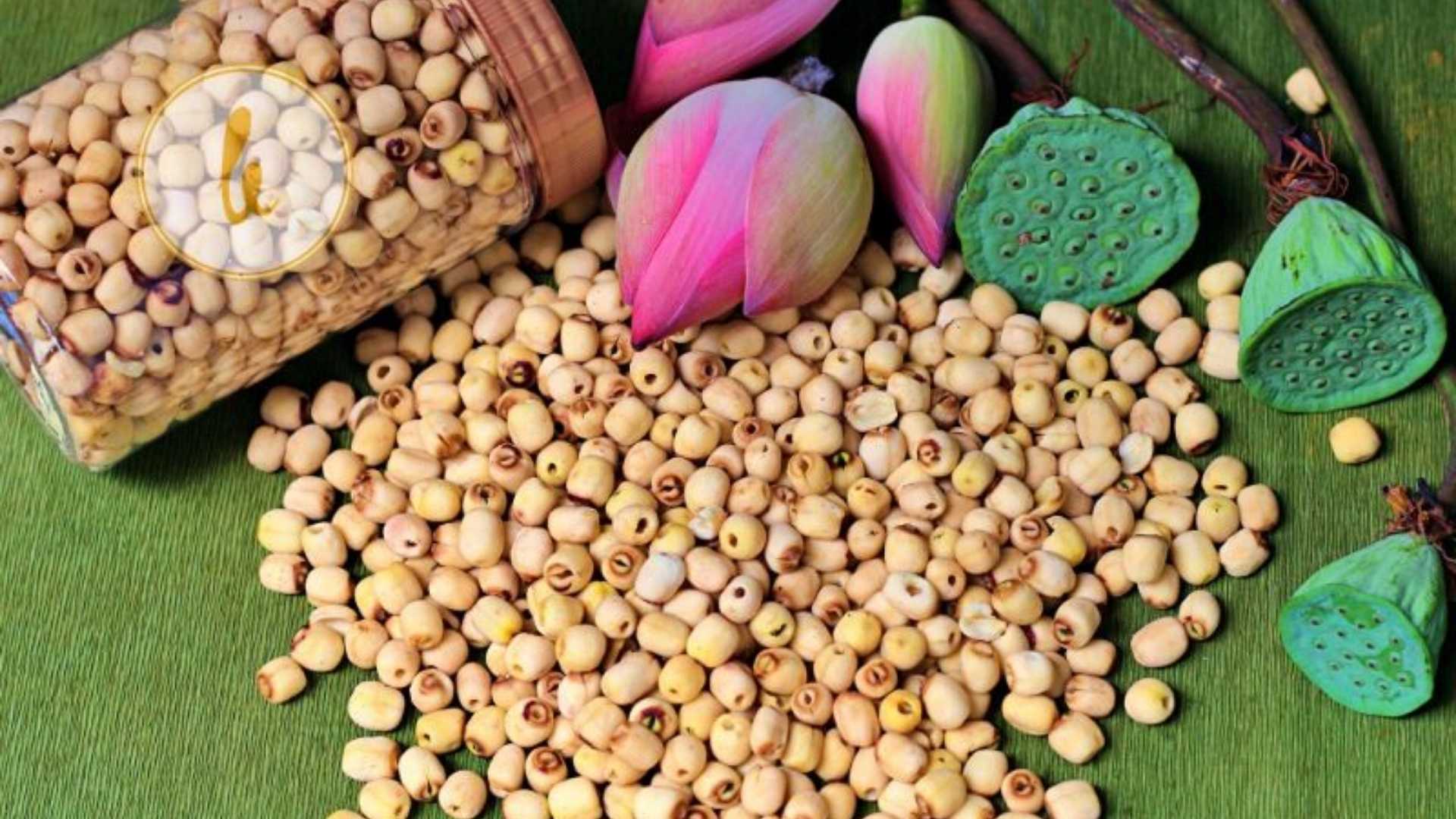
Vietnamese lotus seeds (especially from major hubs like Dong Thap and Hue) are highly valued for their unique physical traits:
- Rich Texture: Once cooked, they develop an exceptionally creamy, soft, and buttery consistency, far superior to harder varieties found in other regions.
- Natural Aroma: They carry a distinctively sweet, milky aroma that enhances the flavor of final products without requiring artificial additives—making them a perfect ingredient for premium bakeries, canned desserts, plant-based milk alternatives, and healthy retail snacks.
A Strategic Sourcing Alternative to China
For decades, global buyers have relied almost entirely on the massive automated outputs of Hunan and Fujian provinces in China. However, relying on a single sourcing country creates high supply chain risks, especially during trade wars or sudden tariff increases. Vietnam stands out as the perfect “China + 1” strategic alternative:
- It keeps your global ingredient supply chain resilient and running smoothly.
- It mitigates the risk of sudden anti-dumping duties or customs flags that frequently target larger industrial nations in Western markets.
Excellent Trade Tariffs and Tax Reductions
One of the biggest financial benefits of sourcing from Vietnam is its network of Free Trade Agreements (FTAs). Vietnam has signed over 15 active global trade agreements, which drastically lower or completely eliminate import taxes for foreign buyers:
- For European Buyers (The EVFTA): The EU-Vietnam Free Trade Agreement allows qualified food-grade lotus seeds to enter European ports at 0% or rapidly decreasing tariff rates, giving your business a massive margin advantage.
- For Asia-Pacific Buyers (CPTPP and RCEP): If your factory is located in Japan, South Korea, Australia, or Singapore, these agreements simplify customs clearings and remove high trade barriers on raw agricultural imports.
Vietnam’s key lotus seed varieties: Dried White vs. Dried Brown Lotus Seeds
Dried White and Brown/Red Lotus Seeds are highly sought-after agricultural commodities, widely exported from Vietnam.
| Feature | Dried White Lotus Seeds | Dried Brown/Red Lotus Seeds |
| Visual Appearance | Ivory white, completely peeled, clean, and smooth surface. | Reddish-brown or light brown, retaining the natural inner nutrient skin layer. |
| Taste & Texture | Naturally sweet, highly starchy, and turns exceptionally creamy and soft after boiling. | Earthy flavor, highly nutritious, but requires a longer cooking time to soften. |
| Best Used For | Food processing, canned desserts, mooncake paste, milk alternatives, and direct snack retail. | Traditional medicine, specialized botanical extracts, herbal teas, and pharmaceutical products. |
How to Source Vietnamese Lotus Seed Suppliers
Finding a trustworthy agricultural exporter in a foreign market can be challenging.
Here are three practical and effective ways to find and verify reliable lotus seed suppliers in Vietnam:
Attend Local Food and Agricultural Trade Shows
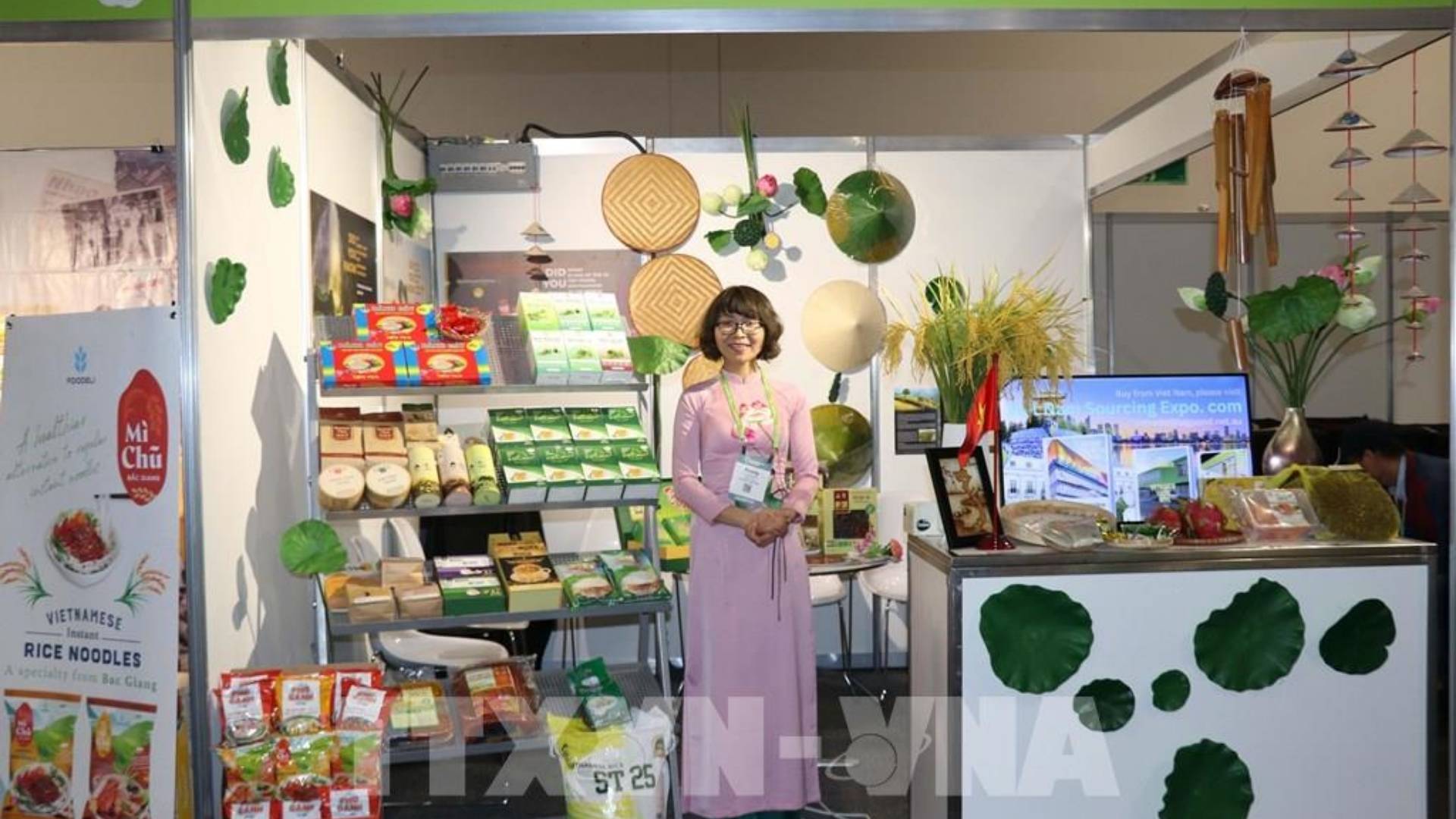
Visiting a professional B2B trade exhibition in Vietnam is the fastest way to meet dozens of verified processors face-to-face. At these events, you can physically inspect product samples, check the seed sizes, and perform quick taste tests.
If you are planning your sourcing trip, here are the major confirmed trade shows to add to your calendar:
- HCMC FOODEX (Ho Chi Minh City International Food Exhibition): Taking place on April 15–18, 2026, at the Saigon Exhibition and Convention Center (SECC). This expo is the prime destination for discovering large-scale agricultural processors and modern automated factories from the Mekong Delta region.
- Vietfood & Beverage – ProPack Vietnam: Taking place in Ho Chi Minh City on August 6-8, 2026. This is one of the largest international food exhibitions in Southeast Asia. It attracts hundreds of top-tier Vietnamese exporters specializing in dried fruits, nuts, and organic seeds.
- VIAF (Vietnam Industrial Automation Fiesta) – Can Tho Chapter: Held on June 17–19, 2026, at the WTC Expo, Binh Duong, this regional event connects global buyers directly with large agricultural cooperatives and local processing facility networks from nearby provinces (Can Tho and Mekong Delta province).
Utilize Specialized B2B Sourcing Platforms
If you cannot travel to Vietnam immediately, digital B2B networks are powerful alternatives for initial supplier research.
- While global platforms like Alibaba and Global Sources host many Vietnamese exporters, you must filter searches carefully to avoid unverified middlemen.
- For a much safer and faster experience, you can use specialized local sourcing platforms like VinaSources. These platforms do heavy lifting for you by pre-screening local suppliers, checking their business licenses, and listing only reputable agricultural factories with proven export records.
Partner with Local On-Ground Sourcing Agents
Hiring a professional on-site sourcing agency or procurement partner in Vietnam is highly recommended for bulk industrial buyers. A local partner acts as your eyes and ears on the ground. They speak the native language, know the local market price fluctuations, and can travel directly to perform physical factory audits, inspect post-harvest machinery, and oversee the pre-shipment container loading process.
4 Essential Steps to Import Vietnamese Lotus Seeds
Importing agricultural products across international borders requires a clear, structured process. To protect your investment and avoid customs delays, you must follow these five essential steps when importing lotus seeds from Vietnam:
Step 1: Verify the Supplier
After you have a shortlist of potential suppliers, you must check their details carefully to choose the best partner. Here are the most important factors you need to look at:
- Official Business License and Tax Code to avoid ghost companies or unlicensed workshops.
- International Food Safety Certifications like ISO 22000, HACCP, Halal, or organic standards to ensure the lotus seeds meet the strict health regulations of your destination country.
- Past Export Experience in difficult markets like the US, EU, Japan, or South Korea, which proves they understand international shipping standards.
- Traceability and Growing Zone Codes, such as Planting Unit Codes (PUC) and Packing House Codes (PHC)
Step 2: Negotiate the Commercial Contract and Technical Specifications
To avoid arguments about quality defects later, you must write exact, measurable numbers directly into your commercial sales contract.
Contract Technical Specifications for Vietnamese Lotus Seeds
| # | Quality Parameter | Technical Standard | Commercial Purpose & Risk Mitigation |
| 1 | Moisture Content | Maximum 12.0% | Strictly controls humidity to prevent mold and rot during long ocean transit. |
| 2 | Coreless Rate | Minimum 99.0% | Ensures the bitter green core is removed so it does not ruin food or paste flavors. |
| 3 | Broken Kernels | Maximum 3.0% | Limits split or damaged seeds to protect premium visual quality for retail packaging. |
| 4 | Foreign Matter | Maximum 0.5% | Guarantees the cargo is free from dust, shell fragments, or processing waste. |
| 5 | Size / Diameter | 10mm to 12mm (Uniform grading) | Ensures uniform sizes, so cooking times stay exactly the same in industrial food factories. |
| 6 | Sulphur Dioxide (SO2) | Maximum 10 ppm (or destination country law) | Prevents illegal chemical smoking and ensures easy customs clearance at the destination port. |
| 7 | Insect Infestation | Zero live insects allowed (Max 0.5% insect-damaged seeds). |
Strict limit to stop latent beetle or weevil eggs from hatching inside the container. |
| 8 | Crop Year Guarantee | 100% Current New Crop | Bans mixing with old, stale warehouse stocks that have lost their aroma and turned hard. |
Besides technical specifications, buyers must write these commercial terms clearly in the contract to protect their money and logistics:
Core Contract Terms:
- Incoterms and Delivery Port: The contract should use FOB (Free on Board) Cat Lai Port, Ho Chi Minh City. This means the Vietnamese supplier is fully responsible for domestic trucking, export paperwork, and all risks until the cargo is safely loaded onto the ocean ship.
- Payment Terms and Schedule: Buyers should use the standard 30/70 T/T (Telegraphic Transfer) method. You pay a 30% deposit to start production, and the remaining 70% balance is transferred only after the supplier provides the scanned Bill of Lading (B/L) and quality test reports.
- Claim Procedures and Timeline: The buyer must notify the supplier about any quality defects within 30 days after the container arrives at the destination port. The claim document must include official photos, videos, and a quality report issued by an independent inspection company.
- Compensation and Dispute Solutions: If the supplier provides bad-quality lotus seeds, they must agree to either replace the damaged goods for free in the next shipment or refund the money within 14 business days. Any unresolved disputes will be settled by the Vietnam International Arbitration Centre (VIAC).
Step 3: Arrange Phytosanitary Certification and Compliance Paperwork
After you finish the contract, you must prepare the export and import documents carefully. Agricultural goods need strict paperwork to clear customs smoothly. Here are the most important certificates and documents you must collect from the Vietnamese supplier.
- Official Phytosanitary Certificate: This is the most important document issued by the Ministry of Agriculture and Rural Development (MARD) of Vietnam. It officially proves that the lotus seeds are inspected and free from dangerous plant diseases or quarantine pests.
- Certificate of Origin (C/O): The supplier must provide a valid Certificate of Origin, such as Form EUR.1 for Europe or Form E for Asian countries. This document proves the lotus seeds are 100% from Vietnam, helping you get 0% or low import taxes.
- Fumigation Certificate: Since lotus seeds have high starch content, customs authorities require a certificate proving the container was treated with Phosphine or Methyl Bromide to kill hidden insect eggs before shipping.
- Commercial Invoice and Packing List: The invoice shows the detailed payment values, bank information, and commercial prices. The packing list shows the total net weight, gross weight, bag quantities, and packaging sizes inside the container.
- Bill of Lading (B/L): This is the official transport document given by the ocean shipping line. It proves that the container of lotus seeds was successfully loaded onto the vessel at Cat Lai Port in good external condition.
- Product Labelling and Traceability Marks: Each bag or carton box must have clear labels printed in English. The label must show the product name, batch/lot number, production date, expiry date, net weight, and the manufacturer’s name.
Step 4: Select Sea Freight Configurations and Packaging Standards
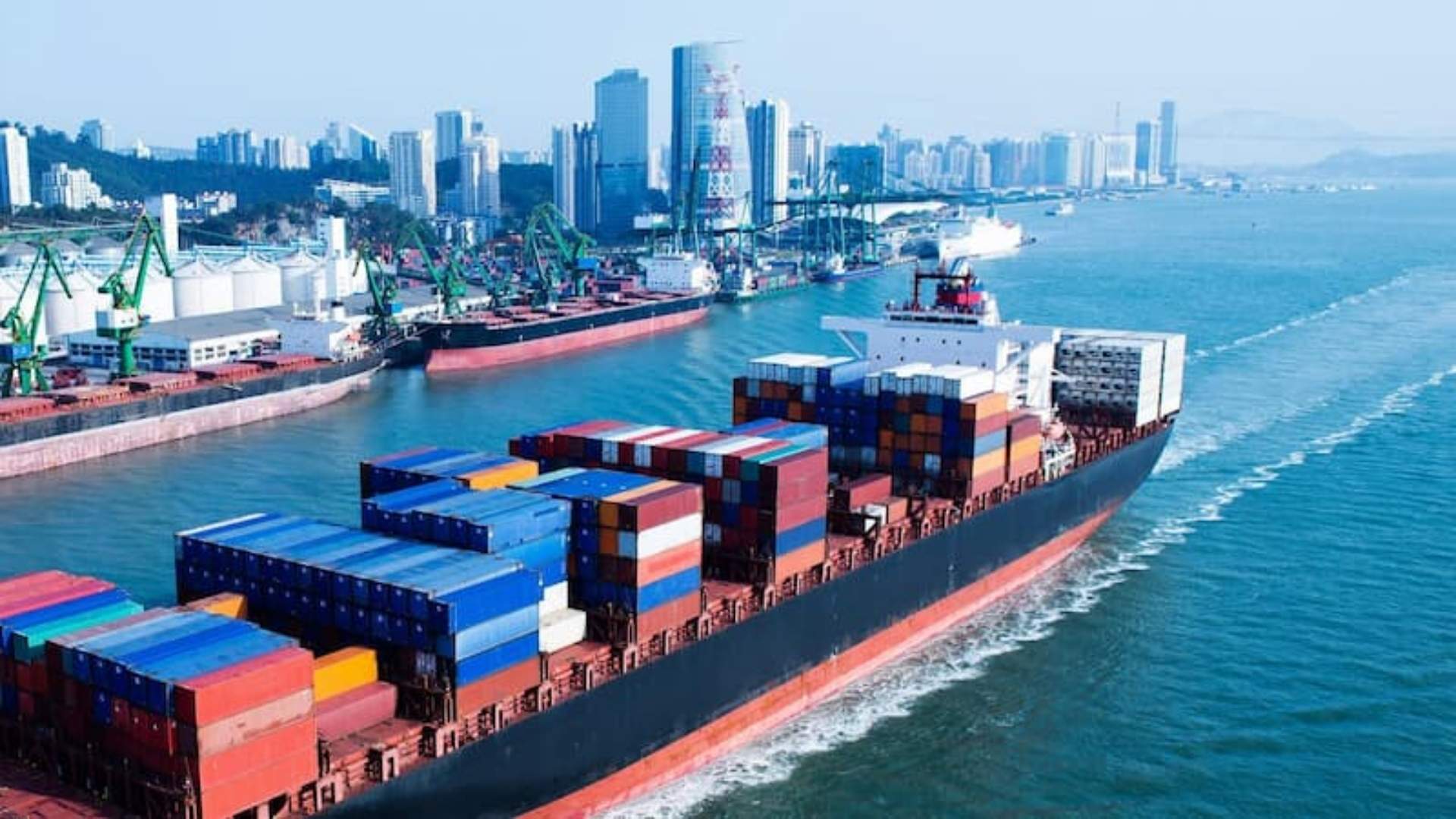
When importing lotus seeds from Vietnam, choosing the right transportation mode and strict preservation protocols are the two deciding factors for your profit margins.
Lotus seeds, whether fresh, frozen, or dried, are highly sensitive to moisture and temperature fluctuations.
Air Freight vs. Sea Freight
| Criteria | Air Freight | Sea Freight |
| Best Used For |
|
|
| Transit Time |
|
|
| Cost & Volume |
|
|
To prevent post-harvest spoilage, insect infestation, or mold growth during long transit times, suppliers must deploy specific preservation strategies tailored to each product’s state.
For Fresh & Frozen Lotus Seeds
Fresh lotus seeds have a high respiration rate and spoil quickly, while frozen seeds (IQF) are vulnerable to temperature abuse.
- Temperature Control (Cold Chain): Frozen lotus seeds (IQF) must be maintained at a continuous -18°C or colder throughout the entire journey. For fresh seeds, the temperature must be strictly regulated between 2°C to 4°C.
- Reefer Container Settings: For sea freight, standard 20ft or 40ft Reefer Containers must be pre-cooled before loading. Humidity should be kept at 85% – 90% for fresh shipments, with the fresh air ventilation port set at 15 – 25 CBM/hour to flush out ethylene gases.
For Dried Lotus Seeds
Dried lotus seeds are highly hygroscopic (easily absorb moisture from the air), making mold and weevils the biggest risks during sea freight.
- Moisture Control: The moisture content of the seeds must be strictly inspected and verified below 12% before packaging.
- FCL Layering & Palletization: Dried seeds should be packed in multi-layer Kraft paper bags or heavy-duty woven PP bags (25kg/50kg). Bags must be stacked neatly on treated ISPM-15 wooden or plastic pallets and tightly wrapped with stretch film to prevent direct contact with the container floor or walls where condensation occurs.
Challenges in Importing Vietnamese Lotus Seeds
Importing lotus seeds from Vietnam offers excellent market opportunities, but global procurement teams must navigate several operational and supply chain risks.
Here are some risks global buyers may encounter when sourcing lotus seeds from Vietnam:
Crop Year Manipulation (Mixing Old and New Inventory)
The risk: To clear out aging stock, unethical suppliers or intermediate brokers may mix old, yellowing, or rancid lotus seeds from the previous harvest into freshly harvested batches. This degrades the overall taste, texture, and shelf life of the shipment.
Mitigation Strategy: Mandate strict visual and sensory specifications in your purchase contract (e.g., maximum percentage of off-color seeds). Require batch-testing samples before container loading, and inspect the moisture levels—older seeds tend to be excessively dry or have uneven moisture distribution.
Spot Price Spikes & Contract Defection during Peak Seasons
The risk: Lotus seeds are a highly seasonal crop. During peak demand periods (such as the Lunar New Year or mid-autumn festival sourcing windows), local raw material prices can skyrocket. Some suppliers may deliberately delay your shipment or ghost you to sell their inventory to local buyers willing to pay a premium.
Mitigation Strategy: Avoid relying entirely on spot-market purchasing. Secure Volume Commitment Contracts early in the crop year with tier-1 processors, backed by a structured deposit matrix (e.g., 30% advance via T/T, 70% against Bill of Lading).
Supply Shortage & Force Majeure Abuse
The risk: Lotus cultivation is highly sensitive to weather anomalies, floods, or pest outbreaks. When a genuine yield shortage occurs, suppliers often abuse the “Force Majeure” clause. They may falsely claim weather-induced crop failure as a legal loophole to cancel your lower-priced contract and redirect limited supplies to higher-paying clients.
Mitigation Strategy: Define “Force Majeure” with extreme precision in your contract, explicitly requiring official, verifiable certification from local agricultural authorities or the Vietnam Chamber of Commerce and Industry (VCCI) to prove crop failure. Additionally, diversify your supplier network across different geographical regions in Vietnam to minimize localized climate risks.
Vietnam vs. China: Lotus Seed Sourcing Comparison
While China remains the world’s largest producer by volume, dominating the highly standardized, cost-driven processing sectors, Vietnam has rapidly carved out a premium market share by offering superior physical grain characteristics, year-round harvest availability in southern regions, and highly favorable tariff advantages through an expansive network of modern Free Trade Agreements (FTAs).
To provide a clear strategic overview of your supply chain mapping, the table below breaks down the critical commercial differences between these two leading origins:
| Sourcing Feature | Vietnam | China |
| Lotus Seed | Premium & Natural: Offers an exceptionally sweet, creamy, and buttery taste after cooking. Highly valued for clean-label products. | Standard / Neutral: Tends to have a more neutral flavor profile. Often processed heavily with automated machinery. |
| Wholesale Price | Medium to High: Slightly more expensive due to smaller-scale farming and a focus on premium, non-chemical processing. | Low to Medium: Highly competitive pricing thanks to massive industrial farming and deep supply chains. |
| Minimum Order Quantity (MOQ) | Highly Flexible: Suppliers easily accept smaller orders, such as Less-than-Container Loads (LCL) or mixed containers. | Strict & High: Factories generally require high minimum volumes, typically multiple Full Container Loads (FCL). |
| Trade Tariffs (Taxes) | Excellent (0% or Low): Benefits from major active trade agreements like the EVFTA, CPTPP, and RCEP to lower import taxes. | High Trade Barriers: Often faces heavy import tariffs, anti-dumping duties, or strict customs flags in Western markets. |
| Best Choice For | Premium retail brands, organic snacks, craft bakeries, and buyers needing supply chain diversification (China + 1). | Mass-volume food processors, budget catering services, and large industrial ingredient buyers. |
Sourcing Premium Vietnamese Lotus Seeds with VinaSources
Finding a good wholesale supplier for Vietnamese lotus seeds is difficult for international buyers. The global market requires high food safety, correct sizes, and clean processing. However, buying online without verification often leads to uncertified brokers, bad quality, and customs rejection. Without a local partner, you can lose a lot of money.
VinaSources is your trusted local partner in Vietnam. We eliminate your business risks by connecting you directly with government-approved factories. We manage the whole process for you:
- Verified Supplier Networks: We conduct rigorous on-site factory audits to verify processing machinery, hygiene standards, and grading accuracy.
- End-to-End Procurement Support: From initial price negotiations and contract drafting to packaging compliance and real-time cold-chain logistics monitoring, we oversee every detail.
- Easy Customs Clearance: We prepare all required export paperwork, guaranteeing a smooth customs clearance.
Contact Us Today for Expert Sourcing Support!
- Phone: 19004356
- Email: [email protected]