
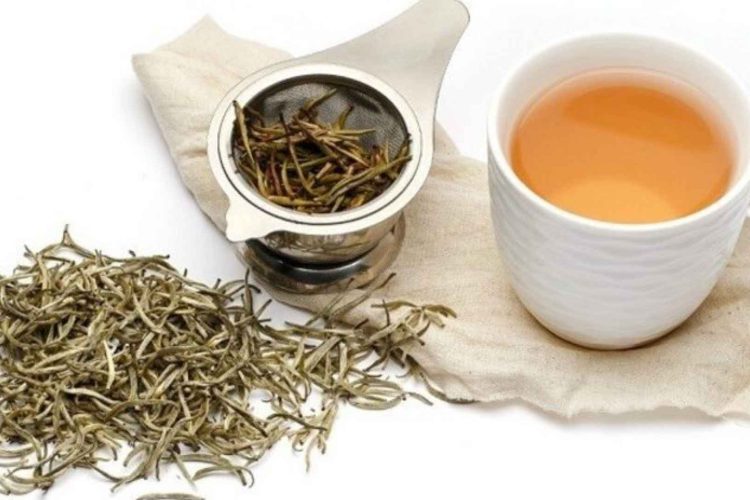
With more than 145,000 tons of production capacity and more than 170 tea varieties, Vietnamese tea is now an increasingly appealing option for companies looking for a stable, varied, and budget-friendly source.
In this article, we will walk you through the full process of Vietnamese tea importing, from market research and supplier selection preparation to shipping logistics and customs clearance. It will help you better plan your sourcing and optimize your business plan.
Vietnamese Tea Market: An Overview
When it comes to tea exports, Vietnam is currently the fifth largest tea producer and exporter in the world, placed after China, Kenya, and Sri Lanka.
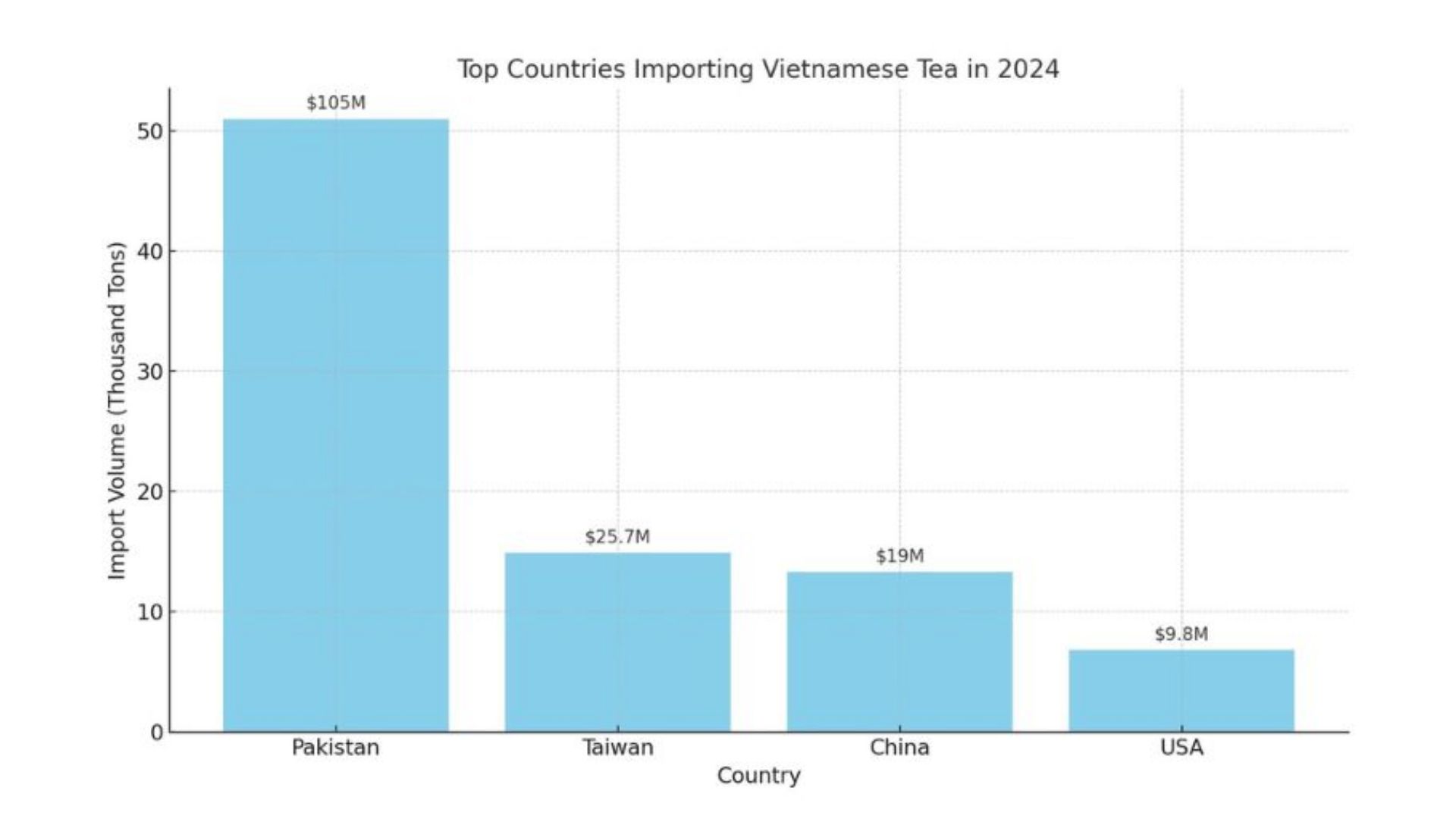
The country exported around 145,000 tons of tea in 2024, worth approximately USD 256 million. That is over 25% volume and 27% value more than in 2023.
Vietnamese tea is exported to over 70 nations. The largest market is Pakistan, representing more than 35% of the value and volume of exports in 2024. According to an interview, Mr. Nguyen Quoc Manh, the Deputy Director of the Department of Crop Production, stated that Vietnam’s export of tea could reach 156,000 tons by 2030 with a constant annual growth rate of about 0.83%.
Black tea accounts for about 80% of total exports, followed by green tea and oolong. Further, some Vietnamese producers are starting to focus more on value-added items like herbal teas and naturally scented teas (e.g., lotus or jasmine) rather than raw leaf exports alone.
So, why has demand suddenly increased? Below are the main reasons:
- Rising global demand for organic, premium, and specialty teas. Vietnam has among the world’s oldest tea trees, dating back to 1000 years. The country is also home to ancient wild-grown varieties like Shan Tuyet, which are famous for their rarity, altitude-grown quality, and minimal processing.
- Increased global interest in health-conscious products and shifting preferences from sugary beverages to natural teas.
- Competitive pricing, with an average export price of around 1,762 USD per ton in 2024, is only about 65-70% of the global average.
- Government support for processing, branding, and certification (VietGAP, Organic, Fairtrade).
- Free trade agreements such as CPTPP and EVFTA help expand access to high-value markets.
7 Popular Types of Vietnamese Tea
Vietnam produces special varieties of tea. Here comes the breakdown:
- Green tea: This type of tea is the most widely exported tea from Vietnam. In 2023, the country exported approximately 52,600 tons of green tea, generating a total value of 104 million USD. Thai Nguyen green tea is especially well-known for its fresh aroma, light bitterness, and long-lasting sweet aftertaste.
- Black tea: Commonly used in tea bags, milk tea, and the food industry. This is the second most exported tea variety from Vietnam. In 2023, around 42,200 tons of black tea were exported, worth around 57.2 million USD. Compared to green tea, black tea is fully fermented and has a bolder and more robust flavor profile.
- Shan Tuyet tea: A premium, hand-picked tea from old tea trees in Vietnam’s northwest mountains. The buds are covered in fine white hairs and have a smooth, herbal aroma. Often packaged as boutique or high-end gift products.
- Oolong tea: A semi-fermented tea made through a complex process, including withering, rolling, partial oxidation, and shaping. Its flavor can range from fruity to nutty or floral. It is popular in the premium gift market.
- Lotus tea: Made by infusing green tea with lotus flowers for about a day. This popular tea in Vietnam has a sweet, enchanting floral aroma.
- Jasmine tea: A blend of green tea and jasmine flowers. It has a strong scent and a light, pleasant aftertaste. Often served as a refreshing drink, it’s in high demand in restaurants, hotels, and beverage chains.
- Herbal tea: Includes teas made from ginger, artichoke, lemongrass, and more. Positioned in the wellness segment, it’s known for helping with relaxation, digestion, and detox. Popular in markets that value organic and healthy products.
Key Regions of Manufacturing Tea in Vietnam
To help you understand the sourcing landscape, not all parts of Vietnam grow tea.
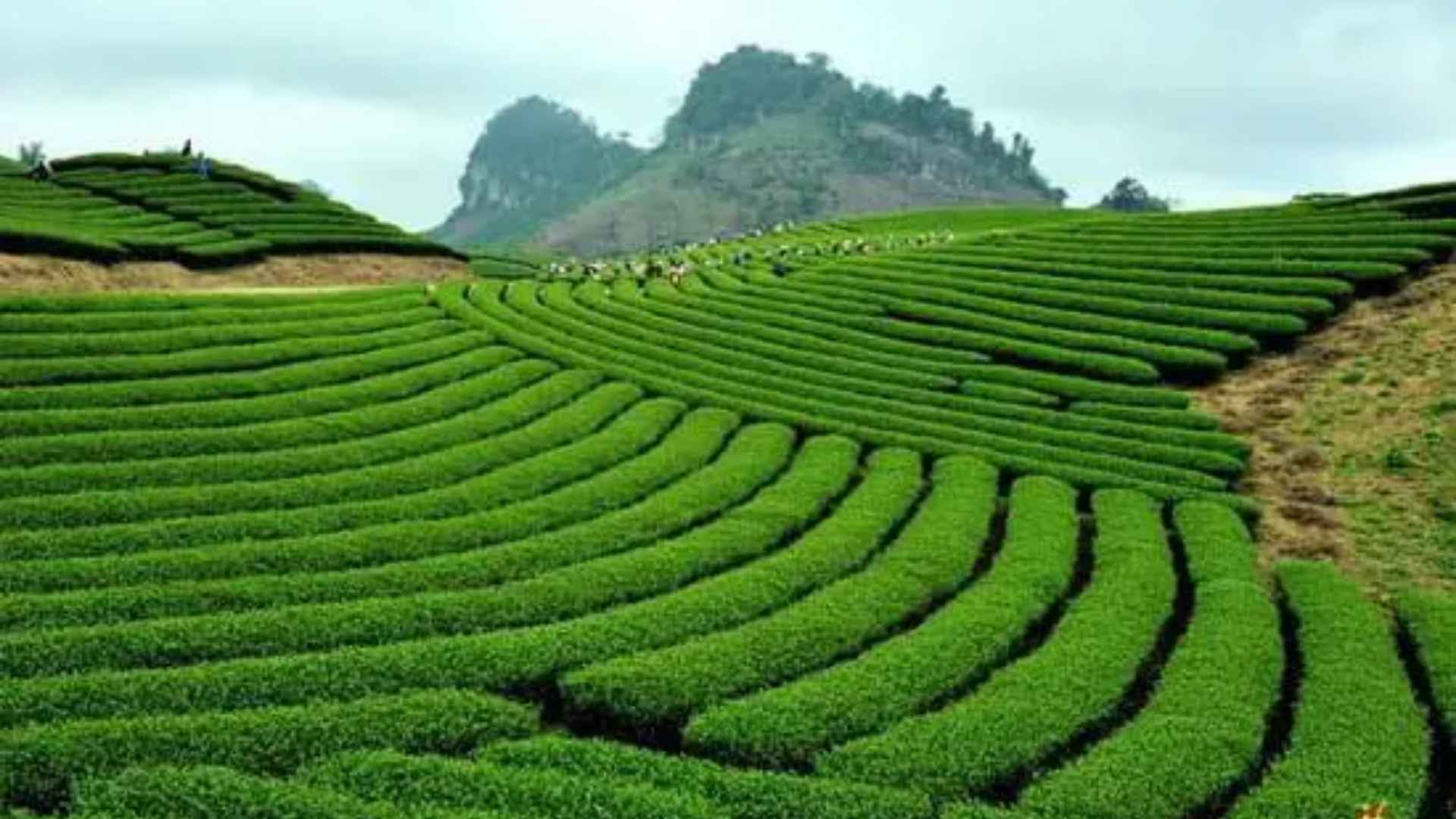
The majority of tea cultivation is concentrated in the northern mountainous regions, thanks to the favorable climate and soil. In the Central Highlands, Lâm Đồng stands out as a southern outlier for premium teas like oolong.
Here are the three key tea-growing regions and their distinct characteristics:
-
Thai Nguyen Province
Thai Nguyen is the tea capital of Vietnam, with over 22,200 hectares of tea estates and yielding over 250,000 tons of fresh tea leaves every year. It produces traditional green tea with the special young rice aroma, with slight bitterness and long-lasting sweetness.
However, most of the tea that is grown in Thai Nguyen is still farmed by small farmers, and this makes it difficult to maintain consistent quality from organic farming to final processing. This can affect total product stability batch by batch.
-
Lam Dong Province
Lam Dong produces over 164,100 tons of tea annually, and the high-grade oolong tea is its leading product, especially from Bao Loc and Cau Dat. Lam Dong tea is typically yellow in color, mild in bitterness, and sweet and clean in aftertaste, and therefore is appropriate for mid- and high-level markets.
In addition, LD97 type tea, with thick fine hairs on buds and fresh leaves, is mainly used for pu-erh, tea bag, and milk tea manufacturing. Raw material LD97 tea is around USD 15/kg. However, raw materials in Lam Dong are overall 20-30% higher in price compared to the north, and buyers seeking competitive prices need to consider this factor.
-
Phu Tho Province
Phu Tho province is located in northern Vietnam and boasts over 14,000 hectares of tea cultivation that produces around 178,900 tons of fresh tea leaves annually. Black tea accounts for around 70% of its processed output. This tea is moderately astringent, typical of fermented teas, but has a smooth feel, leaving a light, lingering sweetness on the palate.
Phu Tho tea is shipped to the Middle East, India, and the UK for its compliance with global standards such as GlobalGAP and Rainforest Alliance. However, the production of high-grade green tea here has not yet been well-developed, something importers should consider in regards to premium green tea supplies.
Northwestern Provinces (Son La, Yen Bai, Ha Giang, Lao Cai, and Lai Chau)
Son La and Lai Chau are the largest tea-producing provinces in this area, and of these, Son La grows as much as 5,850 hectares of tea. The Northwest region produces predominantly the Shan Snow (Shan Tuyet) type of tea, which covers over 80% of the total area of production. Shan Snow tea is renowned for its large buds and pale fragrance, having the scent of forest flowers, herbs, or young rice. The brewed colour is normally bright and light yellow.
While the region is ideal for tea cultivation (e.g., good drainage, mild climate, and frequent fog), logistics are not easy with the mountainous landscape. This could be an issue for customers who value an efficient supply chain.
Top 3 Vietnamese Tea Brands
Below are some of the largest tea production and export companies in Vietnam:
-
Vinatea
Founded in the 1950s, Vinatea currently owns about 4,300 hectares of tea-growing land and operates processing factories in northern provinces such as Phu Tho, Moc Chau, Thai Nguyen, and Yen Bai.
Their product range includes traditional green tea, herbal tea, and premium teas like ancient Shan Snow. Vinatea is certified by international standards such as Rainforest Alliance and follows the Sustainable Agriculture Network guidelines. Today, Vinatea exports to over 120 partners in demanding markets like the U.S., Taiwan, and Sweden.
-
Hatvala
Hatvala sources its tea directly from eco-friendly and wild tea farms in Ha Giang, Lao Cai, Son La, and Yen Bai. Its product range includes Shan Tuyet tea processed in different styles: green, white, oolong, black, and fermented pu-erh. The company also offers seasonal scented teas such as jasmine, chrysanthemum, and lotus.
Hatvala’s teas are now enjoyed in over 40 countries. Some Hatvala tea reviews have praised the clean, smooth flavor of their teas—especially the traditional green tea.
-
AsiaTea
AsiaTea has an annual production capacity of around 20,000 tons, exporting to more than 45 countries, including China, Thailand, Singapore, and several European nations. The company sources raw materials from over 1,200 tea gardens in Phu Tho, with most of them certified by the Rainforest Alliance.
Their main products include Orthodox black tea and CTC black tea, classified by international grading standards. The Orthodox line includes OPA, PEKOE, OP, BOP, FBOP, PS, BPS, F, and DUST grades and can be customized to meet buyer requirements. The CTC line includes grades like CTC BOP, BP, PD, and PF, also tailored for bulk orders by market.
How To Import Tea From Vietnam?
Now that you’ve got a solid understanding of Vietnam’s tea market, it’s time to get into the gritty nitty of sourcing Vietnam tea. Whether you’re planning to source in bulk or test the market with specialty batches, there are a few things you need to get right from the start.
Below is a practical step-by-step guide for beginners on how to import tea from Vietnam with confidence.
-
Define the Tea Product Format
To get started importing tea from Vietnam, you need to clearly define the product format, such as whether it is bulk or packaged, organic or conventional, and how it’s processed. Each type has different standards that importers must comply with.
- Bulk/loose leaf tea: This is tea sold in large un‑packaged quantities, typically raw or minimally processed (unprocessed tea). For this format, the moisture content must typically be under 7-8% and tea leaves should be whole or uniformly sized. The product must be free from mold, and chemical residues must fall below international Maximum Residue Limits (MRLs).
- Packaged tea bags/pyramid bags: These are teas already portioned and sealed in individual bags or sachets. Not only does raw tea need quality checks, but the filter paper, tags, glue, and packaging must be food-grade, sealed, and traceable. The product should pass hygiene and shelf-life tests.
- Organic or certified teas: Organic tea in Vietnam refers to tea grown under certified programs (e.g., organic, VietGAP, or other recognized certifications). In the nation, tea producers who claim organic status must follow TCVN 11041‑6:2018, the national standard for organic agriculture. These standards prohibit the use of synthetic pesticides or chemical fertilizers. Producers must also ensure full traceability from the farming stage to the final packaging.
- Processed teas (e.g., scented, oolong): These teas are often packed (bulk or bag,) but they differ from bulk loose forms because they undergo additional processing steps such as fermentation, scenting, or flavor‑infusion. They must meet stricter moisture content standards; typically below about 6-7% moisture after final drying. Scented tea also needs quality control of aroma, color, leaf integrity, and absence of off‑flavors. Packaging has to be airtight and light-resistant enough to protect against oxygen, light, and moisture.
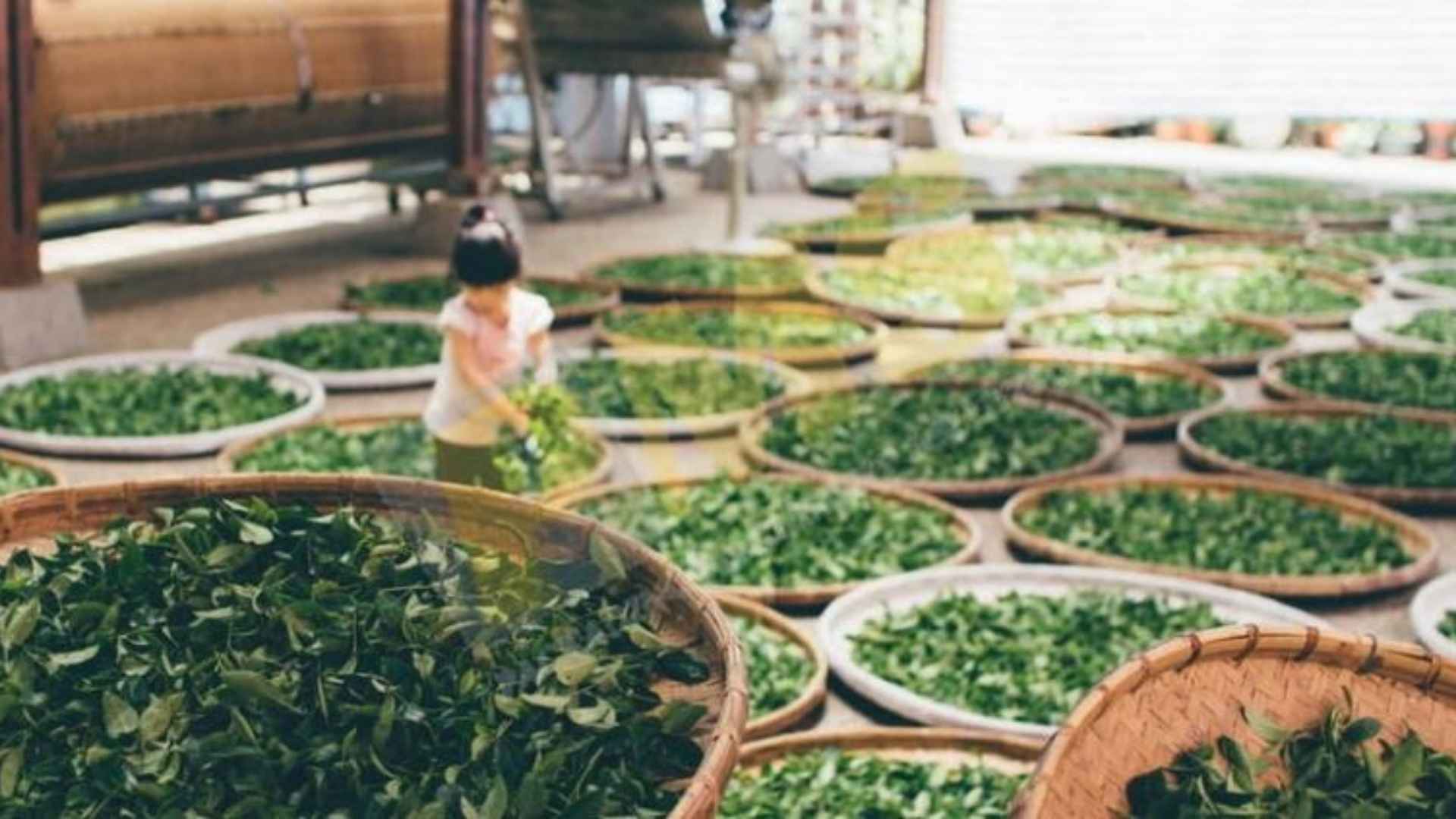
One thing importers should pay close attention to is chemical residue in Vietnamese tea. The issue is almost universal for non‑organic tea. Many local tea farms are smallholder-based and remain unaware of international restrictions on pesticides and fertilizers. So, if you plan to export to regulated markets like the EU, Japan, or the US, it’s something to test and verify carefully.
-
Know the Licenses & Certificates from the Vietnamese Side
When it comes to importing tea from Vietnam, exporters/suppliers usually handle certain documents and processes. It is your job to check and require paperwork on their side to clear customs in the destination country.
Documents Vietnamese exporters must provide:
- Phytosanitary Certificate issued by the Vietnam Plant Protection Department, verifying that the tea shipment is free from pests and complies with plant‑health requirements.
- Certificate of Origin (C/O), issued by the Vietnam Chamber of Commerce and Industry (VCCI) or an authorized agency, to prove the tea originates in Vietnam (often required to receive preferential tariffs under FTAs such as EVFTA).
- Analysis or Test Certificates (e.g., pesticide residue test, heavy metal content), especially for green or scented teas, to meet the standards of importing countries like the EU, the US, and Japan.
- Business Registration & Export License, confirming the exporter is legally registered to export agricultural / food products per Vietnamese regulations.
-
Determine the Requirements For Tea Import
The next step is to check your country’s legal & regulatory framework for tea import. Documents that you, as a tea importer, may need to prepare:
- Import Permit (if required) per the regulations of the destination country; sometimes, food safety or agricultural health authorities require a permit before shipment arrives.
- Customs Import Declaration (invoice, bill of lading, packing list, contract) matching the exporter’s paperwork.
- Phytosanitary Certificate presented to the importing country’s plant health authority during clearance.
- Certificate of Origin to claim preferential tariff rates if under FTA.
- Test/Analysis certificates (residue, heavy metals, moisture, sensory / quality) to satisfy import‑country standards, often needed for regulated markets (EU, US, Japan).
That said, not all countries share the same rules. To comply properly, you should find out the HS code (Harmonized System) for tea under your customs law. Most countries classify tea under HS code 0902 (“Tea, whether or not flavoured”) for green, black, and scented teas. For example, black tea / partly fermented tea often goes under 0902.30.
You must also understand your country’s plant quarantine and food safety regulations. In case of importing to the European Union, you may need chemical residue tests, microbiological tests + heavy metal analysis, or phytosanitary inspections. The specs are generally as follows:
- Pesticide residues must comply with EU MRLs, e.g., imidacloprid ≤ 0.05 mg/kg.
- Tea must be free from Salmonella in a 25g sample.
- Lead must not exceed 0.2 mg/kg.
- Cadmium must not exceed 0.1 mg/kg.
- Arsenic must not exceed 0.2 mg/kg.
- Phytosanitary Certificate may be required for unprocessed leaves.
Be mindful of labeling rules as well. In general, most countries require the label to clearly show the product name, ingredients, country of origin, manufacturer, expiration date, and storage instructions. In case of importing EU member states, authorities may ask for additional labeling elements such as:
- Nutritional information (if applicable to health or function claims)
- Lot or batch number for traceability
- Name and address of importer or distributor within the EU
- Instructions for preparation (e.g., brewing temperature and time)
- Food contact material compliance (if packaged in bags, filter paper, etc.)
- Allergen statement if flavors/additives are used
Notes: Import regulations may change over time, especially for food safety and labeling. We highly recommend you regularly check with your local customs authority or visit the official websites of regulatory agencies for the most accurate and updated information.
-
Find & Verify Vietnamese Tea Suppliers
That’s about the paperwork. Now it’s time to think about suppliers and manufacturers. Typically, there are two main routes to find them:
- Use online supplier sourcing platforms to search for verified tea manufacturers with certifications. Some trustworthy options include Alibaba, VinaSources (Vietnam-focused platform), and Tradewheel. You can also search B2B websites with keywords like “Vietnam tea supplier”.
- Attend trade shows in Vietnam, like Vietnam Tea Coffee Trade Shows, Vietnam Foodexpo,and Vietnam Sourcing Expo, to meet suppliers in person.
For the tea market, online platforms are usually the easier way to start because most Vietnamese tea exporters list their products on B2B sites and provide certification details digitally. Trade shows remain valuable for building trust and sampling directly, but they require more time and budget to attend.
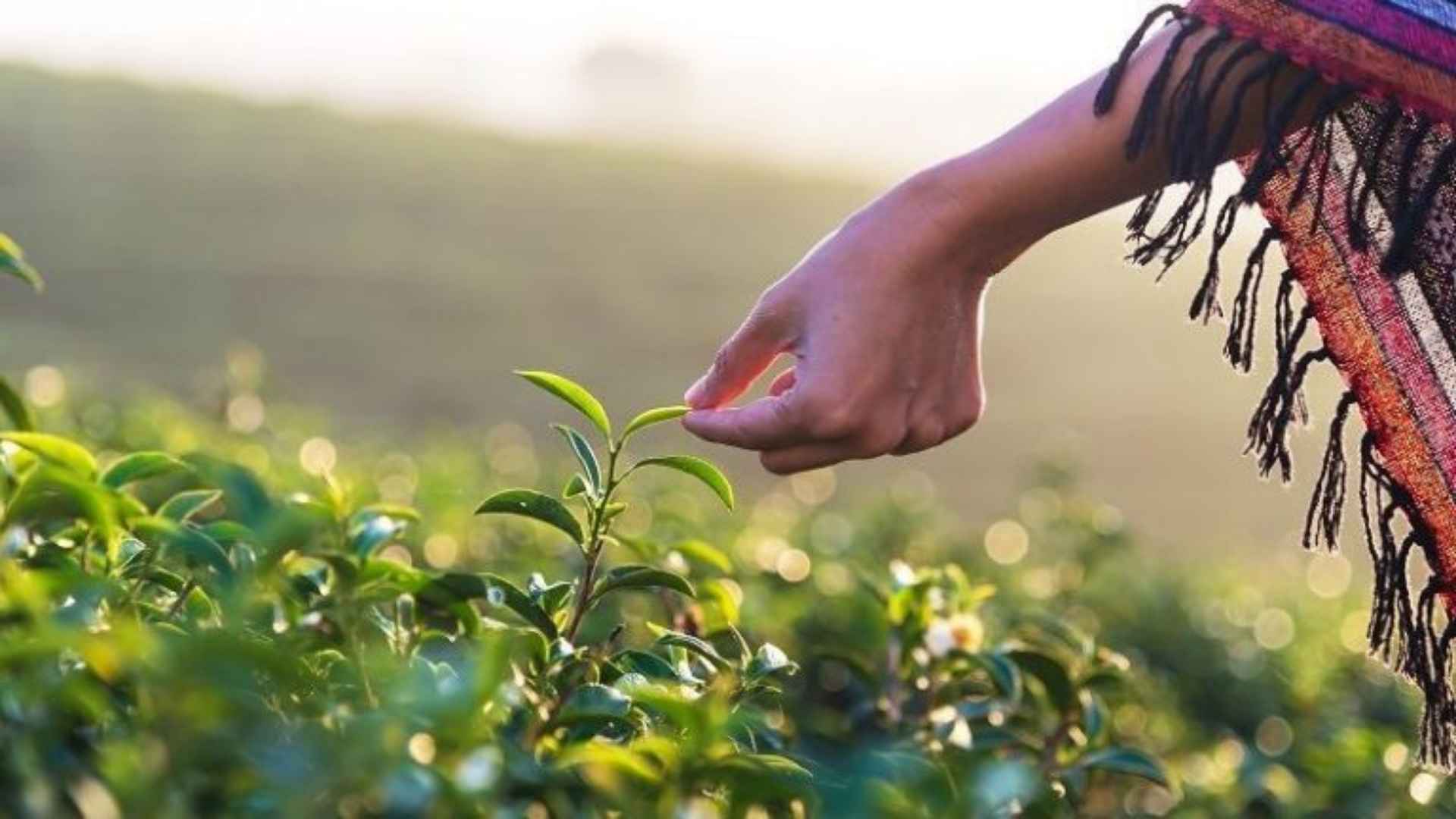
It’s worth noting that local supplier transparency can vary. Some suppliers may list certifications but have limited verification or no lab reports. Thus, it’s best to look for some reviews before working with them. An experienced tea manufacturer will be welcome to provide certain items, samples, and certifications, and support international certificates such as ISO 22000, HACCP, and Organic when asked.
-
Negotiate Terms, Price, Packaging & Payment For Tea Import
This is about negotiating contracts and logistics with your Vietnamese tea supplier. First things first, align carefully on the Incoterm used in the quotation and contract. In case you are unfamiliar, below are some common terms:
- FOB (Free On Board): The seller is responsible until the tea is loaded onto the ship at the Vietnamese port. Buyer handles freight, insurance, and import formalities.
- CIF (Cost, Insurance, Freight): The seller covers export costs, insurance, and freight to your destination port. The buyer takes over at the port of arrival.
Regarding MOQ (minimum order quantity) and lead time for Vietnamese tea, these vary depending on the product format and the supplier you work with. On average, the MOQ starts from around 500 kg for bulk loose tea, 5,000-10,000 tea bags for private label projects, and 1,000 units per SKU for branded or retail-ready packaging.
According to data, it takes about 7 to 14 working days for bulk loose tea orders, 14 to 21 working days for basic private label tea bag orders, 30 to 45 days for branded or customized packaging, and 45 to 60 days for complex OEM projects with international certification.
There are also tariffs and packaging costs to think about. Costs for branded and customized packages are typically higher than for generic bulk packaging. The terms should also clearly define delivery time, payment method (such as L/C, T/T, or deposit), and packaging specifications to avoid any confusion later on.
-
Shipping, Logistics & Customs Clearance
For shipping and logistics, you can choose sea freight (cheap but slow) or air freight (fast but expensive). Major sea ports in Vietnam include Hai Phong Port, Tan Cang ‑ Cat Lai Port, Cai Mep‑Thi Vai Port Complex, Da Nang Port, and Saigon Port. For airports, you can use Noi Bai International Airport (Hanoi) and Tan Son Nhat International Airport (Ho Chi Minh City) for international air cargo shipments.
Below is the average transit timetable for shipping tea from Vietnam, based on official freight data.
| Shipping Method | United States | Europe | Japan | Australia |
| Sea Freight | 24-29 days | 30-40 days | 10-16 days | 15-22 days |
| Air Freight |
|
|
2-4 days | 3-5 days |
For customs and export procedures in Vietnam and your country, you can refer to step 2.
-
Post-Import: Quality Checks & Traceability
That’s about the tea import process. The following are some important considerations regarding post‑shipment inspection and long‑term traceability. These steps are essential for consistent tea quality maintenance and compliance assurance.
- Inspect shipment quantity upon arrival and match with the invoice and packing list.
- Record lot or batch numbers for all imported tea for traceability.
- Make sure that storage is in a clean, dry, temperature‑controlled environment (cool, dry place per EU food safety guidelines).
Vietnam Tea Sourcing Costs and MOQs
The average export price of Vietnamese tea is around $1.7 per kilogram, which is only about 65% of the global average price ($2.6/kg). Below is a reference table with FOB prices and minimum order quantities (MOQs) for some common types of tea in Vietnam:
| # | Type of Vietnamese Tea | Estimated FOB Price (USD/kg) | Typical MOQ |
| 1 | Green Tea (from Moc Chau) | $1.7 | 100 kg |
| 2 | Green Tea (from Thai Nguyen) | $5 – $15 | 100-1,000 kg |
| 3 | Black Tea | $1.85 | 1.000 – 10.000 kg |
| 4 | Oolong Tea (premium, made from Shan Snow tea) | $15 – $30 | 1.000 kg or more |
| 5 | Oolong Tea (good quality, sourced from Lam Dong) | $8 – $15 | 1.000 kg or more |
| 6 | Oolong Tea (standard grade) | $4 – $8 | 1.000 kg or more |
| 7 | Shan Snow Tea | $10 – $20 | 5 – 25 kg (for loose tea leaf); 6.000 – 10.000 kg (for dry tea) |
| 8 | Lotus-Scented Tea | $3 – $5 | 2.200 kg or more |
| 9 | Jasmine Tea (loose tea) | $1 – $3 | 0.1 – 100 kg |
| 10 | Jasmine Tea (loose tea) | $10 – $30 | 500 kg or more |
VinaSources: All-in-One B2B Sourcing Platform for Vietnamese Tea
If you are seeking trustworthy suppliers or even wondering where to find Vietnam tea sourcing suppliers, VinaSources can make the process convenient and hassle-free. As a single-stop B2B sourcing platform, VinaSources directly links global buyers with pre-verified Vietnamese tea suppliers.
Below is how VinaSources is an efficient, transparent, and cost-effective way to source tea from Vietnam:
- Direct access to reliable brands: The entire suppliers of tea on the platform are pre-screened for export licenses, production capability, and required certifications mentioned above. This ensures importers interact only with approved partners who meet international quality and safety standards.
- Basic quote requests: Send an RFQ with your target volume, target price, tea grade and type, packaging requirements, and other requirements.
- Complete supply chain support: VinaSources manages everything for you, including logistics, documents, and supplier follow-up.