
Are you looking to diversify your tropical fruit portfolio with a high-yield, premium-quality origin? Vietnam is rapidly transforming the global fruit trade, emerging as a powerhouse for mango imports that balance exquisite flavor with a competitive price.
This comprehensive B2B operational guide provides a strategic roadmap for importers, wholesalers, and food manufacturers to navigate the Vietnamese mango landscape, from supplier sourcing, contract negotiation, quality inspection, and logistics management.
An Overview of the Vietnamese Mango Export Market
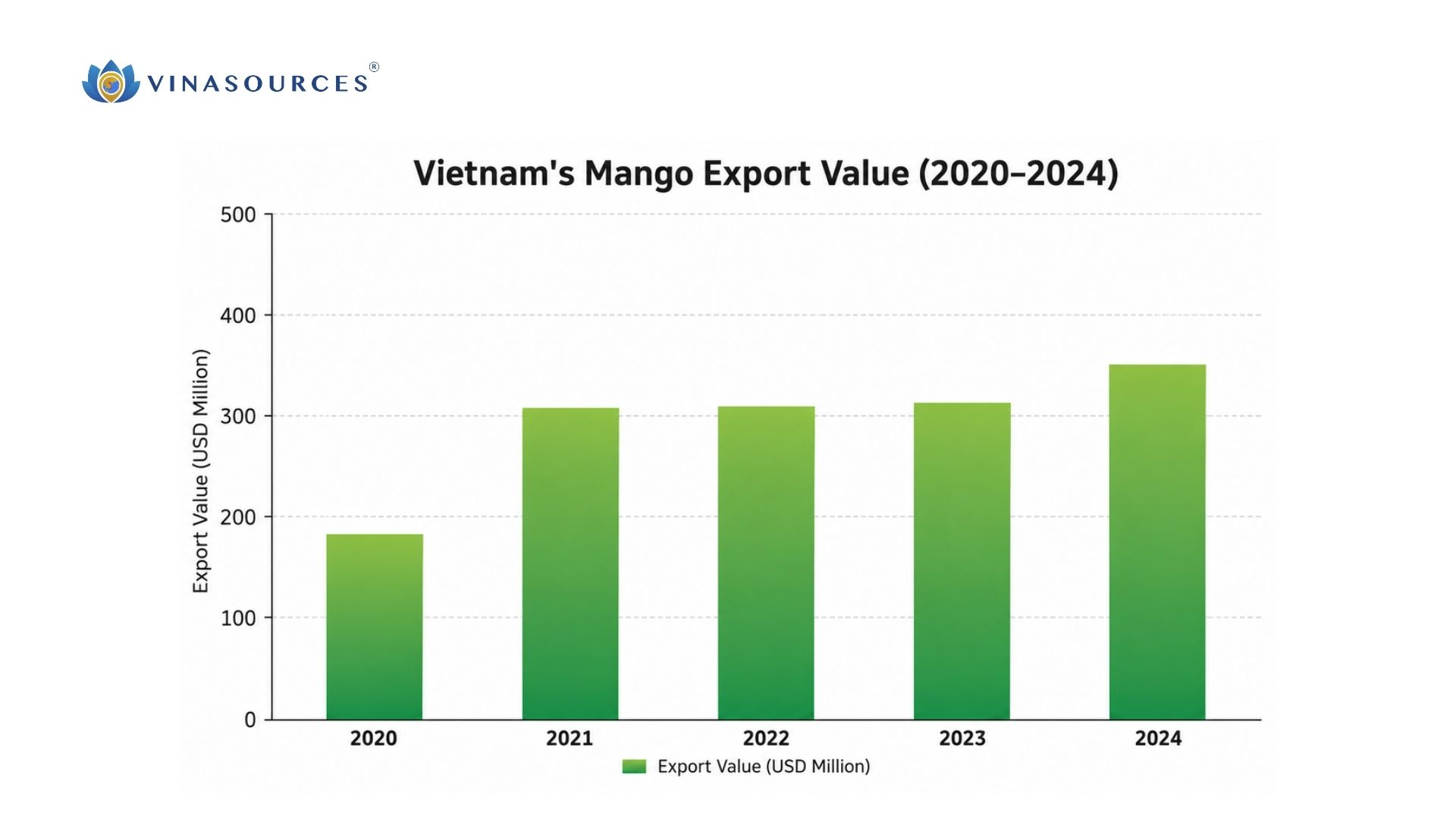
Vietnam has established itself as one of the world’s major mango-producing countries, currently ranking among the top global producers.
The country cultivates mangoes across more than 115,000 hectares, producing approximately 900,000 to 1 million tons annually. Production is concentrated mainly in the Mekong Delta, Southeast Vietnam, and selected northern highland regions.
Dong Thap, Tien Giang, An Giang, Vinh Long, and Son La are among the country’s most important commercial mango-growing provinces.
Vietnam exports several mango varieties serving different market segments. Premium varieties such as Cat Hoa Loc and Cat Chu are widely recognized for their sweetness and aroma, while Green Skin Elephant Mango and Keo Mango are preferred in wholesale and food service channels because of their larger fruit size and better transport durability.
While China remains the dominant market for Vietnamese mangoes, shipments to higher-standard destinations such as the United States, Japan, South Korea, Australia, and the European Union continue increasing steadily.
Why Global Buyers Source Mangoes from Vietnam?
Sourcing mango from Vietnam provides importers with a competitive edge. Here are the key advantages of importing mango from Vietnam:
Premium Flavor Profiles
Vietnamese mangoes are widely recognized for their sweetness, smooth texture, and strong aroma.
Premium varieties such as Cat Hoa Loc and Cat Chu are especially valued in higher-end retail markets because of their low fiber content and rich flavor profile.
For many importers, this is where Vietnamese mangoes differentiate themselves from lower-cost commodity origins.
Diverse Variety Portfolio
Vietnam does not rely on one single commercial mango type. The country offers a broad portfolio of varieties serving different market segments, from premium supermarket retail to industrial processing. Some varieties are optimized for long-distance sea freight, while others are better suited for frozen processing, salads, or premium fresh consumption.
Competitive Pricing
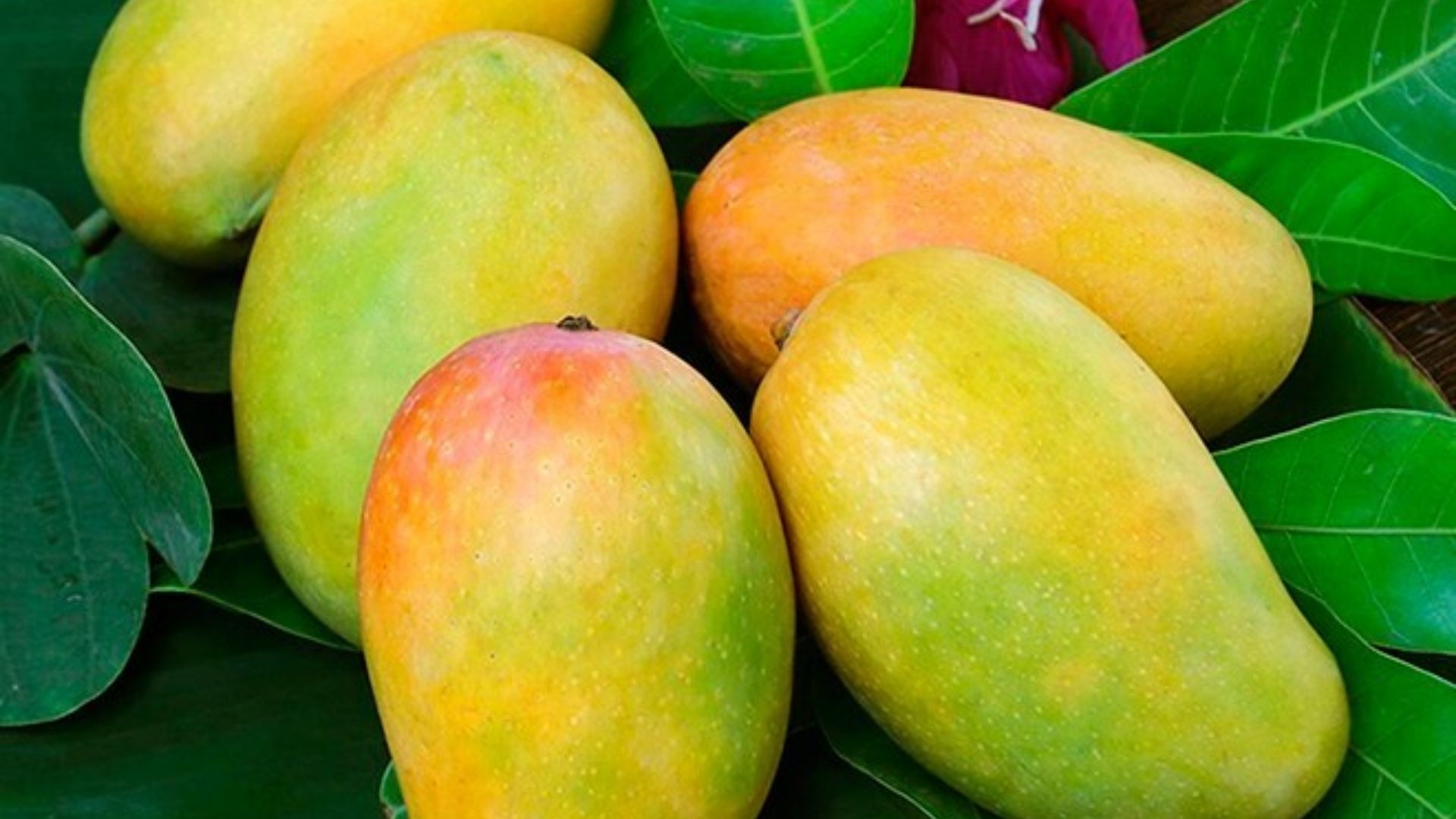
Vietnamese mangoes offer an exceptional price-to-quality ratio, with FOB prices generally ranging from $800 to $1,300 per ton depending on the variety and season. This pricing is significantly more competitive than Australian mangoes (often exceeding $2,500/ton) or premium Thai mangoes ($1,200–$1,800/ton), primarily due to Vietnam’s lower rural labor costs and high production density.
Large and Stable Supply
Vietnam’s annual production exceeds one million tons, supported by large cultivation areas across southern and northern regions.
The country also benefits from staggered harvest cycles and off-season cultivation techniques. This helps exporters maintain a more stable supply continuity for international buyers
Strategic Geographic Location
Vietnam’s location along major maritime routes provides shorter transit times to Asian markets and efficient reefer connectivity to Europe and North America. Ports such as Cat Lai and Cai Mep Thi Vai now handle large volumes of reefer container traffic for fresh fruit exports. This helps reduce transit risks for temperature-sensitive products like mangoes.
Expanding Export Infrastructure
Vietnam has invested heavily in post-harvest handling systems over the past several years. Modern packing houses, Vapor Heat Treatment (VHT) facilities, irradiation centers, and reefer logistics networks are helping exporters meet increasingly strict international phytosanitary standards.
Key Export Mango Varieties from Vietnam
Vietnam offers a broad range of mango varieties serving very different commercial markets, from luxury retail to industrial processing.
Cat Hoa Loc Mango
Often regarded as the finest mango in Vietnam, Cat Hoa Loc is the premium flagship of the country’s mango industry.
- Appearance: The fruit is easily recognized by its elongated, tapering shape and vibrant golden-yellow skin when fully ripe.
- Flavor Profile: Exceptionally sweet (often exceeding 18° Brix), highly aromatic, with smooth, buttery, and almost completely fiberless flesh.
- Average Size: 450g – 600g per fruit.
- Common Export Forms: Fresh whole fruit
- Best For: Premium supermarket retail, luxury fruit programs, high-end restaurants, and direct fresh consumption.
Cat Chu Mango
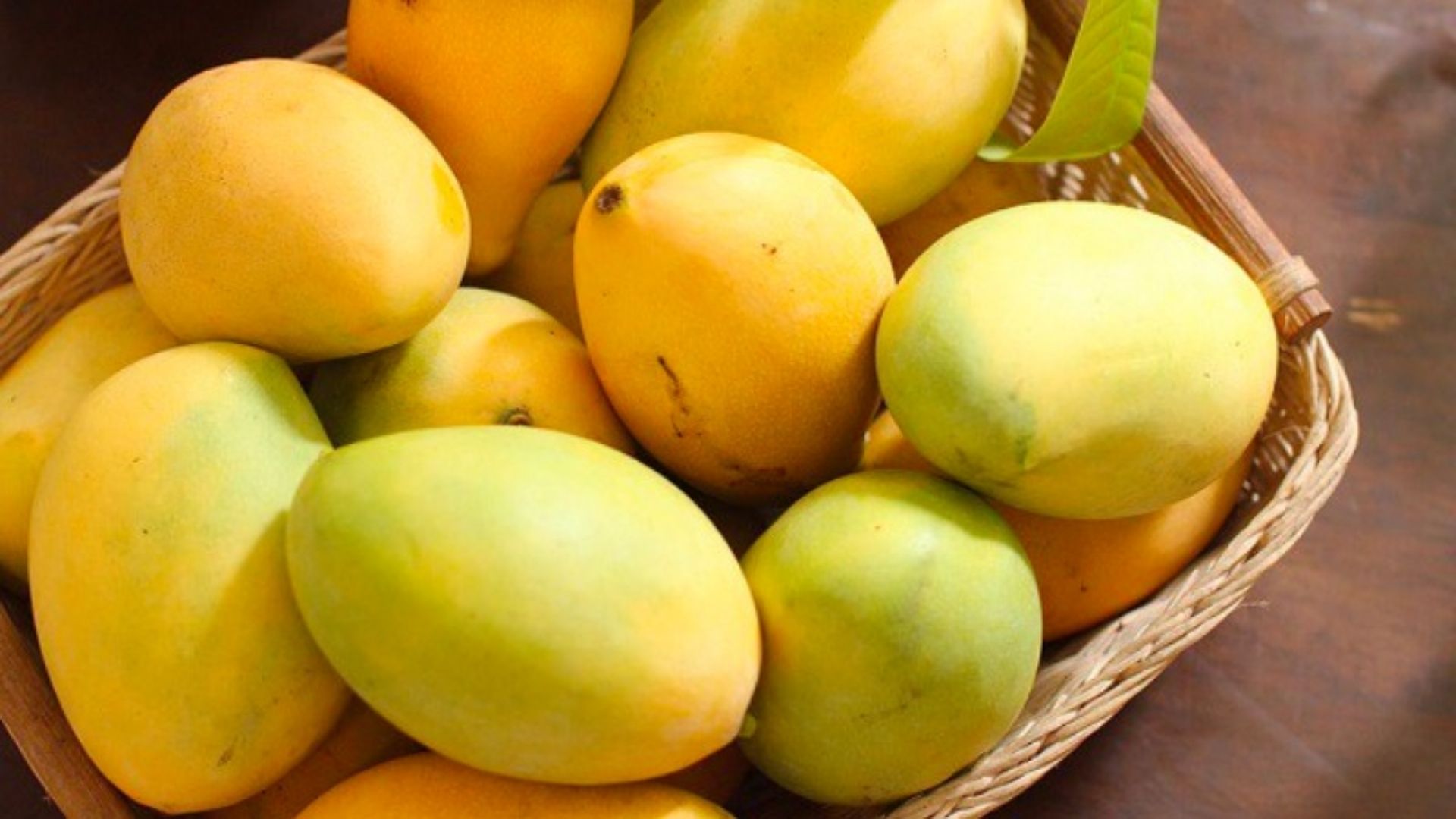
If Cat Hoa Loc is the premium choice, Cat Chu is the commercial backbone of Vietnamese mango exports because of its strong balance between flavor, shelf life, and transport durability.
- Appearance: Smaller and rounder than Cat Hoa Loc, with pale orange-yellow skin when ripe.
- Flavor Profile: Intensely sweet with a slight refreshing tartness. The flesh remains smooth, firm, and low in fiber.
- Average Weight: 250g – 400g per fruit.
- Common Export Forms: Fresh whole fruit, frozen IQF cubes, puree, and processed mango products.
- Growing Regions: Dong Thap province, especially Cao Lanh district.
- Best For: Supermarket chains, frozen processing, wholesale distribution, and premium Asian retail channels.
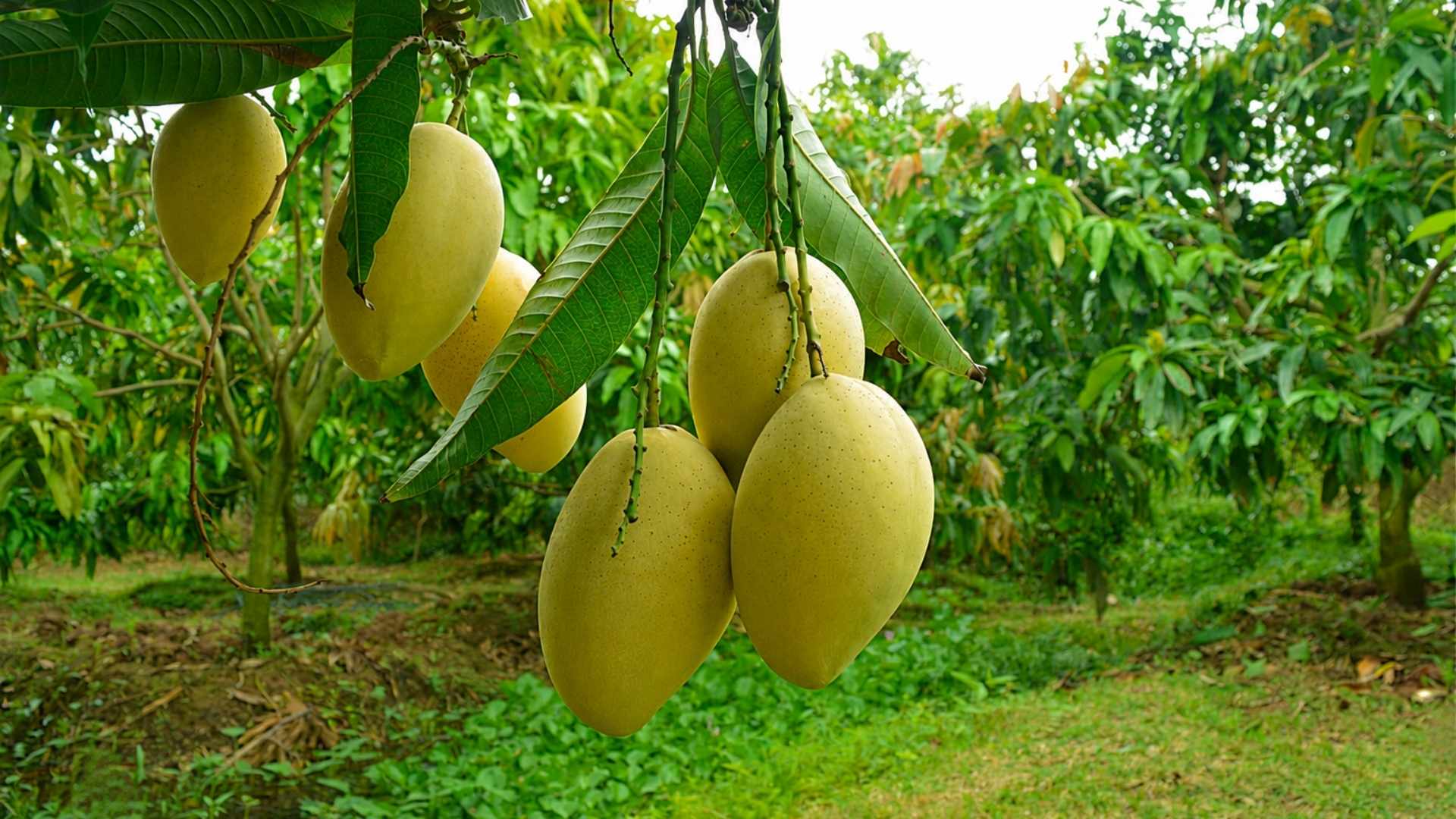
Green Skin Elephant Mango (Xoai Tu Quy/Dai Loan)
Green Skin Elephant Mango is prized for its massive size and strong flesh structure, making it highly suitable for wholesale and long-distance sea freight programs.
- Appearance: Large fruit with distinctive green skin that often remains green even at maturity.
- Flavor Profile: Crunchy texture with mild sweetness and slightly nutty flavor when consumed green or semi-ripe.
- Average Weight: 700g – 1.2kg per fruit.
- Common Export Forms: Fresh whole fruit, salad ingredients, pickled mango, and food service raw material.
- Growing Regions: An Giang and Dong Nai provinces.
- Best For: Wholesale markets, food service applications, slicing, and industrial processing.
Keo Mango
Keo Mango has become increasingly important in both wholesale and processing sectors because of its strong transport durability and versatility for both ripe and green consumption.
- Appearance: Oval shape with green skin and dense flesh texture.
- Flavor Profile: Mild sweetness when ripe and pleasantly sour-crunchy texture when consumed green or semi-ripe.
- Average Weight: 250g – 400g per fruit.
- Common Export Forms: Soft-dried mango, frozen IQF cubes, puree, concentrated mango products, and fresh whole fruit.
- Growing Regions: An Giang and Long An provinces.
- Best For: Food service, industrial processing, salads, pickling, and wholesale distribution.
Muong La Mango (Son La)
Muong La Mango is a specialty variety grown mainly in Son La province in Northwest Vietnam, where mountainous climate conditions help create stronger sweetness and aroma compared to many lowland mangoes.
- Appearance: Medium-sized fruit with smooth skin and attractive yellow coloration when ripe.
- Flavor Profile: Balanced sweetness and acidity with a more concentrated aroma profile.
- Average Weight: 400g – 600g per fruit.
- Common Export Forms: Fresh whole fruit.
- Growing Regions: Son La province (Northern Highlands).
- Best For: Premium Asian retail and specialty fruit programs.
Step-by-Step Guide to Importing Vietnamese Mangoes
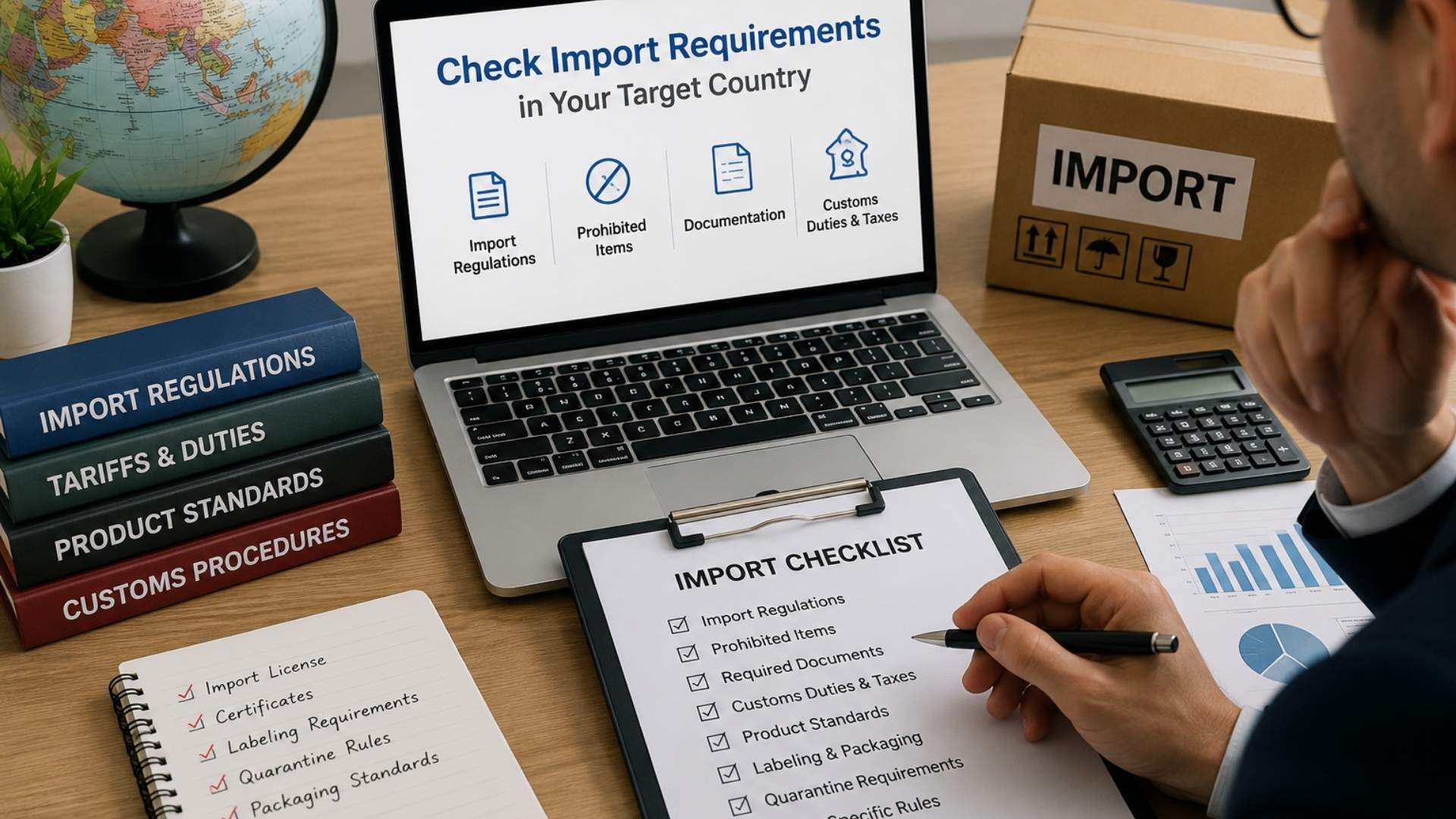
1. Check Import Requirements in Your Target Country
Import requirements for mangoes can vary significantly depending on the destination market. Some countries focus heavily on pesticide residue limits. Others place stricter controls on quarantine treatment, traceability, or post-harvest handling procedures.
Before placing commercial orders, buyers should make sure Vietnamese mangoes are permitted in their market and fully understand the import conditions for fresh fruit shipments.
1. China
China remains the largest consumer market for Vietnamese mangoes, accounting for the majority of the country’s export volume.
One reason this market is so important is logistics efficiency. Vietnam’s close geographic proximity to China helps reduce transportation costs and maintain better fruit freshness during transit.
However, China also applies increasingly strict import controls for fresh fruit products.
Key Import Requirements for China
- All Vietnamese exporters must be officially registered with the General Administration of Customs of China (GACC) under Decree 248.
- Every shipment must come from orchards holding approved Planting Area Codes issued by Vietnam’s Plant Protection Department (PPD) and recognized by GACC.
- Mangoes must be processed and packed in approved facilities operating under valid Packing House Codes.
- Shipments must be free from quarantine pests and regulated plant diseases.
- Each container must be accompanied by an official Phytosanitary Certificate issued by the PPD.
- Export cartons must display information in both English and Chinese, including: product name, country of origin, packing house code, and Planting Area Code (PUC).
- Exporters must maintain full traceability linking shipments back to approved orchards and packing houses.
- Packaging materials must be clean and free from soil, leaves, or plant debris. Wooden pallets must comply with ISPM-15 standards.
- Mangoes must comply with China’s GB 2763 standards governing Maximum Residue Limits (MRLs) for pesticides.
2. The United States
The United States is one of the most tightly regulated fresh fruit import markets in the world.
Fresh mango imports are controlled mainly through USDA APHIS and FDA biosecurity frameworks. This is where treatment compliance becomes critical.
Key Import Requirements for the U.S. Market
- All fresh mangoes exported to the United States must undergo irradiation treatment at USDA-approved facilities to eliminate fruit fly risks.
- Shipments must be inspected and cleared by USDA APHIS officers before departure from Vietnam.
- Mangoes must originate from orchards and packing facilities officially approved by both Vietnam’s Plant Protection Department and APHIS.
- Fruit must be completely free from quarantine pests and regulated plant diseases.
- Exporters must possess valid FDA registration numbers for customs entry.
- Importers must submit FDA Prior Notice before cargo arrival.
- Export cartons must clearly display: fruit type, country of origin, orchard codes, and packing house codes.
- Mangoes must comply with U.S. Environmental Protection Agency (EPA) standards for pesticide residue limits.
3. The EU
The European Union focuses heavily on food safety, sustainability, and traceability.
Compared with many other markets, the EU often applies stricter pesticide residue limits and more aggressive border inspection programs for imported fresh produce.
Key Import Requirements for the EU Market
- Mangoes must comply fully with the EU’s Maximum Residue Limit (MRL) database.
- Every shipment must be accompanied by a Phytosanitary Certificate confirming the fruit is free from harmful quarantine organisms such as fruit flies.
- Exporters must maintain traceability systems linking shipments back to farms and packing facilities.
- Some shipments may be selected for physical inspections and laboratory residue testing upon arrival at EU border control posts.
- To qualify for preferential tariffs under the EVFTA, exporters must provide: Certificate of Origin Form EUR.1 or self-certification documentation where applicable.
- Wooden pallets and crates must comply with ISPM-15 treatment standards.
- While not always legally mandatory, many large European supermarket chains also require GlobalG.A.P. and GRASP certifications as part of supplier approval programs.
2. Choose the Reliable Supplier
Choosing the right supplier is one of the most important decisions when importing mangoes from Vietnam.
There are three primary channels to find verified Vietnamese mango exporters:
Trade Shows & Expos
Trade exhibitions remain one of the most reliable ways to connect directly with Vietnamese mango exporters, fruit processors, packaging companies, and cold chain providers.
Major events such as:
- HortEx Vietnam
- Vietnam Foodexpo
- and Agri Vietnam
These trade shows attract large numbers of export-oriented agricultural companies every year.
The biggest advantage of trade shows is direct verification. Buyers can inspect mango quality in person, compare varieties side by side, evaluate packaging standards, and speak directly with management teams instead of sales intermediaries.
| # | Trade show | Venue (2026) | Date (2026) |
| 1 | HortEx Vietnam | SECC, District 7, Ho Chi Minh City | March 11 – 13, 2026 |
| 2 | Vietnam Foodexpo | SECC, District 7, Ho Chi Minh City | November 18 – 21, 2026 |
| 3 | Agri Vietnam | SECC, District 7, Ho Chi Minh City | May 13 – 15, 2026 |
B2B Online Sourcing Platforms
For faster supplier discovery, many importers use platforms such as:
- Alibaba
- Global Sources
- and Vietnam-focused sourcing portals like VinaSources.
These platforms allow buyers to quickly compare product categories, certifications, export markets, shipment experience, and MOQ structures.
However, buyers should remember that not every supplier listed on B2B platforms owns real plantations or packing facilities. Some companies operate mainly as trading intermediaries. This is why deeper verification is still necessary before placing commercial orders.
Sourcing Agencies
For buyers without a local presence in Vietnam, working with sourcing agencies can significantly reduce procurement risks.
Professional sourcing agents can:
- conduct farm visits
- verify export licenses
- inspect packing facilities
- supervise reefer loading
- and negotiate pricing directly with suppliers.
This is particularly useful for first-time importers unfamiliar with Vietnam’s agricultural export sector or buyers managing high-volume seasonal procurement programs.
Several sourcing agencies and sourcing support companies operate in Vietnam, including MoveToAsia, AGS Vietnam, and Intimex Group.
3. Verify the supplier’s credentials
After shortlisting potential exporters, buyers should carefully verify whether the supplier is legally registered, operationally capable, and experienced in international mango exports.
- Request the supplier’s business tax code and check it on the Vietnam National Business Registration Portal. Make sure the company status is “Active” and licensed for fruit export or agricultural trading.
- Ask for the growing area codes and packing house codes issued by Vietnam’s Plant Protection Department (PPD). These codes must be approved for your target market, such as China, the US, Japan, or the EU.
- Verify certifications such as GlobalG.A.P., VietGAP, HACCP, ISO 22000, or BRC.
- Check whether the exporter is properly registered for your destination market. For example, exporters shipping to China should be registered with GACC, while suppliers exporting to the US should have a valid FDA registration.
- Confirm the supplier works with approved treatment facilities if your market requires Vapor Heat Treatment (VHT) or irradiation treatment.
- Request redacted Bills of Lading (B/L), phytosanitary certificates, or shipment records from previous exports. This helps confirm the supplier has real experience handling international shipments and customs procedures.
To reduce sourcing risks, buyers should also watch for several common warning signs:
- Be cautious if the supplier asks you to transfer money to a personal bank account or an offshore account. Serious exporters normally use registered company accounts in Vietnam for B2B transactions.
- Most professional exporters use company email domains. If a supplier only communicates through Gmail or Yahoo accounts and cannot provide a clear office or packing facility address, that is worth double-checking.
- Be careful with prices that seem far below the market average. Extremely cheap offers often come with inconsistent quality, poor cold chain handling, or lower-grade fruit.
- Avoid suppliers that pressure you to send deposits urgently using claims like “limited-time pricing” or “harvest shortages.”
For first-time cooperation, many importers start with a smaller trial shipment before committing to larger seasonal orders. This gives buyers a chance to evaluate the supplier’s consistency, communication, reefer handling, and overall export reliability under real trading conditions.
4. Negotiate Contract Terms
Negotiating a clear, written contract is the most important step to protect your money when importing mangoes from Vietnam. Never rely only on emails, text messages, or verbal promises. A professional international sales contract must protect your business from delayed shipments, low-quality fruit, and price changes.
When you negotiate with a Vietnamese mango exporter, make sure to agree on these four critical points before signing:
- Exact Quality Specifications: Do not just write “fresh mangoes.” You must state the exact variety (such as Cat Hoa Loc or Cat Chu), the specific grade, the skin color, and the exact weight or size per fruit (for example, 350g to 450g per mango).
- Clear Weight Loss Allowance: Fresh mangoes naturally lose water and weight during long sea transit. You should negotiate a 3% to 5% weight allowance clause. This means the supplier must add extra fruits into each box for free to cover the natural water loss during the journey.
- Safe Payment Terms: Avoid paying a 100% deposit upfront to an unverified supplier. The safest payment method for global trade is a Letter of Credit (L/C), or a T/T bank transfer with a 30% deposit and the remaining 70% paid only after the supplier sends you a copy of the Bill of Lading (B/L) and quality inspection papers.
- Defect and Dispute Clauses: Write down exactly what happens if the mangoes arrive damaged, rotten, or too ripe. Agree on who pays for the loss, how you will prove the damage (usually through photos or a third-party surveyor report), and how the supplier will refund your money or replace the goods.
5. Pre-shipment Inspection
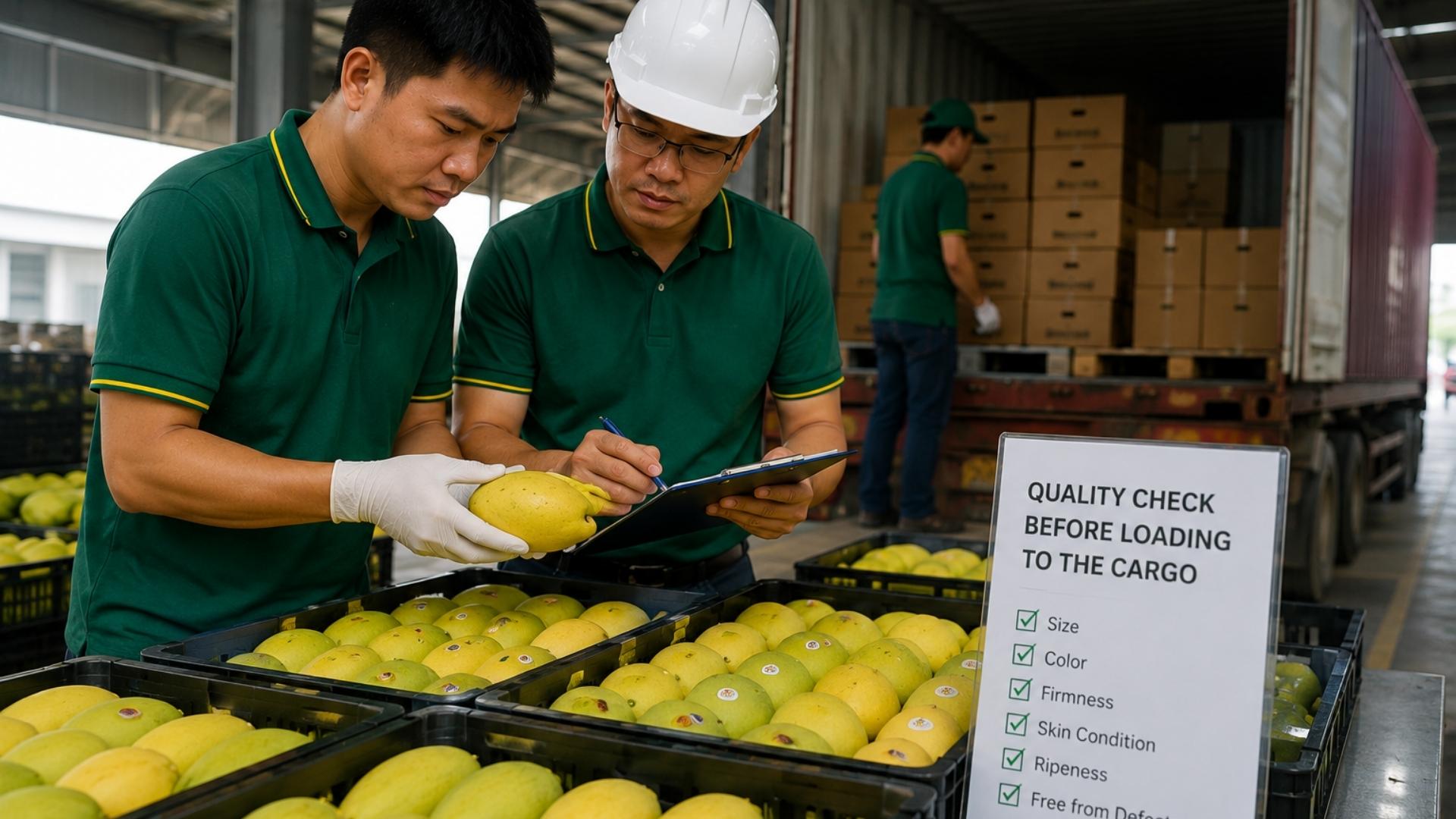
Pre-shipment inspection is a critical step in mango exports because fruit quality can deteriorate quickly if harvesting, grading, packing, or cold chain handling is not managed properly.
Even small issues such as incorrect maturity level, weak carbon quality, or temperature fluctuations during transportation can significantly affect shelf life and increase rejection risks upon arrival.
You can hire some third-party inspection companies in Vietnam, such as SGS Vietnam, QIMA Vietnam, and V Trust, for large procurement programs. They will help you verify product quality, packaging standards, and export compliance before cargo departure.
6. Handle Customs Clearances
Navigating customs clearance is the final administrative hurdle in the mango import process. Because fresh mangoes are highly perishable and subject to strict biosecurity laws, any delay at the port of entry can lead to rapid quality degradation.
Your customs broker will require a complete “Document Package” to be filed, often 24–48 hours before the shipment arrives.
Main Export Documents Commonly Required
- Commercial Invoice: Must detail the unit price, total value, and Incoterm (e.g., CIF, FOB).
- Packing List: Specifies the number of cartons, net weight, gross weight, and pallet count.
- Bill of Lading (B/L) or Air Waybill: The contract of carriage and title to the goods.
- Phytosanitary Certificate: Issued by Vietnam’s Plant Protection Department (PPD). This is the most critical document for fresh produce.
- Certificate of Origin (C/O): Essential for claiming preferential tariffs (e.g., Form E for China/RCEP or Form EUR.1 for the EU).
- Treatment Certificates: Proof of Irradiation (USA) or Vapor Heat Treatment (Japan/Korea).
7. Manage Shipping and Logistics
Managing the logistics of mango exports from Vietnam requires a precise balance of speed, temperature control, and moisture management.
The choice of transport is primarily dictated by the target market’s distance and the fruit’s shelf life.
Air Freight:
- Best for: Premium varieties (Cat Hoa Loc), high-end retail, and urgent seasonal windows.
- Advantage: Rapid transit (2–4 days) preserves maximum freshness and reduces the risk of spoilage.
- Constraint: Significantly higher costs, making it suitable only for high-margin luxury segments.
Sea Freight (Reefer Containers):
- Best for: High-volume wholesale, industrial processing materials, and regional markets (China, Japan, Korea).
- Advantage: Cost-effective for large shipments (FCL). Modern 40ft reefer containers provide full control over the environment.
- Constraint: Longer transit times (15–30 days for Western markets) require highly advanced cold chain management.
To maintain mango freshness and reduce spoilage risks during international transportation, your logistics provider must adhere to strict technical settings within the container:
| # | Operational Factor | Standard Requirement for Mango | Why It Matters |
| 1 | Temperature | 10°C – 13°C (50°F – 55°F) | Temperatures below 10°C cause “chilling injury” (skin pitting/discoloration) Temperatures above 13°C accelerate ripening. |
| 2 | Humidity | 85% – 90% | High humidity prevents the fruit from drying out and losing weight (shriveling). |
| 3 | Ventilation | 35 – 50 CBM/hour | Continuous air exchange is vital to remove ethylene gas and CO2, which otherwise speed up decay. |
| 4 | Pre-cooling | Mandatory | Fruit must be pre-cooled to the set-point temperature before loading to remove field heat. |
| 5 | Ethylene Exposure | Avoid mixing mangoes with high ethylene-producing cargo when possible. Maintain at < 1 ppm | Excess ethylene may accelerate ripening and shorten shelf life |
| 6 | Carton Ventilation | Minimum 4-6% open area on the surface of each carton. | Ensures that cold air actually reaches the fruit inside the box. Poor carbon ventilation creates “hot spots” in the center of the pallet, leading to uneven ripening. |
| 7 | Temperature Monitoring | Use reefer monitoring systems or temperature loggers during shipment | Provides a timestamped record of the environment. This data is the primary evidence required for insurance claims in the event of a reefer malfunction. |
Source Premium Vietnamese Mangoes Easily with VinaSources
Finding a reliable mango supplier in a foreign country can be stressful. That is why VinaSources is here to help you. We are a leading online B2B sourcing platform with 12 years of successful experience in cross-border e-commerce.
We protect your money from scams and bad-quality fruit. Every mango exporter on our website is 100% pre-verified by our local experts. Our team lives in Vietnam and will support you with every step: we help you negotiate safe contracts, check government paperwork, and arrange refrigerated shipping. With VinaSources, you get a safe online platform and a dedicated local partner to make sure your mangoes arrive fresh.
Fill out our simple Request for Quote (RFQ) form to secure the best wholesale market prices:
- Contact Email: [email protected]
- Hotline Support (24/7): 19004356