
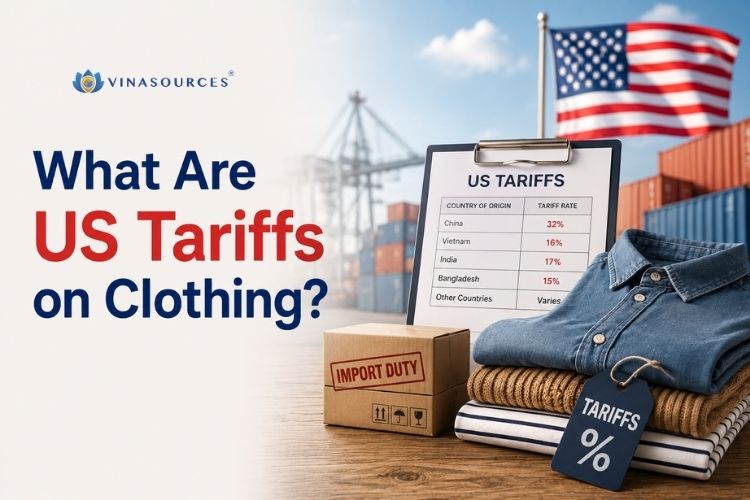
Planning to export or sell clothes in the US market? Then, understanding US tariffs is a must. These import taxes can quickly change the cost of your products and affect your profits.
In this post, we will give you a quick and easy overview of US clothing tariffs.
US Tariff Rates on Clothing from Top Sourcing Countries
When you import clothing into the United States, the country of origin (where the clothes are made) is a critical factor in determining your final costs.
U.S. Customs calculates duty rates differently for each nation based on international trade agreements, reciprocal tariff policies, and trade penalties.
The table below shows the average effective tariff rates applied to apparel imports entering the United States from the world’s top 10 clothing supply hubs:
| Rank | Sourcing Country | Standard MFN Base Rate | Additional Surcharges / Penalties | Total Effective Duty Rate |
| 1 | China | 16.5% – 32.5% | 34% (Section 301) | 50.5% – 69.1% |
| 2 | Cambodia | 16.5% – 32.5% | Reciprocal adjustment | 49.0% |
| 3 | Vietnam | 16.5% – 32.5% | Standard adjustment | 46.0% |
| 4 | Sri Lanka | 16.5% – 32.5% | Standard adjustment | 44.0% |
| 5 | Bangladesh | 16.5% – 32.5% | Standard adjustment | 37.0% |
| 6 | Indonesia | 16.5% – 32.5% | Standard adjustment | 32.0% |
| 7 | Pakistan | 16.5% – 32.5% | Standard adjustment | 29.0% |
| 8 | India | 16.5% – 19.7% | Raw material discount | 18.0% – 27.0% |
| 9 | Turkey | 16.5% – 32.5% | Partial trade discount | 10.0% |
| 10 | Mexico | 0% | n/a | 0% (Duty-Free) |
US Tariff Rates by Clothing Category
When U.S. Customs and Border Protection (CBP) processes imported apparel, the exact duty rate is determined by how the garment is classified under the U.S. Harmonized Tariff Schedule (HTS).
This classification is strictly based on three physical elements:
- The product type (e.g., shirts, trousers, jackets)
- The fabric construction (knitted vs. woven)
- The material composition (natural vs. man-made fibers).
The U.S. government maintains a strict tariff structure to protect domestic synthetic textile mills. As a result, clothing made from synthetic or man-made fibers (like polyester, nylon, and acrylic) faces duty rates that are nearly double those of natural fibers (like cotton, wool, or silk).
- Natural Fibers (Cotton, Wool): Standard baseline duty rates range between 11.5% and 19.7%.
- Synthetic Fibers (Polyester, Nylon): Standard baseline duty rates easily shoot up to 28.0% to 32.5%.
The table below outlines the standard baseline U.S. import duty rates for the most frequently traded clothing categories:
| Clothing Category | Primary Material / Fabric Type | Standard U.S. Base Duty Rate |
| T-Shirts & Tank Tops | 100% Cotton (Knitted – HTS Chapter 61) | 16.5% |
| Performance Tops & Activewear | Synthetic / Polyester (Knitted – HTS Chapter 61) | 32.5% |
| Sweaters & Cardigans | 100% Wool or Cashmere (Knitted) | 16.0% – 17.0% |
| Sweaters & Hoodies | Polyester / Acrylic / Man-made blends | 32.0% |
| Men’s Dress Shirts | 100% Woven Cotton (HTS Chapter 62) | 19.7% |
| Men’s Casual Shirts | Woven Synthetic / Polyester Blend | 32.4% |
| Blouses & Shirts (Women’s) | Pure Silk or Woven Cotton | 6.9% – 15.4% |
| Suits, Blazers & Trousers | Woven Synthetic Fibers | 27.3% |
| Jackets & Windbreakers | Polyester / Woven Water-resistant fabrics | 7.1% – 27.7% |
| Underwear & Sleepwear | 100% Soft Cotton | 7.4% – 11.5% |
| Underwear & Sleepwear | Synthetic / Nylon / Polyester blends | 16.0% |
How to Check the Exact US Tariff Rate for Your Clothing Orders
Importing clothing into the United States can involve very different tariff rates depending on the product type, fabric composition, gender category, and country of origin.
Two products that look almost identical may still face completely different duty rates. Because of this, global buyers should always verify the exact tariff before confirming production or shipment.
Step 1: Identify the Exact Product Type
Start by defining your product as specifically as possible. US customs classification for apparel depends heavily on detailed product characteristics.
You should prepare the following information:
- Product type: T-shirt, hoodie, jacket, shorts, or pants.
- Fabric composition: 100% cotton, polyester blend, or spandex mix.
- Construction type: Knitted or woven.
- Gender category: Men, women, or unisex.
- Intended wearer: Adults or children.
- Special features: Waterproof coating, embroidery, or protective functions.
For example, a knitted cotton T-shirt and a woven polyester shirt will use completely different tariff codes and duty rates in the US market.
Step 2: Find the Correct HTS Code
The United States uses the Harmonized Tariff Schedule system, also called the HTS code, to classify imported products and determine import duty rates. Apparel products are mainly classified under Chapters 61 and 62 of the US HTS system.
- Chapter 61 covers knitted or crocheted apparel.
- Chapter 62 covers woven apparel.
You can search the official US HTS database here: US Harmonized Tariff Schedule Database. In the search bar, enter a specific product description such as: “cotton knit T-shirt”, “polyester woven jacket”, or “women’s cotton hoodie”. The system will display the possible HTS codes and corresponding tariff rates.
Step 3: Review the Duty Rate Carefully
After selecting the correct HTS code, check the “General” duty rate column. This is the standard US import tariff applied to most countries without special trade agreements.
For clothing products, tariff rates can range from below 10% to more than 30% depending on the product category and material.
For example:
- Cotton apparel often has different rates than synthetic garments.
- Jackets usually have higher tariffs than basic T-shirts.
- Man-made fiber products often face higher duty rates than cotton products.
Step 4: Check for Additional Tariffs or Trade Measures
Besides the normal import duty, some products may also face:
- Additional Section 301 tariffs (mainly targeting goods from China).
- Reciprocal tariffs or special trade surcharges.
- Textile quotas or anti-dumping duties.
Recent US tariff policies may add extra duties on top of the normal apparel tariff rate, depending on the country of origin and active trade regulations. Because US trade rules change regularly, buyers should always verify whether additional tariffs apply before shipping goods.
Step 5: Confirm the Classification with a Customs Broker or Sourcing Partner
Apparel classification is one of the most complicated areas in US customs. Small product differences can completely change the tariff code and final duty rate. Before placing a large order, it is strongly recommended to:
- Consult a licensed US customs broker.
- Request a formal classification review.
- Double-check fabric composition and garment construction with your sourcing partner.
Step 6: Calculate the Total Landed Cost
The tariff rate is only one part of the total import cost. To know your true profit margins, you should calculate your total Landed Cost, which includes:
- FOB product price.
- Ocean or air freight fees.
- Customs clearance and broker fees.
- Port handling charges and domestic transportation in the US.
- Cargo insurance.
A product with a lower FOB price may still become more expensive after high duties and logistics costs are added.
Smart Strategies for US Buyers to Reduce Clothing Import Tariffs
Import tariffs can significantly increase the final landed cost of clothing products, especially in the US market, where apparel duties are among the highest of all product categories.
Here are the most effective strategies to lower your clothing import duties.
1. Shift Production to Safe Sourcing Hubs (Avoid Section 301 Tariffs)
Many global brands reduce tariff risks by spreading production across multiple countries rather than relying on a single sourcing market. This helps buyers shift production quickly if tariffs change suddenly and reduces geopolitical trade risks.
- Solution: Many move apparel sourcing from China to stable alternative hubs like Vietnam, Bangladesh, or Indonesia.
- Benefit: Sourcing from Vietnam allows you to completely avoid the heavy Section 301 retaliatory tariffs (an extra 7.5% to 25%) applied to Chinese goods. This instantly brings your tax expenses back to the standard, predictable MFN base rate.
2. Engineer Your Fabric Composition
U.S. Customs calculates tariff rates based on the dominant material by weight in the garment. Small changes in fabric composition can move products into a completely different tariff category with lower duty structures.
- Solution: Review your fabric blends during the product development phase. For example, synthetic fibers (polyester, nylon) face very high tariffs (~32.5%), while natural fibers (cotton) face lower rates (~16.5%).
- Benefit: Tweak a blend from 60% polyester / 40% cotton to 60% cotton / 40% polyester. Because cotton becomes the dominant fiber by weight, your entire shipment can qualify for the lower natural fiber tariff tier without affecting the garment’s performance.
3. Sourced from Countries with Preferential Trade Agreements (FTAs)
One of the most direct ways to eliminate import tariffs is sourcing from countries that have free trade agreements with the United States.
- The Strategy: Utilize regional sourcing hubs that qualify for duty-free entry. For example, Mexico and Canada offer 0% duty rates under the USMCA agreement, while Central American nations offer similar benefits under CAFTA-DR.
- The Rule: To qualify for 0% tariffs, the products must meet strict rules of origin, such as the “Yarn-Forward” rule, meaning the raw yarns and fabrics must be produced within the FTA member countries.
4. Utilize Duty Drawback and Foreign Trade Zones (FTZ)
If your business involves re-exporting goods or managing large inventories before distribution, you can legally delay or recover duty payments.
- Foreign Trade Zones (FTZs): Keeping your imported apparel in an FTZ or bonded warehouse delays duty payments until the products officially enter the U.S. domestic market.
- Duty Drawback Programs: If you import garments into the U.S., pay the tariff, and later re-export those same products to Canada, Mexico, or other global markets, you can claim a refund of up to 99% of the previously paid duties.
Why Vietnam Is the Top Low-Risk Alternative for US Apparel Sourcing?
Today, US clothing brands and buyers want to protect their money from high taxes. Vietnam is now the best and safest place to make clothing.
Here is why big global brands are moving their production to Vietnam:
1. Stable Workforce and Large-Scale Manufacturing Capacity
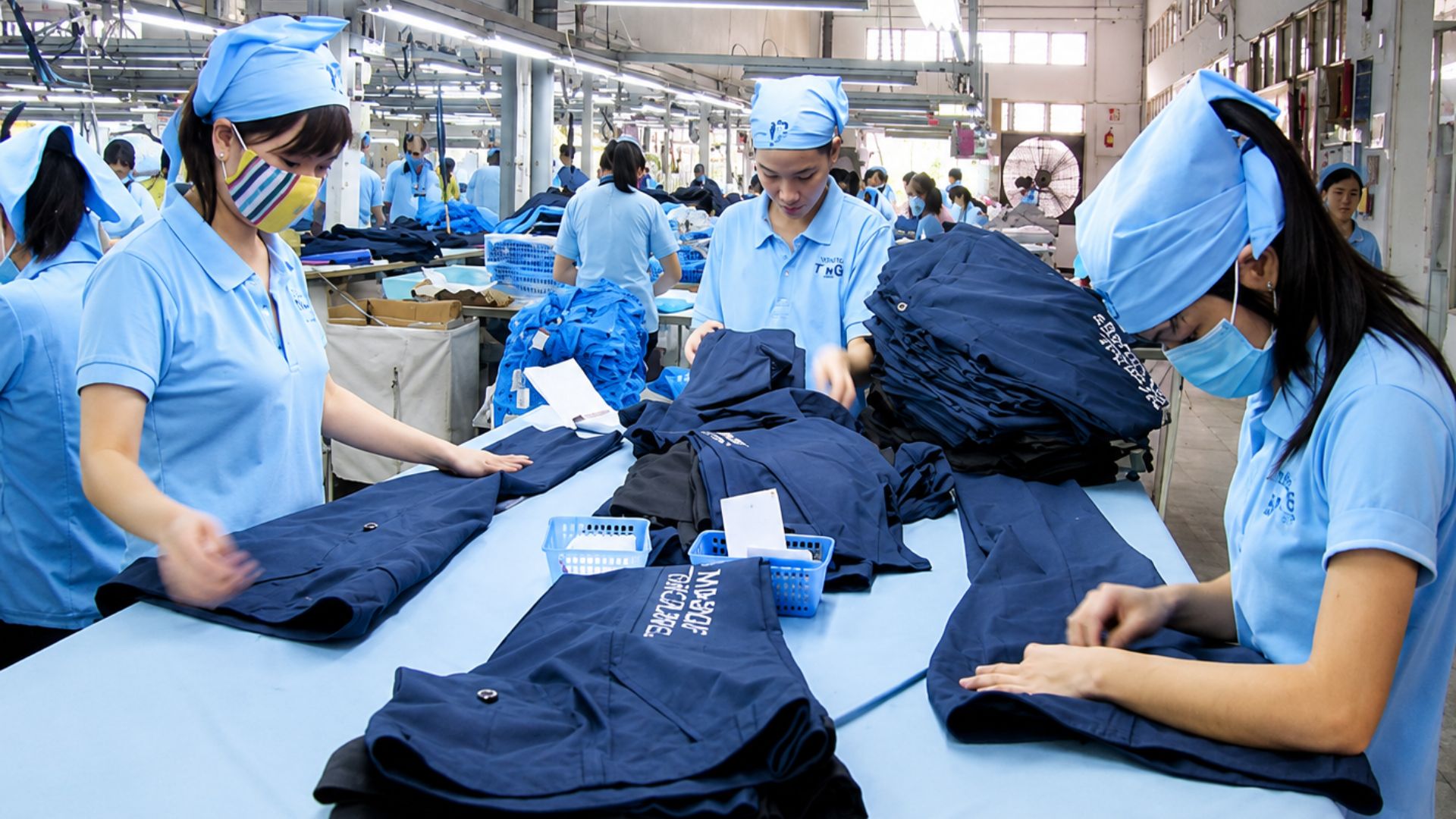
Vietnam has a young and hard-working labor force of over 50 million people. The clothing industry alone has more than 2.5 million workers.
2. The “China Plus One” Strategy
Geopolitical trade tensions have forced global brands to diversify their supply chains away from total reliance on a single market. Vietnam has become the primary beneficiary of this global “China Plus One” movement.
In early 2025, Vietnam officially became a dominant U.S. apparel supplier, capturing a 21.4% market share in the U.S. import market—significantly outperforming competing hubs like Bangladesh (11.1%) and narrowing the gap with China. Moving lines to Vietnam allows U.S. importers to diversify operational risks without sacrificing product quality.
3. Deep Supply Chain Ecosystem
Vietnam has successfully transitioned from a simple “cut-make-trim” (CMT) assembly country into a mature, vertically integrated textile ecosystem. The country boasts an advanced network of over 3,000 textile firms (spinning/weaving) and over 5,000 garment factories nationwide.
Vietnam’s textile trade surplus reached a record $21 billion in 2025, proving that factories are using more domestic raw materials and reducing reliance on external fabric supplies. For U.S. buyers, this deep local ecosystem provides the exact structural transparency needed to execute Fabric Engineering strategies and secure lower HTS tariff brackets.
4. Strategic Geographic Location
Situated in the heart of Southeast Asia and sharing a direct 1,281-kilometer border with China, Vietnam possesses an unmatched geographical advantage. This strategic proximity enables Vietnamese garment factories to import specialized raw materials, high-tech synthetic yarns, or accessories from southern Chinese supply hubs within just 3 to 5 days via land transport, keeping the entire production timeline lean, agile, and cost-effective.
5. Strong Foreign Direct Investment (FDI)
Global textile conglomerates continue to pour billions of dollars into Vietnam’s manufacturing sector. Over the 2018–2025 period, Vietnam attracted 65 greenfield textile projects valued at over $4.6 billion, the highest in the Southeast Asian region. Today, Foreign Direct Investment (FDI) enterprises serve as a key growth engine, accounting for roughly 60% to 62% of the textile sector’s total export value. This massive capital inflow equips Vietnamese factories with advanced automated cutting systems, digital patterns, and smart manufacturing technologies.
5. Strong Port and Export Infrastructure
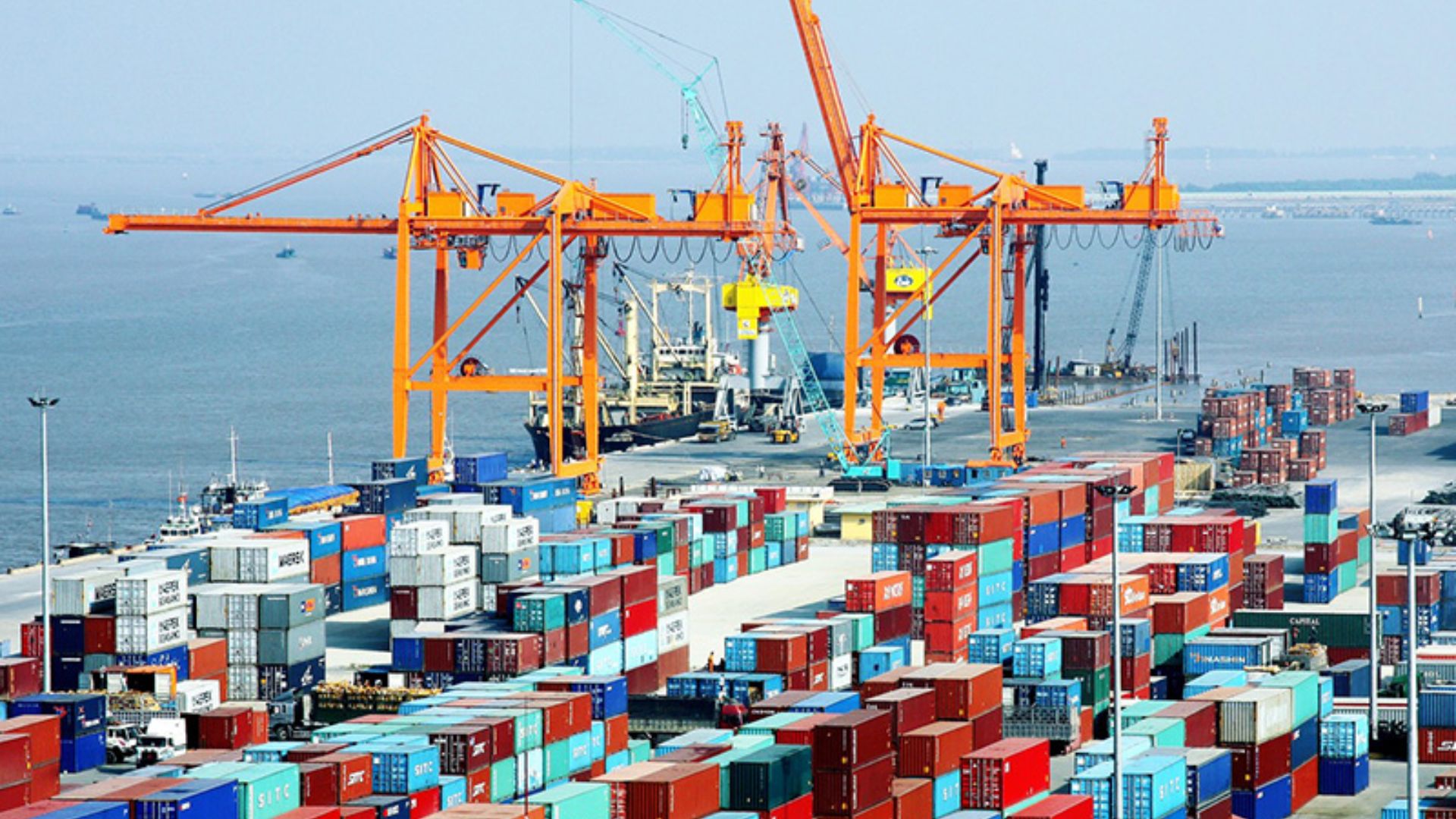
To move bulk cargo quickly, infrastructure is key. Vietnam has invested heavily in its seaport systems, with total container throughput showing a consistent 10% to 11% annual growth. The country handles over 134,600 seagoing vessel calls per year.
Major deep-water ports like Lach Huyen (Hai Phong) in the North and Cai Mep-Thi Vai (Ba Ria – Vung Tau) in the South can accommodate ultra-large container ships. This modern infrastructure allows shipping vessels to travel directly from Vietnam to the U.S. West Coast in just 17–20 days without wasting time at transshipment hubs, drastically shortening your overall shipping lead times.
Streamline Your Apparel Sourcing with VinaSources
VinaSources is your premier business bridge in Vietnam. We connect international B2B buyers directly with top-tier, highly reputable clothing suppliers across the country.
Why should you choose VinaSources:
- Verified Supplier Network: We connect you with pre-audited factories that hold international compliance certificates (like WRAP, LEED, and OEKO-TEX).
- Supplier Matching: We connect you with verified Vietnamese factories that match your specific product type, quality standards, and budget requirements.
- Quality Control (QC): Our team performs on-site inspections at the factory floor to check sewing quality, reduce defect rates, and protect your brand’s reputation.
- Logistics and Customs Support: We help prepare all necessary export documents and country of origin declarations, ensuring your cargo clears U.S. Customs quickly and smoothly.
Contact our sourcing experts today:
- Phone: 19004356
- Email: [email protected]