
With its vibrant appearance, refreshing taste, and competitive pricing, Vietnamese dragon fruit has become a popular sourcing choice for importers, wholesalers, supermarket chains, and food distributors worldwide.
As global demand for tropical fruits continues to rise, more international buyers are looking to Vietnam as a stable and cost-effective sourcing destination. In this article, we will explore Vietnam’s dragon fruit export industry, major export varieties, import procedures, and supplier sourcing methods before importing dragon fruit from Vietnam.
Overview of Vietnam’s Export of Dragon Fruit
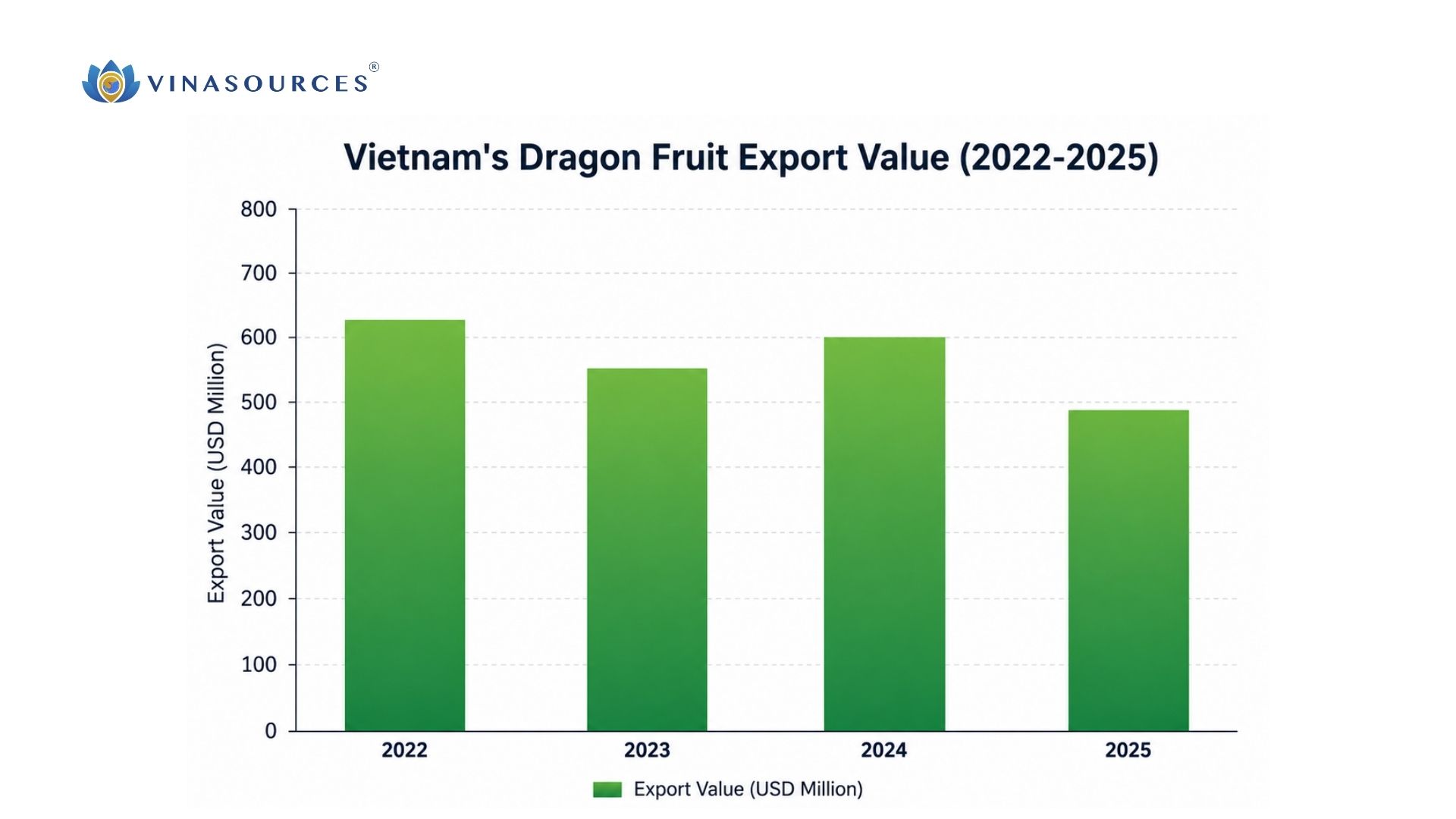
According to the Food and Agriculture Organization of the United Nations (FAQ), Vietnam is the largest exporter of dragon fruit, accounting for approximately 50% of global production.
The country currently maintains approximately 55,000 hectares of dragon fruit cultivation, producing over 1.2 million metric tons annually. Production is concentrated in three key provinces, including Binh Thuan, Long An, and Tien Giang.
China remains Vietnam’s largest export destination for fresh dragon fruit due to strong regional demand and short transit time advantages, followed by India, the US, Thailand, South Korea, and the EU.
Why Vietnam is the Best Source for Quality Dragon Fruit?
Vietnam offers strong production capacity, flexible sourcing options, and a mature export supply chain.
Below are the key advantages of importing dragon fruit from Vietnam:
- Stable export volumes: Vietnam cultivates more than 55,000 hectares of dragon fruit, mainly in Binh Thuan, Long An, and Tien Giang provinces, providing high productivity.
- Year-round supply availability: The country uses staggered growing cycles and artificial lighting techniques to maintain harvests throughout most of the year. This reduces seasonal sourcing gaps and ensure consitent supply.
- Diverse dragon fruit varieties: Vietnam exports both white flesh and red flesh dragon fruit, allowing buyers to target different consumer segments and pricing strategies.
- Broad FTA network: Vietnam participates in trade agreements such as CPTPP, EVFTA, and RCEP, helping improve tariff competitiveness and market access in several major importing regions.
Popular Vietnamese Dragon Fruit Varieties for Export
Vietnam mainly exports two types of dragon fruit varieties, including white flesh dragon fruit and red fresh dragon fruit.
White Flesh Dragon Fruit
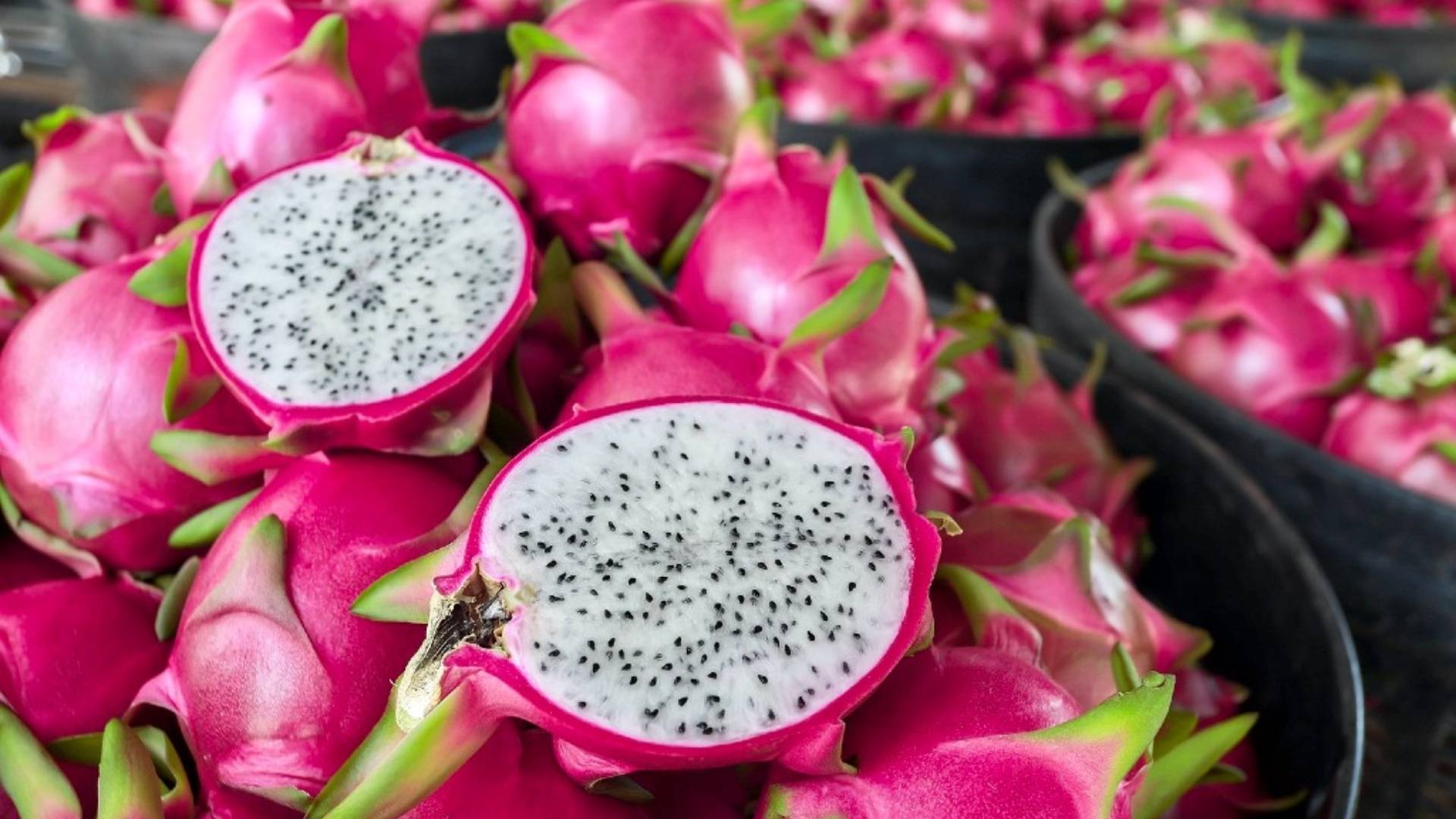
White flesh dragon fruit is the most widely cultivated and exported dragon fruit variety in Vietnam. The fruit has bright pink skin with green scales and is known for its mild sweetness and refreshing taste. The average fruit weight commonly ranges from 350 to 600 grams.
Red Flesh Dragon Fruit
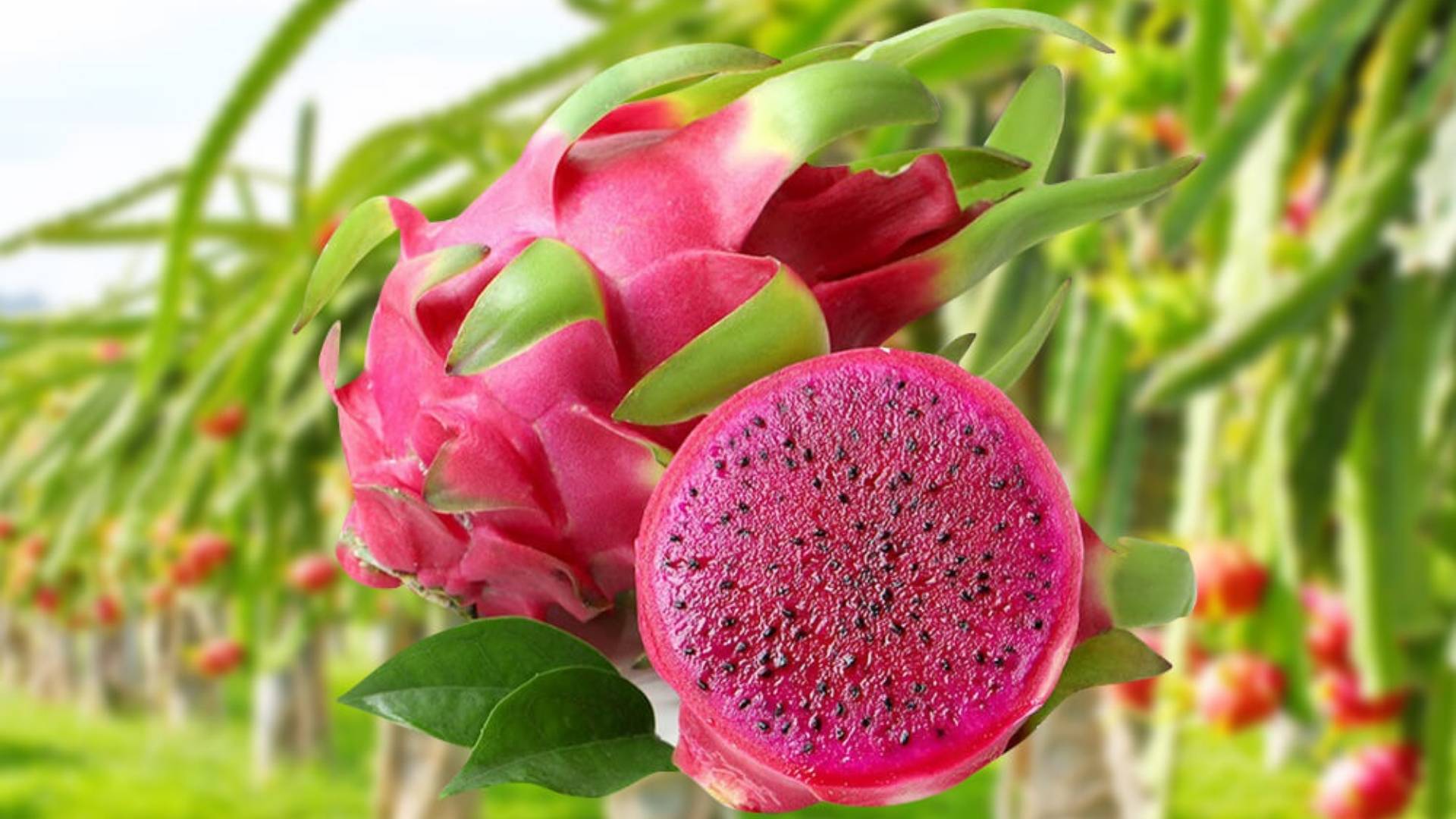
Red flesh dragon fruit has become increasingly important in Vietnam’s premium export segment. The fruit has bright red or pink flesh with stronger visual appeal and generally higher sweetness levels than white flesh varieties. Fruit size is usually medium to large, with average weights ranging from 300 to 500 grams. Red flesh dragon fruit is generally higher than white flesh dragon fruit.
Step-by-Step Guide to Importing Dragon Fruit from Vietnam
1. Find a Good Supplier
Choosing the right supplier is one of the most important steps when importing dragon fruit from Vietnam.
There are several common ways global buyers source dragon fruit exporters in Vietnam. Each method offers different advantages depending on sourcing experience, order volume, and verification capability.
| Sourcing Method | Advantages | Disadvantages |
| Online B2B Sourcing Platforms (Alibaba, VinaSources, Global Sources) |
|
|
| Trade Shows (Vietfood & Beverage, Thaifex) |
|
|
| Sourcing Agencies |
|
|
After identifying potential suppliers, buyers should verify whether the company has real export capability and operational experience before discussing bulk orders.
Here are some tips to verify the supplier:
- Search the business tax code on the Vietnam National Business Registration Portal.
- Request valid copies of GlobalGAP, SMETA, or BRC certificates with current expiry dates.
- Validate the Plantation Unit Code (PUC) and Packing House Code (PHC) via the Plant Protection Department.
- Review past export history using customs data or historical Bills of Lading.
- Conduct a live video call to tour the sorting and packing facilities in real-time.
- Cross-reference client testimonials or ask for references from previous international buyers.
You should notice some common scam warning signs:
- Be cautious of price quotes that are significantly lower than the current market rates.
- The company uses free email domains (e.g., @gmail.com) instead of business domains.
- Company information on the website does not match the details on the business license.
- The business address is vague, non-existent, or located in a residential-only area.
- Certificates appear edited, or the registration numbers do not return results on official databases
- The supplier pressures buyers to transfer deposits urgently.
- Company address information is inconsistent across documents and websites.
- Product photos appear copied from other exporters.
- The supplier refuses to provide export documentation samples.
2. Make a Contract
A well-structured export contract serves as the primary safeguard against the inherent risks of the perishable fruit trade.
By formalizing clear agreements on quality, logistics, and financial terms, buyers can significantly reduce the potential for disputes and ensure a stable supply chain from Vietnamese farms to global markets.
Key contractual components
- Product specifications: Define the specific dragon fruit variety, weight per fruit, and permissible defect tolerances. Clearly state the required skin condition and minimum expected shelf life upon arrival.
- Pricing terms: Clarify the pricing basis, currency, and whether costs include packaging, palletization, inland trucking, cold storage, or export documentation fees. Seasonal price fluctuation conditions should also be discussed in advance.
- Incoterms: Confirm whether the shipment uses EXW, FOB, CIF, or DDP terms. Clearly define which party handles export customs clearance, freight booking, insurance, and destination delivery.
- Payment terms: Discuss payment method, deposit percentage, balance payment timing, and beneficiary bank information. Buyers should also confirm the refund or compensation conditions for shipment disputes.
- Order quantity and loading: Confirm Minimum Order Quantity (MOQ), estimated container loading capacity, and whether mixed varieties or mixed grades are allowed in one shipment. Production lead time and harvest scheduling should also be clarified.
- Packaging standards: Detail the carton specifications, including weight capacity and ventilation holes, to withstand high-humidity environments. Include all mandatory labeling requirements for your target market, such as origin, weight, and PUC/PHC codes.
- Cold Chain Requirements: Set strict temperature and humidity parameters for the duration of the voyage. Mandate the use of calibrated data loggers in every container to provide a verifiable record of the thermal environment.
- Inspection and Quality Claims: Define the timeline and procedure for filing quality claims, usually within 24 to 48 hours of container de-vanning. Specify that an independent third-party report (e.g., from SGS or Intertek) will serve as the final evidence for compensation.
- Shipment Schedule and Lead Times: Agree on a firm cut-off date for harvest and the expected transit time to the port of discharge. Include clauses for potential delays caused by weather conditions or vessel omissions during peak seasons.
- Legal and Dispute Resolution: Confirm governing law, force majeure conditions, dispute resolution procedures, and penalties for delayed shipment or quality non-compliance. Written agreements should clearly define responsibilities for both parties.
When negotiating contracts, experienced buyers usually request all technical specifications in written form instead of relying only on verbal discussions or email conversations.
Important Contract Precautions
- Verify that the payment information belongs to the supplier’s registered company.
- Avoid vague quality descriptions without measurable specifications.
- Confirm the compensation policy before transferring deposits.
- Clarify the compensation policy for weight loss or spoilage exceeding the standard 3%–5% threshold.
- Do not transfer the final balance until you have verified the shipping documents through official channels.
- Review all Incoterms responsibilities carefully before signing.
- Confirm whether inspection costs are covered by the buyer or the supplier.
3. Product Packaging and Pre-Shipment Inspection
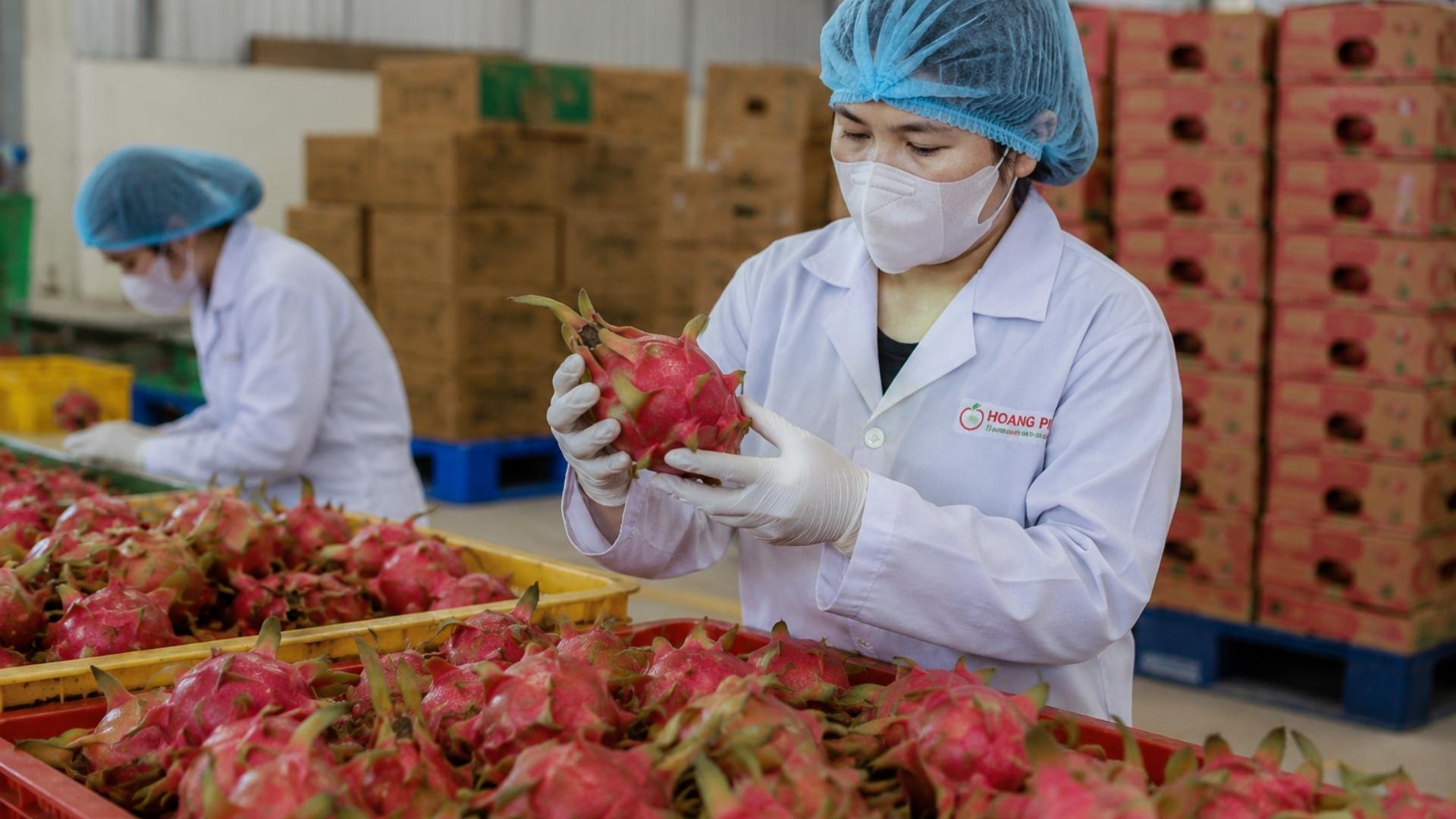
Proper packaging and rigorous pre-shipment inspections are important in protecting dragon fruit quality during export transportation.
Here are dragon fruit packaging and storage guidelines:
- Use double-walled corrugated fiberboard boxes capable of withstanding 95%–100% humidity without collapsing under the weight of stacked pallets.
- Use ventilation holes on cartons to improve airflow and reduce moisture accumulation during transportation.
- Wrap each dragon fruit in individual polyethylene (PE) bags or protective foam netting to prevent friction burns and bruising during transit.
- Pre-cool the fruit to a core temperature of 5°C to 6°C immediately after packing to remove field heat and slow the respiration rate.
- Maintain a steady container temperature between 6°C to 7°C with a relative humidity of 90%–95% for sea freight.
- Avoid co-shipping dragon fruit with high ethylene producers like bananas or mangos, as this accelerates skin yellowing and wilting.
- Secure pallets with plastic strapping and edge protectors to prevent shifting during maritime movement.
- Avoid excessive humidity buildup inside cartons to reduce mold and condensation risks.
Many buyers conduct pre-shipment inspections before cargo departure. This process helps ensure that the fruit meets the exact grading, color, and size specifications defined in your contract before the container is sealed.
For high-volume consignments, it is highly recommended to appoint an independent firm, such as SGS Vietnam, QIMA, or V-Trust, to conduct pre-shipment inspections on your behalf.
4. Handle Customs Clearances
After the shipment has been packed and inspected, the next step is preparing customs clearance procedures in both Vietnam and the destination market.
Most exporters in Vietnam will handle export customs procedures locally, while importers or customs brokers manage clearance in the destination country. However, buyers should still review all documentation carefully before shipment departure to ensure consistency across the entire shipment file.
Export Documents Commonly Required:
- Commercial Invoice
- Packing List
- Bill of Lading or Air Waybill
- Phytosanitary Certificate
- Certificate of Origin
- Laboratory Testing Reports
- PUC and PHC Information
- HS Code Verification
Upon arrival, authorities perform several rigorous checks to ensure food safety and biosecurity.
- Confirm whether irradiation treatment is required for the destination market, especially for countries such as the United States or Japan.
- Verify pesticide residue limits before shipment departure through random sampling and laboratory testing to ensure compliance with local food safety standards.
- Check retail labeling and traceability requirements in advance, including mandatory markings such as fruit variety, net weight, country of origin, exporter information, and importer details.
- Confirm whether import permits are required for fresh dragon fruit shipments and ensure the importer holds valid authorization for fresh produce imports.
- Review destination quarantine and food safety inspection procedures, particularly inspections related to fruit flies, pests, soil contamination, or plant disease risks.
- Coordinate customs document review carefully to ensure shipment quantity, HS codes, carton labels, and physical cargo condition match the customs declaration data.
5. Manage Shipping and Logistics
Dragon fruit is a delicate product. Its shelf life depends entirely on how carefully you manage the shipping process from the farm to your warehouse. Because dragon fruit is sensitive to temperature and physical damage, choosing the right logistics strategy is key to your business success.
You can choose between two main ways to transport your dragon fruit:
- Air Freight (Best for Speed): Air freight is much faster than sea shipping. While it is more expensive, it is the best option for high-end markets, small sample orders, or when you need the freshest fruit possible. Air transport significantly reduces transit time, ensuring your dragon fruit arrives in premium condition, ready for immediate display.
- Reefer Sea Freight (Best for Volume): This is the most popular choice for supermarket chains and large wholesalers. It is the most cost-effective way to ship large quantities of dragon fruit. You will use 20ft or 40ft refrigerated containers (Reefers) to keep the fruit cool during the long journey.
Here is a guide to estimated transit times and sea freight costs from Vietnam to major international markets:
| Destination Market | Estimated Transit Time | Estimated Reefer Cost (20ft) | Estimated Reefer Cost (40ft) |
| China | 3 – 7 Days | $800 – $1,500 | $1,200 – $2,500 |
| South Korea | 7 – 12 Days | $1,200 – $2,200 | $2,000 – $3,500 |
| EU (Rotterdam) | 28 – 35 Days | $1,200 – $2,200 | $5,500 – $8,500 |
| U.S. West Coast | 22 – 30 Days | $4,000 – $6,000 | $6,500 – $9,500 |
To avoid quality loss and ensure your shipment arrives perfectly, follow these professional precautions:
- Book Equipment Early: Reefer containers are often hard to find during the peak harvest season in Vietnam. Always book your space weeks in advance.
- Choose Direct Routes: Avoid transshipments whenever possible. This reduces the risk of power disconnection at busy shipping hubs.
- Plan for Delays: Port congestion can happen. Always have a backup plan in case a shipment takes longer than expected, which could affect the fruit’s freshness.
Import Regulations for Vietnamese Dragon Fruit in Major Markets
Import regulations for Vietnamese dragon fruit vary significantly by destination market and product processing status.
| Market | Main Import Requirements | Quality and Compliance Standards |
| China |
|
|
| United States |
|
|
| European Union |
|
|
Top 5 Vietnamese Dragon Fruit Exporters
Below are some of the most recognized dragon fruit exporters in Vietnam that international buyers frequently source from.
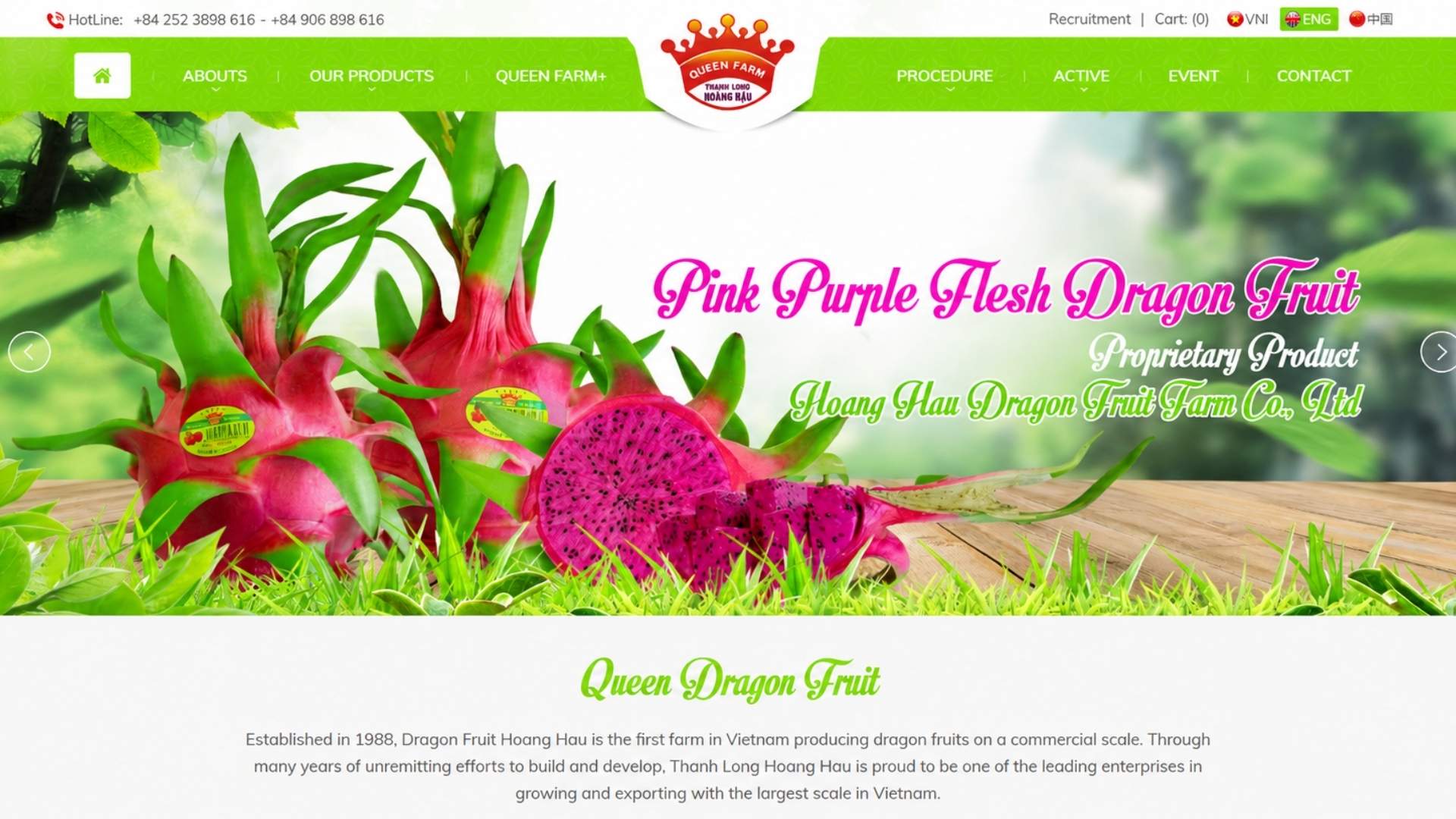
1. Hoang Hau Dragon Fruit Farm Co., Ltd.
Established in 1988, Hoang Hau is widely recognized as the pioneer of commercial dragon fruit farming in Vietnam. The company currently owns two dragon fruit farms with an area of over 500 hectares of its own GLOBALG.A.P. certified orchards, ensuring complete control over the supply chain. Their product profile includes white flesh dragon fruit, red flesh dragon fruit, dried purple and pink dragon fruit, etc.
Contact Information
- Website: www.hoanghau.com.vn
- Email: [email protected]
- Phone: +84 906 898 616
2. Hoang Phat Fruit Co., Ltd.
Founded in 2012, Hoang Phat Fruit has become one of Vietnam’s major fresh fruit exporters, with dragon fruit serving as one of its core export products. The company reports an annual export capacity of approximately 7,000 tons of white flesh dragon fruit and 10,000 tons of red flesh dragon fruit. Hoang Phat also operates packing and treatment facilities supporting exports to Japan, South Korea, Australia, the United States, and Europe.
Contact Information
- Website:
www.hoangphatfruit.com - Email: [email protected]
- Phone: 028 62918496
3. The Fruit Republic (TFR)
The Fruit Republic is a Dutch-managed enterprise that has revolutionized the Vietnamese fresh produce sector through a strict contract farming model. They are the only exporter in the world providing a year-round supply of GLOBALG.A.P. certified dragon fruit. TFR operates BRC Grade-A certified facilities, making them the preferred partner for high-end European supermarkets that demand the highest levels of social and environmental compliance (including GRASP and SMETA standards).
Contact Information
- Website: www.thefruitrepublic.com
- Phone: +84 (0)28 5410 5668
4. Nafoods Group
Nafoods Group is a major Vietnamese agricultural exporter with strong capabilities in fruit processing, frozen products, puree manufacturing, and juice concentrates. The company exports various tropical fruit products globally and has invested in processing technologies and international food safety certifications to support industrial buyers and beverage brands.
Contact Information
- Website: www.nafoods.com
- Email: [email protected]
- Phone: +84 28 37 447 666
5. Chanh Thu Export Import Company Limited
Chanh Thu is one of Vietnam’s experienced fresh fruit exporters with more than 25 years in the agricultural export industry. The company specializes in exporting fresh and frozen fruits to major international markets, including the United States, China, Japan, Australia, South Korea, and Europe.
With factories located in Ben Tre, Khanh Hoa, and Dak Lak provinces, Chanh Thu Group has an annual supply capacity exceeding 200,000 tons of fruit products.
Contact Information
- Website: www.chanhthu.com
- Email: [email protected]
Top 3 Notable Fruit Sourcing Events
Below are some of the major sourcing exhibitions in Vietnam where buyers can connect with dragon fruit exporters and fresh produce suppliers.
Vietnam Sourcing Expo 2026 – VIS 2026
Vietnam International Sourcing Expo is one of Vietnam’s major B2B sourcing exhibitions focusing on export-oriented manufacturers, agricultural products, houseware appliances, and international supply chain connections. The event attracts global buyers, sourcing agencies, retailers, and distributors looking to diversify sourcing from Vietnam.
| Event Information | Details |
| Event Name | Vietnam Sourcing Expo 2026 |
| Venue | SECC, Ho Chi Minh City |
| Date | September 3 – 5, 2026 |
| Typical Scale | 400+ participating businesses from 60+ countries; 10000+ professional visitors |
Vietnam Foodexpo
Vietnam Foodexpo is one of the country’s largest international food and agricultural trade exhibitions, organized with strong participation from Vietnamese export companies and international buyers. The exhibition covers fresh fruits, processed food, beverages, seafood, and agricultural products.
| Event Information | Details |
| Event Name | Vietnam Foodexpo |
| Venue | SECC, Ho Chi Minh City |
| Date | November 11-14, 2026 |
| Typical Scale | ~300 leading Vietnamese agricultural and F&B companies, ~400 exhibiting companies. |
AgroViet
Hosted by the Ministry of Agriculture and Rural Development (MARD), AgroViet is the most prominent and long-standing agricultural trade fair in Northern Vietnam. The exhibition attracts agricultural cooperatives, fruit exporters, processing companies, and agribusiness suppliers from multiple growing regions across Vietnam.
| Event Information | Details |
| Event Name | AgroViet |
| Venue | Economic and Trade Exhibition and Transaction Center, No. 489 Hoang Quoc Viet Street, Nghia Do Ward, Hanoi, Vietnam. |
| Date | November 12-15, 2026 |
| Typical Scale | ~350 international and domestic booths, 20,000 visitors, |
Simplify Dragon Fruit Sourcing in Vietnam with VinaSources
Finding reliable dragon fruit suppliers in Vietnam can take time, especially when buyers need to evaluate export capability, certifications, product quality, and cold chain handling.
VinaSources helps simplify this process by connecting international buyers directly with verified Vietnamese exporters, growers, and agricultural processing companies.
Beyond a simple digital directory, VinaSources offers an end-to-end operational ecosystem designed to protect your capital and ensure product quality:
- Vetted Supplier Network: Access an extensive, pre-audited catalog of Vietnamese fruit exporters holding active GlobalG.A.P., HACCP, and market-specific phytosanitary registrations (GACC, FDA, USDA-APHIS).
- On-Site Quality & Inspection Support: We assist global buyers in coordinating third-party pre-shipment inspections to verify fruit calibration, brix metrics, and pulp stability before the container seal is locked.
- Logistics & Export Facilitation: Leverage our network of regional freight forwarders to optimize your cold-chain parameters from packing facilities to your destination port.
Looking for reliable Vietnamese dragon fruit suppliers? Contact the VinaSources team at [email protected] to connect with verified fruit exporters for your business.