
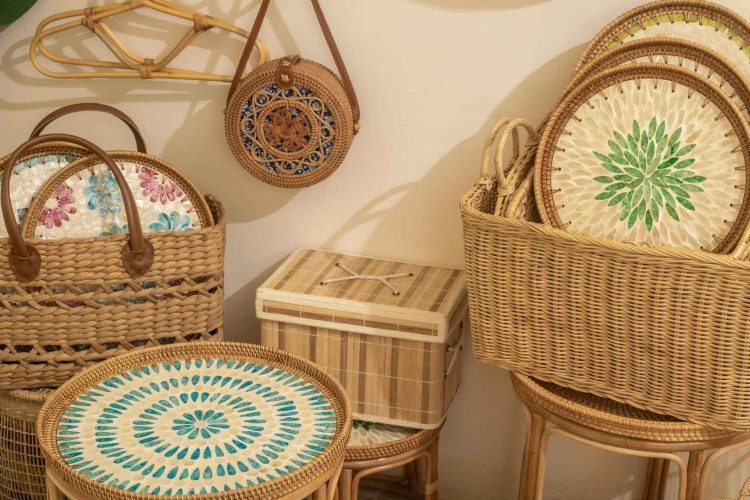
Rattan baskets from Vietnam are widely sought after for their natural aesthetics and competitive pricing, but sourcing them is not always straightforward. Global buyers often face challenges related to supplier reliability, product quality consistency, and export compliance.
This practical guide breaks down the importing process step by step, from finding reliable suppliers to handling customs and documentation, and managing international shipping.
Overview of Vietnam’s handicraft products exports
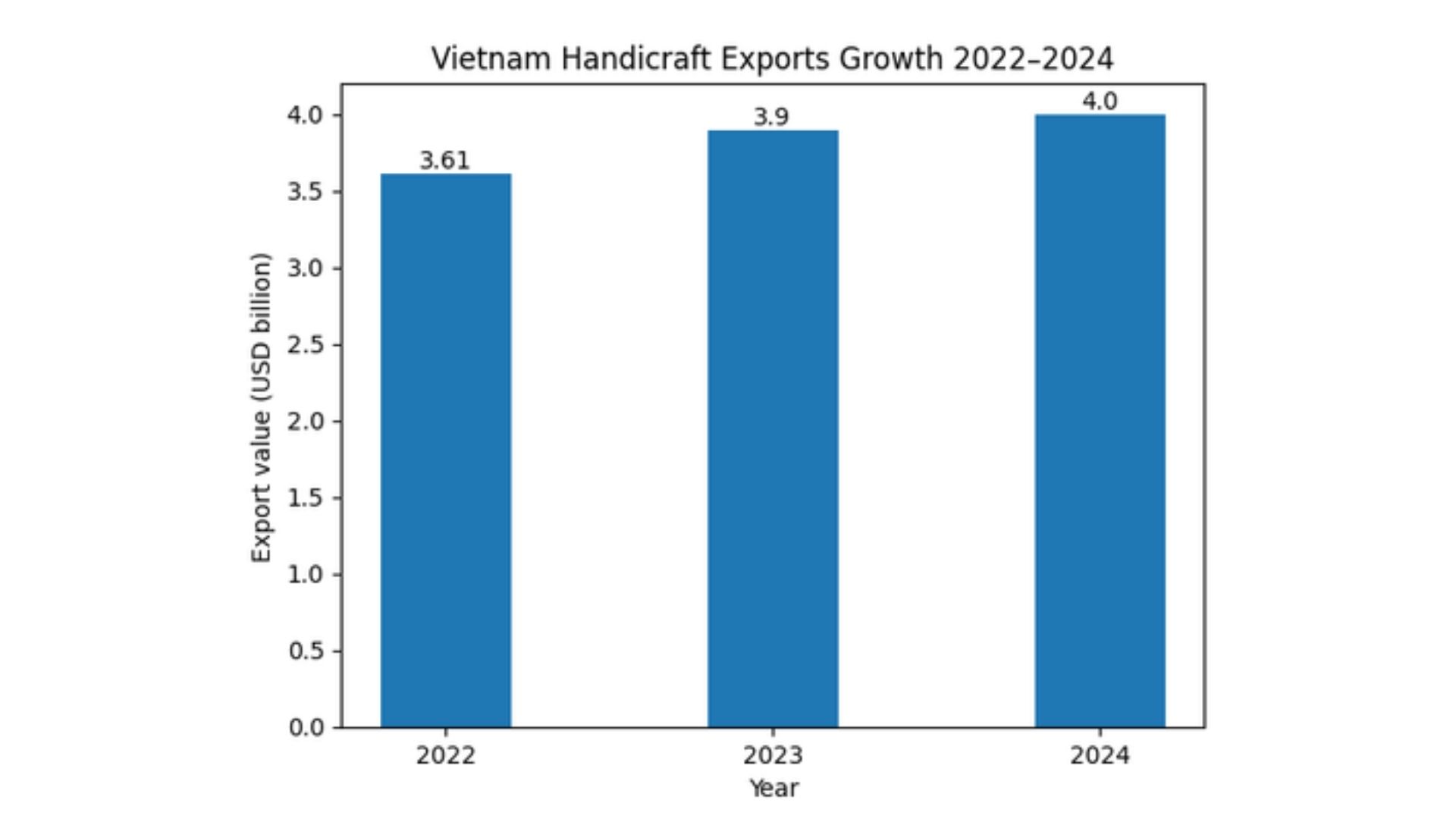
Vietnam is a major export hub for handicraft products, including bamboo, rattan, sedge, and woven household items. The country currently ranks in the top 3 worldwide in export value, behind only China and India. The industry’s export value reached USD 3.5 billion in 2023 and is on a trajectory to hit USD 4.5 – 4.7 billion by the end of 2025.
In the first nine months of 2024, exports for this specific group reached USD 594.8 million, representing a 10.3% year-on-year increase. The United States remains the largest market, accounting for 41.6% of total exports, followed by Japan and the United Kingdom. Currently, Vietnamese handicrafts are present in 163 countries and territories, meeting approximately 10% of global market demand.
Why Global Buyers Import Rattan Baskets From Vietnam
-
Strong raw material availability
Vietnam possesses a vast and diverse natural resource base that ensures a steady supply for large-scale orders. The country has an extensive bamboo and rattan area covering approximately
1.5 million hectares. This resource is distributed across most provinces, with 37 out of 63 provinces having over 10,000 hectares dedicated to these materials. This geographical spread prevents supply chain bottlenecks and allows for a variety of rattan species, each suited for different basket types, from flexible fine-weave baskets to rigid storage bins.
-
Skilled handwoven production
The quality of Vietnamese rattan baskets is rooted in a tradition of manual expertise. Vietnam is home to over 1,000 traditional rattan and bamboo weaving villages, accounting for 24% of the total number of handicraft villages in the country. These villages employ over 1.4 million workers, many of whom are artisans with generational knowledge. This human capital allows factories to offer extensive OEM/ODM services. Buyers can request custom patterns, complex shapes, and unique textures that automated machinery cannot replicate.
-
Competitive prices with high-quality assurance
While manufacturing wages in Vietnam have risen, they remain highly competitive compared to other major exporters like China. The industry leverages a decentralized production model where large firms outsource specific weaving tasks to communal employees in craft villages. This model allows for lower overhead costs while maintaining the high quality associated with artisan handwork. So that global buyers can source premium, handwoven rattan baskets at price points.
6-step guide to importing rattan baskets from Vietnam
Importing rattan baskets from Vietnam requires a structured approach to ensure cost efficiency, compliance, and quality.
This six-step guide provides a data-driven framework for global buyers. Following these steps minimizes risk and establishes a reliable supply chain from a key global exporter.
-
Find a good supplier
Identifying a reliable supplier is the most critical step when you import rattan baskets from Vietnam. Conduct thorough due diligence before entering into any commercial cooperation.
Start by evaluating potential partners based on valid business licenses, production capacity, and export experience.
It is also important to verify compliance with relevant international standards, especially those related to product safety, material treatment, and sustainability.
You can conduct factory site audits, live video calls, and references from previous overseas clients to assess actual operations.
-
Place a sample order
Always order a physical sample before finalizing a bulk order.
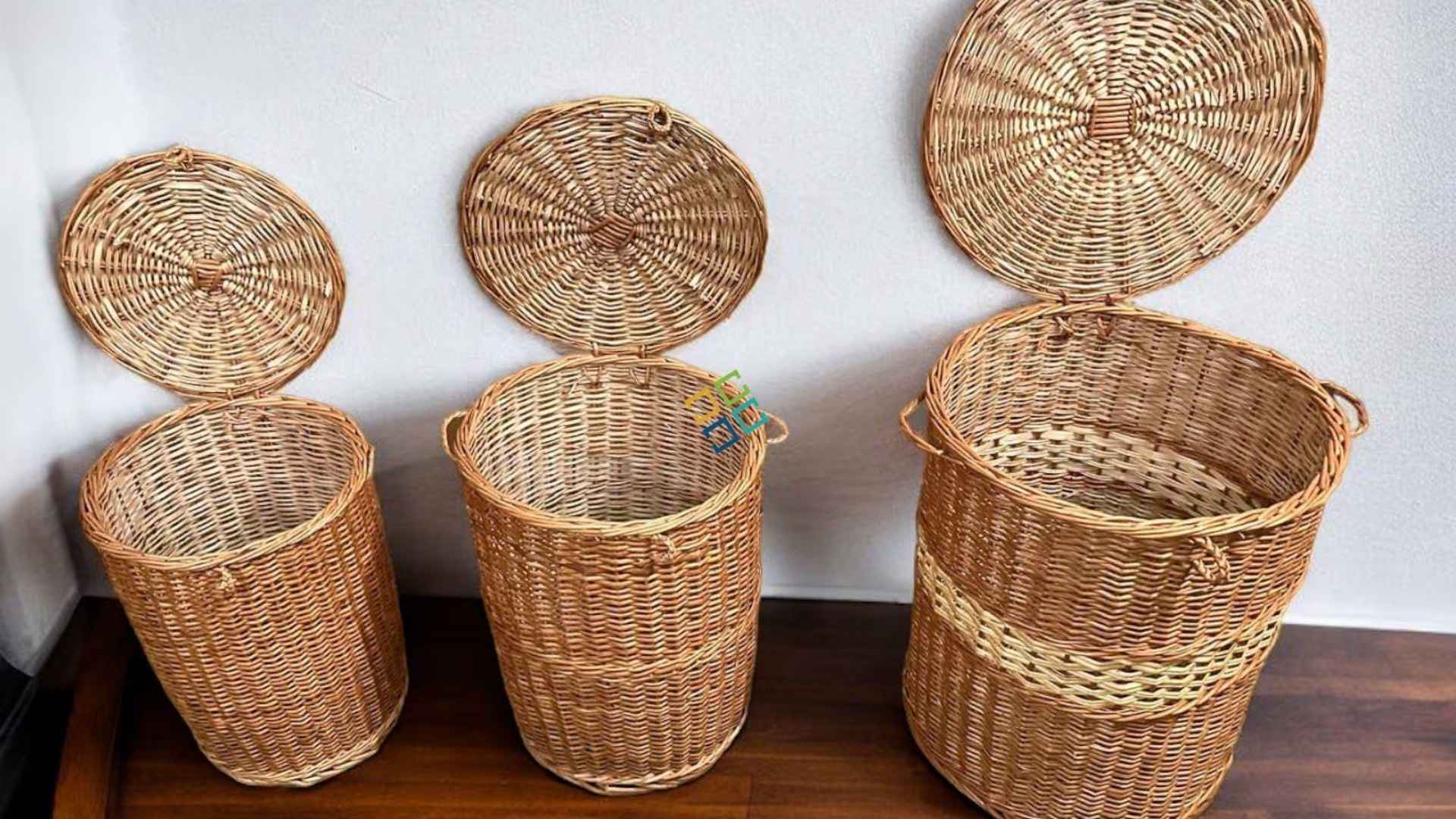
When reviewing rattan basket samples, you should focus on 3 core factors to ensure consistent quality and market suitability.
- Material quality: High-quality rattan fibers are even in color, flexible, and free from brittleness or fraying.
- Weaving technique and finishing: The weaving should be tight, uniform, and structurally secure. Basket edges must be smoothly finished without sharp points.
- Design and aesthetics: Styles should align with current trends such as modern, minimalist, or rustic. Colors must be consistent and colorfast.
-
Make a contract
Once a supplier is selected, a clear and enforceable contract becomes essential. A well-structured written contract protects both parties, minimizes misunderstandings, and serves as a critical reference if issues arise during production, inspection, or shipment.
A standard export contract for rattan baskets should clearly define the following elements:
- Detailed product specifications
- Unit pricing, currency, and agreed payment terms
- Production schedule, lead time, and delivery terms
- Dispute resolution mechanism, including governing law and arbitration venue
Most international buyers apply Incoterms to allocate responsibilities and risk clearly. Commonly used terms include FOB and CIF, depending on whether the buyer or seller manages freight and insurance.
-
Customs duties, taxes & tariffs
Customs duties vary depending on the destination country, the HS tariff classification, and any applicable trade agreements. Rattan baskets are commonly classified under HS code 4602, but the final duty rate is determined by local customs authorities based on product structure and material composition.
In some markets, preferential tariffs may apply if the shipment qualifies under a free trade agreement. For example, imports into the European Union may benefit from reduced or 0 import duty under the EU-Vietnam Free Trade Agreement (EVFTA), provided the supplier presents a valid certificate of origin.
Beyond import duties, buyers should also factor in Value Added Tax (VAT) or Goods and Services Tax (GST), as well as customs clearance fees, port handling charges, and inspection costs.
To avoid unexpected costs or clearance delays, buyers should consult their national customs authority in advance or work closely with a licensed customs broker to confirm duty rates and documentation requirements before shipment.
-
Packaging & labelling
Proper packaging prevents damage and ensures customs clearance.
Rattan baskets require protection from moisture and crushing. Use plastic wraps, silica gel packets, and sturdy cartons.
Packaging should also clearly display: Product description, country of origin and quantity, and carton number.
Some markets require additional compliance labelling. Buyers should confirm requirements early to avoid relabelling costs at destination ports.
-
Manage shipping
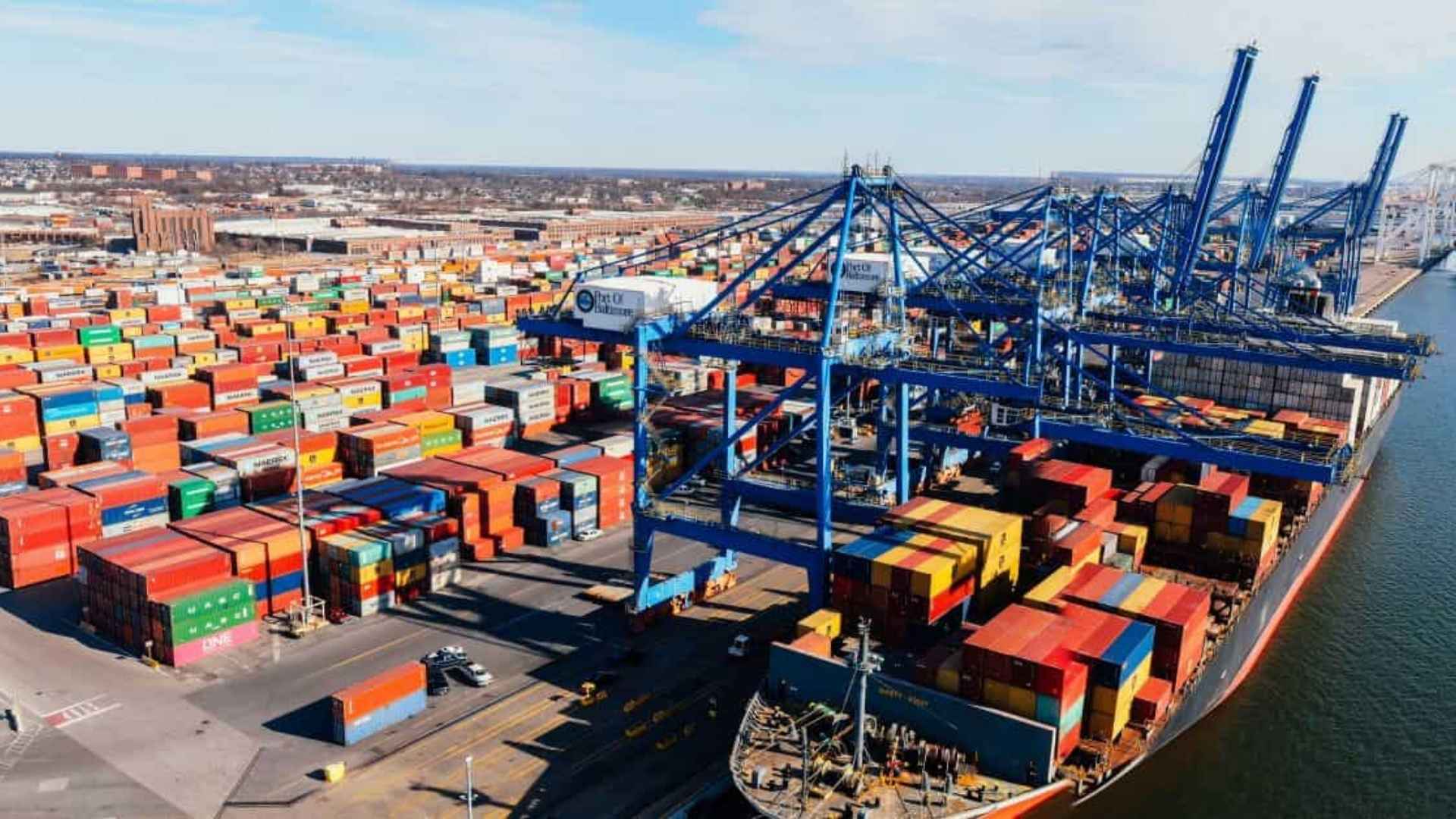
The final step is to choose a logistics method that balances cost, delivery time, and shipment volume.
There are two main shipping methods, and the right choice depends on order size, urgency, and budget.
| Shipping Method | Advantages | Disadvantages | Best Use Case |
| Sea Freight | Lowest cost per unit. High container capacity. Flexible options for full container load and less-than-container load shipments. | Longer transit times. Requires advanced production and booking planning. | Bulk B2B orders and long-term sourcing programs. |
| Air Freight | Fast transit time. Reduced risk of storage damage. Better schedule reliability. | Significantly higher shipping costs. Not economical for large or bulky shipments. | Samples, small trial orders, and urgent stock replenishment. |
To clear customs, you will need a dossier including the Commercial Invoice, Packing List, Bill of Lading, Certificate of Origin, and a Phytosanitary Certificate (to prove the natural materials have been treated for pests).
Where to find reliable rattan basket suppliers?
To find reliable suppliers of rattan baskets from Vietnam, global importers can explore the following channels:
-
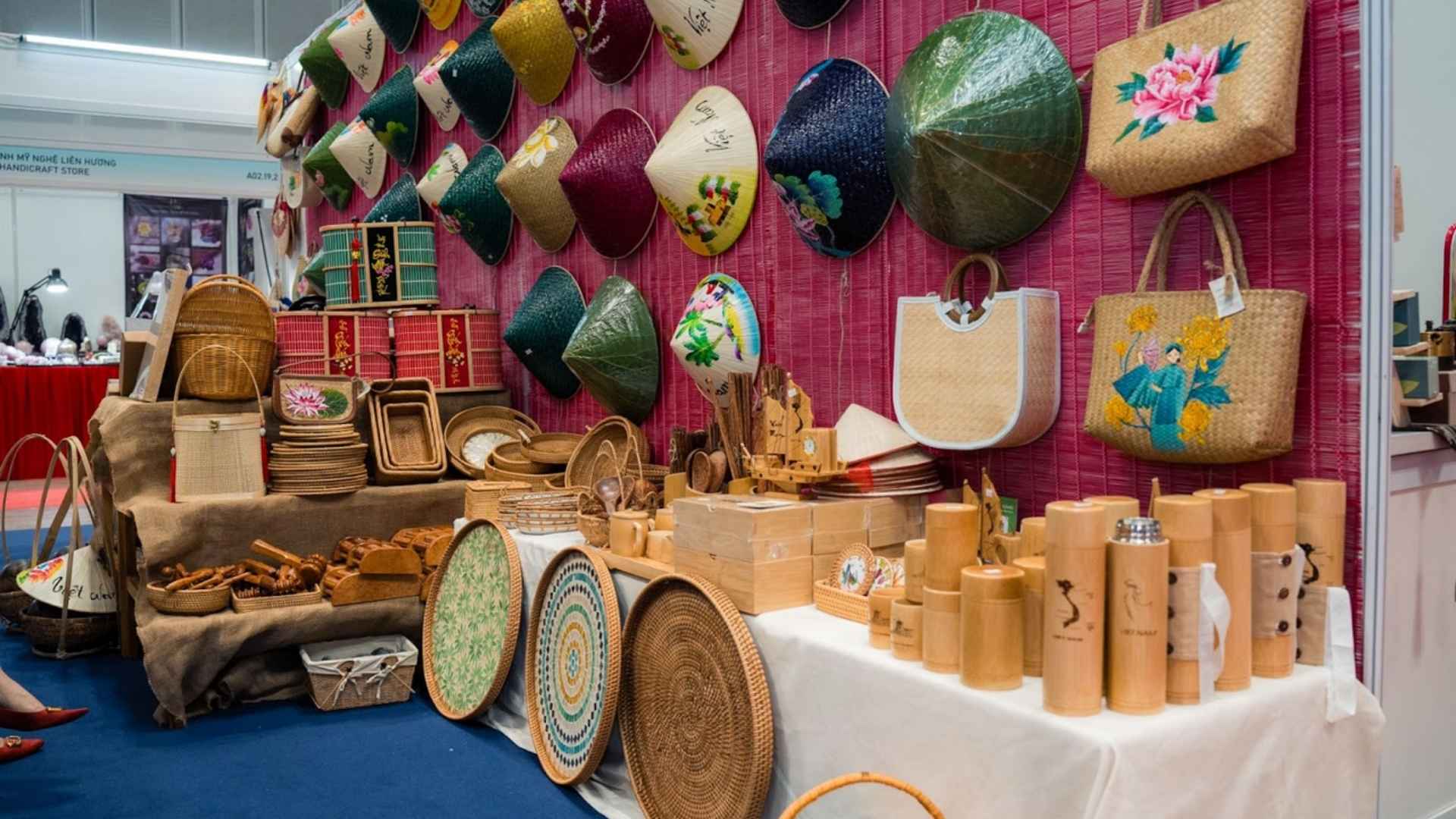
Trade fairs
Trade shows in Vietnam serve as high-impact sourcing events where buyers can meet suppliers face-to-face and assess product quality firsthand.
This method helps build trust and enables quick comparison across multiple manufacturers. However, it requires travel time and costs, is limited to fixed event schedules, and still requires follow-up verification before placing large orders.
Lifestyle Vietnam
Lifestyle Vietnam is an international trade fair dedicated to home décor, handicrafts, and lifestyle products, including rattan baskets and other woven goods. The event typically features around 1,600 booths and attracts nearly 600 exhibitors, bringing together manufacturers, exporters, designers, and international buyers. It serves as a key sourcing platform for B2B buyers seeking Vietnamese suppliers with export experience and design-oriented products.
VIFA EXPO
VIFA EXPO is one of Vietnam’s largest international exhibitions for furniture, home accessories, and handicraft products, with a strong focus on bamboo and rattan items. The show typically features around 2,800 booths and more than 680 exhibitors, covering sectors such as indoor and outdoor furniture, home décor, and handcrafted products.
For B2B buyers, VIFA EXPO is a key sourcing event to meet export-ready Vietnamese manufacturers, compare product quality on site, and establish direct business relationships with suppliers specializing in furniture and rattan handicrafts.
Its upcoming event in 2026:
- Date: March 8-11, 2026
- Location: SKY EXPO (Quang Trung Software Park) and WTC EXPO (Binh Duong), Ho Chi Minh City.
Vietnam Expo
Vietnam Expo is a long-running national trade fair organized by the Ministry of Industry and Trade of Vietnam. The exhibition covers multiple industries, including handicrafts, home products, furniture, and consumer goods, and is widely regarded as a key entry point for international buyers sourcing from Vietnam.
The event typically attracts over 20,000 visitors and more than 500 exhibitors from 16 or more countries, creating a broad networking environment for supplier discovery and market exploration.
Its upcoming event in 2026:
- Date: April 8–11, 2026
- Location: VEC, Dong Anh, Ha Noi
-
Online B2B sourcing platforms
B2B sourcing platforms connect importers with suppliers and manufacturers globally, including those based in Vietnam. They help buyers compare products, pricing, and basic capabilities at low cost. However, supplier information may not always be fully verified, and buyers still need samples, inspections, or audits to confirm quality and production reliability.
Alibaba
Alibaba is one of the largest global B2B marketplaces. It hosts millions of suppliers and allows buyers to search by product keyword, location, and certification status. Buyers can search for Vietnamese rattan basket manufacturers, compare pricing ranges, and review supplier verification badges.
VinaSources
VinaSources is a Vietnam-focused B2B sourcing platform that connects global buyers with verified Vietnamese manufacturers. The platform helps buyers shortlist suppliers by providing clearer visibility into minimum order quantities, indicative pricing, production lead times, and available logistics support, enabling more efficient and informed sourcing decisions. For buyers sourcing rattan baskets from Vietnam, VinaSources helps reduce supplier verification time and supports structured sourcing workflows.
MadeInChina
Although originally centered on Chinese suppliers, MadeinChina also lists suppliers from other countries. It connects buyers to a wide range of manufacturers across industries, including Vietnam. For buyers sourcing rattan baskets, Made-in-China can help to identify Vietnamese suppliers, benchmark pricing, and compare manufacturing capacities.
-
Work with direct factories
Working directly with a manufacturer is the most effective way to secure competitive pricing and ensure product consistency.
This can reduce unit costs and give buyers stronger control over quality, customization, and lead times. However, this approach requires thorough due diligence, including factory audits and sample approvals, and may involve higher minimum order quantities or communication challenges.
Below are examples of Vietnamese manufacturers relevant to rattan baskets and related handicrafts:
Thang Long Crafts Manufacture & Export., JSC
Thang Long Art Company is a prominent manufacturer and exporter of Vietnamese handicrafts. The company specializes in high-end rattan, bamboo, and seagrass products, including baskets, furniture, and home decor. It has experience supplying international markets, including the United States, Europe, and South Africa.
Contact information
- Address: No.14D, TT14, Van Quan, Ha Dong Dist, Ha Noi City, Viet Nam.
- Phone: (+84-24) 3992.3565
- Website: https://thanglongcraft.com/
Dan Tra Decor (Dan Tra Joint Stock Company)
Founded in 2011, Dan Tra Decor specializes in handmade rattan home décor products, including storage baskets, lampshades, and decorative trays. The company operates multiple production facilities across Vietnam with a workforce of over 100 workers, combining traditional craftsmanship with standardized production to serve domestic and export markets.
Contact information
- Address: 33 Xo Viet Nghe Tinh, ward 7, Da Lat city, Lam Dong, Vietnam
- Phone: (+84) 938 218 488
- Website: https://dantra.com.vn/
Common Types of Rattan Baskets Exported
When buyers import rattan baskets from Vietnam, products are typically categorized by function and end use.
Below are the most common rattan basket types, explained through their key characteristics and applications.
-
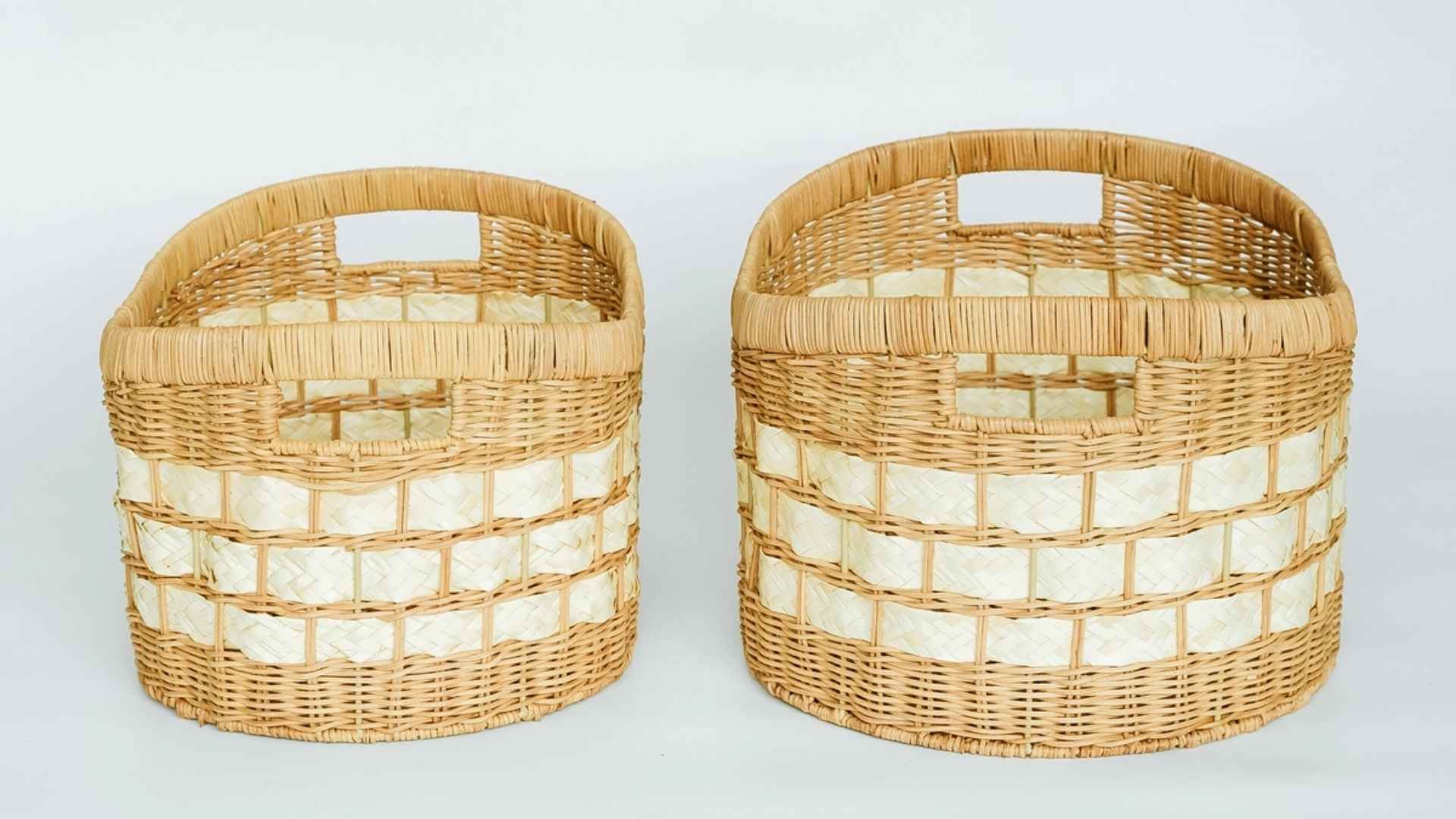
Storage baskets and hampers
Storage baskets and hampers are usually made from tightly woven natural rattan to ensure durability and load-bearing capacity. They are produced in standard shapes such as round, oval, or rectangular, often with reinforced rims, handles, or fitted lids.
These baskets are widely used for storing household items such as blankets, toys, or personal belongings.
-
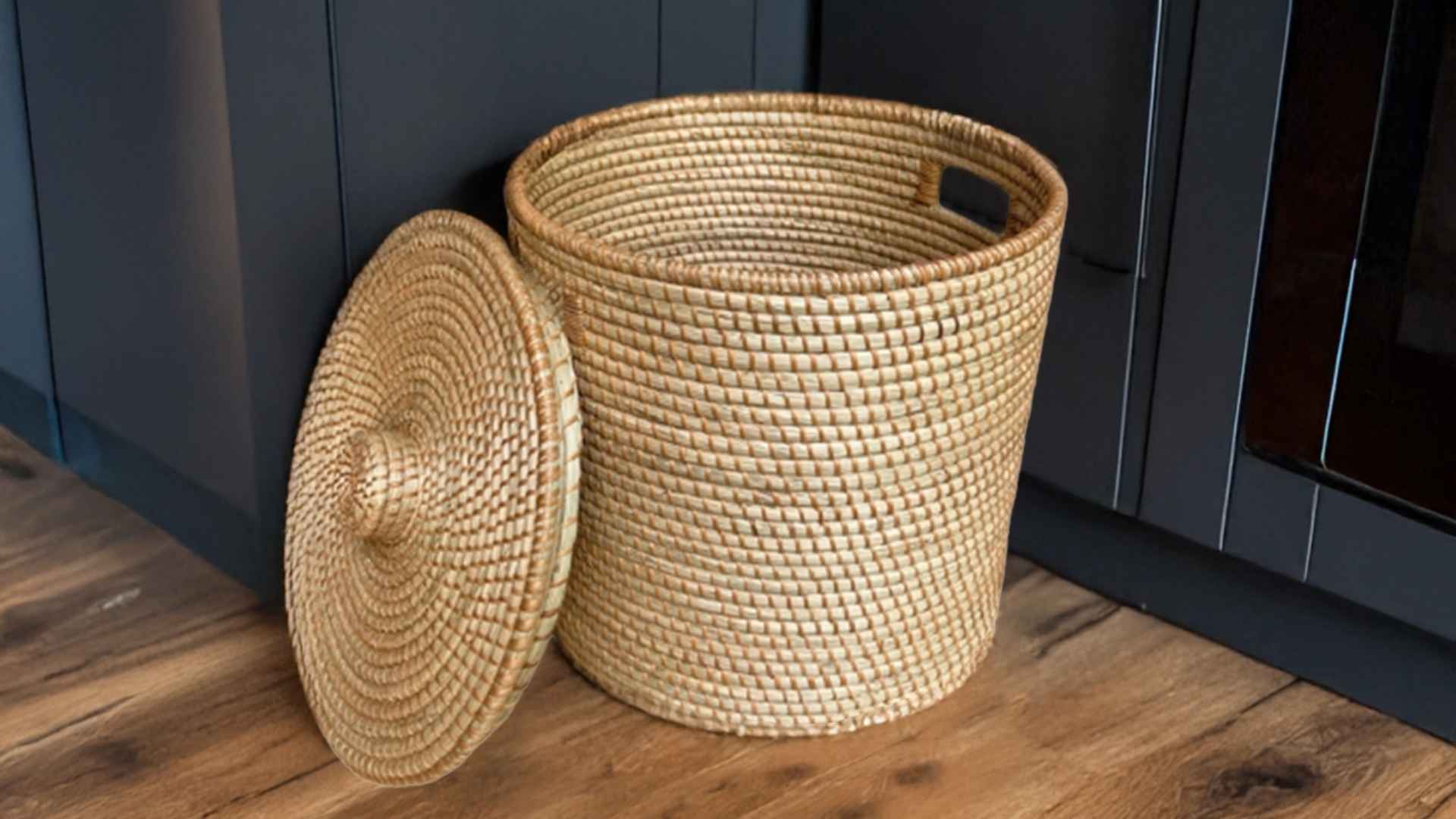
Laundry and home organization baskets
Laundry and home organization baskets are designed with breathable weaving structures to support airflow. They are typically lightweight but sturdy, and may include fabric liners, lids, or internal dividers, depending on buyer specifications.
These baskets are primarily used for laundry storage, wardrobe organization, and general home organization.
-
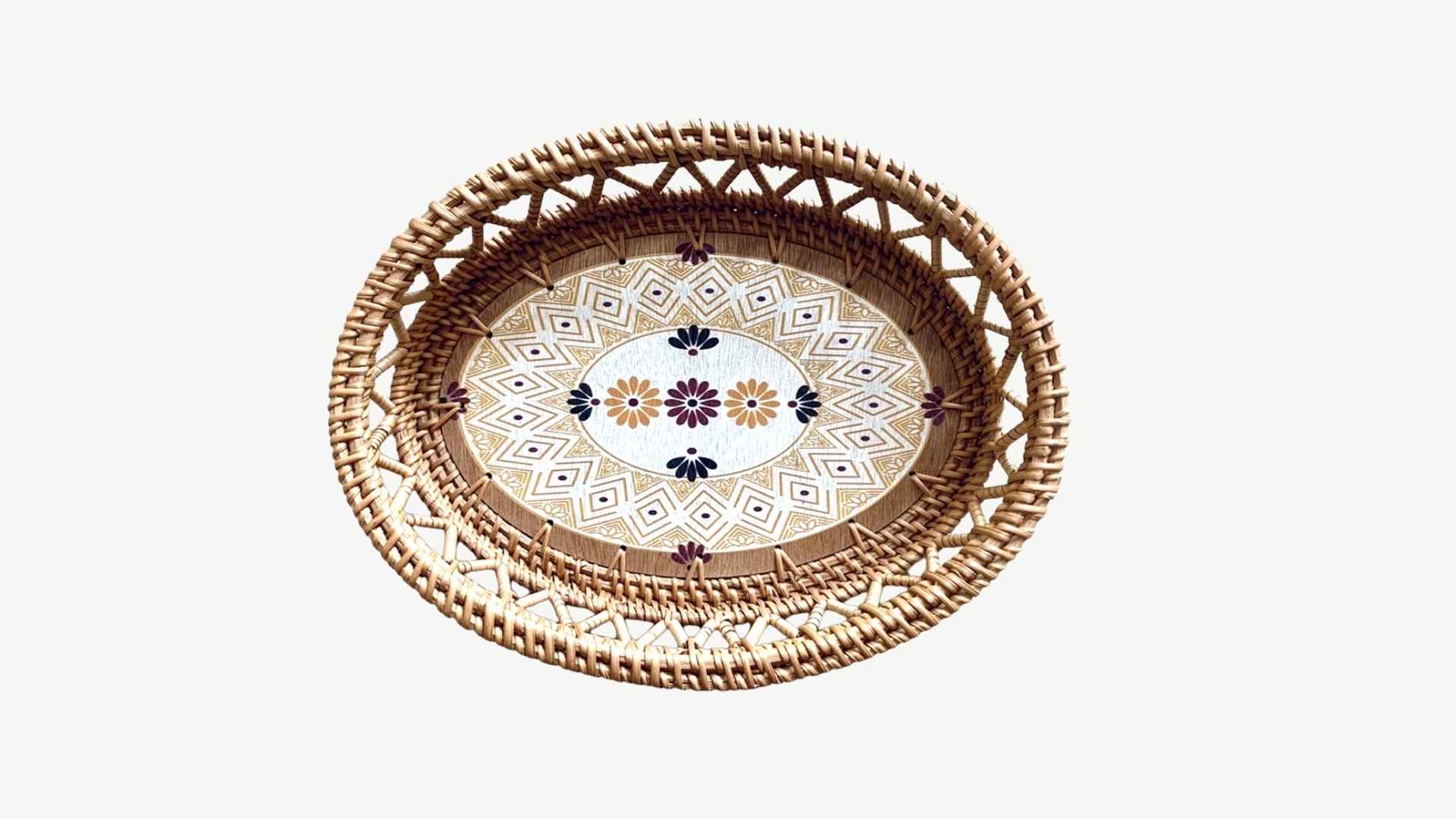
Decorative and gift baskets
Decorative and gift baskets emphasize design and visual appeal. They often feature finer weaving, smoother finishes, and decorative details.
These baskets are used for gift packaging, retail displays, and interior decoration.
What are the typical MOQs for rattan baskets?
Vietnamese rattan basket manufacturers typically set MOQs in the range of 100 to 1,000 pieces per design for standard products. For customized baskets, such as private label designs or special sizes, MOQs are usually higher.
What is the lead time for rattan baskets?
For standard rattan basket designs, typical production lead times range from 30-45 days after sample approval and deposit confirmation.
For customized or large-volume orders, lead times often extend to 45-60 days, depending on order size and factory workload.
What is the typical cost for rattan baskets?
The cost of rattan baskets varies depending on size, design complexity, level of craftsmanship, finishing, and order volume.
- Small or basic rattan baskets: approximately USD 2-6 per piece
- Mid-range rattan baskets: approximately USD 6-12 per piece
- Large or specialty rattan baskets: can range up to USD 40 per piece or higher
Working with VinaSources for importing rattan baskets?
When global buyers import rattan baskets from Vietnam, finding reliable and export-ready suppliers is a key challenge. VinaSources is a Vietnam-based B2B sourcing platform that connects international buyers with verified Vietnamese suppliers across sectors such as handicrafts, furniture, textiles, and home decor.
For buyers sourcing rattan baskets, the platform allows access to a curated range of export-oriented handicraft manufacturers. Suppliers are categorized by product type, materials, and production capability, making it easier to identify suitable partners efficiently.
Key features include tools for buyers to submit requests for quotations (RFQs), view verified supplier profiles, and access export-related information such as lead times, minimum order quantities, and certificates. This transparency helps buyers screen potential suppliers early in the process without spending excessive time on individual outreach or unverified directory listings.
Buyers interested in sourcing rattan baskets can contact VinaSources directly by phone at 1900.4356 or via email at [email protected] to receive supplier matches aligned with their product specifications, order volume, and target market requirements.