
Vietnam has become one of the world’s leading suppliers of fresh coconuts, thanks to its tropical climate, year-round harvests, and growing investment in export-grade processing. As global demand for natural beverages and healthy food products continues to rise, more importers, wholesalers, and supermarket chains are turning to Vietnam as a reliable source of origin.
In this article, we provide a simple step-by-step guide to help you import fresh coconuts from Vietnam safely, efficiently, and at a great price.
Overview of Vietnam’s Export of Fresh Coconut
Vietnam ranks among Southeast Asia’s top coconut producers, with over 200,000 hectares under cultivation and annual output near 2 million tons, placing it fifth globally in area and production. One-third of this growing area meets the standards for the US and EU to be recognized as organic.
The Mekong Delta drives this scale, particularly Ben Tre (over 80,000 hectares, 42% of the national area), Tra Vinh, and Tien Giang, where fertile soils and water resources support high yields.
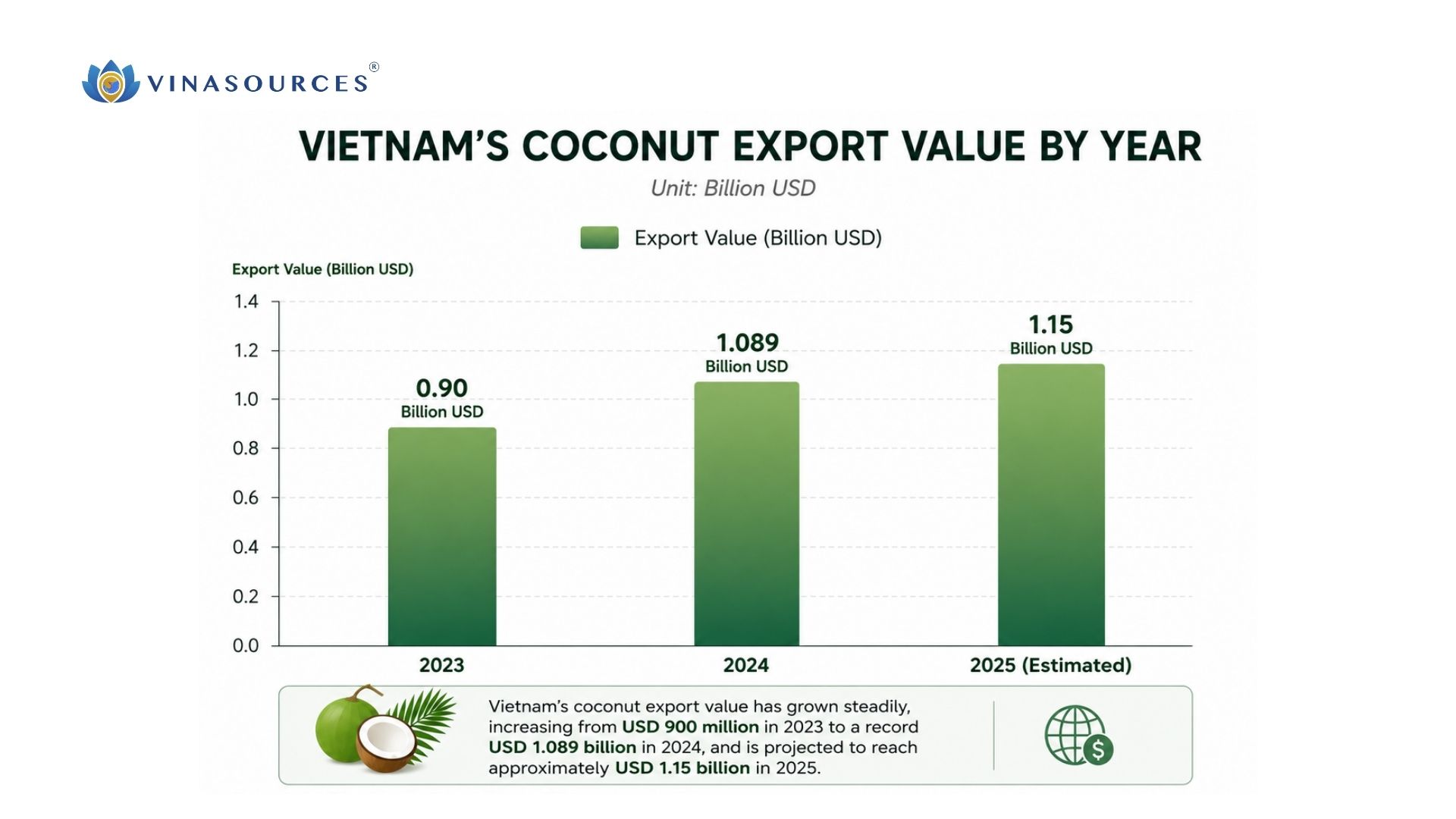
Fresh coconut exports from Vietnam have expanded strongly alongside the country’s broader coconut industry. In 2024, Vietnam’s coconut export value exceeded USD 1 billion, supported by growing shipments of fresh coconuts, coconut water, desiccated coconut, and processed coconut products.
China has become one of the fastest-growing export markets. Other important export destinations include the United States, South Korea, the EU, Japan, and the Middle East.
Key Advantages of Importing Fresh Coconut from Vietnam
Vietnam ranks as the 4th largest coconut exporter in the Asia-Pacific and 5th globally, with strong export growth driven by rising global demand for fresh tropical fruits and coconut water products.
The country offers several sourcing advantages for international buyers, particularly in terms of flavor profile, pricing, production scale, and export readiness.
Below are the key advantages of importing fresh coconut from Vietnam:
| # | Factor | Brief Analysis |
| 1 | Outstanding Flavor and Product Quality | Vietnamese coconuts draw buyers with naturally sweet water (7-9% sugar), thin shells for easy processing, soft, creamy flesh ( 35% meat yield vs. global average), and high water content (27% vs. average). |
| 2 | Competitive Export Pricing | Vietnam benefits from relatively low production and labor costs compared to several regional exporters like Thailand and the Philippines. Large cultivation areas and strong farming communities also help maintain competitive pricing for bulk buyers. |
| 3 | Large Production Capacity | Vietnam has more than 200,000 hectares of coconut cultivation, mainly concentrated in the Mekong Delta region. The country produces nearly 2 million tons of coconuts annually, supporting stable, large-volume exports. |
| 4 | Stable Year-Round Supply | Tropical growing conditions allow coconut harvesting throughout the year in many regions of Vietnam. This helps importers maintain more consistent procurement schedules and inventory planning. |
| 5 | Improving Cold Chain and Logistics Infrastructure | Major ports such as Cat Lai and Cai Mep support reefer container exports to global markets. Many suppliers have also invested in cold storage, automated trimming lines, and export-standard packaging facilities. |
| 6 | Broad FTA Network | Vietnam participates in trade agreements such as CPTPP, EVFTA, and RCEP, which may help reduce tariffs and improve market access in several importing countries like the EU, Japan, Canada, and Australia. |
Key Export Coconut Varieties in Vietnam
Vietnam exports several coconut varieties to international markets, with different types serving different retail, beverage, and food processing purposes.
Below are some of the main coconut varieties exported from Vietnam.
1. Green Dwarf Coconut
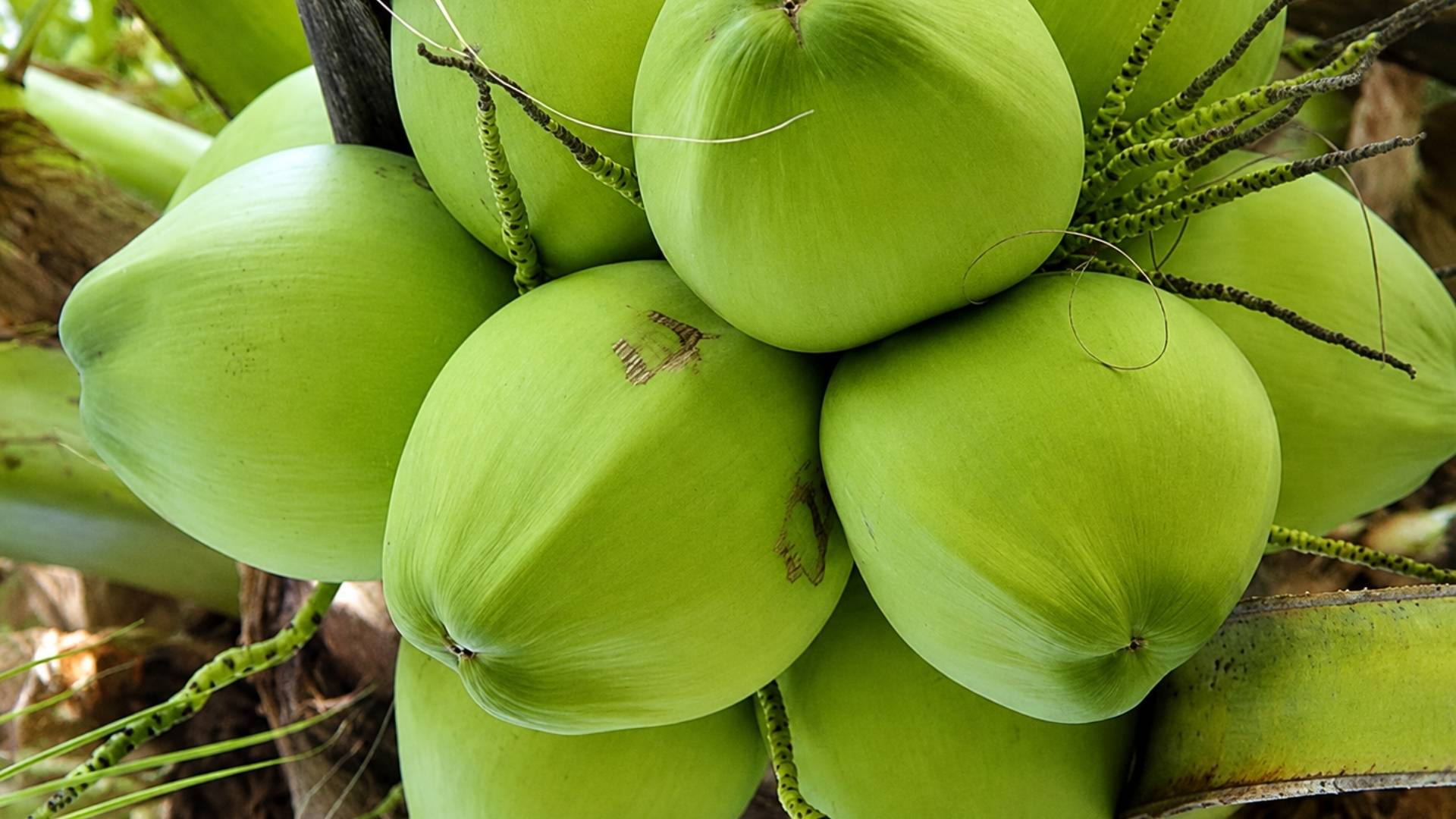
Green Dwarf Coconut is one of the most popular fresh drinking coconut varieties exported from Vietnam. The fruit has a small to medium round shape, thin green skin, and relatively high water content, typically around 250 to 350 mL per fruit.
The coconut water is naturally sweet, light, and refreshing, making it highly suitable for direct consumption and beverage chains.
This variety is widely cultivated in Ben Tre, Tra Vinh, Vinh Long, and Tien Giang provinces.
Major export markets: China, South Korea, the United States, and the Middle East.
2. Brown Red Coconut
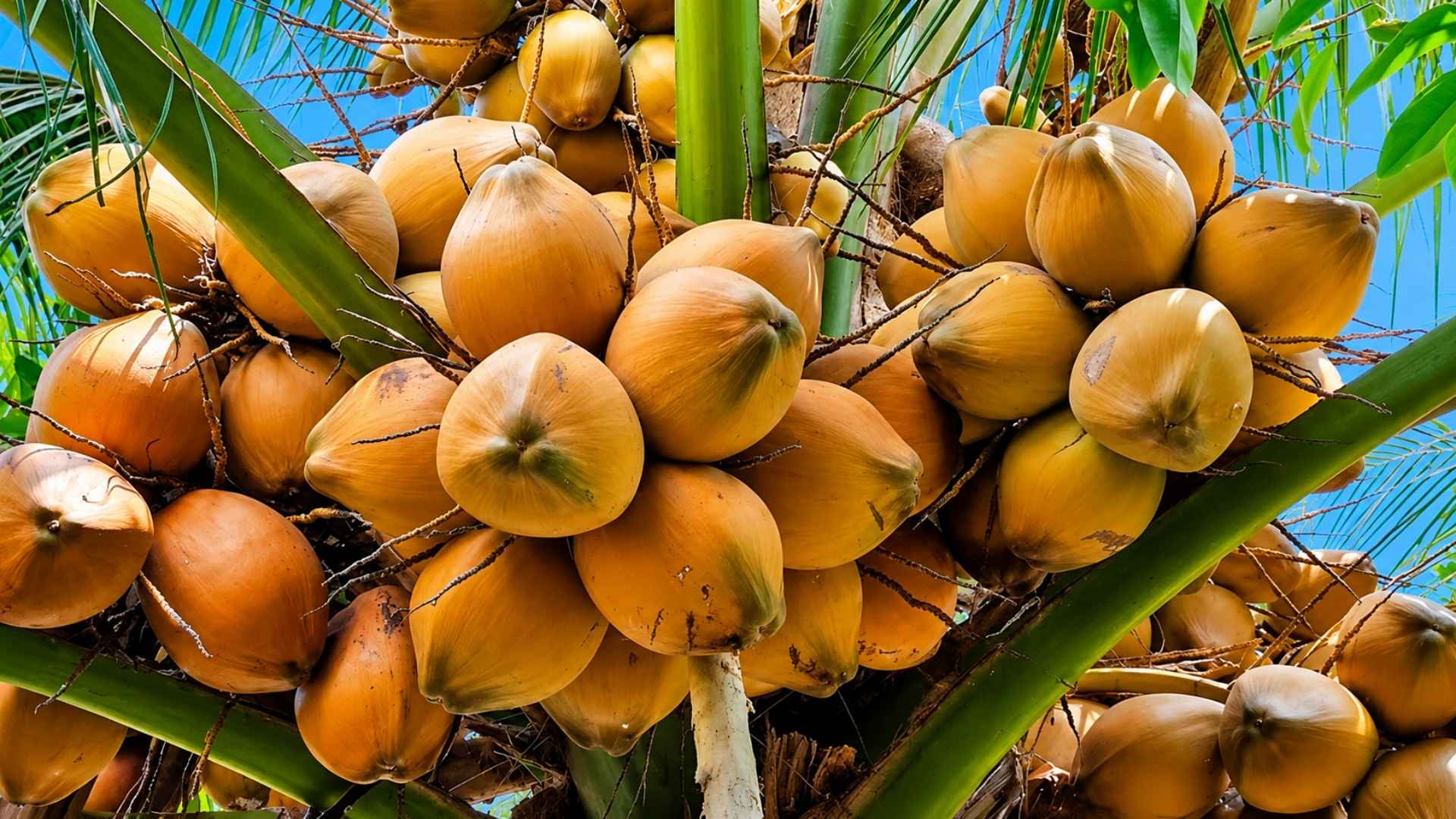
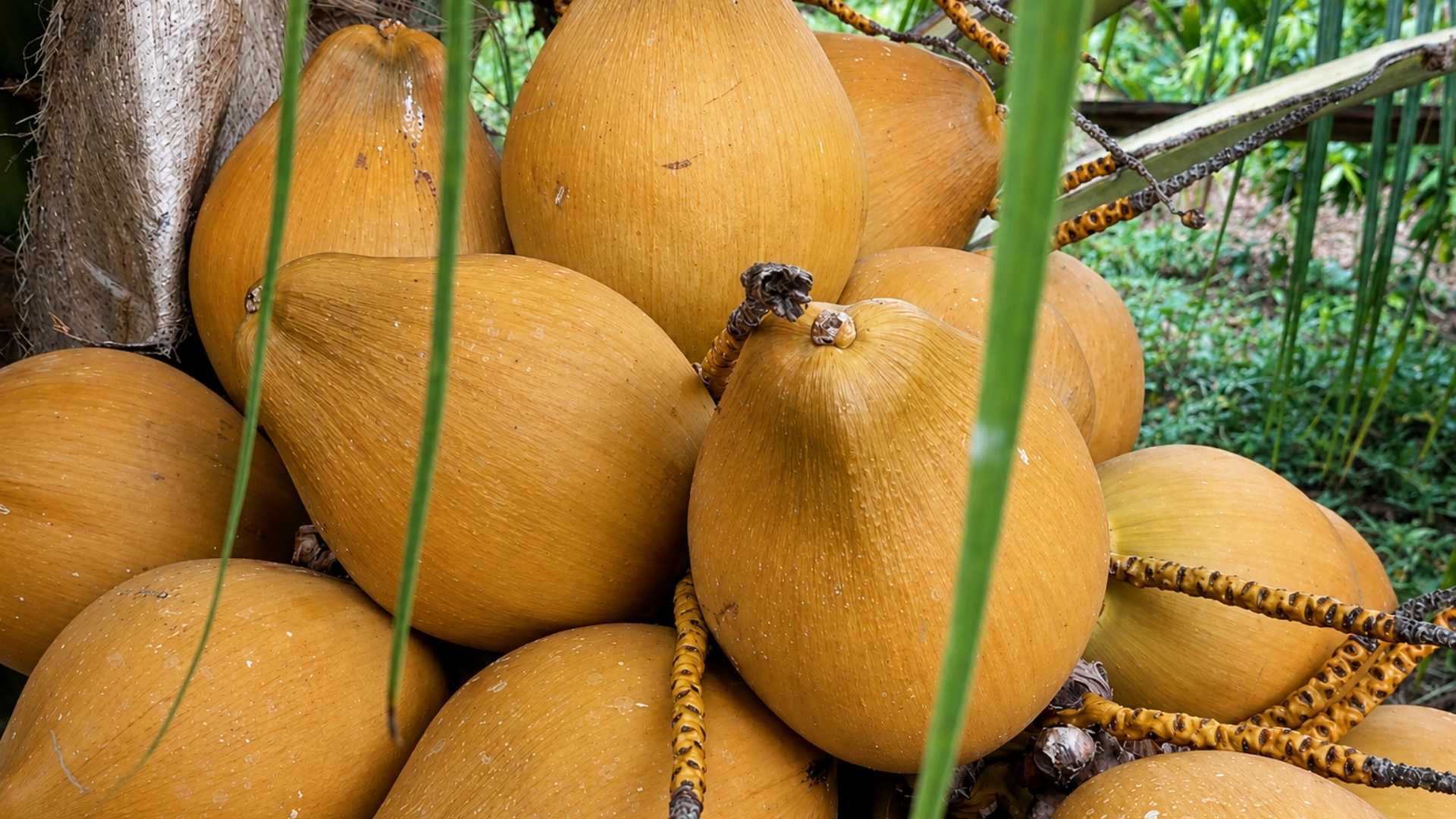
Brown Red Coconut is recognized for its reddish-orange outer shell and attractive appearance. The fruit size is relatively small, but it contains sweet coconut water with mild aroma and soft young flesh, typically around 250 to 350 mL per fruit.
Brown Red Coconut is mainly grown in Ben Tre, Tien Giang, and Vinh Long
Major export markets include China, Japan, and premium Asian retail markets.
3. Green Siamese Coconut
Green Siamese Coconut is another well-known drinking coconut variety with a slightly elongated shape and smooth green shell. The fruit generally contains a relatively high amount of clear coconut water with balanced sweetness.
Major growing regions include Ben Tre, Vinh Long, and Tra Vinh.
Major export markets include China, South Korea, and several Southeast Asian countries.
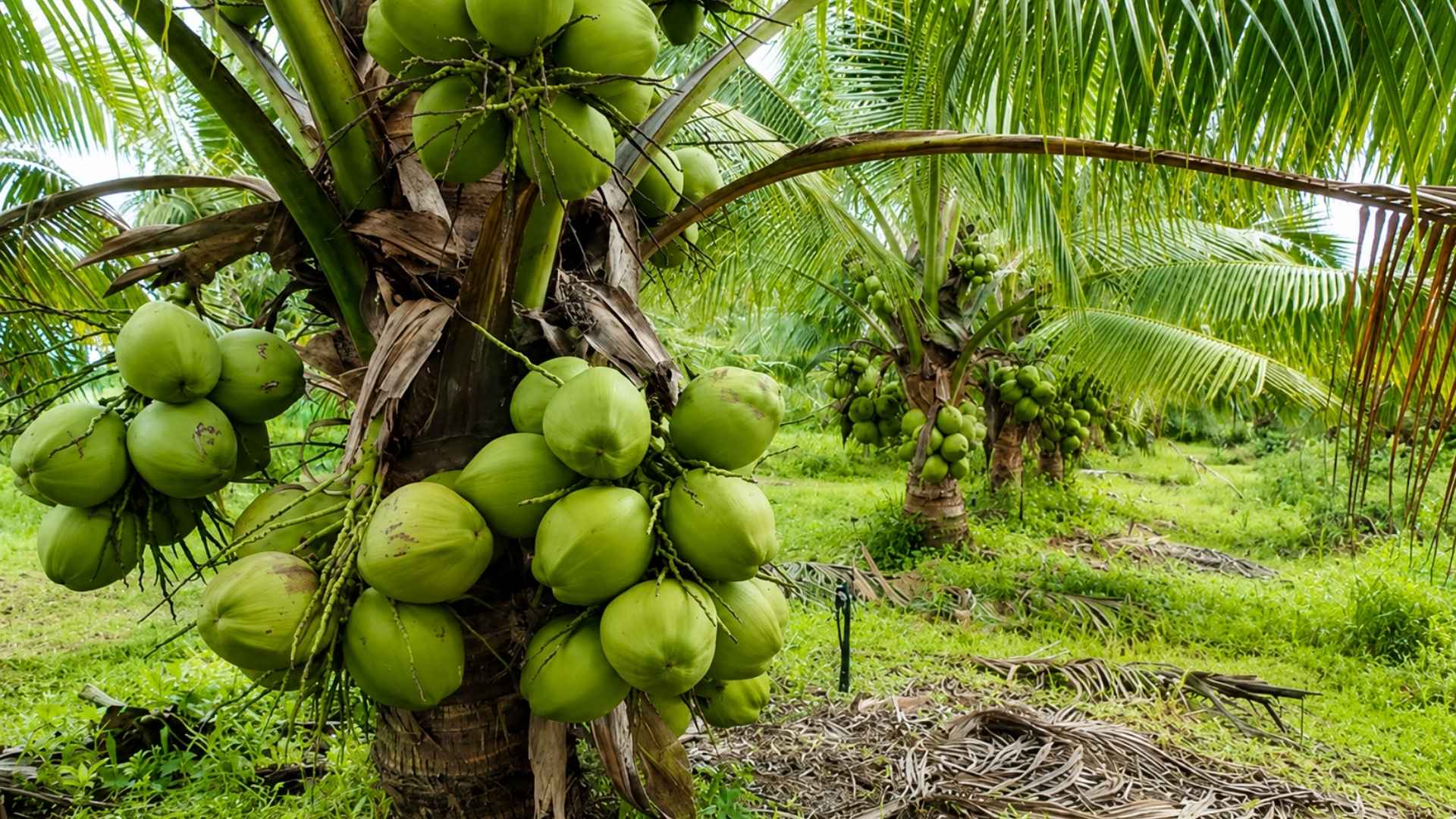
4. Pineapple Coconut
Pineapple Coconut is considered one of Vietnam’s premium coconut varieties due to its naturally fragrant coconut water. The fruit is medium-sized with green outer skin and usually contains highly aromatic water with pandan-like notes.
The coconut water is sweet and strongly aromatic, making this variety popular in premium beverage markets and specialty fruit stores.
Pineapple Coconut is mainly cultivated in Ben Tre and Tra Vinh provinces.
Major export markets include Japan, South Korea, Singapore, and premium retail segments in the United States.
5. Tall Coconut
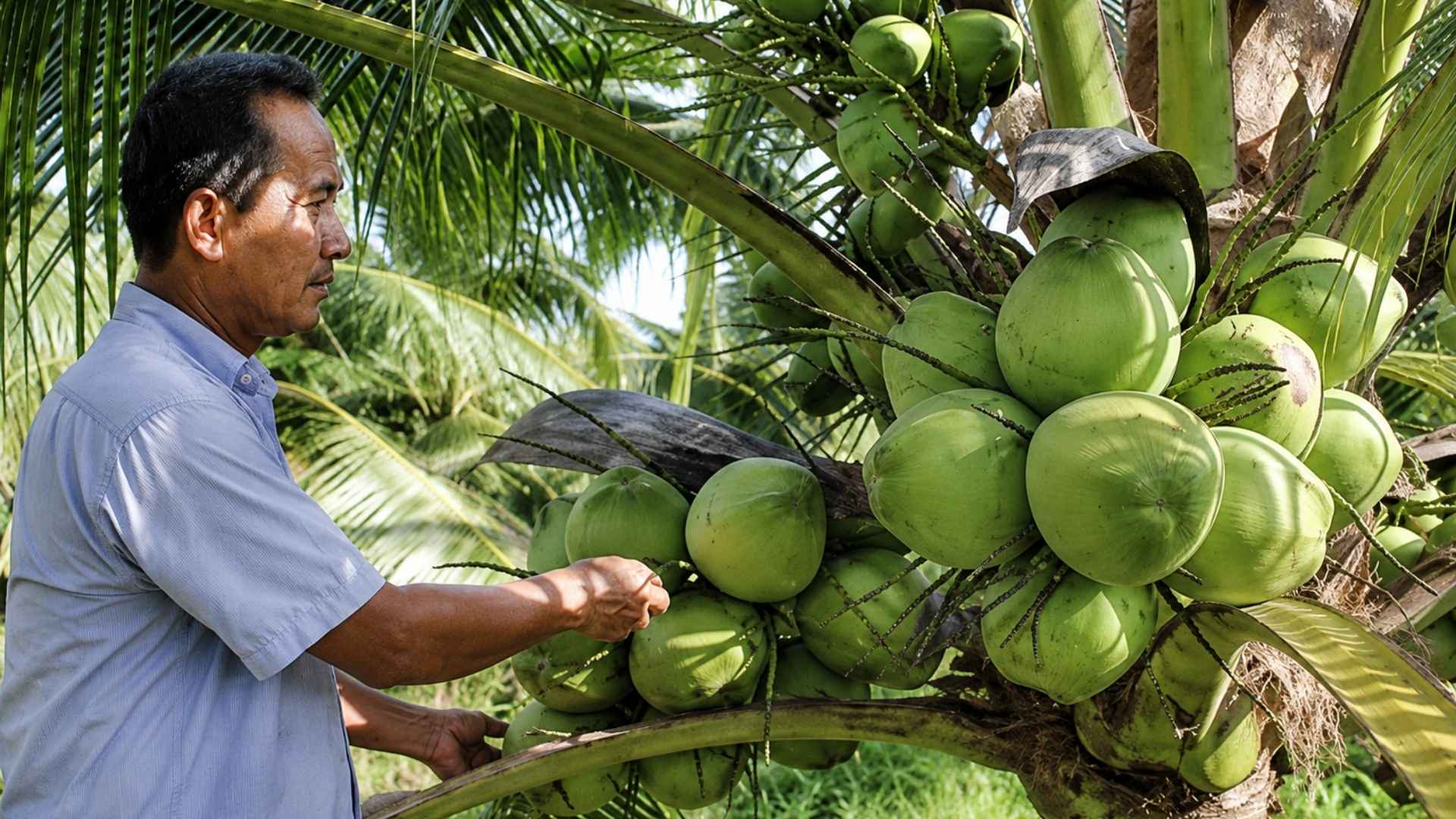
Tall Coconut is a traditional coconut variety commonly used for both fresh consumption and industrial processing. The fruit is larger than dwarf coconut varieties and contains thicker flesh with moderate water content.
Because of its higher copra yield and thicker meat, this variety is widely used for coconut milk, desiccated coconut, coconut oil, and food processing industries.
Tall Coconut is cultivated across many coconut-growing provinces in the Mekong Delta, especially Ben Tre and Tra Vinh.
Major export markets include China, India, and processing markets in Asia.
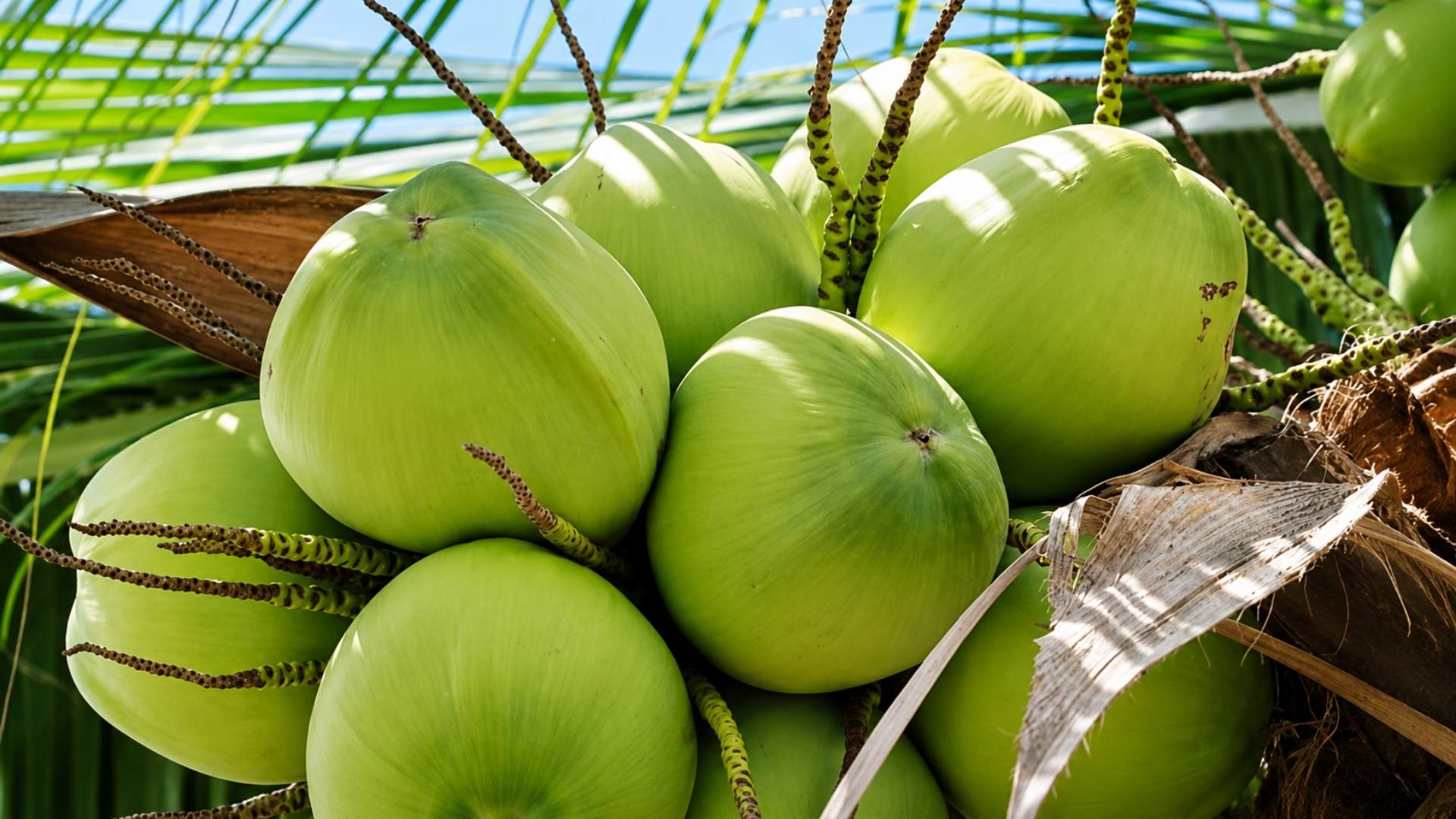
6. Cocos Nucifera
Cocos Nucifera is widely cultivated for its stable yield, compact tree size, and sweet coconut water. The fruit is relatively small with smooth outer skin and moderate flesh thickness.
The coconut water is sweet and refreshing, making it suitable for fresh beverage consumption and food service businesses.
Major growing areas include Ben Tre, Tien Giang, and Vinh Long provinces.
Major export markets include China, South Korea, and several Middle Eastern countries.
How to Import Fresh Coconut from Vietnam
1. Find and Verify Vietnamese Coconut Suppliers
Once you have identified the type of coconut product you want to import, the next step is finding suppliers that can consistently meet your quality, volume, and export requirements.
There are some ways that buyers can use to find suppliers, including:
- GG Search
- Use B2B sourcing platforms like Alibaba, VinaSources, and Global Sources
- Visit trade shows and exhibitions such as HortEx Vietnam and Vietnam Foodexpo.
- Work with sourcing agencies, such as Seditex, Cosmo Sourcing, and DragonSourcing.
Before moving to pricing discussions, buyers should confirm whether the supplier has real export experience and operational capability.
1. Request key export documents, including the business registration certificate, export license, food safety certificates, phytosanitary compliance documents, previous shipment records, etc.
2. Watch for common scam warning signs
Buyers should be cautious if suppliers:
- offer prices far below market averages
- use free email domains instead of company domains
- provide unclear factory or office addresses
- have recently created websites with limited company information
- pressure buyers to transfer deposits urgently
- avoid providing export documents or certifications
3. Start with trial orders if necessary
After shortlisting potential suppliers, many buyers request sample orders before moving to full-container purchases.
This helps reduce sourcing risks and allows buyers to evaluate product consistency, communication quality, and logistics performance before establishing long-term cooperation.
2. Discuss the Contract Terms
When you import coconuts from Vietnam, a clear contract is your best protection. It helps you and the supplier agree on exactly what you are buying, how it will be shipped, and what to do if there is a problem.
Before you pay, make sure your contract includes these important points:
- Product Details: Do not just write “coconuts.” Be specific. Include the weight per coconut (e.g., 1kg or more), the color, and how mature the fruit should be. Also, agree on the percentage of bad coconuts you will allow per shipment (e.g., less than 2%).
- Shipping Rules (Incoterms): Agree on who pays for the shipping and who is responsible if the fruit is damaged. FOB: The seller is responsible until the coconuts are on the ship in Vietnam. CIF: The seller pays for shipping and insurance to your port. Choose the one that works best for you.
- Payment Rules: For a new partner, it is safer to pay a small deposit (e.g., 30%) and pay the rest after you see the shipping documents. Avoid paying 100% of the money before the fruit is shipped.
- Quality Claim Terms: Fresh coconuts can sometimes spoil during transport, so your contract must include a clear rule for problems. For example, you can agree that if more than 5% or 10% of the coconuts arrive damaged or rotten, the supplier must refund your money or give you a discount on your next order. To make a claim, you must send proof, such as photos or an inspection report, within 24 to 48 hours after the shipment arrives at your warehouse.
Beyond the main terms, here are a few simple but important tips to make your business with Vietnamese suppliers safer:
- Always Use Written Agreements: Never rely only on phone calls or text messages. Every change to the price, quantity, or delivery date must be written in a formal contract and signed by both sides.
- Keep Communication Records: Always save your emails. If a problem happens later, these messages act as important proof to protect your rights.
- Be Careful with Details: Do not be afraid to ask about small things. If you need thicker boxes or special packaging, write it clearly in the contract. A detailed contract helps you get exactly what you ordered.
- Check the “Force Majeure” Clause: This is a rule for “unforeseeable events” like storms, floods, or natural disasters. Make sure your contract includes this. It protects you and the supplier if the goods cannot be shipped due to these unexpected events.

3. Prepare Export Documents and Compliance Paperwork
Once commercial terms have been finalized, the next step is preparing the export documentation required for customs clearance and international shipping.
In most cases, Vietnamese exporters will prepare the core export documents, while importers coordinate with customs brokers and logistics providers in the destination market.
Before shipment departure, buyers should carefully review all paperwork to ensure that product descriptions, quantities, weights, HS codes, and consignee information remain consistent across all documents.
Key documents include:
- Commercial invoice
- Packing List
- Bill of Lading (B/L) or Airway Bill (AWB)
- Phytosanitary Certificate
- Certificate of Origin (CO) – Certifies Vietnamese origin of the products and may support tariff preferences under trade agreements such as CPTPP, EVFTA, or RCEP.
- Food Safety or Health Certificate – May be required for trimmed young coconuts, processed coconut products, or certain destination markets with stricter food safety controls.
- Testing Reports – May include pesticide residue analysis, microbiological testing, or heavy metal testing if requested by buyers or customs authorities.
- FDA Prior Notice and Facility Registration – Required for many food shipments entering the United States and must be submitted before cargo arrival.
To reduce compliance risks, many importers work closely with customs brokers, freight forwarders, and inspection companies before shipment departure.
These partners can help review export paperwork, confirm destination import requirements, and identify documentation issues before the cargo reaches the port.
For fresh coconut shipments with a relatively short shelf life, avoiding customs delays is crucial to prevent spoilage and financial loss.
4. Arrange Shipping and Cold Chain Logistics
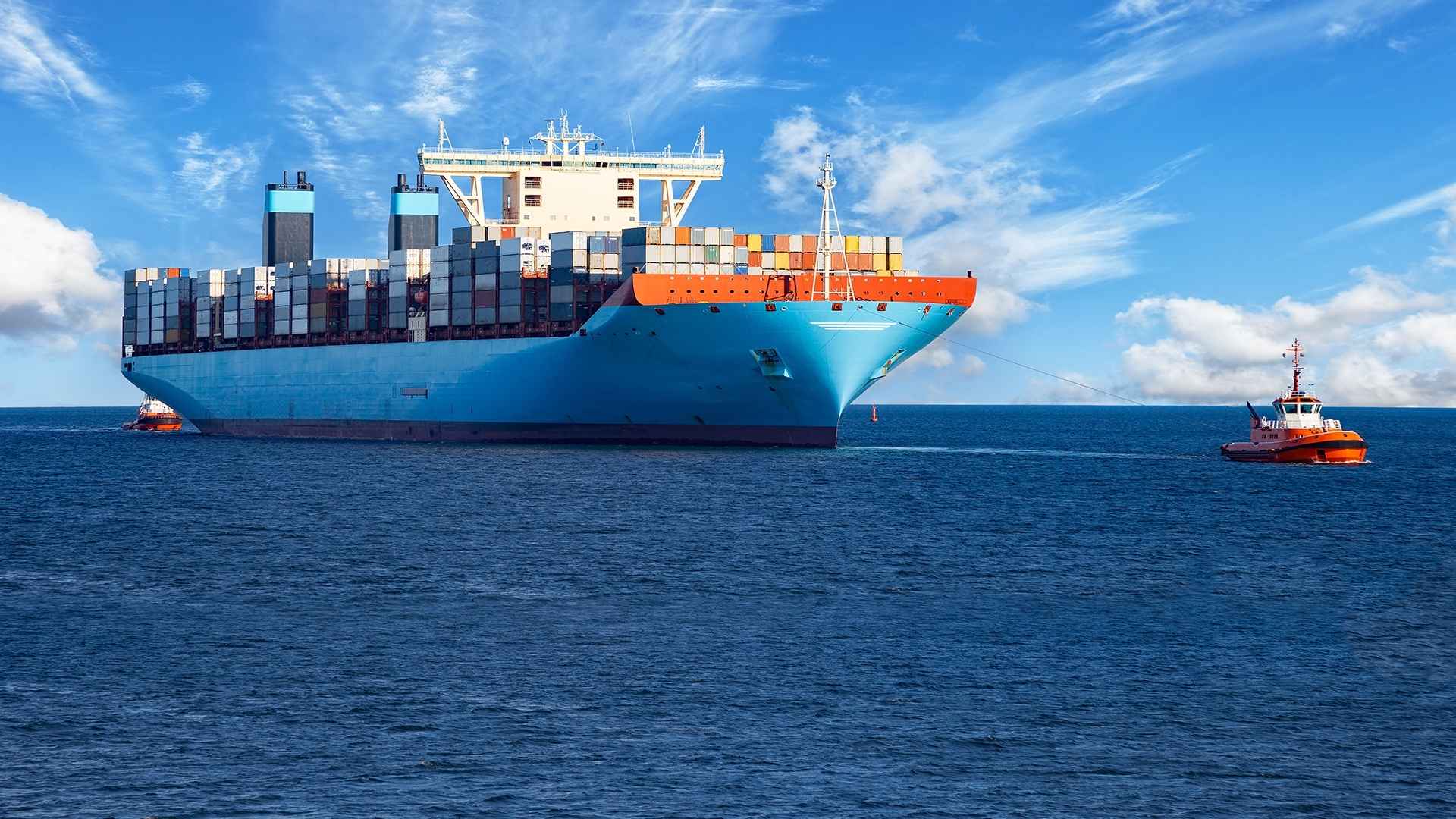
For coconut exports, logistics planning is particularly important because product freshness, appearance, and shelf life can all be affected by temperature fluctuations and transit delays.
Vietnam’s coconut export industry benefits from relatively strong logistics connectivity, especially through major southern ports such as Cat Lai and Cai Mep, which handle a large share of the country’s agricultural exports. These ports support regular reefer container routes to China, South Korea, the Middle East, Europe, and North America.
| Shipping Method | Common Use Cases | Key Considerations |
| Sea Freight | Large-volume fresh coconut shipments and reefer container exports | Lower transportation cost, suitable for long-distance exports, but requires stable cold chain management and longer transit time |
| Cross-Border Trucking | Regional exports to nearby Asian markets | Faster regional delivery, but border congestion may affect transit schedules during peak seasons |
For sea freight shipments, buyers generally choose between Full Container Load (FCL) and Less than Container Load (LCL) arrangements depending on shipment volume.
| Destination Market | Estimated Sea Freight Transit Time | Estimated Reefer Freight Cost (20ft) | Estimated Reefer Freight Cost (40ft) |
| China | Approximately 3 to 7 days | $500 to $1,500 | $1,000 to $2,500 |
| South Korea | Approximately 3 to 7 days | $1,000 to $2,500 | $2,000 to $3,500 |
| EU | Approximately 25 to 40 days | $2,500 to $4,500 | $4,500 to $8,000 |
| U.S. West Coast | Approximately 20 to 30 days | $2,500 to $5,000 | $5,000 to $9,000 |
Because coconuts are more sensitive to dehydration and temperature fluctuations, cold chain management should be discussed carefully before shipment departure.
Below are some coconut handling and storage tips during transportation:
- Store fresh coconuts in clean, well-ventilated areas before container loading to reduce moisture buildup and mold risk.
- Avoid direct sunlight exposure during inland transportation and port handling, especially for trimmed young coconuts.
- Maintain reefer container temperatures consistently between approximately 1°C and 4°C for trimmed coconuts. Whole mature coconuts are commonly stored at around 8°C to help preserve freshness and shelf life.
- Maintain relative humidity at approximately 85% to 90% to reduce moisture loss, prevent shell cracking, and preserve flesh quality during long-distance shipping.
- Pre-cool reefer containers before loading cargo to minimize sudden temperature fluctuations.
- Use proper pallet spacing inside containers to maintain stable airflow around the cargo.
- Use food-grade plastic wrapping or protective film when exporting premium trimmed coconuts for retail distribution.
- Monitor the reefer container temperature regularly during transit
- Inspect coconuts for cracks, leakage, mold, or spoilage before container sealing to avoid quality claims after arrival.
Import Regulations for Vietnamese Fresh Coconut in Major Markets
Import regulations for fresh coconut products vary significantly depending on the destination market.
Before confirming shipments, buyers should carefully review import eligibility, required documents, and compliance standards in their target market to avoid customs delays or rejected cargo.
1. China
China has become one of the fastest-growing markets for Vietnamese fresh coconut exports following the official signing of fresh coconut export protocols between the two countries.
The market mainly imports fresh young coconuts, trimmed coconuts, and semi-husked coconuts for direct consumption and retail distribution.
Main import requirements:
- Export farms and packing facilities must be officially registered and approved by Chinese authorities.
- Coconut shipments must comply with Chinese phytosanitary and food safety regulations.
- Products must meet traceability requirements linked to growing areas and packing facilities.
- Packaging materials must be clean, hygienic, and suitable for agricultural imports.
- Labels and shipment information must match customs and quarantine documentation.
Quality and Compliance Standards
- No quarantine pests, insects, or visible contamination
- No mold, spoilage, or damaged coconuts
- Pesticide residue must remain within Chinese regulatory limits
- Packaging and labeling must support shipment traceability
2. United States
The United States imports Vietnamese coconut products mainly for retail distribution, beverage production, and food service channels.
The market mainly imports fresh coconuts, trimmed young coconuts, semi-husked coconuts, frozen coconut products, and processed coconut products.
Main Import Requirements
- Food import facilities may require FDA registration.
- Importers must submit an FDA Prior Notice before cargo arrival.
- Buyers should verify fresh coconut import conditions through USDA APHIS if applicable.
- Products must comply with U.S. food labeling regulations.
- Importers may need Foreign Supplier Verification Program (FSVP) documentation.
Quality and Compliance Standards
- Products must comply with FDA food safety standards.
- No contamination, spoilage, or adulteration
- Proper labeling and traceability information
- Cold chain management for trimmed fresh coconuts
- Packaging materials must comply with food contact safety standards
Because the U.S. market has relatively strict food safety controls, many importers also request pesticide residue analysis and microbiological testing reports before shipment departure.
3. European Union (EU)
The EU imports Vietnamese coconuts for supermarkets, ethnic retail markets, beverage chains, and food processing industries.
The market mainly imports fresh coconuts, trimmed coconuts, semi-husked coconuts, frozen coconut products, and processed coconut products.
Main Import Requirements
- Products must comply with EU food safety and traceability regulations.
- Packaging materials must comply with EU food contact standards.
- Import controls may vary depending on the EU member state and product format.
- Retail products must follow EU labeling requirements.
- Some shipments may undergo additional inspection at border control points.
Quality and Compliance Standards
- Pesticide residue must comply with EU Maximum Residue Limits (MRLs).
- Products must be free from mold, spoilage, and foreign contamination.
- Retail labels should include origin, importer details, storage instructions, and net weight where applicable.
- Packaging materials must comply with EU food safety standards.
Top 5 Vietnamese Coconut Exporters
Below are some of the notable Vietnamese coconut exporters:
| # | Compnay | Main product category | Contact information |
| 1 | Dai Viet International |
|
|
| 2 | Doveco |
|
|
| 3 | Hoang Tho Fruit |
|
|
| 4 | Hung Hau Food |
|
|
| 5 | ASAVINA |
|
|
Find Reliable Fresh Coconut Suppliers in Vietnam with VinaSources
Sourcing fresh coconuts from Vietnam often involves more than simply comparing prices between suppliers. International buyers also need to evaluate growing regions, export capability, food safety compliance, cold chain handling, packaging standards, and shipment coordination before placing large-volume orders.
VinaSources helps global buyers connect with verified Vietnamese manufacturers and agricultural exporters across multiple product categories, including fresh coconuts. The platform supports businesses looking to simplify supplier sourcing, improve procurement efficiency, and reduce sourcing risks when importing from Vietnam.
For buyers looking to build long-term sourcing partnerships in Vietnam’s coconut industry, VinaSources can help simplify the supplier discovery and procurement process.
Contact information:
- Email: [email protected]
- Website: https://vinasources.com