
As global electronics supply chains continue to shift, Vietnam has emerged as a major manufacturing and export hub in Asia. Driven by supply chain diversification, strong foreign investment, and expanding production capacity, Vietnam’s electronics export now plays a critical role in global electronics trade.
This article provides an overview of Vietnam’s electronics export, highlights its top export products and leading trade partners, explains why it grows fast, and what this means for sourcing and investment decisions.
Overview of the Vietnam Electronics Export Sector
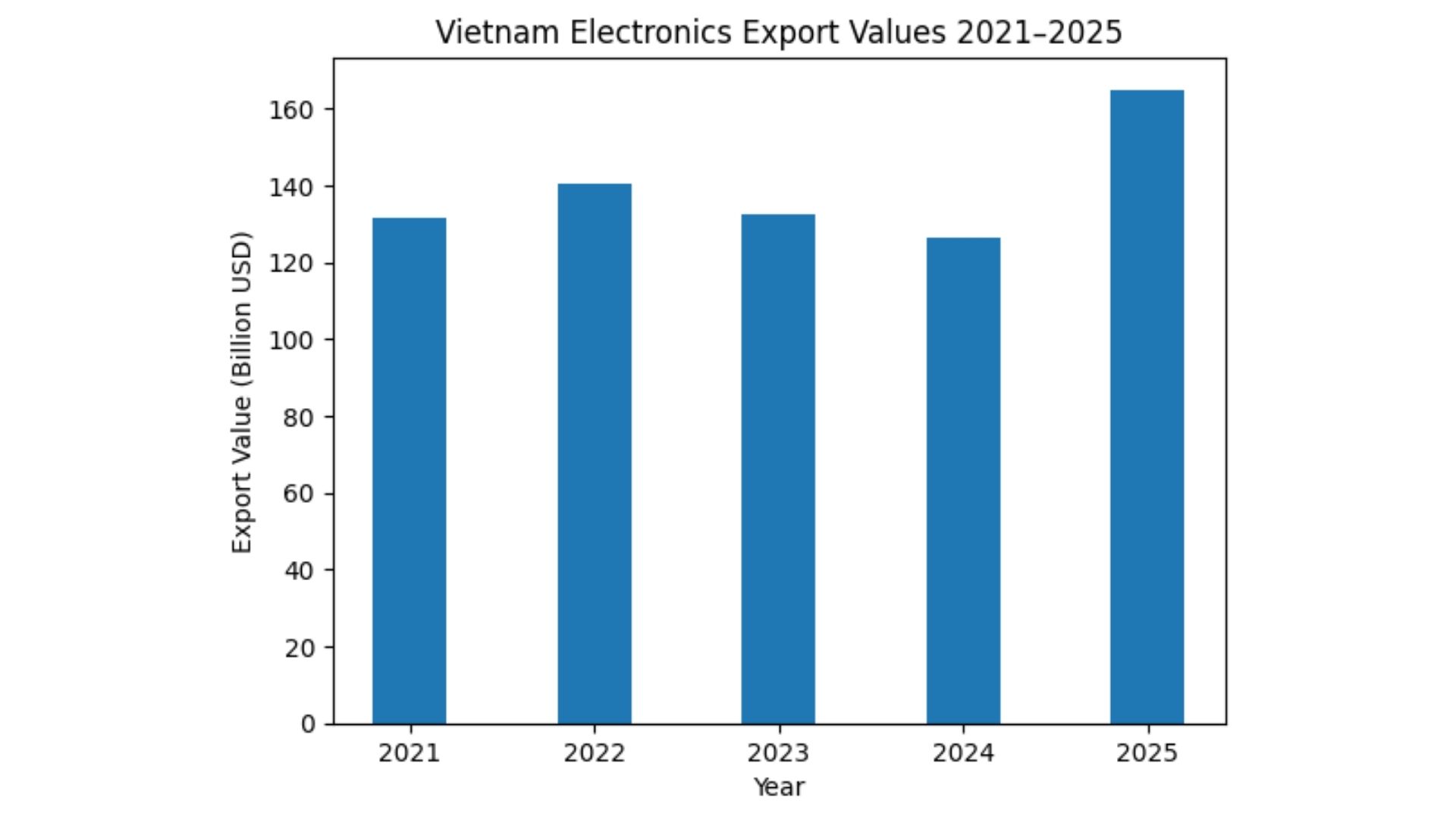
Vietnam’s electronics export sector has grown into one of the most important parts of the national economy. In 2025, Vietnam reached a massive milestone as total electronics exports hit nearly USD 165 billion, with computers, electronics, and components surpassing the USD 100 billion mark for the first time. This alone contributes approximately 34.6% of Vietnam’s total national export value. This dominance far surpasses traditional sectors like textiles or footwear.
The sector is split into two primary categories. Computers, electronic products, and components generated USD 107.75 billion. This category saw a dramatic year-on-year increase of 48.4%. Phones and phone components accounted for USD 56.7 billion. Vietnam now ranks among the top 10 electronics exporters globally.
Vietnam exports electronics to a diverse set of global markets. The United States is a leading destination for Vietnamese electronics exports. In 2025, exports to the US reached USD 42.09 billion, an increase of 81.4% compared to the previous year. The second-largest destination is China. China imported USD 16.89 billion in Vietnamese electronics. This is a 33.6% rise year-on-year. Other key markets include the EU, Hong Kong, and South Korea.
Below is the Vietnam Electronics Export Data from the last 5 years:
List of Top 10 Electronics Exports of Vietnam
Below are the top 10 electronics exports of Vietnam in 2023, ranked by export value, based on official Vietnam electronics export data. Mobile phones, computer-related accessories, and electronic components account for the largest share of Vietnam’s electronics exports.
| # | Electronic products | HS code | Export value |
| 1 | Telephone sets and smartphones | 8517 | $78.50 billion |
| 2 | Electronic integrated circuits | 8542 | $13.25 billion |
| 3 | Semiconductor devices | 8541 | $7.53 billion |
| 4 | Insulated wires and cables | 8544 | $6.25 billion |
| 5 | Monitors and projectors | 8525 | $5.64 billion |
| 6 | Transmission apparatus for radio broadcasting or television | 8528 | $5.38 billion |
| 7 | Electrical transformers and static converters | 8504 | $4.01 billion |
| 8 | Parts suitable for flat panel display modules, transmission | 8518 | $3.79 billion |
| 9 | Microphones and stands thereof, loudspeakers | 8507 | $2.55 billion |
| 10 | Electric accumulators | 8501 | $2.15 billion |
Top 10 Major Vietnam’s Trade Partners for Electronics Exports
Vietnam’s electronics export is diversified across major global markets, with strong demand from North America, China, and South Korea. Here are the top 10 countries where Vietnam exports the most electronics, according to Vietnam export data by country 2023:
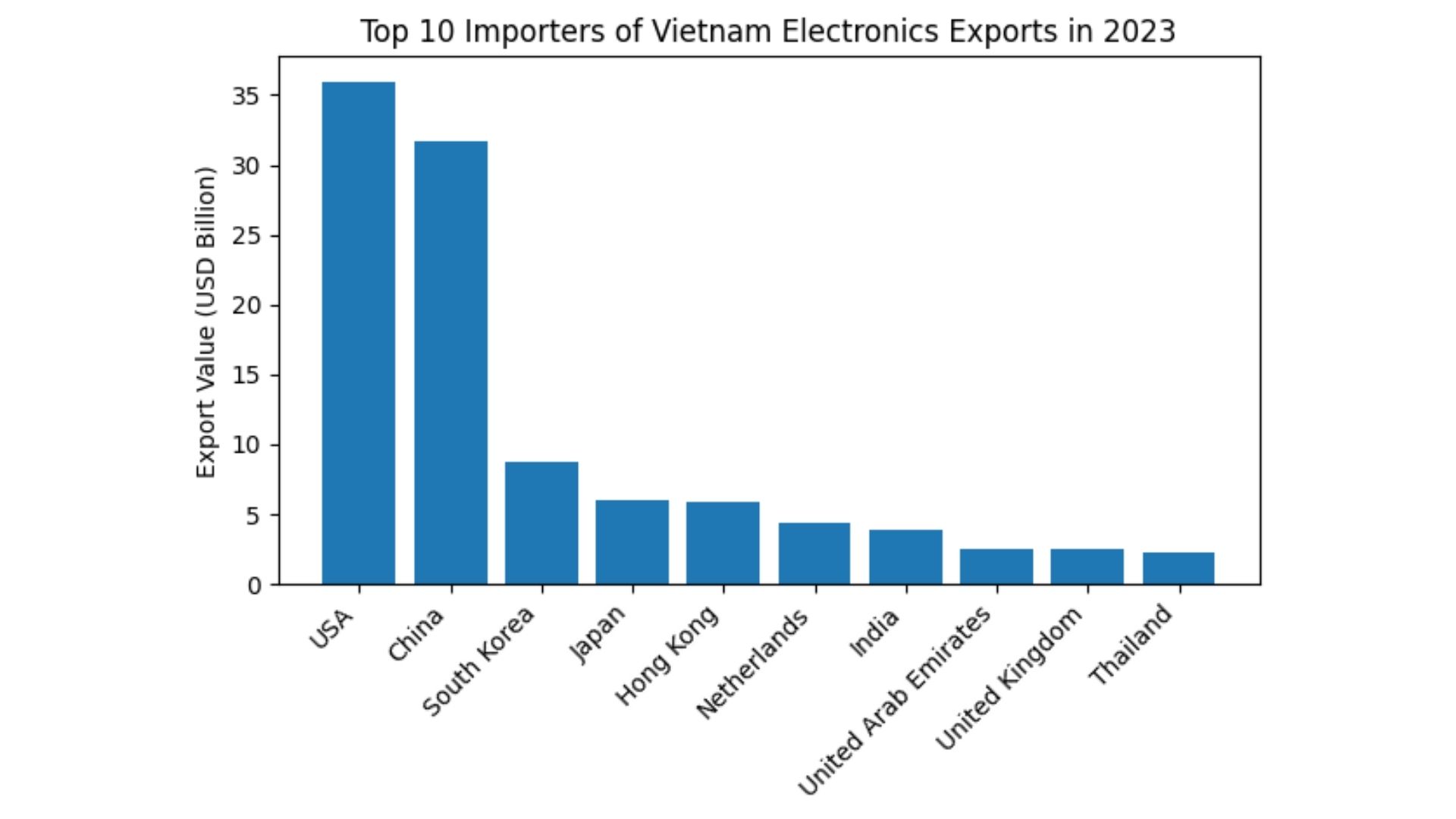
- USA: USD 35.96 billion (accounting for 27.1% of the total export value)
- China: USD 31.63 billion (accounting for 23.83% of the total export value)
- South Korea: USD 8.78 billion (accounting for 6.22% of the total export value)
- Japan: USD 6.03 billion (accounting for 4.55% of the total export value)
- Hong Kong: USD 5.86 billion (accounting for 4.42% of the total export value)
- Netherlands: USD 4.38 billion (accounting for 3.3% of the total export value)
- India: USD 3.95 billion (accounting for 2.98% of the total export value)
- United Arab Emirates: USD 2.57 billion (accounting for 1.94% of the total export value)
- United Kingdom: USD 2.47 billion (accounting for 1.86% of the total export value)
- Thailand: USD 2.31 billion (accounting for 1.74% of the total export value)
Why is Vietnam a hub for electronics?
Global manufacturers continue to shift electronics production to Vietnam as part of long-term supply chain diversification. Vietnam offers multiple benefits for importing electronics, including foreign investment depth, competitive cost structure, strong trade access, and policy-backed workforce development.
-
Foreign direct investment ecosystem
The Vietnam electronics export sector is built upon a resilient Foreign Direct Investment (FDI) foundation. In 2025, total registered FDI reached USD 38.42 billion, with the manufacturing and processing industry capturing 59.2% of this capital. Total revenue from the digital technology industry reached USD 198 billionin 2025, which exceeded targets by 16%.
Global leaders such as Samsung, Apple, and Intel have not only established facilities but are actively expanding their footprints.
- Samsung: The corporation has invested over USD 23.2 billion by 2024 and operates six manufacturing plants, a major R&D center, and a sales entity established across the country.
- Apple: Through its local supply chain partners, Apple has spent nearly USD 16 billion in Vietnam since 2019.
- Intel: The company operates a USD 1 billion facility in Saigon Hi-Tech Park.

-
Cost structure and productivity
Vietnam maintains a significant cost advantage over traditional manufacturing hubs like China. Average manufacturing labor costs are approximately USD 2.99 per hour, which is less than half of China’s $6.50 per hour. Overall, operating costs for labor-intensive assembly are roughly 50% lower than in China.
Beyond labor costs, Vietnam’s operational costs beyond labor also remain competitive. Industrial electricity rates are approximately USD 0.085 per kWh, which is lower than the regional average of USD 0.114 per kWh. While Vietnam relies on imported raw materials for 80% of its inputs, the proximity to China allows for fast and cost-efficient “just-in-time” delivery. This allows firms to benefit from lower overheads while maintaining high-speed production cycles.
-
Trade Agreements and Tariff Access
Vietnam’s extensive network of 17 active Free Trade Agreements (FTAs) provides exporters with unparalleled market access. These agreements have successfully reduced tariff barriers, making Vietnamese-made electronics highly competitive in the US, EU, and Asian markets. In 2025, these FTAs were instrumental in helping Vietnam reach a total trade turnover of
over USD 930 billion.
Key treaties such as the Comprehensive and Progressive Agreement for Trans-Pacific Partnership (CPTPP), the European Union-Vietnam Free Trade Agreement (EVFTA), and the Regional Comprehensive Economic Partnership (RCEP) allow manufacturers in Vietnam to export electronics at near 0 tariffs to major markets in Europe, Asia, and Oceania.
-
Skilled Workforce and Policy Support
The Vietnamese government has shifted its focus from labor quantity to high-tech quality through aggressive policy reforms and workforce training. The electronics sector currently employs over
1.5 million workers.
To support the transition toward semiconductor design and “smart manufacturing,” the government issued the Digital Technology Law, which provides specific criteria for identifying and incentivizing high-quality digital technology human resources. New regulations offer a 0% corporate income tax (CIT) rate for the first four years and a 50% reduction for the following nine years for strategic projects in semiconductors and AI.
Additionally, the government has launched the Semiconductor Industry Development Strategy to 2030, aiming to train 50,000 engineers by 2030 to serve the growing chip design and packaging (OSAT) sectors.
These incentives are designed to increase the “localization rate” of electronic products, which reached 40-50% in certain segments by the end of 2025.
-
Manufacturing clusters and specialization
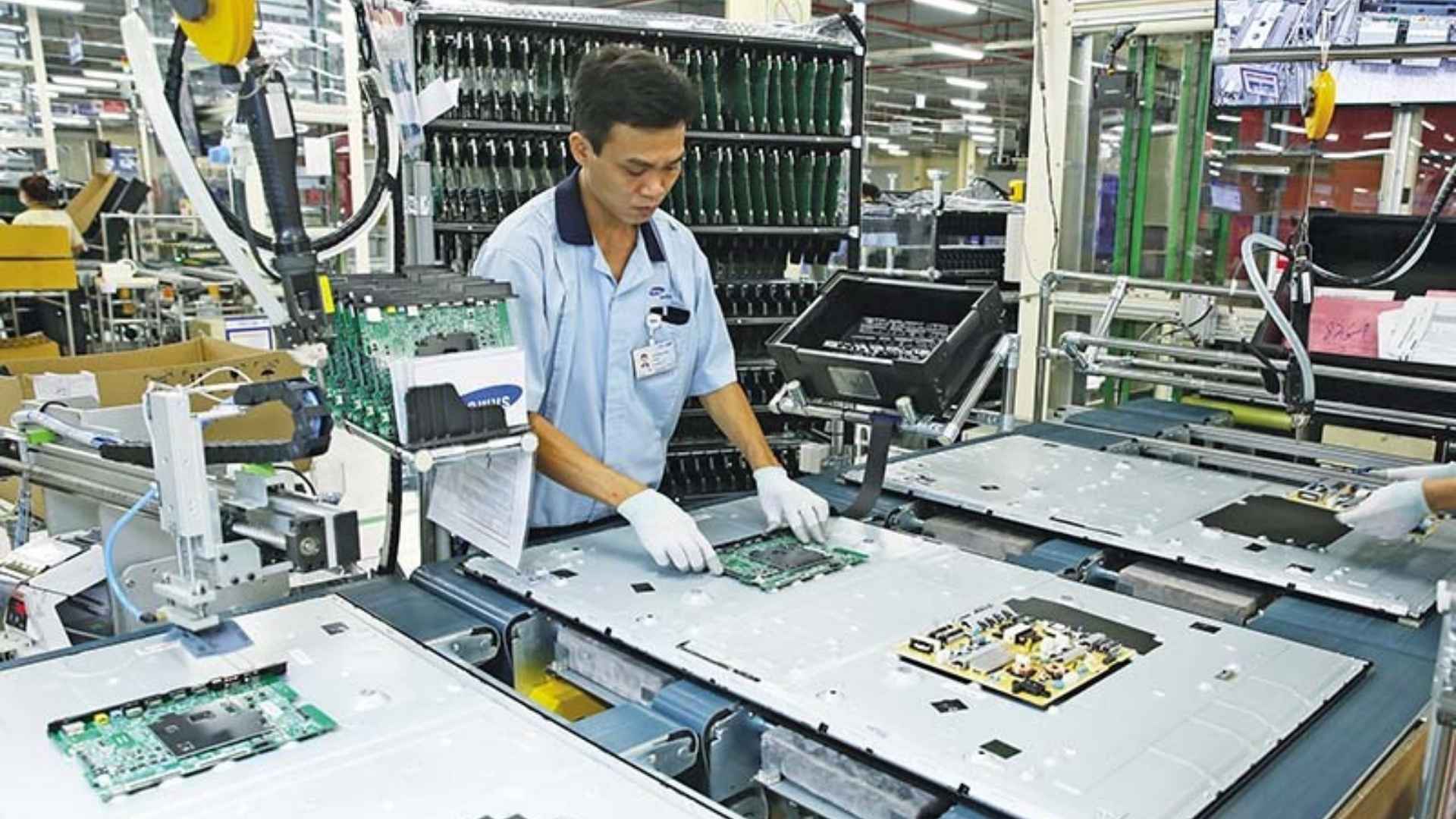
Vietnam’s electronics industry is organized into distinct regional clusters with specific specializations. The Northern Cluster (Hanoi, Bac Ninh, Thai Nguyen, Hai Phong) dominates the production of smartphones, tablets, and computer components. Samsung’s presence in Bac Ninh and Thai Nguyen has created a massive ecosystem of hundreds of Tier-1 and Tier-2 suppliers.
The Southern Cluster (Ho Chi Minh City, Binh Duong, Dong Nai) focuses on consumer electronics, semiconductors, and household appliances. Intel’s largest global assembly and testing facility is located in Ho Chi Minh City. This facility has exported over 4 billion units as of early 2025.
Vietnam now hosts approximately 2,800 enterprises in the electronics sector. While FDI firms still account for 95% of export value, domestic firms are increasingly providing higher-value components such as printed circuit boards (PCBs) and sensors.
-
Logistics and export infrastructure
Robust infrastructure supports Vietnam’s high-tech export volumes. The country ranks 43rd globally in the Logistics Performance Index. The government has prioritized infrastructure projects to reduce logistics costs, which currently stand at 16-17% of GDP. Key hubs, like the Cai Mep-Thi Vai deep-water port and the Long Thanh International Airport expansion, are critical for high-speed electronics shipping.
Air freight is also seeing a surge, with a projected 7.98% CAGR through 2026 to support time-sensitive semiconductor and mobile phone exports. The “Smart Border Gate” and “Smart Port” projects at key crossings like Huu Nghi (Vietnam) – Youyi Guan (China) model implemented in 2025 have improved customs clearance efficiency for trade with China. This ensures a steady flow of intermediate components for Vietnamese assembly lines.
Future Outlook and Opportunities
Vietnam’s electronics export is expected to remain on a growth path over the medium to long term. It is expected to grow at a Compound Annual Growth Rate (CAGR) of 9.8%, reaching
USD 220 billion by 2030. This outlook is supported by global supply chain restructuring, sustained foreign investment, and expanding end-market demand.
Vietnam has become a leading destination for electronics manufacturing and sourcing in Asia. The country plays a central role in the global diversification strategy of multinational electronics companies. As firms reduce over-reliance on a single manufacturing base in East Asia, Vietnam has emerged as a preferred secondary and parallel production location. This shift supports more stable export growth, rather than short-term volume spikes tied to temporary relocation.
The country offers access to large-scale manufacturing capacity capable of supporting consistent and repeatable order volumes. This scale is critical for global buyers supplying mass markets. At the same time, Vietnam continues to offer competitive production costs alongside improving labor productivity in electronics assembly. These factors help buyers maintain cost predictability over long-term sourcing contracts.
Furthermore, Vietnam’s extensive free trade agreement network further strengthens its outlook. Trade agreements with major markets such as the European Union, Japan, and regional Asia Pacific partners reduce tariff exposure and improve market access for electronic products.
By leveraging these advantages, businesses can unlock the potential of this dynamic market and stay ahead in the ever-evolving electronics industry.