
When sourcing products for your business, Alibaba is often the first name that comes to mind. However, there is a diverse landscape of wholesale platforms that offer unique advantages in terms of product specialization, supplier verification, and regional focus.
Each platform serves a different buyer profile, region focus, and sourcing depth. For B2B buyers seeking alternatives, understanding these platforms is crucial for optimizing sourcing strategies, mitigating risks, and discovering new supplier relationships.
1. Global Sources
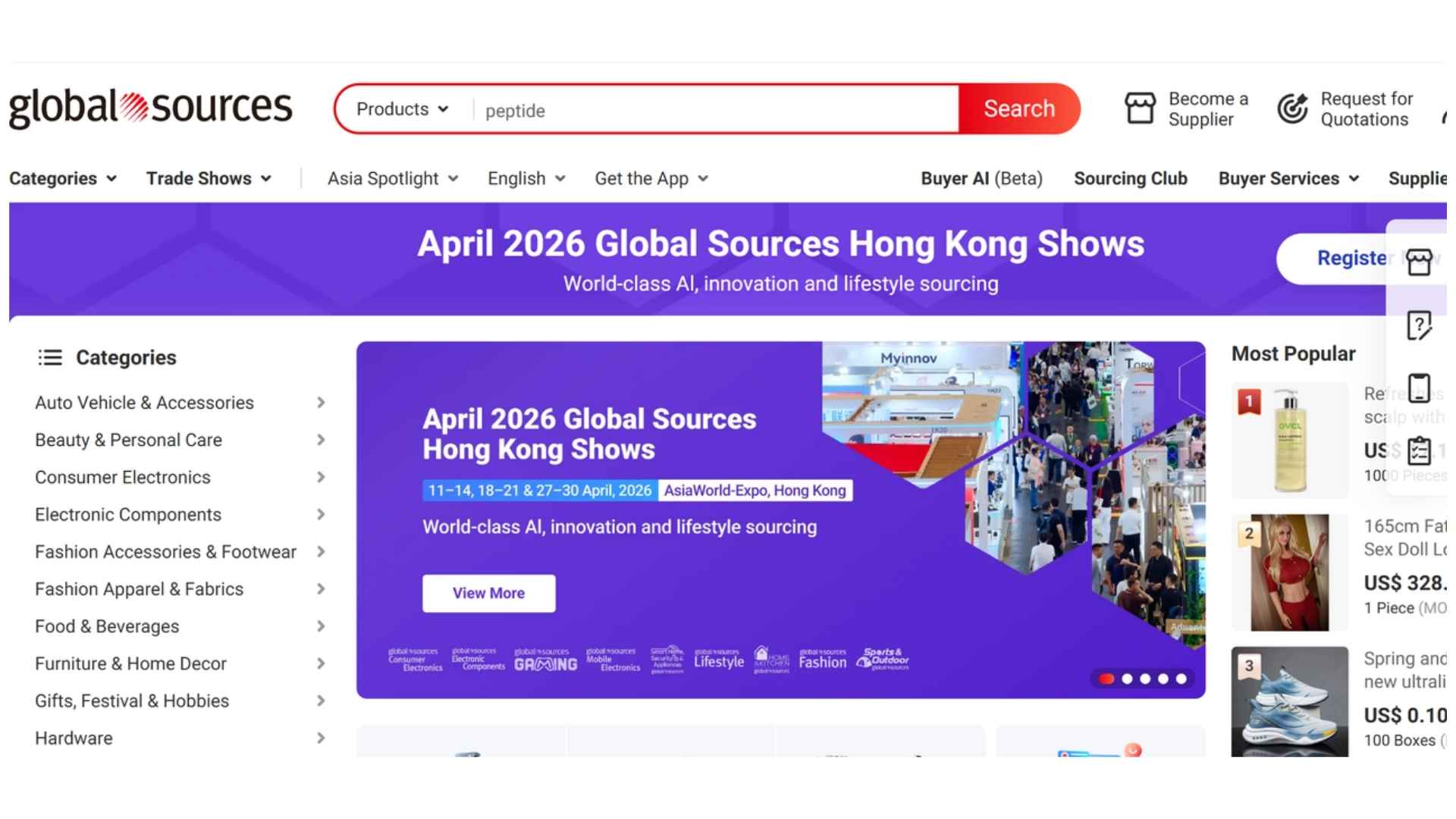
Global Sources is a Hong Kong-based B2B sourcing platform, established in 1971, with a strong focus on connecting international buyers with manufacturers, mainly across Asia.
The platform offers a vast product range, including electronics, consumer electronics accessories, hardware, gifts, home products, and fashion accessories.
Global Sources operates primarily as a supplier discovery and lead generation platform. Buyers search for products by category or keyword, and send inquiries that usually include product specifications, order volume, and sourcing requirements to the supplier.
Similar to Alibaba, Global Sources has a large supplier database. However, Global Sources does not operate as a closed transaction marketplace. The platform does not offer a buyer protection system. Buyers are fully responsible for payments, contracts, and order execution.
So, it works well for companies sourcing large volumes and are already familiar with factory-level negotiations. High MOQs and limited platform support make it less suitable for small buyers or first-time importers.
In addition to its online marketplace, Global Sources organizes large-scale international trade shows. These events allow buyers to meet reputable suppliers in person and conduct deeper supplier evaluation beyond online profiles.
The platform is highly regarded for its focus on high-quality and reliable suppliers, supported by a strict verification process.
2. Made-in-China
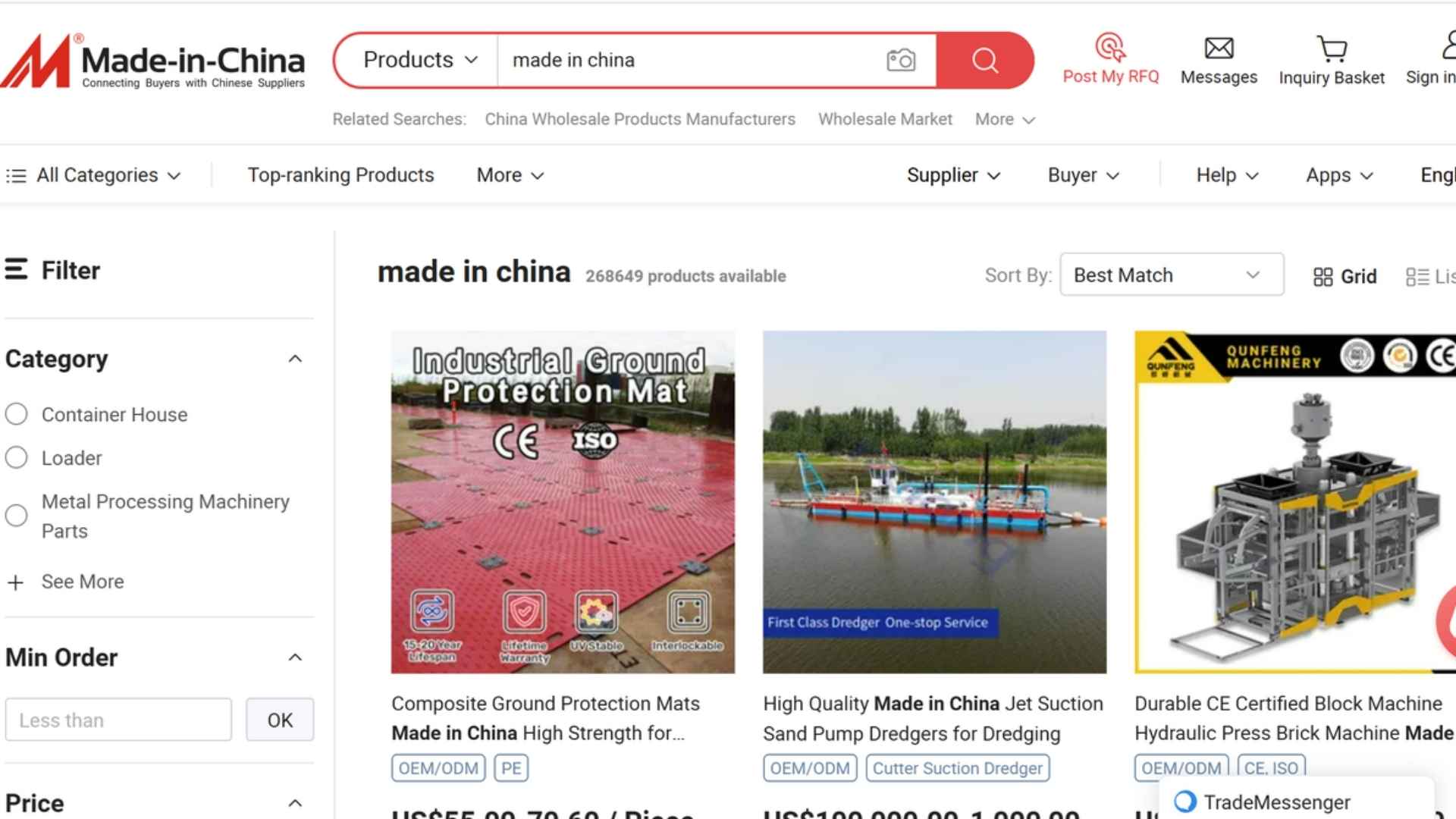
Made-in-China, founded in 1998, is a China-based B2B sourcing platform. Similar to Global Sources, the platform functions as a supplier discovery and inquiry channel. It helps buyers assess supplier credibility, with some suppliers verified through third-party audit services. The platform does not participate in transactions between buyers and suppliers.
Compared to Alibaba, which offers a broad mix of consumer goods, fashion, electronics, and trend-driven products, Made-in-China is more focused on China’s industrial manufacturing strengths. Its core categories include machinery, industrial equipment, construction materials, electronics, auto parts, and selected consumer goods.
Minimum order quantities on Made-in-China are generally higher than on Alibaba. This is because most suppliers on the platform are industrial manufacturers that prioritize large-volume orders to optimize production efficiency and unit costs.
The platform is widely favored for offering competitive pricing by directly connecting buyers with suppliers, eliminating intermediaries.
3. EC21
EC21 is a South Korea-based B2B marketplace launched in 1997. It primarily operates as a supplier discovery and inquiry platform rather than a full-service marketplace. Suppliers create company profiles and list products, while buyers search listings or post buying requests and contact suppliers directly.
The platform covers multiple industrial sectors, including agriculture, chemicals, health and medical equipment, electrical components, machinery, raw materials, etc.
Unlike Alibaba, EC21 acts only as a connector between buyers and suppliers. It does not provide escrow services, trade assurance, or integrated logistics support. All negotiations, payments, and order fulfillment are handled directly between the two parties.
4. DHgate
DHgate is a China-based B2B and B2C marketplace that connects international buyers with Chinese suppliers.
The platform is commonly used for standardized and ready-made products. It is not designed for custom manufacturing or complex OEM projects.
Similar to Alibaba, DHgate operates as a transaction-based marketplace. Buyers place orders directly on the platform. DHgate processes payments and releases funds to suppliers after buyers confirm receipt. The platform also manages disputes when issues occur.
Compared with Alibaba, DHgate focuses more on small volume wholesale and ready stock items. Meanwhile, Alibaba has stronger coverage for factory sourcing and custom manufacturing.
DHgate is suitable for small importers, e-commerce sellers, and buyers testing new products who need low MOQs and fast access to ready-made goods.
5. Kompass
Kompass is a global B2B company directory, rather than a transaction-focused marketplace. It is designed to support buyers who are searching for manufacturers, distributors, and B2B service providers across a wide range of industries.
All businesses on Kompass are indexed by industry, product, and capability using a standardized classification system. Buyers can access detailed company profiles, review basic business information such as location, size, and industry focus, and then contact suppliers directly outside the platform. Kompass does not manage payments, orders, or logistics, which allows buyers and suppliers to negotiate terms independently without platform interference or transaction fees.
The platform is built for professional procurement and strategic sourcing, not for first-time importers.
6. Thomasnet
Thomasnet is a leading North American industrial B2B platform and supplier discovery. It connects buyers with manufacturers, suppliers, and service providers based in the United States and Canada.
The platform operates as a supplier discovery network. Suppliers create detailed profiles that outline manufacturing capabilities, certifications, and industries served. Buyers search by product category, manufacturing process, or required certification. They review and evaluate supplier profiles and then contact selected suppliers directly. Pricing, contracts, and payments are negotiated and executed outside the platform.
7. IndiaMART
IndiaMART is the largest B2B marketplace in India. It is primarily used to connect buyers with Indian manufacturers, suppliers, and service providers.
To source products on the platform, buyers search by product or category and review multiple supplier listings. They contact suppliers directly through inquiry forms, phone calls, or email. Pricing, sampling, contract terms, and order confirmation are handled directly between the buyer and the supplier.
IndiaMART does not operate a full escrow system like Alibaba Trade Assurance. The platform introduced Pay with InidaMART, an escrow-style system where payments are held until the buyer confirms the receipt and quality of goods.
The platform also functions as a large B2B supplier directory, allowing buyers to discover companies globally, compare quotations, and initiate direct business relationships.
8. Banggood
Banggood is among the Chinese direct-to-consumer online retailers that offer products across categories such as electronics, apparel, toys, automotive accessories, home improvement items, health and wellness products, sports and outdoor equipment, and tools and industrial supplies.
Unlike Alibaba and many other platforms that host multiple sellers, Banggood operates mainly as a single retailer. It warehouses and ships its own products. The company operates 37 global warehouses across regions such as the United States, the United Kingdom, Europe, and Asia to support faster shipping and more consistent delivery times.
9.Tradekey
TradeKey is a global B2B marketplace designed to facilitate international trade between importers and exporters in more than 240 countries. The platform primarily serves SMEs that want to find overseas buyers or suppliers efficiently. TradeKey acts as an intermediary for supplier discovery and communication, but it does not participate in shipping, payment processing, or transaction execution.
Supplier credibility on TradeKey is built through company profiles and international certificates. This provides global buyers with the peace of mind and confidence they need when sourcing new partners.
10. VinaSources
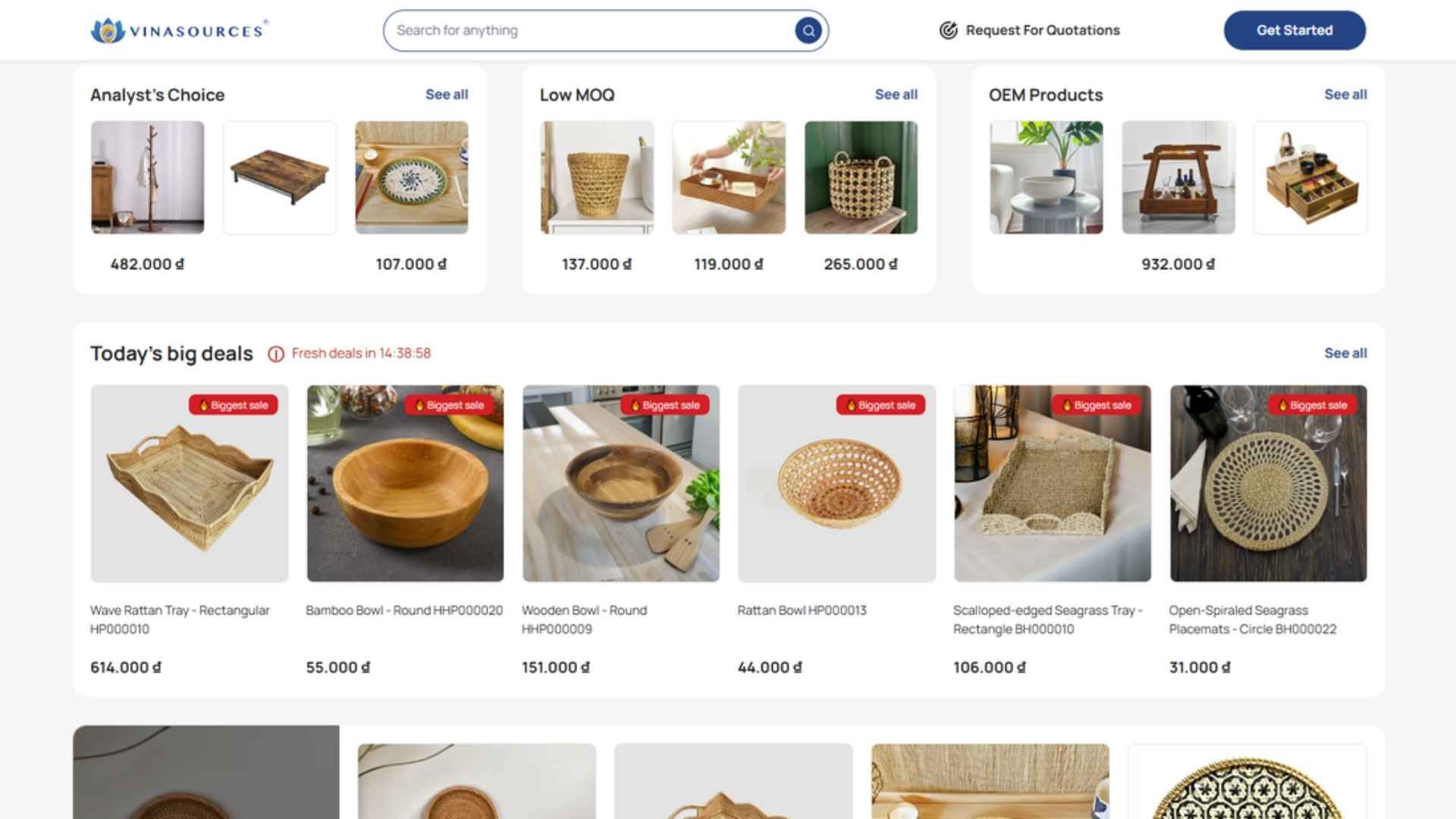
VinaSources is a Vietnam-focused B2B sourcing platform. The platform serves as a bridge that connects global buyers with Vietnamese manufacturers and exporters.
VinaSources covers multiple industries and is especially suitable for furniture, home decor, handicrafts, textiles and garments, footwear, and agricultural products. These sectors are Vietnam’s key export strengths and offer a balance of competitive pricing and consistent product quality.
The platform operates as an all-in-one sourcing solution. It supports buyers throughout the entire sourcing journey, from supplier matching and quality coordination to warehousing, logistics, and export documentation support. This reduces operational complexity for buyers sourcing from Vietnam.
All suppliers on VinaSources are vetted to ensure they meet export quality standards, production capability requirements, and international market compliance expectations.
Sourcing products on VinaSources follows a clear and easy-to-follow process.
Step 1. Buyers browse curated product catalogs or submit an RFQ with detailed sourcing requirements.
Step 2. VinaSources matches buyers with suitable manufacturers based on product specifications, capacity, and export readiness.
Step 3. Buyers work directly with selected suppliers to confirm pricing, MOQs, samples, lead time, and production terms. Logistics and compliance support can be coordinated when required.
Conclusion
Alibaba remains a major entry point for global sourcing, but it is not the only effective option. Each wholesale platform reviewed in this guide serves a distinct sourcing purpose. Evaluating alternative platforms allows you to diversify suppliers, improve sourcing quality, and build more resilient procurement strategies.