
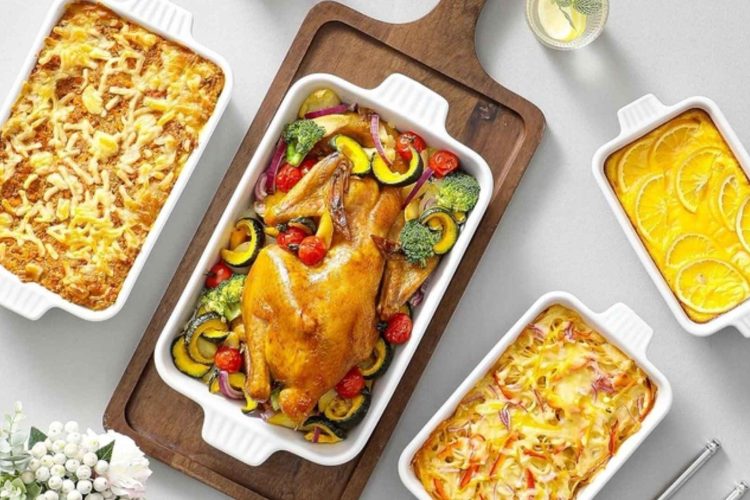
Looking to import high-quality ceramic dishes in 2026? Vietnam has rapidly emerged as a strategic hub for handcrafted and industrial ceramics. However, importing ceramics successfully requires more than just finding the right product: you need insight into market trends, supplier selection, quality control, logistics, and customs regulations.
In this comprehensive guide, we’ll walk you through every step of the import journey, from identifying reliable Vietnamese suppliers to navigating shipping and compliance, so you can confidently build a profitable supply pipeline this year.
Overview of Vietnam’s Ceramic Tableware Exports
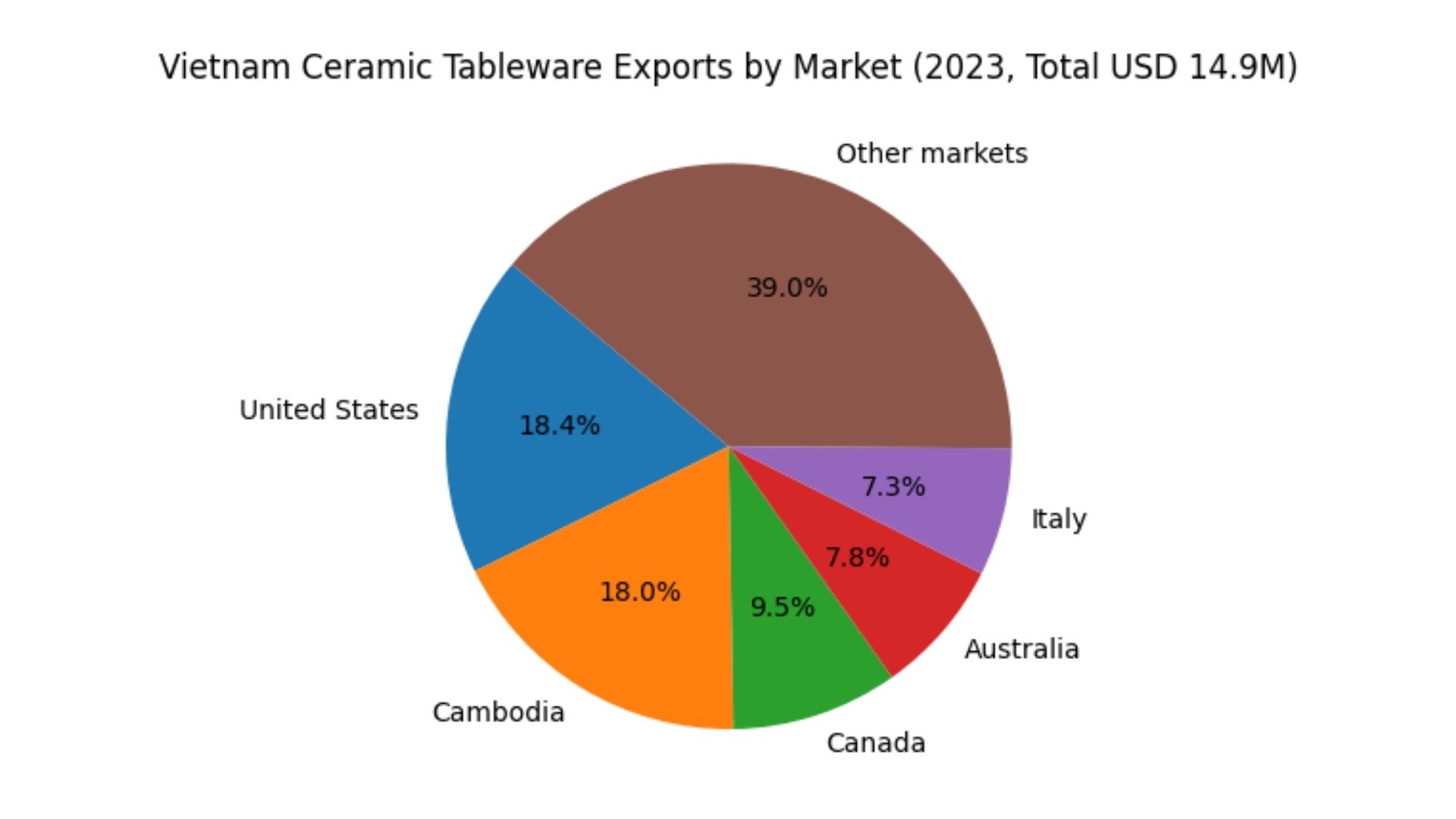
During the 2019-2023 period, ceramic product exports from Vietnam grew at an annual average rate of 3.5%. Vietnam’s ceramic industry continues to expand its export footprint. In 2023, ceramic tableware exports reached approximately USD 14.9 million, placing Vietnam among the world’s notable exporters in this product segment.
Vietnam’s primary export markets for ceramic tableware were the United States, with about USD 2.74 million in exports, followed by Cambodia at USD 2.68 million. Other important markets included Canada (USD 1.42 million), Australia (USD 1.16 million), and Italy (USD 1.09 million).
Ceramic tableware remains a staple product for household use and service sectors worldwide. Demand in large markets such as the United States, the European Union, and Japan is likely to grow steadily, driven by rising consumer interest in home dining and lifestyle products
Top Reasons to Import Ceramic Products from Vietnam
Vietnam has established itself as a premier global hub for ceramic and pottery production.
Here are the top reasons to import ceramic products from Vietnam:
-
Skilled craftmanship
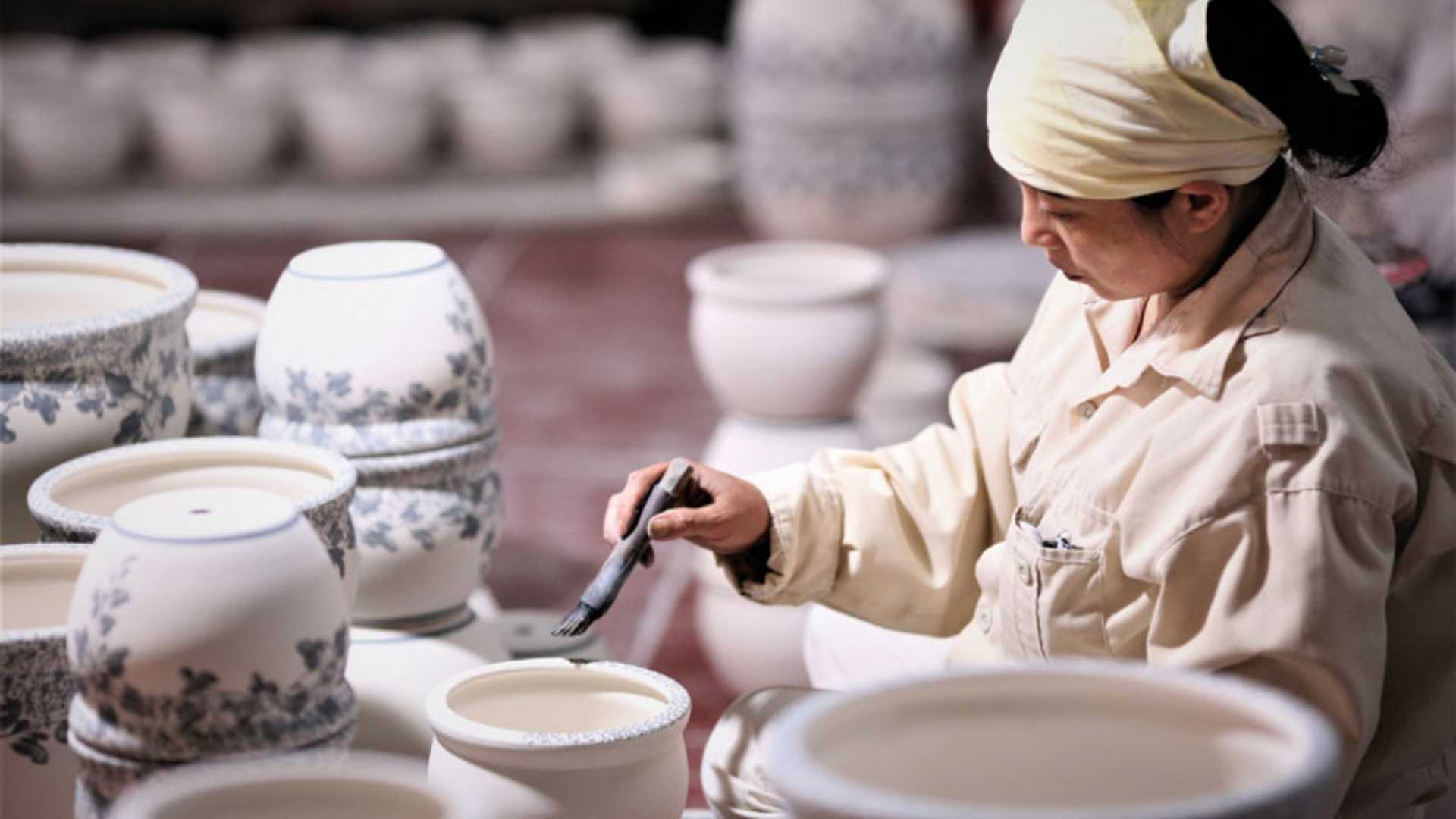
Vietnam’s ceramic industry is rooted in a deep-seated cultural heritage that few countries can match. The nation is home to over 5,400 craft villages, encompassing bamboo, rattan, weaving, and embroidery, with nearly 2,000 recognized as traditional craft villages.
Some of the most famous ceramic villages in Vietnam, including:
- Bat Trang (Hanoi): As the most famous “ceramic capital” with a history spanning over 700 years, Bat Trang is renowned for its sophisticated porcelain and exquisite glazes. Its artisans are masters of intricate detailing, making it the go-to source for high-end home decor and traditional tableware.
- Bau Truc (Ninh Thuan): Recognized by UNESCO, Bau Truc represents one of the oldest pottery villages in Southeast Asia. It is famous for its unique hand-molding technique (using no pottery wheel) and open-air firing. This results in rustic, “one-of-a-kind” earthenware that is highly sought after by boutique collectors and interior designers looking for authenticity.
- Chu Dau (Hai Duong): Once a lost art, Chu Dau ceramics are celebrated for their “pure Vietnamese” aesthetics, featuring ivory-white glazes and cobalt blue motifs that were historically prized by royalty across Asia and Europe.
-
Cost-effectiveness
Vietnam offers a unique economic advantage where high craftsmanship meets competitive pricing.
- Labor Cost Advantage: Vietnam’s manufacturing wages remain significantly lower than those in China and other regional competitors. According to some recent reports, Vietnam’s average hourly manufacturing labor cost sits at approximately USD 3 compared to over USD 6.50 in China and nearly USD 5 in Thailand.
- High Profitability per Export Unit: According to Chairman Trinh Quoc Dat (Vietnam Fine Arts and Handicrafts Association), ceramics and handicrafts are consistently among Vietnam’s top 10 export earners due to their high “added value.” He notes that for every USD 1 million of ceramic exports, the profit margins are 5 to 10 times higher than in mass-produced electronics or textiles.
- Benefits from Free Trade Agreements (FTAs): Vietnam’s participation in multiple free trade agreements continues to support export competitiveness. Preferential tariff treatment in markets such as the EU, Japan, and CPTPP member countries helps Vietnamese ceramic tableware maintain price advantages compared to suppliers from non-FTA countries.
-
Trusted export and delivery
Vietnam now boasts three ports ranked in the Global Top 50 for container throughput, providing direct access to major global shipping lanes.
- Lach Huyen Deep-Water Port (Hai Phong): Serving as the primary gateway for Northern Vietnam. The port is up to 57 hectares in size. The berth is designed to handle container vessels of up to 14,000 TEU as well as breakbulk vessels with a capacity of up to 160,000 DWT.
- Cai Mep – Thi Vai Port Complex: Located in the south, this cluster serves the industrial powerhouses of Binh Duong and Dong Nai, where large-scale ceramic factories are concentrated. Cai Mep is ranked among the most efficient container terminals in the world, capable of handling vessels of over 200,000 DWT.
How to Import Ceramic Dishes from Vietnam
This section explains the full import workflow, from selecting a supplier to managing shipping & logistics.
-
Identify the supplier
Buyers typically use B2B sourcing platforms, attend trade shows, or engage local sourcing agents. When selecting a partner, consider these core pillars:
- Business Legality: Verify the supplier’s business license and tax registration.
- Export History: Prioritize factories with a proven track record in your specific market (e.g., US, EU, or Japan) to ensure they understand regional compliance.
- Production capacity: Confirm monthly output capability and peak season capacity.
- Quality Standards: Confirm the supplier holds international certifications such as ISO 9001, BSCI, or SA8000. For dishes, lead-free and cadmium-free certifications are mandatory for food safety.
-
Place a sample order
A sample order is the most critical stage for quality assurance in the ceramic industry.
Samples are usually provided at a higher unit cost or a flat development fee. For B2B tableware, a standard sample set includes 3-5 units per SKU.
Sample lead times generally range from 14 to 21 days. Shipping is typically handled via air courier (e.g., FedEx or DHL) for speed.
When the samples arrive, inspect the following:
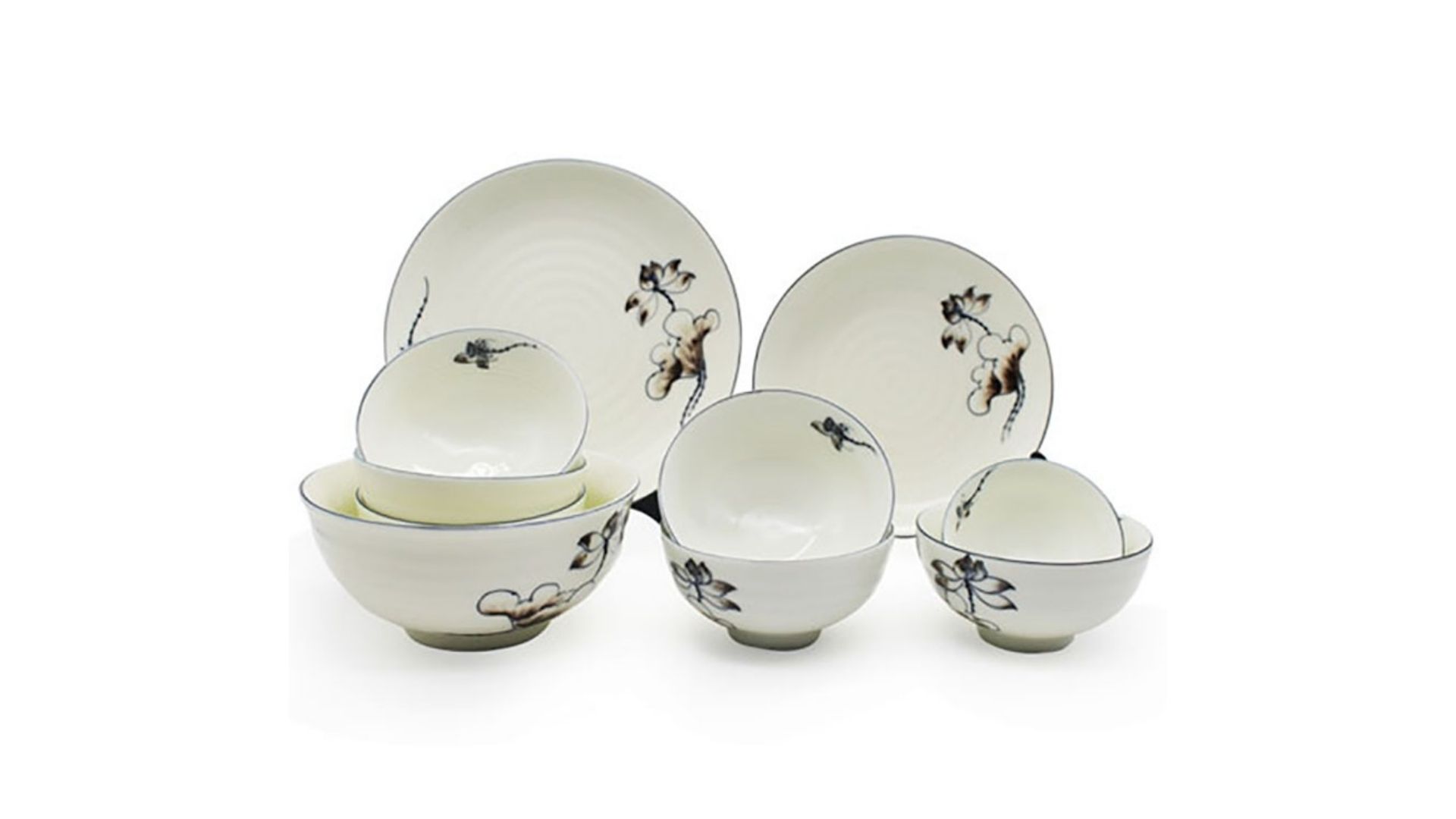
- Glaze Consistency: Look for pinholes, bubbles, or uneven thickness.
- Vitrification: Ensure the clay body is fully fired and non-porous.
- Dimension Tolerances: Check if sizes align with your technical drawings.
- Safety Testing: Check the sample passes “microwave-safe” and “dishwasher-safe” benchmarks.
-
Make a contract
A formal contract is essential to mitigate risks associated with fragile goods and production delays. It serves as the legal foundation for dispute resolution and quality accountability.
Key clauses that must be included are:
- Incoterms: Define who bears the cost, risk, and responsibility for goods at each stage of shipment. Commonly used Incoterms in international trade include EXW, FOB, CIF, and DDP.
- Payment Terms: Clarify the payment method, payment schedule, and currency. The standard B2B structure is often a 30% deposit and a 70% balance paid against the Bill of Lading.
- Order Quantity: Define minimum order quantity (MOQ), batch sizes, and flexibility for repeat orders.
- Pricing and Payment terms: Define the unit price, total contract value, and currency.
- Delivery Schedule and Lead Time: Define the agreed production lead time and shipment window.
- Dispute Resolution and Governing Law: Specify governing law and dispute resolution method. This provides legal clarity if disagreements cannot be resolved through negotiation.
A well-structured contract protects both parties and supports long-term sourcing stability.
-
Handle customs clearances
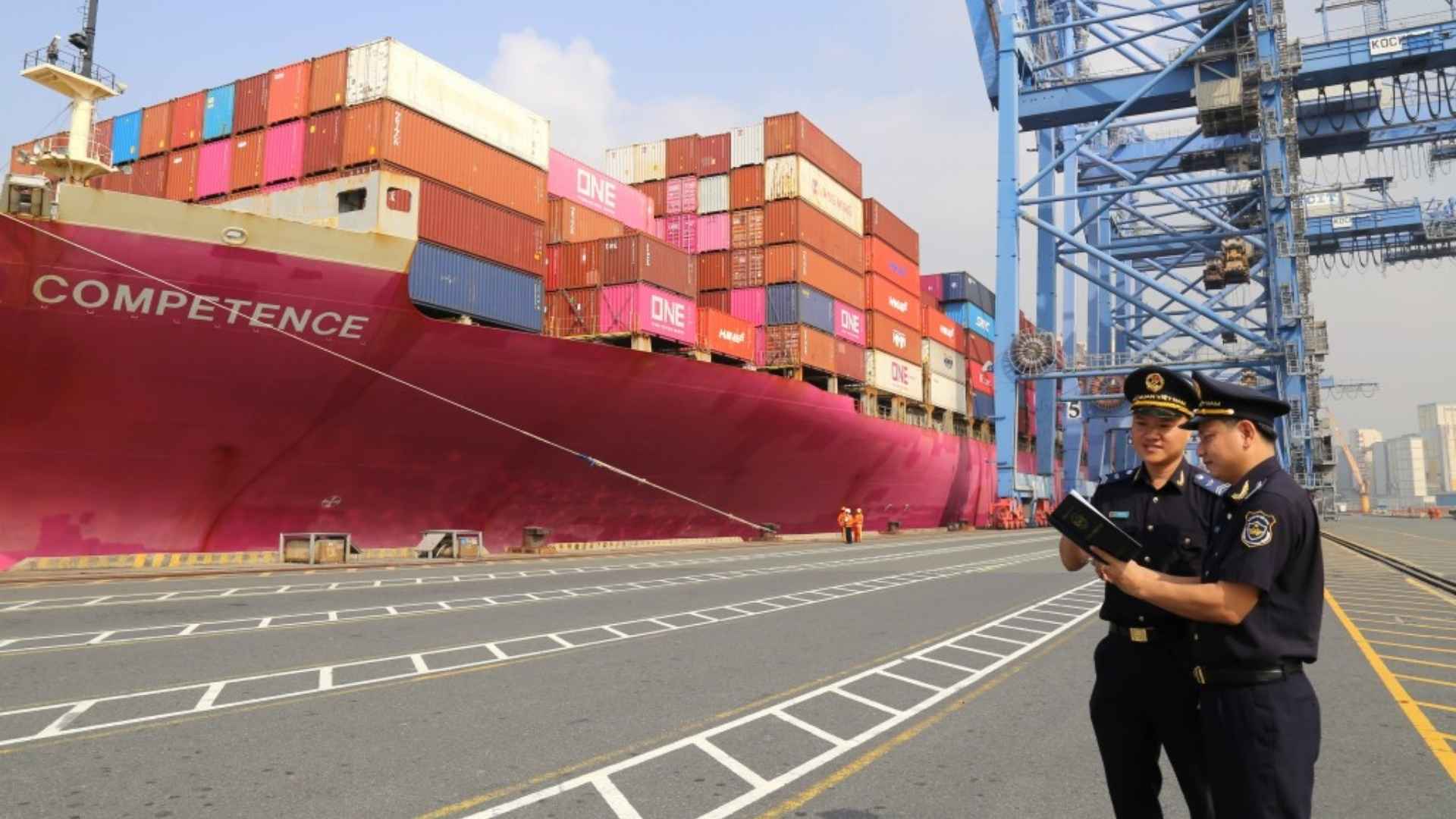
The 2025 regulatory landscape in Vietnam emphasizes digital transparency and rules of origin. To clear the customs gate efficiently, the following documents are required: Commercial Invoice, Packing List, Bill of Lading, and Certificate of Origin (if preferential tariffs are claimed).
-
Manage shipping & logistics
Ceramic dishes are fragile and require careful logistics planning. The choice of shipping method depends on volume, urgency, and cost tolerance.
The table below compares common shipping methods for ceramic dishes.
| Method | Benefits | Disadvantages | Shipping time | Best Use Case |
| Sea Freight (FCL/LCL) | Most cost-effective; handles massive volumes. | Longer transit; higher risk of moisture damage if not packed correctly. | 20-45 days | Standard bulk orders; inventory restocking. |
| Air Freight | Fastest delivery; lower risk of breakage due to less handling. | Very expensive for heavy items like ceramics. | 7-9 days | Urgent samples; high-value limited editions. |
How to Vet a Reliable Vietnamese Ceramic Dish Supplier?
-
Direct factories
Vietnam has several well-known ceramic producers that buyers often consider for direct sourcing.
Direct factories offer better control over quality and product customization. However, buyers must verify export readiness, production capacity, and communication capability.
Below are three frequently referenced ceramic companies.
MINH LONG I CO., LTD
Founded in 1970, Minh Long I is widely regarded as one of Vietnam’s most prestigious porcelain brands.
The company specializes in decorative and fine-art porcelain, premium giftware, jewelry-inspired collections, home cookware, and dedicated product lines for restaurants and hotels.
Minh Long I employs more than 3,000 workers and operates large-scale, export-oriented manufacturing facilities. Its products are exported to demanding markets such as Germany, France, Japan, and the United States, reflecting strong quality control and international compliance capabilities.
Contact Information:
- Address: No. 333, Hung Dinh 24th Street, Hung Loc Quarter, Thuan An Ward, Ho Chi Minh City, Viet Nam.
- Website: minhlong.com
- Email: [email protected]
Bat Trang Pottery Village
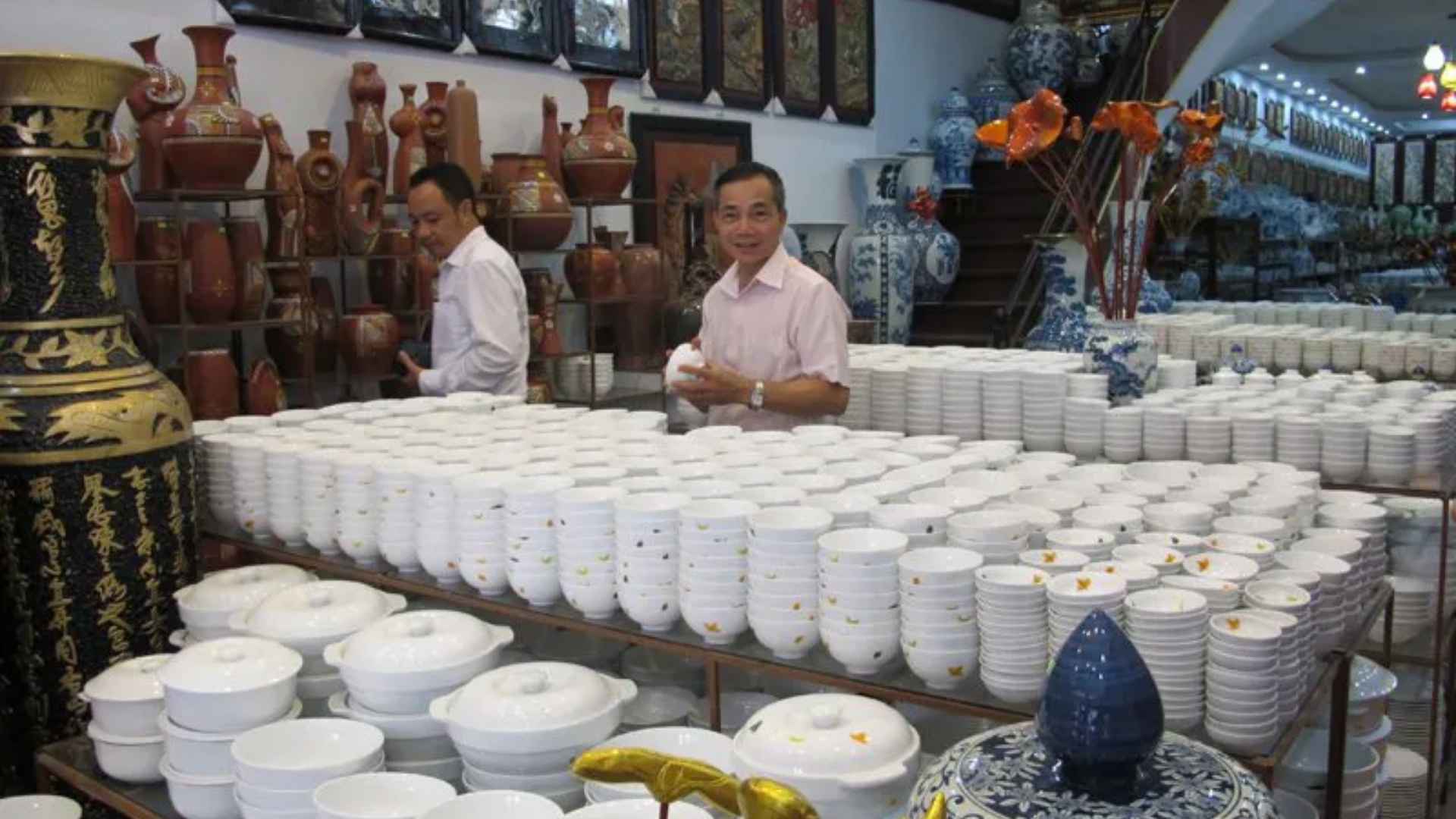
This organization represents the elite craftsmanship of the 700-year-old Bat Trang ceramic village. The product portfolio focuses on tea sets, incense bowls, and everyday tableware such as bowls and plates, as well as decorative ceramic items, including vases, jars, and ceramic wall art.
The organization maintains a network of showrooms across Vietnam, including locations in Hanoi, Ho Chi Minh City, and Da Nang, to support domestic sales and strengthen buyer engagement.
Contact Information:
- Address: Bat Trang Village, Gia Lam District, Hanoi, Vietnam.
- Website: https://khonggiangom.com/
- Email: [email protected]
-
Online B2B platforms
Online B2B platforms are a common starting point for sourcing ceramic suppliers in Vietnam. They allow buyers to compare suppliers, review product catalogs, and initiate contact remotely.
Alibaba
Alibaba is the world’s largest business-to-business (B2B) marketplace. It acts as a digital intermediary that connects global buyers (retailers, wholesalers, and manufacturers) with suppliers, primarily based in Asia.
Pros: Massive supplier database; Significant discounts for large MOQs; Easily connect and negotiate with manufacturers
Cons: Long lead time; High MOQs; Hard to verify suppliers’ true capabilities.
VinaSources
VinaSources is a Vietnam-focused B2B sourcing platform designed to connect global buyers with verified Vietnamese manufacturers and exporters. Its core purpose is to simplify sourcing from Vietnam by reducing supplier risk, improving transparency, and supporting export-ready transactions.
Pros: Vietnam-focused supplier network; Flexible MOQs; Reduced lead times and miscommunication.
Cons: Smaller supplier pool compared to global platforms
Global Sources
Global Sources is an international B2B sourcing platform that connects global buyers with export-oriented manufacturers, mainly from Asia. It focuses on helping buyers find suppliers that are already active in international trade and familiar with export requirements.
Pros: Stronger supplier verification compared to open marketplaces; Focus on export-capable manufacturers; Trade show integration
Cons: Smaller supplier pool; Limited Vietnam-only focus; Paid features for deeper access
-
Trade shows
Trade shows are valuable for directly vetting suppliers, seeing product samples, and forging business relationships.
Attending trade fairs allows buyers to meet multiple suppliers in a short period and assess products face-to-face.
| Trade show | VIFA EXPO 2026 | Global Sourcing Fair 2026 | HawaExpo 2026 |
| Introduction | VIFA EXPO is the largest furniture and home accessories fair in Vietnam. It is highly relevant for buyers looking for ceramic vases that complement large-scale furniture collections. | This is a premier international B2B sourcing show organized by Global Sources. It serves as a specialized platform for “export-ready” products from Vietnam and across Asia. | HawaExpo is an international trade fair that serves as a professional B2B platform specifically curated for international buyers, importers, and retailers. |
| Scale | Expected over 51,000 m² of exhibition space with 2,800+ booths | Expected to feature 500+ exhibitors and 700+ booths. | Expected over 40,000 m² of exhibition space with 2,500 booths & showcases |
| Attendance | Anticipated 680+ exhibitors from 20 countries and more than 20,000 visitors | Forecasted to attract over 10,000 professional trade visitors. | Anticipated 700 exhibitors and 25,000 visitors |
| Date & Venue |
|
|
|
Quality Standards and Safety Compliance When Importing Ceramic Dishes
Imported ceramic dishes must comply with food contact safety regulations to be legally placed on the market. To reduce the risk of recalls and import rejections, B2B buyers should require pre-shipment compliance checks.
Exporters of ceramic, glass-ceramic, and glass dinnerware commonly follow ISO 6486-1, the international test method for measuring the release of toxic metals such as lead and cadmium, to ensure products are safe for food contact use.
- Cadmium ≤0.07 mg/dm², Lead ≤0.8 mg/dm² for flatware.
- Hollowware <1.1L: Cd ≤0.5 mg/L, Pb ≤2.0 mg/L.
- Cups/mugs: Cd ≤0.25 mg/L, Pb ≤0.5 mg/L.
Ceramic dishes are typically categorized as medium to high-risk due to potential chemical migration.
To ensure safety, B2B buyers must prioritize the following:
- Food Contact Material (FCM) Testing: Products must comply with QCVN 12-1:2011/BYT (for plastics/materials) and general safety standards like ISO 22000.
- Heavy Metal Limits: For US imports, FDA compliance for lead and cadmium leaching is mandatory. For example, large hollowware must not exceed 1.0 mg/L of lead.
- Vitrification Standards: Industrial ceramics should have a water absorption rate of <0.5% for porcelain to ensure durability and hygiene.
- Third-Party Inspection: Use accredited labs such as SGS to conduct migration tests before shipment.
What are the Typical MOQ & Lead times for Importing Ceramic Dishes?
Minimum order quantities (MOQs) and lead times vary depending on the supplier, level of customization, and the type of ceramic material used.
In general, MOQs for ceramic dishes typically range from 100 to 1,000 pieces per design.
For standard, non-customized orders, production lead times usually fall between 45 and 60 days. However, during peak export seasons, particularly in the summer months, factory capacity constraints may extend lead times to 60 days or longer.
You should place orders early to secure production slots and avoid delays.
What is the Typical Cost for Importing Ceramic Dishes?
-
Product wholesale price
Unit prices of ceramic dishes vary based on material and decoration complexity.
- Basic Stoneware Plates: USD 0.70 – USD 3.5 per unit.
- Hand-painted Artisanal Sets: USD 20.00 – USD 55.00 per set (e.g., Bat Trang premium collections)
-
Shipping cost
Freight rates have stabilized but remain subject to energy surcharges.
- Sea Freight (FCL): Shipping a 20ft container to the US West Coast, such as Los Angeles and Long Beach, averages USD 1,300 – USD 1,800, with a transit time of 24-30 days. A 40-foot container usually ranges from USD 2,000 to USD 3,200.
- Air Freight: Costs range from USD 11.00 – USD 16.00 per kg for shipments over 100kg.
-
Tariffs and Trade Regulations
Under the Joint Statement on Reciprocal Trade (2025), Vietnam faces specific tariff structures:
- United States: Many Vietnamese ceramics are subject to a 10% reciprocal tariff as of late 2025.
- European Union: Most ceramics qualify for 0% duty under the EVFTA, provided a Certificate of Origin is present.
-
Customs handling fees
Standard brokerage and documentation fees in Vietnam are relatively low.
Key Customs fees
- Standard Goods Declarations: Approximately USD 0.80 per declaration for imported, exported, or transited goods.
- ATA Carnets: Issuance fee of around USD 40.8 per carnet. Re-issuance fee of approximately USD 20.4.
- Inspection, Supervision, or Suspension Requests: About USD 8.20 per request, depending on the inspection scope.
- Transit Vehicles: Road vehicles such as cars or tractors: approximately USD 8.20 per vehicle. Waterway vehicles, including ships or barges: approximately USD 20.40 per vessel.
-
Local taxes
VAT: As of July 2025, Vietnam applies a 10% VAT, though a 2% reduction remains in effect for many sectors until the end of 2026.
Export Tax: Most ceramic products enjoy a 0% export tax to encourage international trade.
Partner with VinaSources for Efficiently Importing Ceramic Dishes
With over 12 years of experience in cross-border sourcing and international trade, VinaSources
was established to help global buyers reduce sourcing risks and streamline the process of importing ceramic dishes from Vietnam. As a Vietnam-focused B2B sourcing platform, VinaSources connects international buyers directly with verified, export-ready ceramic manufacturers specializing in tableware and decorative ceramics.
VinaSources has developed a strong network of trusted Vietnamese suppliers with proven export track records in demanding markets such as the United States, the United Kingdom, and the European Union. All listed manufacturers are thoroughly vetted to ensure compliance with international quality standards, food-contact safety regulations, and sustainability requirements.
Through the platform, buyers can explore a broad selection of ceramic dish suppliers offering varied designs, glazing finishes, and flexible OEM and ODM capabilities at competitive prices.
Start your ceramic dish sourcing project with VinaSources today:
- Email: [email protected]
- Tel: 1900 4356
Office locations:
- United States: 30 N Gould St Ste 2514, Sheridan, WY 82801, USA
- Singapore: 16 Raffles Quay, #16-02 Hong Leong Building, Singapore 048581
- European Union: Harju maakond, Tallinn, Pirita linnaosa, Padriku tee 12/3-4, 11912, Estonia
- Vietnam: 4th Floor, Rainbow Office, Van Quan Ward, Ha Dong, Hanoi, Vietnam