
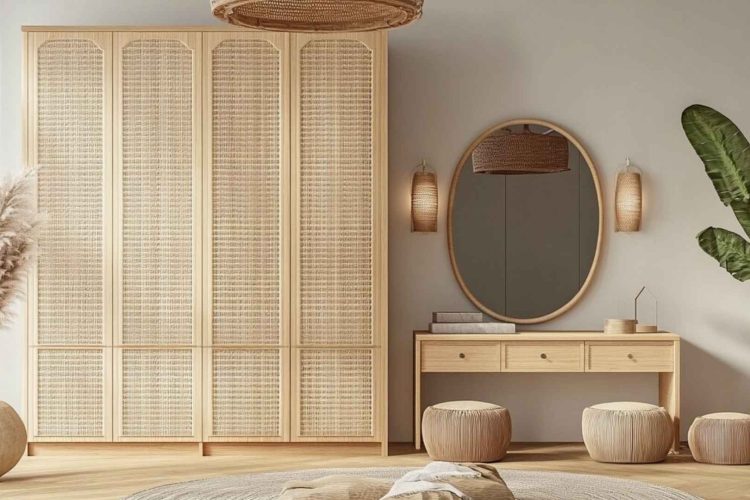
Importing rattan wardrobes from Vietnam has become a strategic choice for global furniture buyers seeking natural materials, skilled craftsmanship, and export-ready suppliers. Vietnam’s furniture and handicraft industry supports large-scale production while maintaining consistent quality for international markets.
This guide explains where to find reliable suppliers, how to evaluate sourcing channels, and what B2B buyers should consider before placing orders.
Overview of Vietnam’s rattan furniture export
Vietnam has solidified its position as a global manufacturing powerhouse. It currently ranks as the second-largest furniture exporter in the world, following only China.
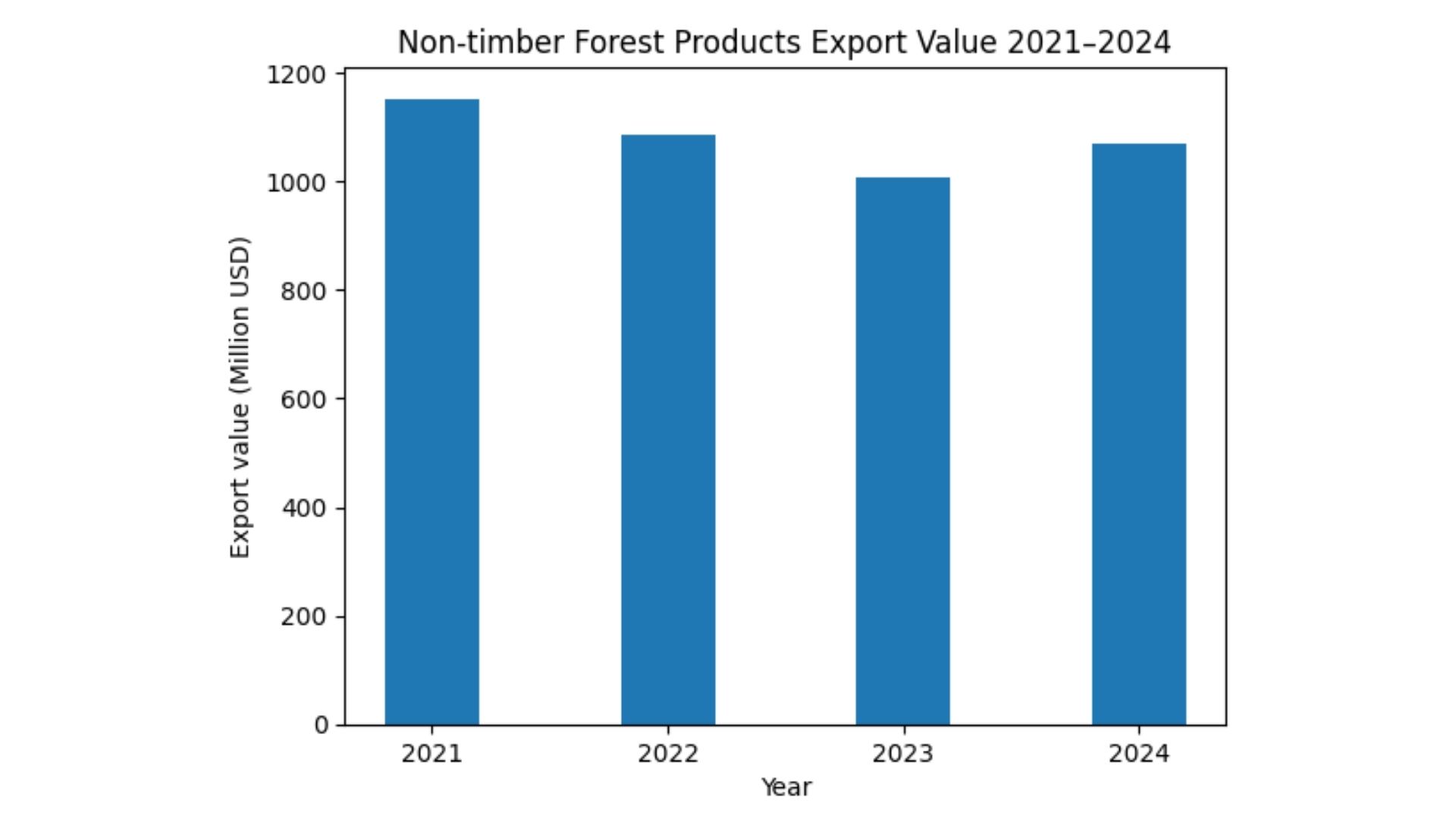
Although timber and wood products account for the majority of furniture export value, non-timber forest products, including rattan, bamboo, and sedge products, also play a meaningful role.
In 2024, these products generated USD 804.1 million in total export turnover. This momentum continued into the first nine months of 2025, when exports reached USD 594.8 million, marking a 10.3 percent increase compared with the same period in 2024.
During this period, the United States remained the largest export market, with export value exceeding USD 247 million, accounting for approximately 41.6% of total export turnover. Japan and the European Union followed as key destination markets, driven by demand for sustainable and handcrafted furniture.
Vietnam currently aims to capture 10%-15% of the global rattan and bamboo market share, which is forecast to reach USD 82.9 billion by 2028.
Why Choose Vietnam for Importing Rattan Wardrobes
| # | Factors | Brief analysis |
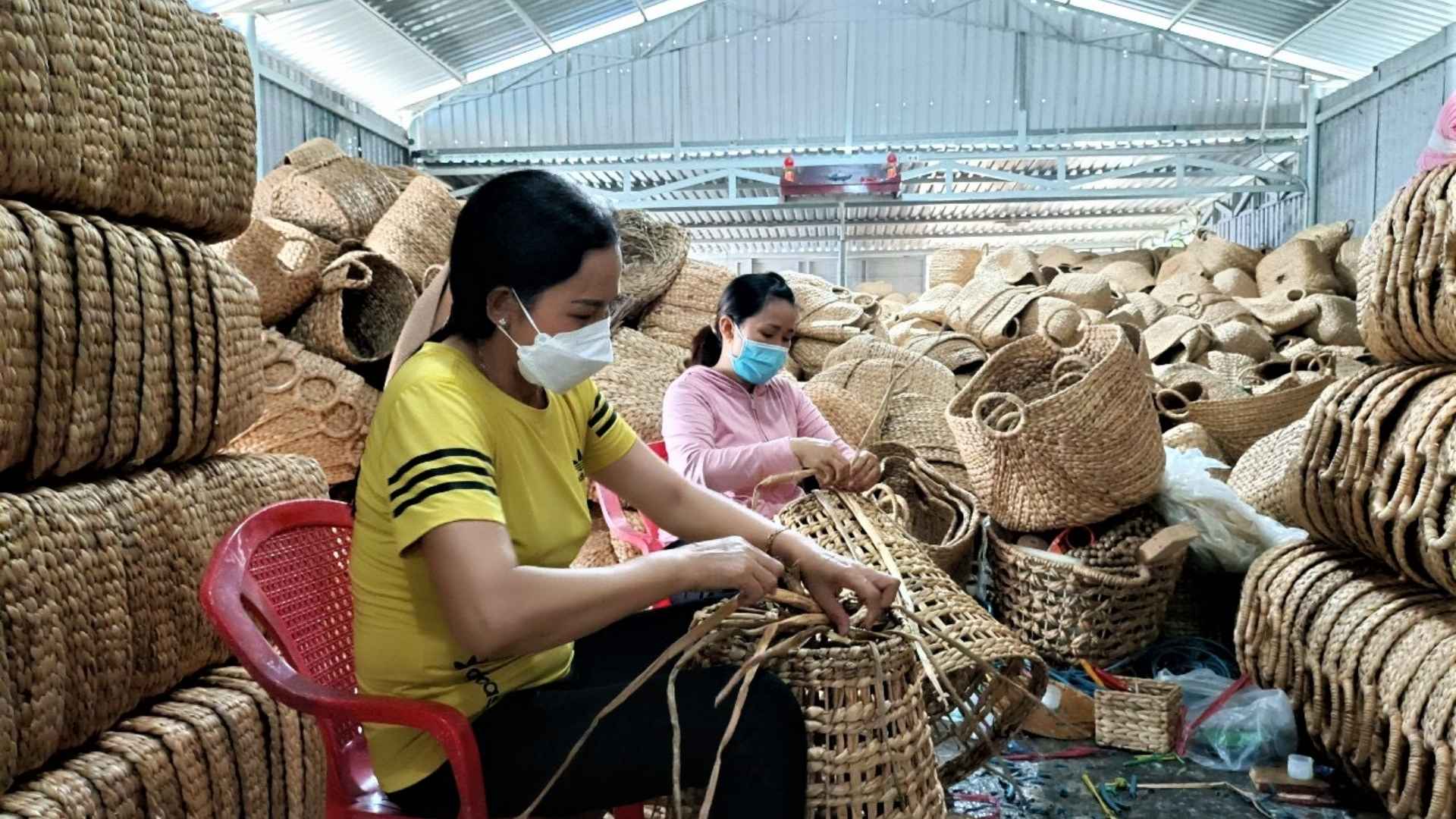
| 1 | Production capacity | Vietnam’s production capacity is supported by more than 1,000 bamboo and rattan craft villages nationwide. The sector employs over 342,000 skilled artisans. This workforce enables flexible production and supports large volume manufacturing for export orders. |
| 2 | Cost competitiveness | Vietnamese furniture manufacturing, maintenance, and personnel management costs are 20-30% lower than those in China. Minimum wages range from USD 133 to 196, significantly reducing the production cost of large items like wardrobes. |
| 3 | Stable raw material supply | Vietnam manages 1.5 million hectares of bamboo and rattan forests across 37 provinces. This ensures a stable, local supply chain that is not dependent on high-cost raw material imports. |
| 4 | Trade agreements | Vietnam participates in 16 free trade agreements. This includes the CPTPP and EVFTA, which provide significant tariff advantages in over 60 countries. |
| 5 | Market demand | The United States absorbs 41.6% of Vietnam’s rattan exports. This demonstrates a high level of compliance with Western quality and safety standards. |
How to Import Rattan Wardrobes from Vietnam
-
Identify the supplier
The first step when you import rattan wardrobes from Vietnam is to identify reliable suppliers. You should use multiple sourcing channels, including trade shows, online B2B platforms, and direct factory outreach.
This approach allows you to compare product quality, pricing levels, and export capability before selecting a suitable partner.
When reviewing a supplier, you should check key factors such as valid business registration, export licenses, production capacity, export history, past client references, and relevant quality certifications to ensure reliability and compliance.
-
Place a sample order
After you shortlist suppliers, placing a sample order is a critical step before mass production. The sample allows you to verify product quality, confirm design accuracy, and check compliance with your technical specifications.
When requesting a sample, you should provide the supplier with clear drawings, exact dimensions, material specifications, and finishing references.
Once you receive the rattan wardrobe sample, inspect it carefully. Focus on weaving consistency, joint strength, frame stability, and surface finishing. You should also check for proper rattan treatment to prevent mold or pest issues during shipping.
Sampling costs are usually borne by the buyer, so you should agree clearly on the sample price, shipping method, and lead time before confirming the order.
-
Negotiate terms
Contract negotiation is a critical risk control stage when importing rattan wardrobes from Vietnam. A clear contract reduces disputes and protects both parties.
Mandatory contract terms should include the following points.
- Product specifications: Define materials, dimensions, and finishing standards.
- Order quantity
- Unit price: Confirm the agreed unit price and currency. Specify whether the price includes packaging, labeling, or other export-related costs.
- Production timeline: Confirm the agreed unit price and currency. Specify whether the price includes packaging, labeling, or other export-related costs.
- Incoterms: State the agreed Incoterms, such as FOB or CIF, to clarify responsibility for freight, insurance, and risk.
- Payment terms: Define payment structure, such as deposit ratio and balance payment timing. Also specify acceptable payment methods.
- Dispute resolution and governing law: State the governing law and dispute resolution methods, such as arbitration or court jurisdiction, to reduce legal uncertainty.
-
Handle customs clearances
Handling customs clearance correctly is essential when importing rattan wardrobes from Vietnam. You should prepare all required documents in advance and verify them with your customs broker before the shipment’s arrival.
Typical documents required for customs clearance include the following.
- Declaration form
- Bill of lading
- Certificate of origin
- Commercial invoice
- Packing list
You should work with an experienced customs broker to help smooth the clearance of rattan wardrobes at the destination port.

-
Pre-shipment inspection
It is essential to conduct a pre-shipment inspection when you import rattan wardrobes from Vietnam. This step helps you reduce quality risk and avoid costly issues after the goods arrive at the destination port.
You can hire an independent third-party inspection company to check the shipment before it leaves the factory.
If the inspection finds defects, you can ask the supplier to fix the issues before you approve the shipment. This process helps protect your payment and ensures the bulk order matches your expectations.
-
Packaging & labelling
Proper packaging is the only defense against the high humidity and rough handling typical of cross-Pacific transit.
- Protective Standards: Use foam corner protectors and moisture-absorbent silica gel packs. Flat-packed wardrobes should be disassembled and cushioned with corrugated board.
- Labelling: Vietnamese law requires labels to include the product name, origin (Made in Vietnam), and the name of the responsible organization. For US imports, upholstered items must also include flammability labels per CPSC regulations.
- Fumigation: All wood and rattan products require an ISPM 15 fumigation certificate to prove the shipment is free of pests.
-
Manage shipping
Most rattan wardrobes are shipped by sea due to size and weight. Full container load shipping is the most cost-effective option for large orders.
Air freight is rarely used for wardrobes due to cost and size restrictions, but it may be considered for urgent samples.
Where to Find Reliable Rattan Wardrobes Suppliers
-
Direct factories
Working directly with factories is one of the most effective ways to source rattan wardrobes from Vietnam. Direct factories control raw material sourcing, weaving processes, and final assembly. This gives buyers better transparency on quality and cost structure.
Viettime Craft (Indochina Creative Investment and Development JSC)
Viettime Craft is a prestigious leader in Vietnam’s handicraft export sector. Established in 2007, the company specializes in producing and exporting handmade goods such as baskets, storage items, lacquerware, and indoor furniture, using natural materials including rattan, bamboo, water hyacinth, seagrass, palm leaf, and sedge. Its products are exported to Europe, the United States, Australia, and Asian markets.
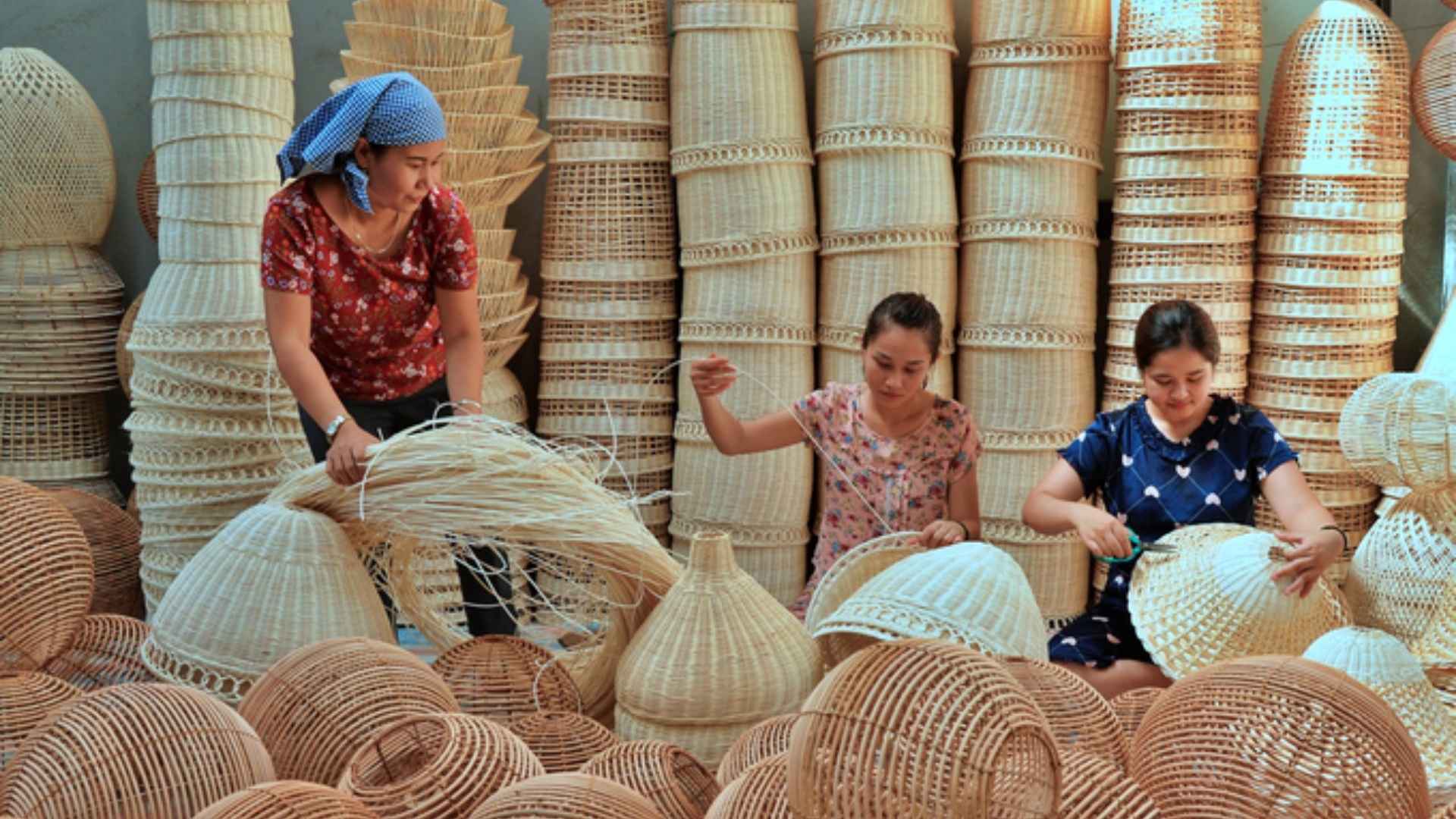
The company maintains a robust output of 100,000 pieces per month, supported by a massive network of 5,000 home workers and specialized artisans across various craft villages.
Contact Information:
- Address: No. 43 Nguyen Hy Quang, Dong Da Ward, Hanoi City, Vietnam
- Website: https://viettimecraft.com/
- Email: [email protected]
Bamboo Village Company Limited (Tre Lang Living Bamboo)
Founded in 1999, Bamboo Village specializes in high-class bamboo and rattan furniture for both indoor and outdoor use.
The company’s key products: Indoor furniture (rattan wardrobes, beds, shelves), outdoor sets (dining tables, fences), and bamboo houses.
Main export markets: Highly reputed in the UK, the Netherlands, France, Germany, the USA, and Australia.
Contact Information:
- Address: No.32, Road 87, Group 9, Phu Loi Hamlet, Tan Phu Trung Commune, Cu Chi Dist., Ho Chi Minh City.
- Website: https://www.livingbamboo.com/
- Email: [email protected]
Artex Nam An Joint Stock Company
Founded in 2013, Artex Nam An Joint Stock Company is a manufacturing and trading company specializing in the export of handicraft products made from natural materials. They are recognized for integrating traditional techniques with modern quality management systems, holding certifications such as BSCI, ISO 9001:2015, and ISO 14001:2015.
Key products: Furniture made from rattan, bamboo, and water hyacinth, as well as complex woven handicrafts.
Export Markets: Focuses heavily on the USA, Australia, and Europe.
Contact Information:
- Address: No. 6 BT 1A, My Dinh 2 Urban Area, Nam Tu Liem District, Hanoi, Vietnam.v
- Website: https://artexnaman.com/
- Email: [email protected]
-
Online B2B platforms
Online B2B platforms aggregate thousands of suppliers and allow buyers to search by product type, material, and export capability.
Key advantages of online platforms include broad supplier reach, fast comparison, and early-stage communication. Buyers can review product photos, check basic specifications, request quotations, and evaluate supplier responsiveness before moving forward.
Alibaba
Alibaba is the world’s largest B2B online marketplace and is often the first sourcing channel used by international buyers when researching furniture suppliers. The platform hosts millions of active suppliers worldwide, including a substantial number of Vietnamese manufacturers and exporters specializing in rattan wardrobes, rattan cabinets, and bamboo and rattan furniture products.
VinaSources
VinaSources is a Vietnam-focused B2B sourcing platform built to connect global buyers with export-oriented Vietnamese manufacturers. For buyers sourcing rattan wardrobes, VinaSources simplifies the sourcing process by connecting buyers with manufacturers that specialize in bamboo and rattan furniture. These suppliers are familiar with export quality expectations, export grade packaging, and standard trade documentation.
Made-in-China
Made-in-China is a well-known sourcing platform focused primarily on Chinese suppliers, but it also lists manufacturers from other Asian countries, including Vietnam.
-
Trade shows
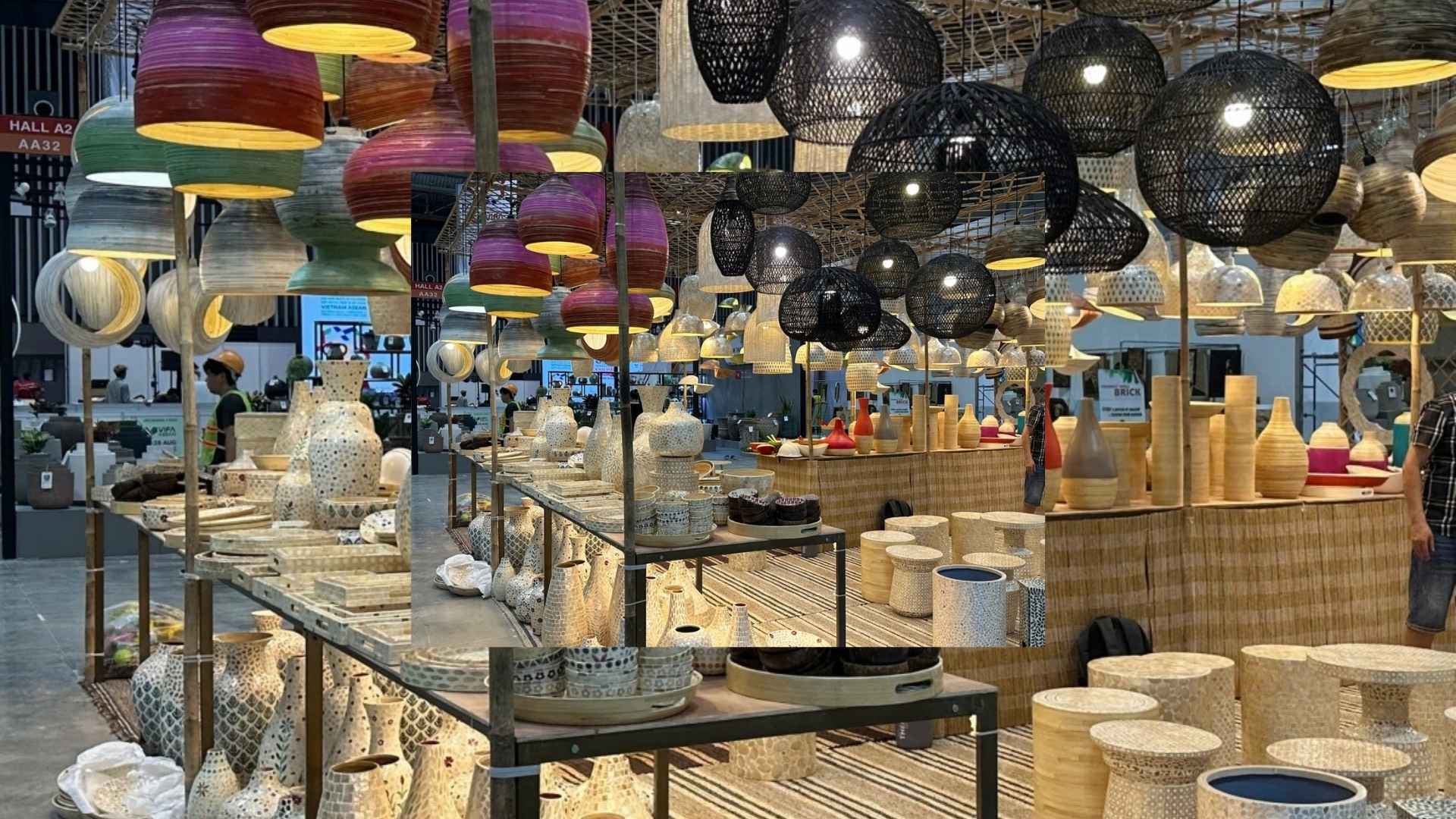
Trade shows are also an effective method for verifying product quality. These events allow B2B buyers to physically inspect rattan weave density and evaluate the structural integrity of wardrobe frames before engaging in supplier discussions.
For B2B buyers planning their 2026 procurement strategy, these three trade fairs are the most critical events for sourcing bamboo and rattan furniture.
HawaExpo (Ho Chi Minh Export Furniture Fair)
HawaExpo is organized by the Handicraft and Wood Industry Association of Ho Chi Minh City (HAWA). The exhibition serves as a major entry point for international buyers seeking to connect with export-ready furniture and handicraft suppliers in Vietnam.
The exhibition focuses on export-oriented furniture categories, including living room furniture, bedroom furniture such as wardrobes, children’s furniture, and a dedicated segment for bamboo and rattan products.
HawaExpo typically hosts more than 700 exhibitors, features around 3,000 booths, and attracts about 20,000 visitors from over 100 countries.
2026 Event Details:
- Date: March 4 – 7, 2026.
- Location: Saigon Exhibition & Convention Center (SECC), District 7, Ho Chi Minh City.
VIFA EXPO (Vietnam International Furniture & Home Accessories Fair)
VIFA EXPO is Vietnam’s longest-running international furniture exhibition, first held in 2008. The event is widely recognized as a key sourcing platform for export-oriented furniture manufacturers and home décor suppliers.
In 2026, the fair is planned to feature around 2,800 booths and is expected to attract between 13,000 and 20,000 professional visitors to the fair.
2026 Event Details:
- Date: March 8 – 11, 2026.
- Location: Simultaneously held at SKY EXPO (District 12) and WTC EXPO (Binh Duong), Ho Chi Minh City. (A free shuttle bus service connects the venues.)
What is the Typical Cost for Importing Rattan Wardrobes?
-
Product wholesale price
In Vietnam, wholesale costs vary significantly based on material grade and design complexity. So that rattan wardrobe prices are typically quoted in tiers:
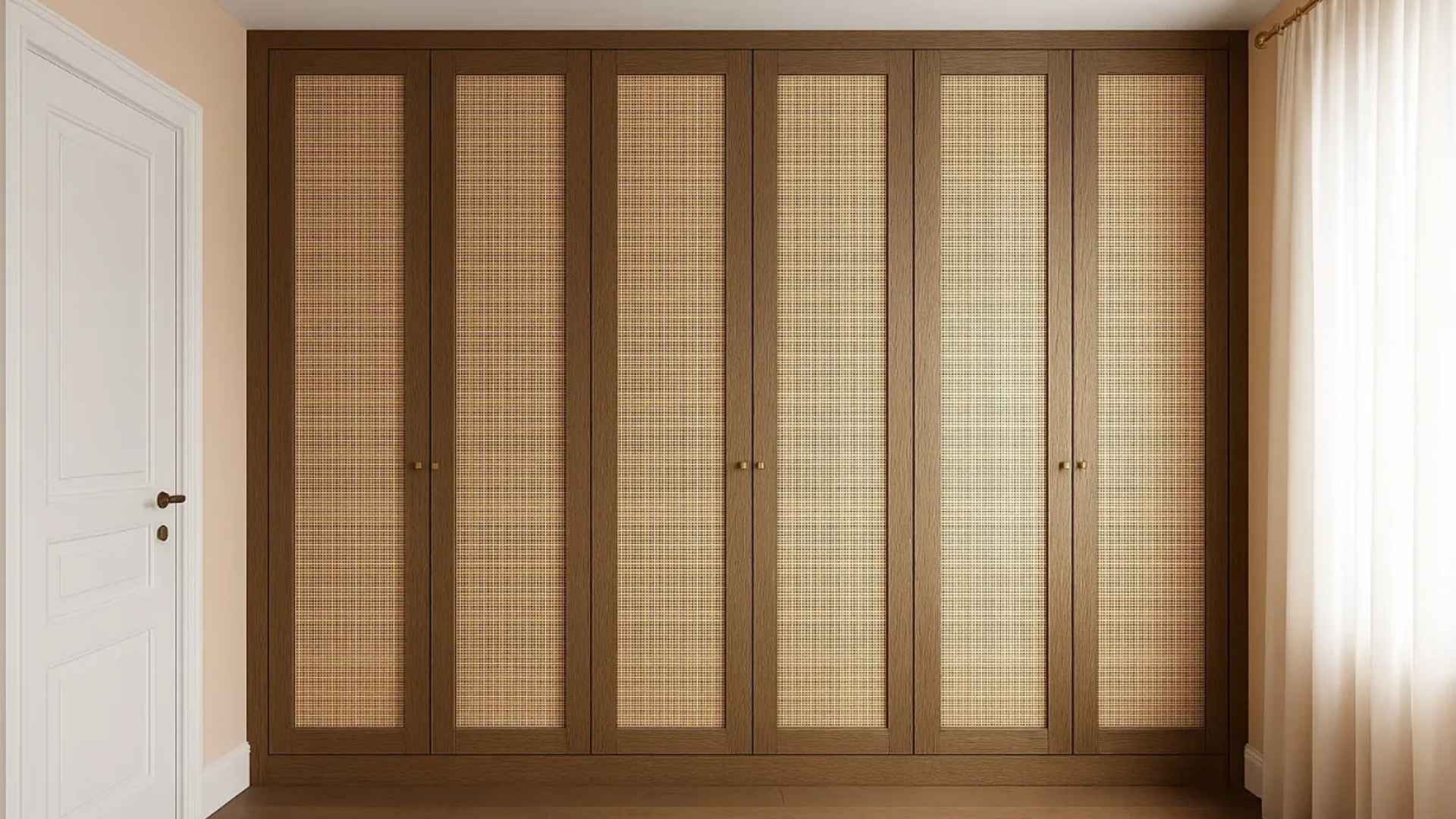
- Small 1-door wardrobes with 2-4 tier rattan shelving: $70 – $250 per unit
- Full-size 2-door wardrobes or wardrobes with integrated drawers: $150 – $380+ per unit
- Large luxury 3-door wardrobes or fully custom-made cabinets with intricate carvings and shell inlays: $380 – $600+ per unit
-
Shipping cost
Ocean freight remains the standard shipping method when you import rattan wardrobes from Vietnam on a commercial scale. Wardrobes are bulky and space-intensive, which makes container-based shipping more cost-efficient than air freight in almost all cases.
- For Full Container Load (FCL)
For shipments to the United States West Coast, including ports such as Los Angeles and Long Beach, a 20-foot container is commonly quoted between USD 1,300 and USD 1,880, while a 40-foot container usually ranges from USD 2,000 to USD 3,200.
For shipments to the United States East Coast, including New York and New Jersey, costs are higher due to longer transit distances. A 20-foot container is typically quoted between USD 1,800 and USD 2,000, while a 40-foot container often falls in the range of USD 3,500 to USD 3,800.
- For Less than Container Load (LCL)
Freight forwarder quotations for 2025 indicate typical LCL rates of USD 50 to USD 80 per cubic meter.
-
Tariffs and Trade Regulations
As of late 2025, trade regulations for furniture have shifted significantly, particularly for the US market.
- United States: Under trade policy changes scheduled to take effect in October 2025, certain rattan furniture products, such as rattan wardrobes classified under HS Code 9403.89, may be subject to an additional duty of 20%.
- European Union: Under the EU-Vietnam Free Trade Agreement (EVFTA), many rattan furniture items qualify for 0% duty rates, provided they meet the specific Rules of Origin requirements.
-
Customs handling fees
Customs handling fees include broker service fees, documentation processing, and port-related charges.
These fees are usually charged by logistics providers or customs brokers in the destination country.
Fees vary, but in the U.S, basic customs clearance and handling services for furniture imports commonly range from $200-$500 per shipment.
-
Local taxes
Local taxes vary entirely by destination country. In many markets, imported furniture is subject to value-added tax or sales tax at the point of import or sale.
For example, in the European Union, standard VAT rates currently range from a low of 17%-27%, depending on the member state. These taxes are applied to the customs value plus duties and freight.
In the United States, there is no federal VAT, but state-level sales tax may apply after import, depending on the distribution structure.
VinaSources – Your Trusted Partner in Sourcing Rattan Wardrobes
Finding reliable suppliers for rattan wardrobes in Vietnam can take significant time without a clear sourcing process. VinaSources is a dedicated B2B platform that connects you directly with a verified network of Vietnamese manufacturers specializing in rattan and bamboo furniture.
With 12 years of experience in cross-border sourcing, VinaSources has supported thousands of international buyers in identifying export-ready suppliers, managing communication, and securing consistent product quality. Our focus is on manufacturers with proven experience in producing and exporting rattan wardrobes for global markets.
You can browse the website to review available rattan wardrobe designs or submit your specific requirements through the quotation form. Based on this information, the sourcing team will shortlist suppliers that align closely with your business objectives.
By working with VinaSources, you reduce sourcing time, lower supplier risk, and gain access to reliable Vietnamese manufacturers that specialize in rattan wardrobes and support long-term cooperation.
Contact our team via email at [email protected] or call the hotline 1900 4356 to start building sourcing partnerships in Vietnam.