
Garments made in Vietnam have become a familiar sight around the world. It’s not unusual to see “Made in Vietnam” on the tags of a Nike t-shirt, an H&M dress, or a Uniqlo jacket. That label is a sign of skilled work and reliable quality.
If you’re considering introducing garments from Vietnam to your market but aren’t sure where to find reliable suppliers, which products to select, or what documents are required for shipping, this guide is for you. We’ll walk you through how to import garments from Vietnam in a straightforward way, with practical tips you can actually use.
Overview of Vietnam Garment Manufacturing
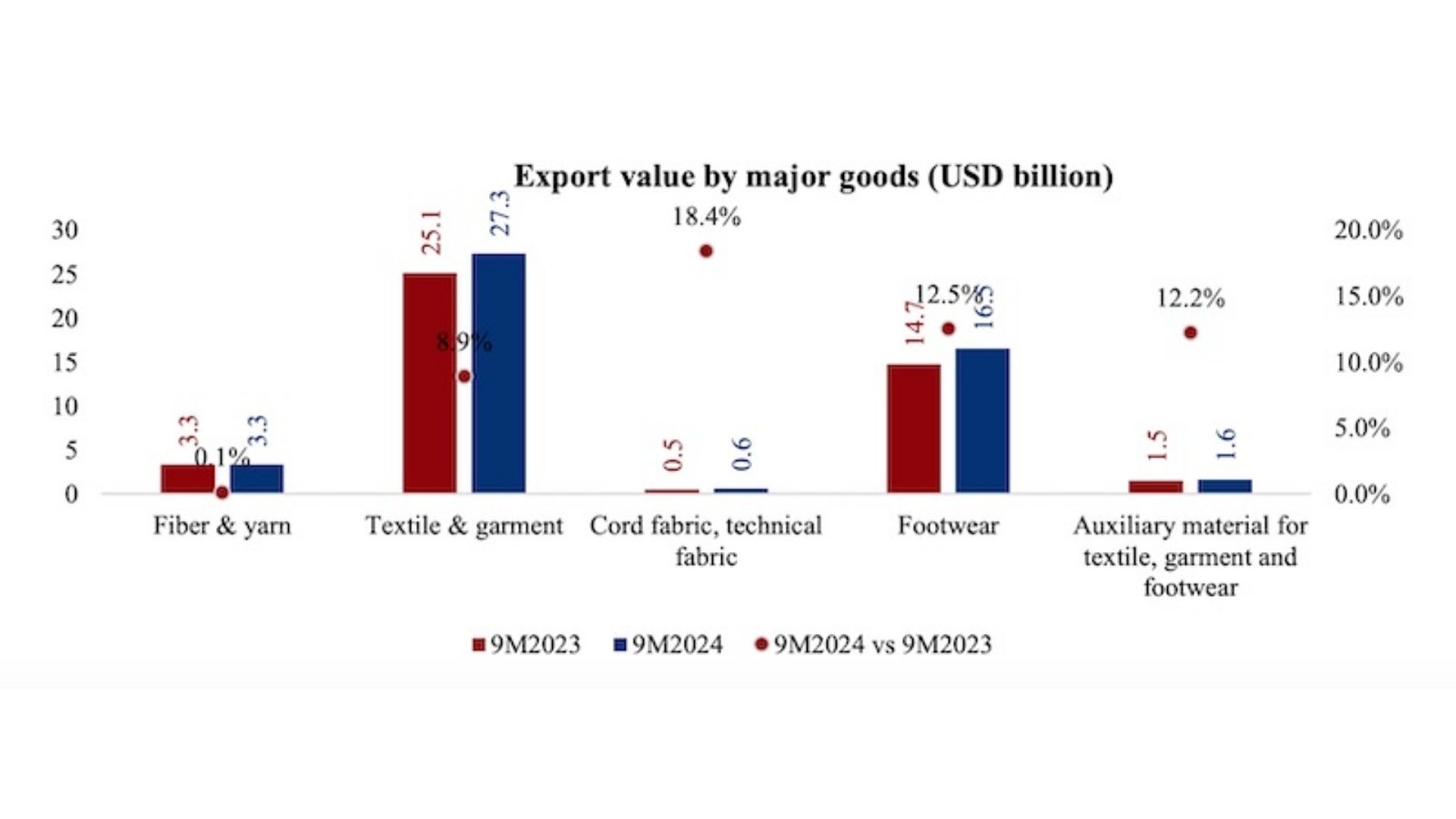
Vietnam has become one of the world’s key players in garments and textiles, second only to China. In 2024, Vietnam exported over $44 billion worth of garments, making it the second-largest apparel exporter globally, just behind China and surpassing Bangladesh’s $40.5 billion in exports.
Vietnam’s textile and garment industry started growing rapidly post-1995 with trade liberalization (ASEAN, WTO). At first, the country focused on basic manufacturing, offering competitive prices but limited export capacity and inconsistent quality. Eventually, it gained momentum in the 2000s through FTAs like CPTPP and EVFTA, which helped improve standards, expand market access, and attract foreign investment. As of 2024, according to VITAS, it operates over 3,800 factories employing 2.7 million workers, serving major global brands.
Regarding key importers, the United States and the European Union are the biggest destinations. Asian markets such as Japan, South Korea, and China also play a major role.
Why Import Garments from Vietnam?
What really makes Vietnam a good choice for your sourcing plans comes down to a few clear advantages:
- Prices are very competitive: Labor costs here are usually about half of China’s and lower than places like Thailand or Malaysia.
- Large workforce: More than three million people are employed in the industry. Many of them are valued for their precision, which makes it easy for factories here to meet high-quality standards.
- Compliance and sustainability: Many leading manufacturers, such as Vinatex and Garco 10, already hold certifications like ISO, WRAP, BSCI, and OEKO-TEX, so you can be confident that products meet modern expectations for responsible sourcing.
- Free trade agreements such as EVFTA, CPTPP, and RCEP make importing even easier. In many markets, including the EU, Japan, and Korea, tariffs are very low or even zero, and customs procedures are more straightforward.
Popular Types of Garments For Import
| # | Garment type | Key feature | Typical MOQ (pcs/style) | Estimated FOB Price per Unit (USD) |
| 1 | Sportswear & Activewear | Expertise in technical fabrics, moisture-wicking, and stretch | 300–500 | 8–15 |
| 2 | Casualwear Basics | Strong capacity for cotton blends, high-volume export, and stable quality control | 300–500 | 6–11 |
| 3 | Workwear & Uniforms | Durable fabrics, compliance with international safety and durability standards | 500+ | 7–14 |
| 4 | Lightweight Outerwear | Advanced sewing for insulated yet light jackets, good for seasonality in export markets | 500–1,000 | 12–20 |
| 5 | Performance Outerwear | Waterproof, windproof technical fabrics | 500–1,000 | 15–25 |
| 6 | Functional Knitwear | Expertise in seamless knitting, compression garments for sports and medical use | 300–600 | 15–25 |
Key Regions of Garment Manufacturing in Vietnam
Vietnam has several major garment manufacturing regions. Each comes with different specialties, costs, and capabilities, which can significantly impact your production success.
Ho Chi Minh City
Ho Chi Minh City and surrounding provinces account for over 60% of Vietnam’s garment exports. This region focuses on casual wear, active wear, and work uniforms. Garment sourcing costs here are often higher compared to the north, but compensated by a dense supplier network and advanced factory automation. Its proximity to Cat Lai Port, Vietnam’s largest container port, ensures fast export.
Hanoi
Moving north, Hanoi and neighboring provinces such as Bac Ninh and Hung Yen offer a different set of strengths. These areas focus more on knitwear, outerwear, and technical uniforms, providing competitive production costs and factories known for their technical expertise and compliance with strict international standards.
Thanks to the nearby Hai Phong Port, exporters here have efficient access to markets in Europe and North America. This makes Hanoi a strategic choice for buyers prioritizing quality and compliance while keeping costs manageable.
Da Nang
Further down the coast, Da Nang is an emerging garment manufacturing center gaining attention for its specialization in sportswear and lightweight outerwear. While smaller than the other two regions, Da Nang benefits from modern industrial parks and growing foreign direct investment.
The region’s access to Da Nang Port allows convenient export routes within central Vietnam. It is an attractive alternative for buyers looking for competitive costs and niche product expertise.
Beyond these hubs, Vietnam also offers specialized industrial zones like Long Hau Industrial Park near Ho Chi Minh City and the Vietnam-Singapore Industrial Park near Hanoi. These zones provide tax incentives, modern infrastructure, and streamlined customs processes, supporting efficient manufacturing and export logistics.
Thai Binh
Thai Binh has one of the highest rural workforce participation rates in northern Vietnam. For decades, the province has supplied sewing workers to Hanoi, Hai Phong, and Nam Dinh.
Garment production in Thai Binh focuses on cut and make, trim operations, knitwear, woven apparel, uniforms, and exporting basic garments. Worker turnover is lower than in major cities, which helps factories maintain stable quality and delivery schedules.
Best Vietnam Garment Factories
Below is a concise guide to the best suppliers, tailored for businesses seeking quality, reliability, and low MOQs, with verified details to streamline your sourcing process.
| # | Manufacturer | Location | Specialization | MOQ |
| 1 | Vinatex | Hanoi | Uniforms, casual wear, yarn-to-garment services, exports to US/EU, largest textile group, 100+ factories, strong in EU markets | 1,000 pieces |
| 2 | Thanh Cong Textile | Ho Chi Minh City | Knitwear, casual clothing, eco-friendly fabrics, exports to Asia, 26M products/year, Oeko-Tex certified | 500 pieces |
| 3 | Phong Phu Corp | Da Nang | Sportswear, casual wear, sustainable production, exports to Japan, flexible MOQs, ISO 14001 certified | 200 pieces |
| 4 | TNG Investment | Thai Nguyen | Outerwear, sportswear, jackets, exports to US/EU, 257 sewing lines, 18M pieces/year capacity | 800 pieces |
| 5 | VinMake | Binh Duong | High-end fashion, sportswear, rapid prototyping, sustainability focus, lowest MOQs, ideal for startups | 100 pieces |
How to Import Garments From Vietnam
Now that you understand why Vietnam is an ideal destination for garment sourcing. How do you start the garment sourcing process in Vietnam effectively, and what are the key considerations?
Below is a detailed step-by-step guide to sourcing garments in Vietnam:
-
Define your product requirements
Create a tech pack with exact specs: fabric (e.g., Vietnam’s cotton or imported polyester), sizes, designs, and details like zippers or embroidery. Specify standards like Oeko-Tex or GOTS if targeting EU markets.
-
Find Vietnam-based manufacturers
Search on the VITAS directory, Saigontex, or meet suppliers at HanoiTex or VTG expos in Ho Chi Minh City. Focus on factories in Binh Duong or Dong Nai for sportswear, Hanoi for uniforms.
An audit helps you see a supplier’s production capacity, working conditions, and quality control in real life. You can either arrange a visit yourself or work with a reliable third-party auditor in
Vietnam, such as SGS or Intertek. Here are some simple points to follow:
- Check capacity (e.g., 10,000 units/month) and compliance with EVFTA rules for EU exports.
- Label checks: Fiber content, “Made in Vietnam” origin labeling, and ASTM-compliant care instructions
- Compliance with chemical safety standards: OEKO-TEX Standard 100 and REACH, restricting substances such as azo dyes, cadmium, formaldehyde, lead, and mercury
- Safety documentation: Material Safety Data Sheets (MSDS) and programs like ZDHC (Zero Discharge of Hazardous Chemicals)
- Social compliance certifications: BSCI, SA8000, or WRAP for ethical production, as required by US and EU importers.
- Quality control: AQL inspections and regular on-site audits
Send tech packs to 3-5 factories via email or Zalo, the primary communication app in Vietnam. Expect sample costs of $50-200, delivered in 7-10 days. MOQs range from 100-2,000 pieces. Language barriers can cause delays, so use a Vietnamese translator or agent for clarity if needed.
-
Negotiate and sign contracts
When you draft the sales contract, include a clear production schedule and spell out the Incoterms, so both sides know who is responsible for shipping and delivery. List all product specs, fabric details, designs, and color samples. If you have physical samples, attach them to the contract and have the supplier sign and stamp them to avoid any confusion.
Payment terms also need to be put in writing. A safer approach is to release the final payment only after quality control checks are passed and textile lab tests come back clean.
-
Customs duties, taxes & tariffs
HS Codes are numerical codes customs use to classify products, anđ they dictate how much duty you owe and whether you qualify for FTA tariff benefits. In the category of Vietnamese garments and apparel, the common international HS codes are HS 61 (Knitted or Crocheted Apparel) and HS 62 (Not Knitted / Woven Apparel).
Taxes do not make up the total landed cost. You will also have freight, insurance, and customs fees to account for.
Imagine you are importing men’s silk shirts with a CIF value of 10,000 dollars. The HTSUS code for this product is 6105.90.40, with a regular duty rate of about 0.9 percent. With the extra tariff, the duty would be:
- Regular duty: 10,000 × 0.9% = 90 dollars
- Extra tariff: 10,000 × 20% = 2,000 dollars
- Total duty: 2,090 dollars
In addition, like with any export, your shipment of garments from Vietnam will need the right paperwork to clear customs. The list can vary a little depending on the product, so it helps to double-check with your freight forwarder or logistics partner before shipping. In most cases, you will be asked for:
- An import license
- A certificate of origin showing the goods are made in Vietnam
- A commercial invoice
- A packing list
- A bill of lading (for sea freight) or an air waybill (for air shipments)
- Product catalog or technical sheets, especially if the garment is specialized (like protective workwear) or has extra requirements (like garments with functional coatings)
- Your business registration
Documents like the certificate of origin or commercial invoice can be requested from your supplier. Meanwhile, documents such as the import license or your business registration must be prepared by yourself and submitted in advance.
-
Comply with Destination Regulations
Besides standard paperwork, most countries also have their own rules for labeling and product safety. Generally, your labels should include:
- The product name
- The country of origin, for example, “Made in Vietnam”
- The name and address of the manufacturer or importer
- The fabric composition with percentages of each fiber
- Basic care instructions
Some countries may require additional documents and labeling rules depending on their import rules. For example, in the US, you may need CBP Form 3461 (Entry/Immediate Delivery) or CBP Form 7501 (Entry Summary). Labels of garments imported to the US must also be permanent and in English. They need to clearly show the washing, drying, and ironing instructions, and in some cases flammability warnings, especially for kids’ apparel, according to the Flammable Fabrics Act (CPSC) and 16 C.F.R. Part 1610 / Part 1615‑1616 for children’s sleepwear.
-
Manage production, logistics, and partnerships
For small shipments under 150 kg, air freight can be faster and sometimes more cost-effective. In practice, however, most garment exports exceed this weight, so sea freight is usually the best option when shipping garments or textiles from Vietnam, specifically from Hai Phong or Ho Chi Minh City ports, to your destination.
Before exporting, you should hire a third-party inspection service to catch defects.
Additionally, shipping can be delayed due to unexpected shutdowns or sourcing issues, so be sure to tell your freight forwarder that you want the shipment covered from the moment it leaves the factory until it reaches your final delivery point.
Dealing with paperwork can be challenging, so working with a licensed customs broker ensures everything is filed correctly to avoid costly mistakes.
Notable Sourcing Agents
-
Vietnam B2B Direct
Vietnam B2B Direct is a sourcing and supply chain solutions provider that helps international businesses find manufacturers in Vietnam for a range of products, including garments and textiles. They have been operating in Vietnam for over 18 years and support sourcing, manufacturing oversight, quality control inspections, and importing processes. The company also assists with logistics and export documentation for foreign buyers.
Contact Information:
- Address: 2A / 20 Bach Dang Street, Ward 2, Tan Binh District, Ho Chi Minh City (Saigon), Vietnam
- Website: https://vietnamb2bdirect.com/
-
Cosmo Sourcing
Cosmo Sourcing is an established global sourcing company with operations in Vietnam since 2014. The company connects buyers with vetted manufacturers, provides detailed factory quotations, and supports quality control and logistics services. Cosmo has worked with thousands of clients from more than 50 countries, spanning from small ecommerce brands to large multinational buyers.
Contact Information:
- Address: Ho Chi Minh City, Vietnam.
- Website: https://www.cosmosourcing.com
-
Seditex
Seditex is a Vietnam-based sourcing and quality control firm founded in 1999. It offers end-to-end sourcing services, including factory identification, production oversight, quality assurance inspections, and supply chain consulting across Vietnam and neighboring markets. Seditex’s local expertise is rooted in decades of experience working with factories and international buyers.
Contact Information:
- Address: Hoang Anh River View A01-0337 Nguyen Van Huong, Thao Dien, District 2, Ho Chi Minh City, Vietnam.
- Website: https://seditexvn.com/
Top Sourcing Platforms
-
Alibaba
As the world’s leading B2B marketplace, Alibaba connects businesses with global manufacturers for bulk buying and private labeling. Beyond its Chinese roots, the platform also features a robust network of Vietnamese suppliers, providing a massive database of products for nearly every industry.
-
VALO Vietnam
VALO Vietnam is a B2B sourcing platform designed to connect international buyers directly with verified, export-ready manufacturers exclusively in Vietnam.
It operates as a connector that facilitates direct contact between buyer and manufacturer. Buyers can contact the supplier directly to discuss logistics, payment handling, or price negotiation.
-
VinaSources
VinaSources is a modern B2B sourcing ecosystem and technology platform designed to connect global buyers with verified “Made in Vietnam” manufacturers. It offers an end-to-end solution that assists buyers with everything from supplier matching and sample evaluation to customs clearance and logistics management.
Considerations When Importing from Vietnam
A few key points to keep in mind when importing garments from Vietnam:
- Pay attention to quality control and inspections. Hiring a local third-party quality inspector can help ensure your clothing meets your specifications, passes chemical tests, and reduces the risk of shipments being held at customs.
- Be aware of cultural and communication differences. Most suppliers confirm contracts by email, but day-to-day chats often happen on Zalo, which is like WhatsApp. Having an account makes staying in touch much easier.
- Understand logistics challenges. Ports can get busy, and shipping costs can fluctuate, so plan ahead for possible delays and include shipping fees in your budget.
VinaSources: Your Trusted Partner to Import Garments from Vietnam
VinaSources is a leading Vietnam-focused B2B platform that helps you easily find verified garment and textile manufacturers. We go beyond simply connecting you with suppliers and supporting you at every step, from sourcing and quality checks to shipping and compliance.
Currently, we feature hundreds of ready-to-export products across categories like casualwear, sportswear, uniforms, and knitwear. You can browse by product type, such as women’s apparel or men’s apparel, or filter by materials.
Send your request for quotes today or email via [email protected] to quickly receive verified offers from multiple local suppliers.