
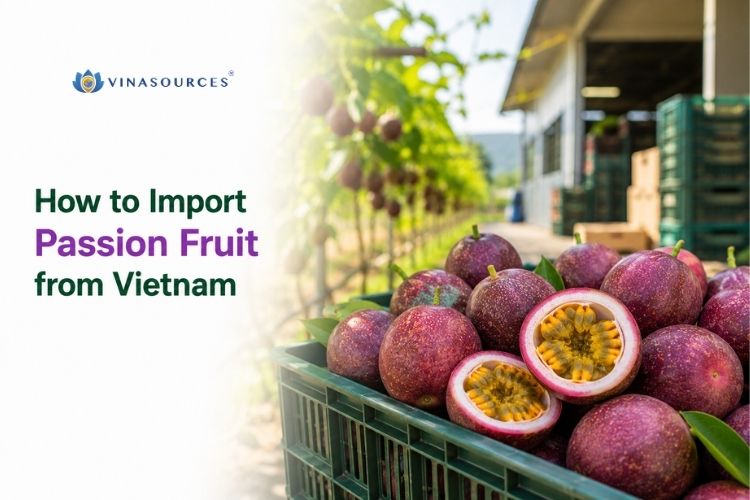
Global demand for passion fruit is rising rapidly across juice manufacturing, frozen puree processing, and premium fresh fruit retail. Backed by superior taste, consistent supply, and strict adherence to international quality standards, Vietnam is becoming one of Southeast Asia’s most competitive sourcing hubs for both fresh and processed passion fruit exports.
This guide explains how to import passion fruit from Vietnam, including supplier sourcing, export procedures, logistics management, and operational considerations for global buyers.
Overview of Vietnam’s Export of Passion Fruit
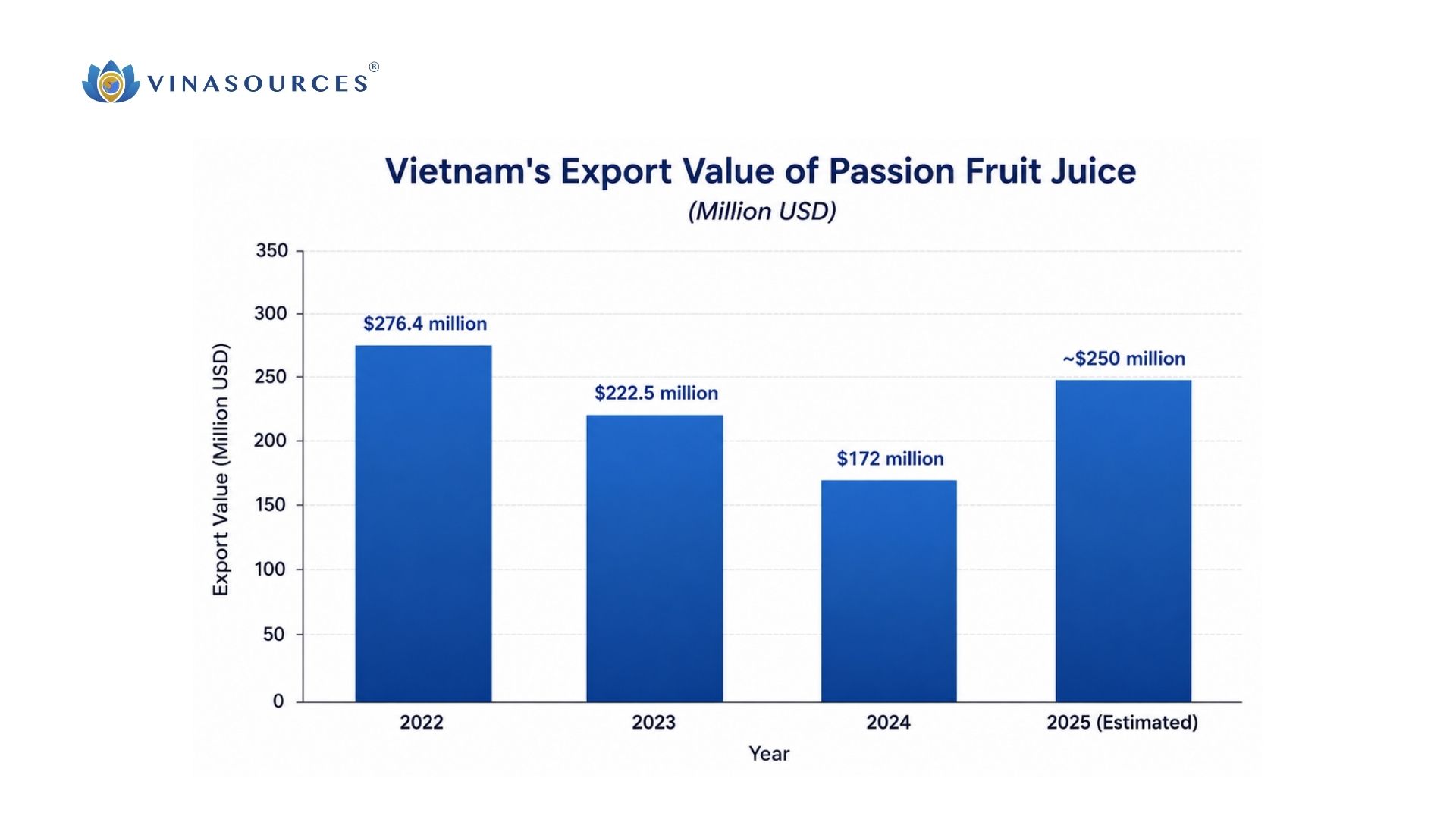
Vietnamese passion fruit exports have expanded rapidly over the past few years as demand for frozen puree, juice concentrate, and tropical beverage ingredients continues rising globally.
Vietnam is one of the top 10 global producers and exporters of passion fruit. The country currently cultivates passion fruit across approximately 12,000 to 15,000 hectares, with annual production estimated at 250,000-300,000 tons. Major growing regions include Gia Lai, Dak Lak, Lam Dong, Son La, and Nghe An, where cooler climate conditions and fertile soil help support high productivity and stable fruit quality.
China remains one of the largest export destinations for Vietnamese passion fruit, particularly for fresh fruit and frozen pulp. At the same time, the US, EU, and Japan are becoming increasingly important markets for processed passion fruit products and beverage ingredients.
Key Advantages of Importing Passion Fruit from Vietnam
Below are key advantages of wholesale importing passion fruit from Vietnam, including:
Rich Tropical Flavor Profile
Vietnamese passion fruit is widely recognized for its strong tropical aroma, balanced acidity, and concentrated flavor intensity. Compared to some lower-acid commercial varieties from other regions, Vietnamese passion fruit generally offers a richer taste profile and stronger juice concentration.
Competitive Export Pricing
Vietnam maintains relatively competitive farming and labor costs compared to several Latin American and African sourcing origins. FOB prices for Vietnamese fresh passion fruit commonly range from approximately $1,500 to $3,000 per ton, depending on variety, season, and quality grade.
This pricing is generally more competitive than passion fruit exports from countries such as Colombia or Peru, where FOB prices for export-grade fruit can often exceed $3,000 to $5,300 per ton.
Year-Round Supply Capability
Different growing regions across Vietnam help maintain relatively stable passion fruit production throughout the year.
Main harvest periods include:
- Gia Lai and Dak Lak: Main harvest season typically runs from May to October.
- Lam Dong: Cooler climate conditions help extend production into late-year and off-season periods.
- Son La and Northern regions: Secondary harvest windows often support supply during cooler months.
- Greenhouse-supported cultivation areas: Some farms maintain staggered production schedules to support off-season exports.
Broad FTA Network
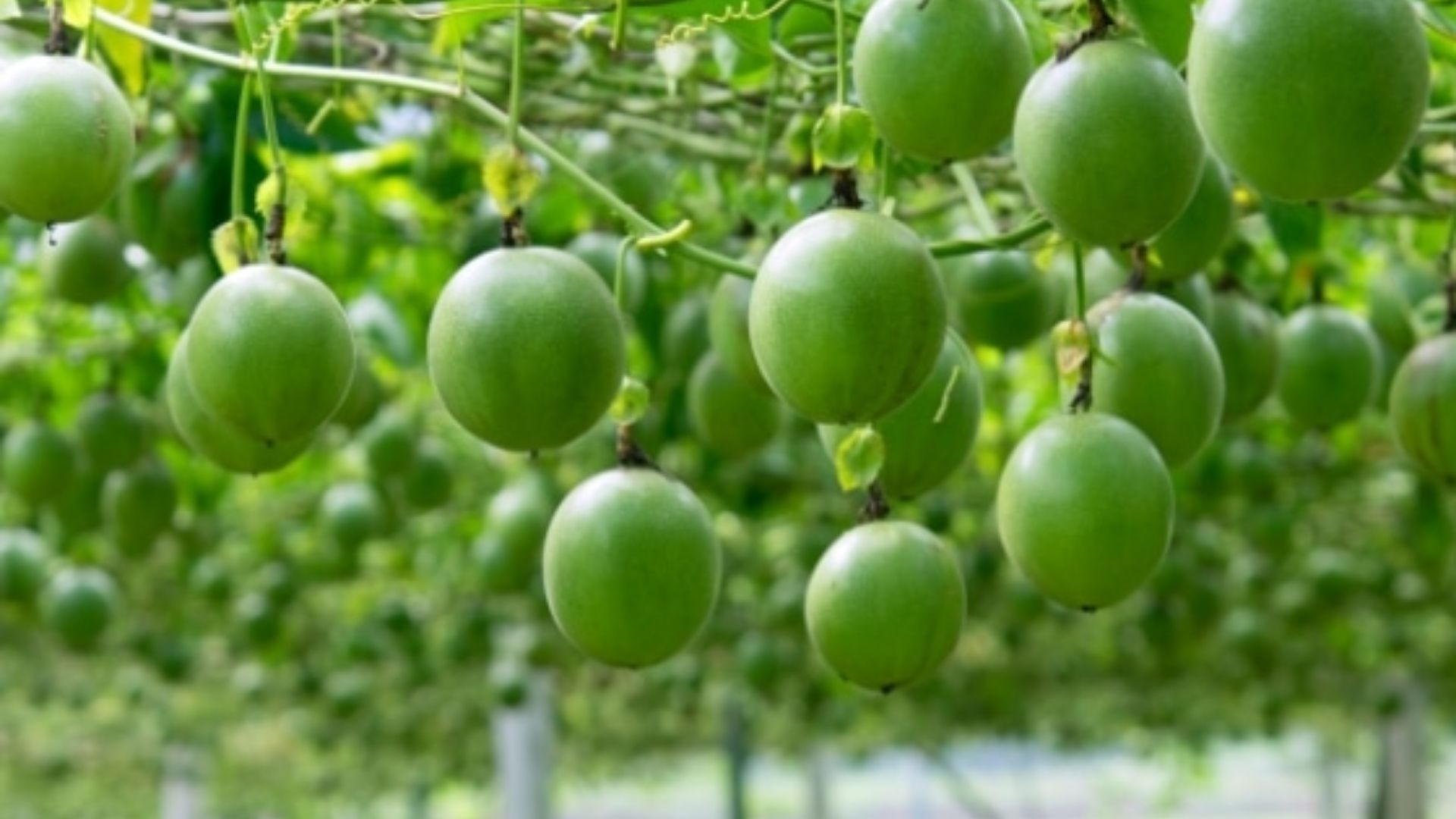
Vietnam participates in several major free trade agreements that help improve export competitiveness for agricultural products, including passion fruit and processed fruit ingredients.
- EVFTA (EU–Vietnam Free Trade Agreement): Helps reduce tariffs and improve market access for Vietnamese agricultural exports entering the European market.
- RCEP (Regional Comprehensive Economic Partnership): Strengthens regional trade connectivity across Asia and helps simplify export procedures for nearby markets such as China, South Korea, and ASEAN countries.
- CPTPP (Comprehensive and Progressive Agreement for Trans-Pacific Partnership): Creates tariff advantages and stronger trade access for member markets such as Canada, Japan, and Australia.
Strategic Logistics Location
Vietnam sits along major maritime trade routes connecting Northeast Asia, ASEAN, and international export markets. With more than 3,260 kilometers of coastline and major deep-sea ports, such as Cat Lai and Cai Mep–Thi Vai, the country has developed strong export logistics connectivity for refrigerated agricultural products.
Its proximity to large Asian markets such as China, South Korea, Taiwan, and ASEAN countries helps shorten transit time for highly perishable products like passion fruit. Shorter shipping routes also improve cold chain stability and reduce reefer transportation costs during export.
Key Export Passion Fruit Varieties in Vietnam
Vietnam exports several passion fruit varieties serving both fresh retail and industrial processing markets.
| Variety | Purple Passion Fruit | Yellow Passion Fruit |
| Appearance & Size | Round to oval shape; deep purple skin; average weight 60g–90g per fruit | Bright yellow skin; slightly larger fruit size; average weight 80g–120g |
| Flavor Profile | Balanced sweetness and acidity with a strong tropical aroma | Higher acidity, more intense aroma, stronger juice concentration |
| Main Growing Regions | Gia Lai, Dak Lak, Lam Dong | Central Highlands, Son La |
| Commercial Advantages | The export workhorse of Vietnam’s fresh passion fruit segment, with stable retail acceptance | Higher pulp recovery and stronger flavor profile for beverage processing |
Step-by-Step Guide to Importing Passion Fruit from Vietnam
The steps below outline the key operational stages global buyers should prepare for passion fruit procurement process.
Step 1: Find and Verify Suppliers
There are several common sourcing methods for searching Vietnamese passion fruit suppliers.
| # | Sourcing Method | Advantages | Limitations |
| 1 | Google Search |
|
|
| 2 | B2B Sourcing Platforms (Alibaba, VinaSources, Global Sources) |
|
|
| 3 | Trade Shows & Exhibitions (HortEx Vietnam, Vietnam Foodexpo, AgroViet) |
|
|
| 4 | Sourcing Agencies (Seditex, Dragon Sourcing, Cosmo Sourcing) |
|
|
After shortlisting suppliers, buyers should verify whether the company has real export capability and legal business operations.
Important verification checks include:
- Verify the company’s business registration
- Request valid export licenses for agricultural products.
- Check certifications such as HACCP, ISO 22000, or BRC.
- Confirm growing area codes for target export markets.
- Review packing house approvals and export compliance records.
- Review pesticide residue and microbiological testing reports.
Step 2: Request Samples and Product Specifications
Before buying in large quantities, you should always ask the supplier for product samples. This helps evaluate actual product quality, processing consistency, and export readiness before moving into contract negotiations.
For fresh passion fruit shipments, buyers should evaluate:
- Size and Weight: (e.g., 10, 12, or 14 pieces in a 5kg carton).
- Outer Skin Quality: Choose fruits with clean skin that are free from passion fruit sap, bruises, sunburns, or mold.
- Uniform Color: All fruits in the box must have a similar color maturity throughout the shipment batch.
For frozen puree, concentrate, or processed products, buyers should additionally:
- Freezing Temperature (typically around -18°C)
- Shelf Life (normally lasts for 24 months)
Step 3: Check Import Regulations
Every country has different rules for importing passion fruit from Vietnam.
China
China is one of the largest buyers of Vietnamese passion fruit because transport by land or sea is very fast.
Key import requirements include:
- Register approved growing area codes.
- Use GACC-approved packing facilities.
- Comply with phytosanitary inspection requirements.
- Maintain traceability throughout the supply chain.
- Match packaging labels with customs documents.
Fresh fruit shipments may also undergo quarantine inspections and pesticide residue testing upon arrival.
European Union (EU)
The EU market maintains some of the strictest food safety standards for imported fruit products.
Key import requirements include:
- Comply with EU pesticide residue limits.
- Maintain farm-to-shipment traceability.
- Provide phytosanitary documentation.
- Follow EU labeling requirements.
- Meet microbiological safety standards for processed products.
Many EU buyers also require certifications such as GlobalG.A.P., HACCP, BRC, or ISO 22000.
United States
The United States market focuses heavily on food safety, traceability, and supplier compliance.
Key import requirements include:
- Submit FDA Prior Notice before shipment arrival.
- Follow Foreign Supplier Verification Program (FSVP) requirements.
- Provide phytosanitary certificates for fresh fruit.
- Maintain compliant product labeling.
- Prepare laboratory testing reports when required.
Step 4: Negotiate Pricing and Trade Terms
Before confirming commercial orders, buyers should negotiate technical specifications and operational responsibilities clearly with Vietnamese suppliers.
Important negotiation points include:
- Payment terms: Use 30% deposit and 70% after inspection approval or shipping document release. Avoid paying 100% upfront to new suppliers.
- Incoterms: Use FOB for better control over freight and reefer management. Use CIF if suppliers arrange ocean transportation to the destination port.
- Claim procedures: Require photos, inspection reports, temperature logs, or surveyor documents for quality or reefer-related claims.
Vietnamese suppliers often place strong importance on long-term relationships and stable cooperation. Buyers who negotiate clearly, communicate consistently, and avoid aggressive bargaining usually build smoother long-term sourcing partnerships.
Step 5: Conduct Pre-shipment Inspection and Quality Control
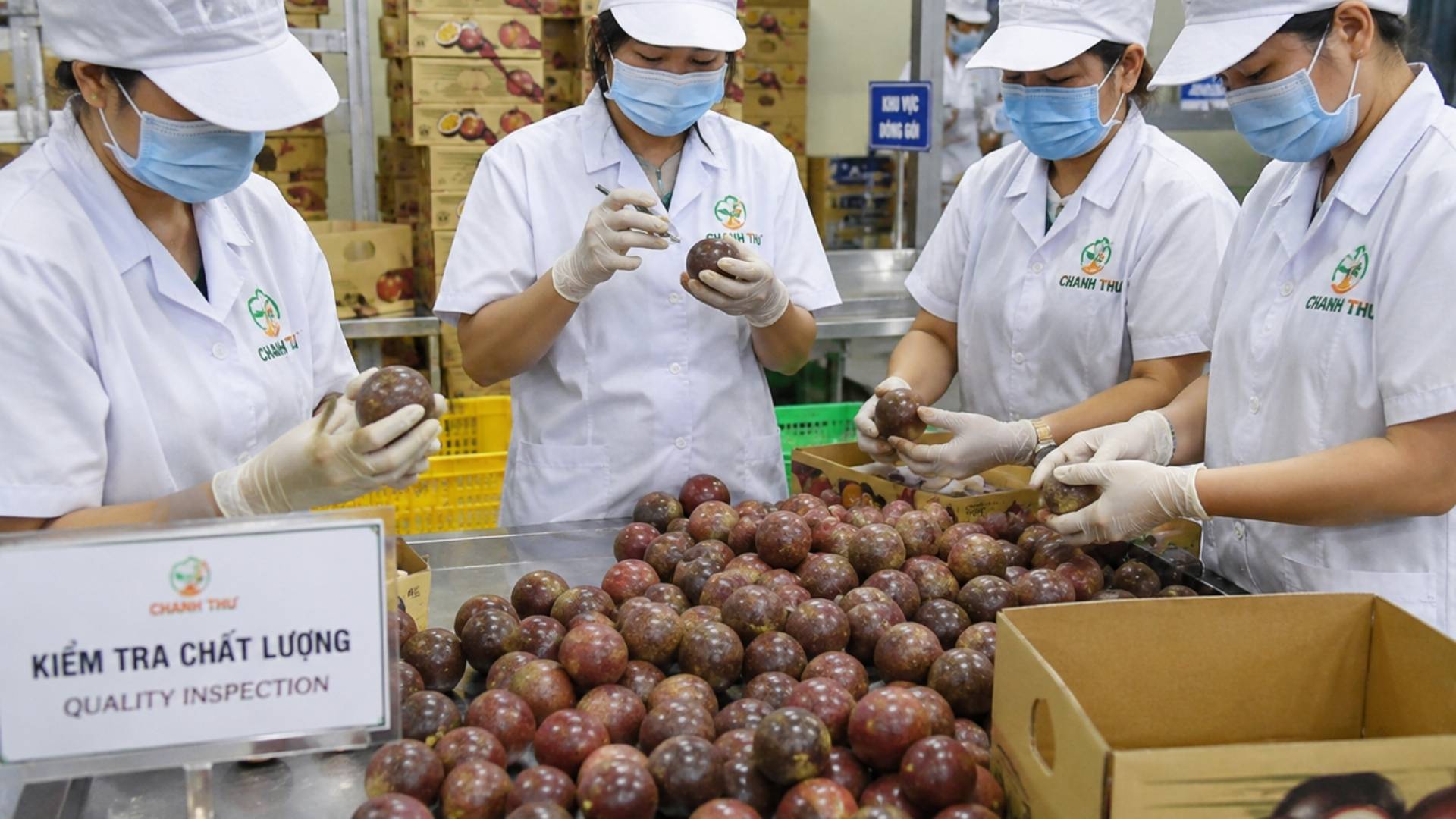
Pre-shipment inspection is especially important for passion fruit because product quality can deteriorate quickly if harvesting, packing, or cold chain handling is poorly managed. Even small handling mistakes may reduce shelf life, pulp quality, and retail performance upon arrival.
Many importers also appoint third-party inspection companies such as SGS, Bureau Veritas, or QIMA to reduce shipment risks and verify export compliance independently before cargo departure.
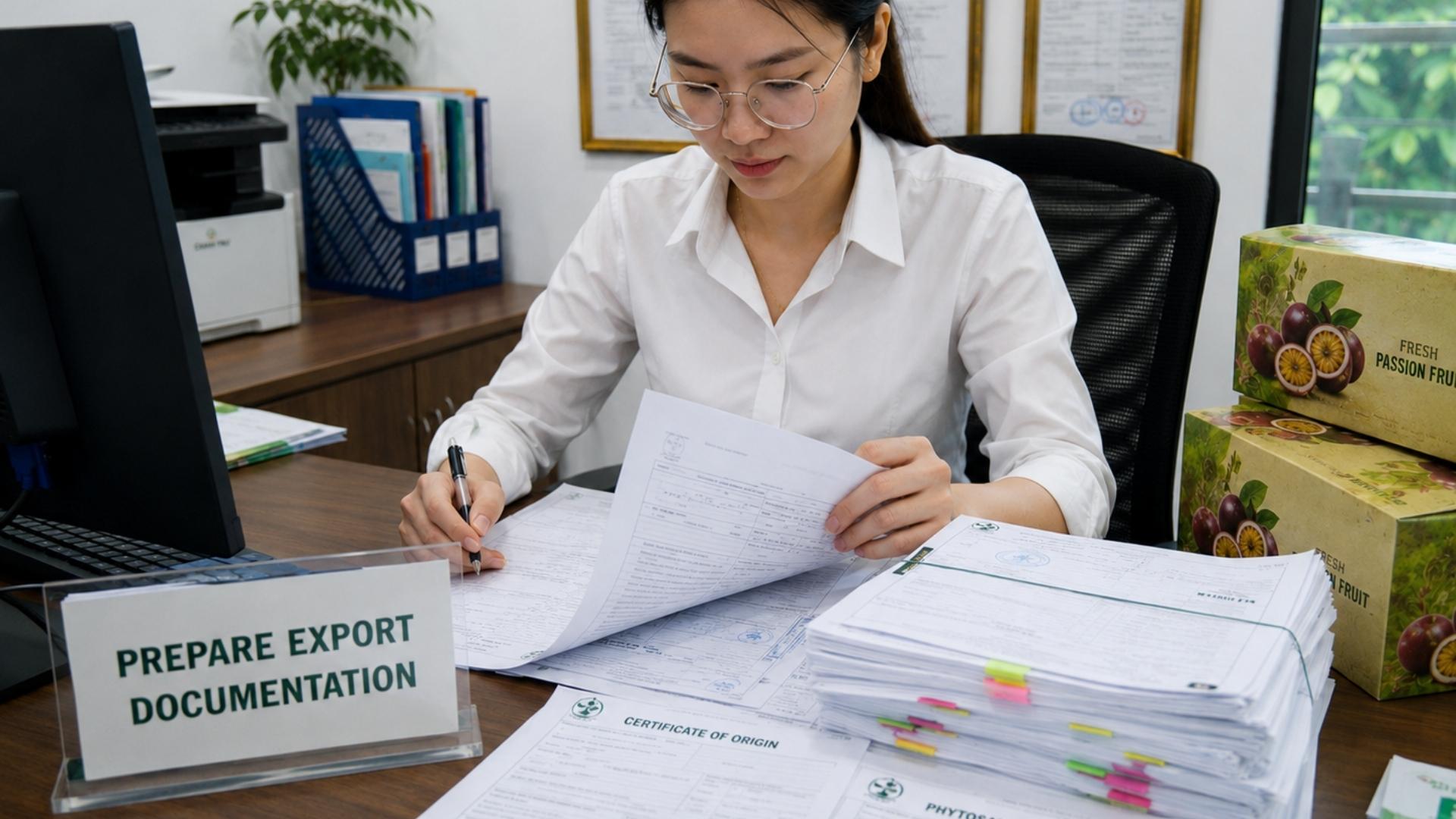
Step 6: Prepare Export Documentation
Request and check carefully scanned copies of all export documents before the container departure to reduce customs delays.
Key export documents include:
- Commercial Invoices: Customs authorities use this document to verify product value, HS code, shipment quantity, and payment terms during import clearance.
- Packing Lists: Importers and customs officers use Packing Lists to confirm carton quantity, pallet count, net weight, and container loading details.
- Bill of Lading (B/L) serves as the official cargo ownership document required for cargo release at the destination port.
- Phytosanitary Certificate: Provided by the Vietnam Plant Protection Department to confirm that fresh passion fruit exports comply with plant health and quarantine regulations.
- Certificate of Origin (C/O): Crucial for claiming FTA tariff exemptions such as EUR.1 under EVFTA or CPTPP-related preferential duty programs.
- FDA Prior Notice: Mandatory for passion fruit shipments entering the United States before cargo arrival.
- Laboratory Testing Reports: Failed pesticide residue or microbiological tests can lead to import bans at the destination market.
Step 7: Arrange Shipping and Cold Chain Logistics
Passion fruit is highly sensitive to temperature fluctuations and poor handling during transportation.
Vietnamese exporters offer flexible shipping solutions based on the importer’s needs:
Air freight
Air freight is best suited for:
- Urgent orders needed for special occasions or peak seasonal demand.
- Small-volume shipments for high-end retail distribution.
Most Vietnamese air freight shipments for passion fruit are handled through Tan Son Nhat International Airport (SGN) in Ho Chi Minh City and Noi Bai International Airport.
Transit time for passion fruit shipments to the EU and the United States typically ranges from around 1–3 days by air freight. Faster transit helps preserve freshness. However, air freight costs can be several times higher than reefer sea freight, significantly increasing the final landed cost.
Sea freight
Shipping by sea freight from Vietnam is the most popular choice for global buyers because it keeps transport costs low for large volumes.
Main export ports
- Cat Lai Port (Ho Chi Minh City) and Cai Mep–Thi Vai Port (Vung Tau) mainly serve northern growing regions
- Hai Phong Port mainly serves the northern growing regions
Transit time to nearby Asian markets, such as China or South Korea, typically ranges from around 3–12 days, while shipments to Europe or the United States can take more than 25 days.
Important considerations when using sea freight for transporting passion fruit:
- Keep fresh passion fruit from 5°C to 7°C, frozen pulp/IQF at -18°C or colder
- Set reefer humidity between 85% to 90%
Vietnamese exporters increasingly use preservation technologies such as MAP bags, moisture absorbers, and controlled atmosphere systems to extend shelf life during long-distance transportation.
These technologies are especially important for shipments to Europe and the United States, where ocean transit can exceed 25 days.
Common Risks When Sourcing Passion Fruit from Vietnam
Importing passion fruit from Vietnam can bring great profits, but fresh fruits are delicate. International buyers should know these three common risks to protect their money and business:
Fast Fruit Spoilage
Passion fruit has a very high respiration rate, which means it breathes fast and ripens quickly after harvest. If the temperature and moisture inside the shipping container are wrong, the fruit will turn brown, lose its natural juice, and the skin will become very wrinkled and ugly before it reaches your market.
Solution
- Use Refrigerated Containers: Never ship fresh passion fruit in normal dry containers. Always use reefer sea containers or air freight.
- Set the Correct Temperature: Keep the container temperature strictly between 5°C to 7°C with a relative humidity of 85% to 90%. This slows down the ripening process safely.
Price Fluctuations and Supply Shortages
Passion fruit prices in Vietnam can change quickly every week. Prices usually go up during the dry season. If you only have a verbal agreement, a bad supplier might break their promise, sell your fruit to another buyer who pays more, or delay your shipment because they cannot find enough fruit.
Solution:
- Sign a Clear Contract: Always sign a written contract with a fixed price and a clear delivery schedule before the harvest begins.
- Work with Large Cooperatives: Do not buy from small middle traders who do not own farms. Source your fruit from large agricultural cooperatives or verified suppliers on VinaSources who have steady, long-term partnerships with big farm networks.
Insects and Disease
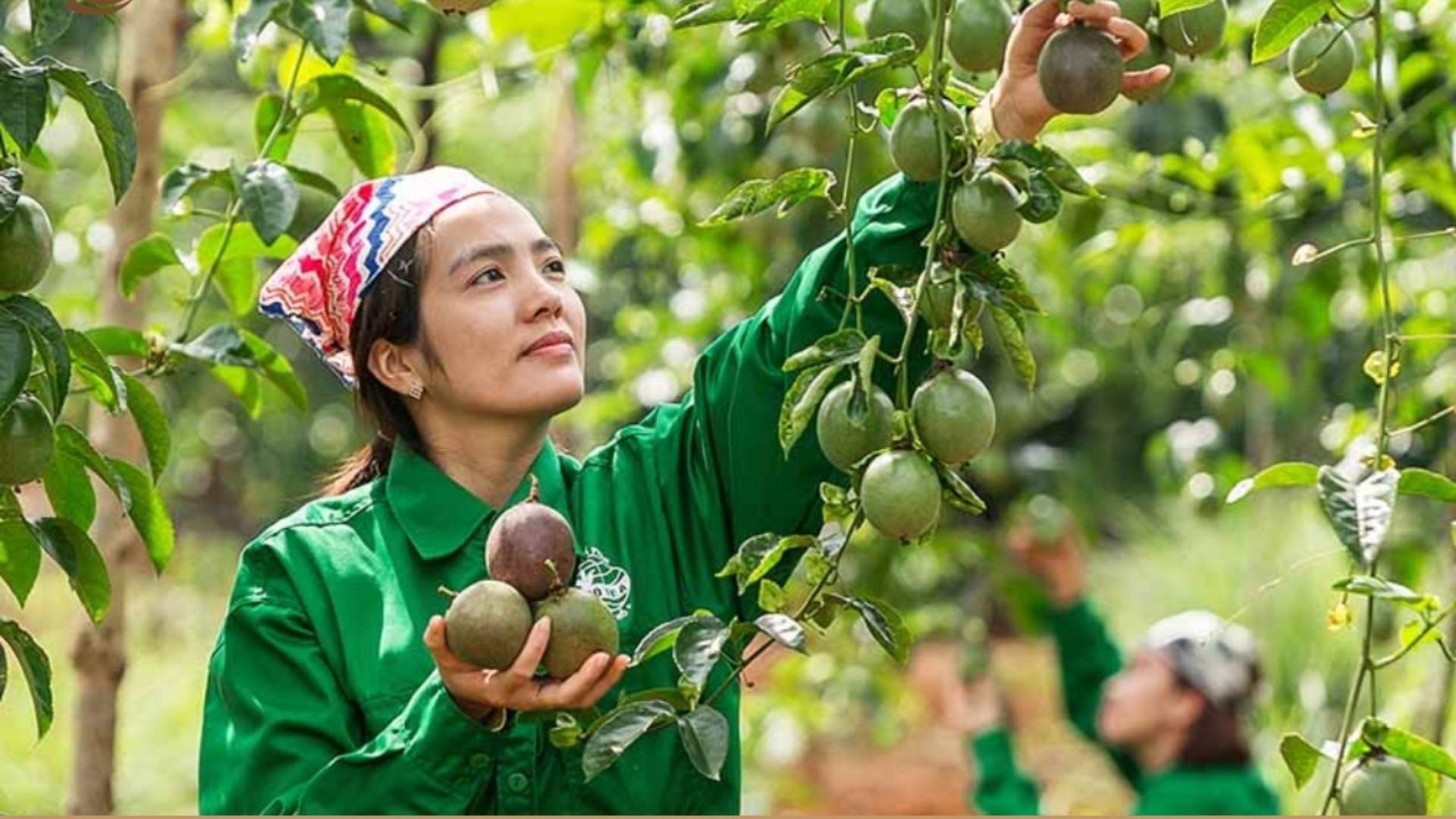
Passion fruit can easily suffer from fruit flies, mealybugs, or fungal infections like brown spots. If the packaging factory does not sort the fruit carefully, one sick passion fruit can spread mold and ruin the entire box during a long sea journey.
Solution:
- Strict Sorting Rules: Write clear quality rules in your contract. The supplier must wash the fruit properly and reject any fruit with small spots, insect marks, or soft skin.
- Hire Third-Party Inspectors: Pay an independent inspection company to check the quality, size, and weight of the fruit directly at the factory before the container doors are closed.
Import Passion Fruit Safely with VinaSources
Importing fresh or frozen passion fruit from Vietnam is a great way to grow your business, but managing quality standards and international paperwork can be difficult. As a trusted online B2B sourcing platform with 12 years of cross-border e-commerce experience, VinaSources
makes the process safe and simple.
Every passion fruit exporter on our platform is 100% pre-verified. Our local team in Vietnam will help you check farm certificates, negotiate safe contracts, and manage refrigerated shipping smoothly.
Get Your Free Wholesale Quote Today!
- Request a Custom Quote: Go to the RFQ Form
- 24/7 Hotline Support: 19004356
- Official Business Email: [email protected]