
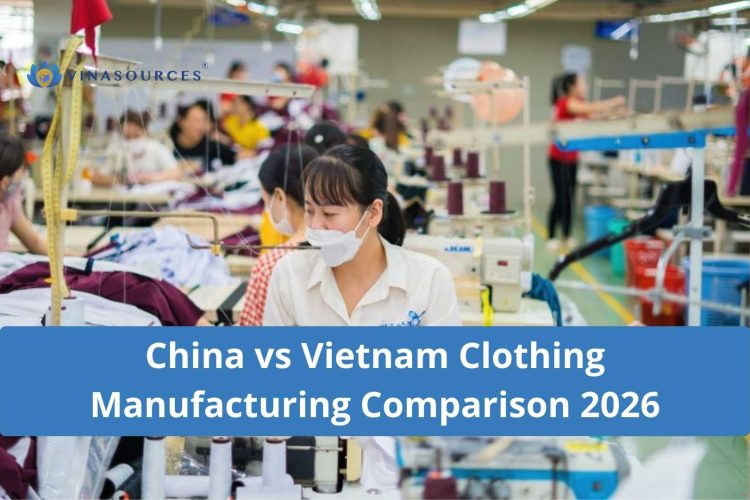
Global buyers are rapidly reshaping their sourcing strategies amid rising costs, trade tensions, and ongoing supply chain disruptions. While China continues to dominate as the world’s most mature apparel manufacturing hub, Vietnam is emerging as a strong alternative with competitive costs and growing capabilities.
This guide analyzes key factors such as cost, quality, scalability, and risk, helping you make a well-informed and confident sourcing decision.
Cost Comparison Table: Clothing Manufacturing in China vs Vietnam
In recent years, Vietnam has emerged as a strong alternative to China, particularly for brands seeking cost efficiency and tariff advantages. Meanwhile, China continues to maintain its edge through a well-established supply chain, faster production turnaround, and more competitive material sourcing.
The table below provides a side-by-side comparison of key cost factors between Vietnam and China, helping you identify which market better aligns with your sourcing strategy.
| Criteria | Vietnam | China |
| Min. Average wage | Lower ($0.68-$1.03 per hour) | Higher ($3.64 per hour) |
| Material prices | Higher due to import dependency | Lower due to domestic supply |
| Industrial rent | Lower ($2 to $5 per m² per month) | Higher ($4 to $8 per m² per month) |
| Electricity cost | Lower ($0.085 per kWh) | Higher ($0.114 per kWh) |
| Shipping costs | Moderate; fewer direct routes, often requires transshipment | Slightly lower; dense network of direct shipping routes |
| Tariff & FTAs | Lower landed cost due to EVFTA, UKVFTA, CPTPP; many products are eligible for 0% duty in the EU & UK | Higher tariffs in the EU, UK, and US markets due to a lack of FTAs |
Clothing Manufacturing Cost Breakdown: China vs. Vietnam
1. Labor cost differences
Labor remains the most visible cost gap between China and Vietnam.
In 2026, minimum manufacturing wages in China start from around $3.64 per hour, while the Asian average is about $2.56 per hour.
In contrast, Vietnam’s garment sector wages typically range from $0.68 to $1.03 per hour, depending on the region and minimum wage zone. This means Vietnam’s minimum labor cost is roughly 60% lower than China’s.
2. Raw material sourcing and dependency
Material cost is often 50 to 70% of total garment cost, making it among the critical factors in sourcing decisions.
China is the world’s largest producer of cotton, yarn, and fabric, supported by large-scale industrial clusters. China contributes over 30% of global textile output, covering spinning, weaving, dyeing, and finishing within one domestic system. This strong local supply reduces reliance on imports, stabilizes material pricing, and limits exposure to global supply chain disruptions and currency fluctuations.
Vietnam, by contrast, is heavily dependent on imported raw material, particularly from China, with dependency rates for certain materials ranging between 60-80%. This leads to higher input costs due to import pricing and adds longer lead time because of cross-border sourcing and customs processes.
3. Overhead and compliance costs
Beyond direct production costs, overhead and compliance create a growing gap between China and Vietnam. Overhead costs include factory rent, utilities, environmental compliance, and labor regulations.
China’s overhead and compliance costs are generally higher than those of Vietnam
- Industrial rent: In Vietnam, industrial rent typically ranges from $2 to $5 per m² per month, compared to $4 to $8 per m² per month in China’s coastal regions.
- Electricity cost: Electricity cost in Vietnam is also lower, at about $0.085 per kWh, while in China ranges from $0.114 per kWh.
- Compliance costs: China enforces strict environmental and labor regulations, which can increase operating costs by 10 to 20% due to wastewater, treatment, emission, and certified safety systems. Vietnam has lower compliance costs, with initiatives targeting a 20% reduction in regulatory compliance costs and administrative processing time.
4. Logistics and shipping costs
China has one of the most advanced logistics systems globally, built on a dense network of highways, railways, and ports. The country operates over 177,000 km of expressways, enabling fast and direct connections between manufacturing hubs and major ports like Shanghai, Ningbo-Zhoushan, and Shenzhen. This level of infrastructure significantly reduces inland transportation costs. Goods can move quickly from factories to ports with fewer delays, lower fuel consumption, and optimized trucking routes.
However, these ports operate at very high capacity because they handle the largest container volumes globally. During peak export seasons, congestion can occur. Shipping lines may face longer waiting times for berthing and container handling. This increases operational pressure and can lead to additional costs for carriers.
Vietnam’s logistics infrastructure has improved significantly over the past decade. The country is developing a more connected system of highways, seaports, and industrial zones to support international trade. As of 2025, Vietnam operates around 3,000 km of expressways, with a national target of 5,000 km by 2030.
In addition, Vietnam’s logistics performance has also improved, with its score increasing to 3.3 out of 5. Major ports such as the Port of Cat Lai and the Port of Hai Phong handle a large share of container exports, while new deep-sea ports like Cai Mep Thi Vai Port allow direct shipping routes to the US and Europe, reducing transshipment reliance. This saves costs and shortens transit time.
5. Tariff trade agreements
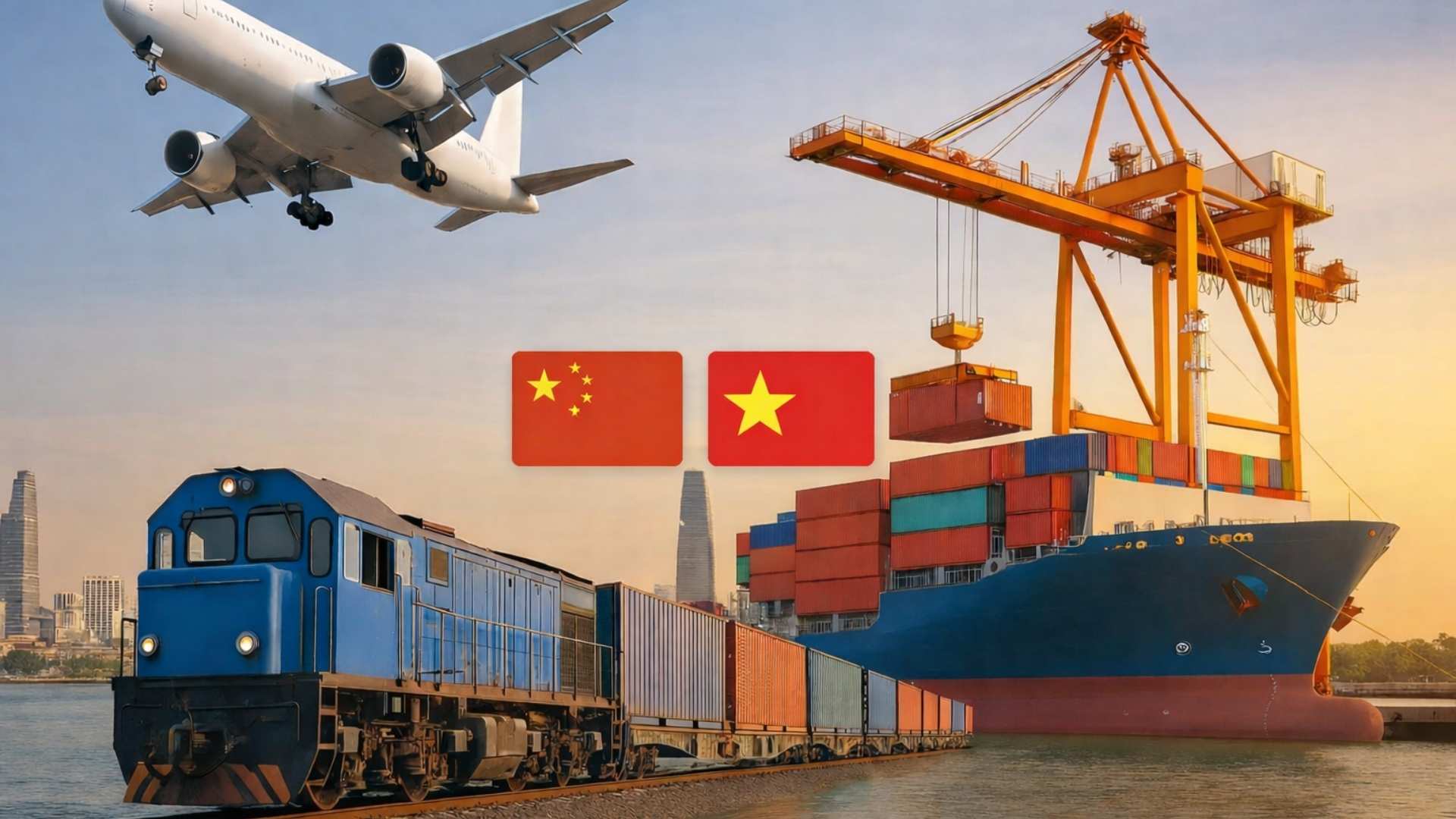
Vietnam has one of the most extensive free trade agreement networks in Asia. It is a member of major agreements such as the CPTPP, UKFTA, and EUFTA. Under these agreements, many apparel products exported from Vietnam to the EU can receive 0% import duty, compared to standard rates of 10 to 12 percent without FTA benefits.
China, by contrast, does not benefit from the same level of preferential trade access in Western markets. Apparel exports to the US and EU are typically subject to standard tariffs. In addition, the US-China Trade War led to the introduction of extra duties under Section 301 on a wide range of Chinese goods, including textiles and apparel.
Pros and Cons of Manufacturing Clothing in China
China remains the most mature clothing manufacturing base in the world. Its advantages come from scale, supply chain depth, and production efficiency.
| Advantages | Limitations |
| Large-scale production: China’s factories can handle large-volume orders quickly and consistently thanks to advanced machinery, skilled labor, and well-established production systems. | Rising tariffs and trade barriers: Exports to major markets like the US, EU, and UK often face higher import duties of 7.5 to 25%, increasing total land cost. |
| Shorter production lead time: With materials and manufacturing located in the same clusters, bulk orders can often be completed much faster. | Supply chain concentration risk: Relying heavily on China can expose businesses to disruptions (e.g., policy changes, geopolitical tensions, or lockdowns), impacting production continuity. |
| Lower shipping costs and faster delivery: China’s extensive direct shipping network reduces transit time and logistics costs, allowing goods to reach global markets faster and more efficiently. | High MOQ: Many factories prioritize large-volume production, making it harder for small or mid-sized brands to negotiate low MOQs or competitive pricing. |
Pros and Cons of Manufacturing Clothing in Vietnam
Vietnam has emerged as a leading alternative manufacturing hub for apparel. Its advantages are driven by competitive costs, favorable trade agreements, and a growing production base, while its limitations mainly stem from material dependency and developing supply chain infrastructure.
| Advantages | Limitations |
| Flexible supplier base for mid-sized orders: many Vietnamese factories are more open to medium volume orders, which suit small and medium businesses. | Limited production capacity for large-scale orders: Factories are generally smaller, which can make it difficult to handle very large or urgent orders. |
| Stable political environment and export-focused policies: The Vietnamese government supports manufacturing through industrial zones, export incentives, and trade facilitation, which creates a stable sourcing environment. | Longer lead time due to material sourcing: Importing fabrics can add 5 to 10 days or more to production timelines. |
| Favorable trade agreements (FTAs): Vietnam benefits from major FTAs like EVFTA, CPTPP, and UKVFTA, allowing many apparel products to enjoy reduced or zero import duties in key markets. | Higher shipping costs: Vietnam has fewer direct international shipping routes than China. This extra step increases both shipping costs and delivery time. |
China vs. Vietnam: Which Country Should You Choose in 2026?
There’s no one-size-fits-all answer when choosing between China and Vietnam for apparel manufacturing. The right decision depends on your priorities.
Choose China if you prioritize speed, scale, and supply chain efficiency
China remains the best option for businesses that require large production volumes, fast turnaround times, and easy access to a wide range of materials. Its fully integrated supply chain and advanced manufacturing capabilities make it ideal for fast fashion brands, large retailers, and complex product lines.
Best for: Fast fashion brands, high-end apparel, and complex garments.
Choose Vietnam if you prioritize cost savings and tariff advantages
Vietnam is a strong choice for companies looking to reduce costs and benefit from favorable trade agreements. With FTAs like EVFTA and CPTPP, many apparel products can enter key markets with reduced or zero import duties, making Vietnam especially attractive for export-focused brands targeting the EU, UK, and CPTPP countries.
Best for: small to medium-sized brands.
If you’re planning to source clothing from Vietnam, VinaSources can help you connect with verified manufacturers quickly and efficiently. As a sourcing platform similar to Alibaba, it allows you to browse, compare, and contact suppliers directly, making it easier to find the right partners for your business.
Explore VinaSources to compare verified Vietnamese manufacturers, reduce sourcing risks, and find the right partners faster.