
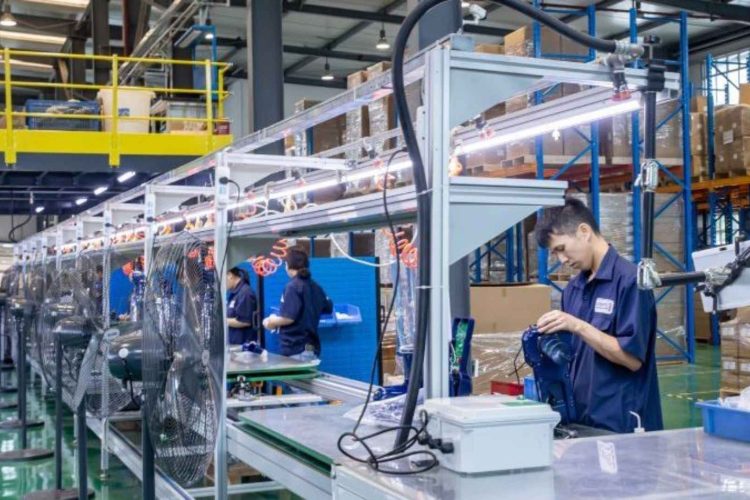
Vietnam is becoming an important manufacturing and export hub in the global supply chain. The shift of production from many countries to Vietnam has helped processing industries and high-tech sectors grow strongly.
Below are the top 5 most manufactured industries in Vietnam that accounted for the largest share of production and exports, playing a decisive role in Vietnam’s economic growth and international trade.
Top 5 Most Manufactured Industries in Vietnam
-
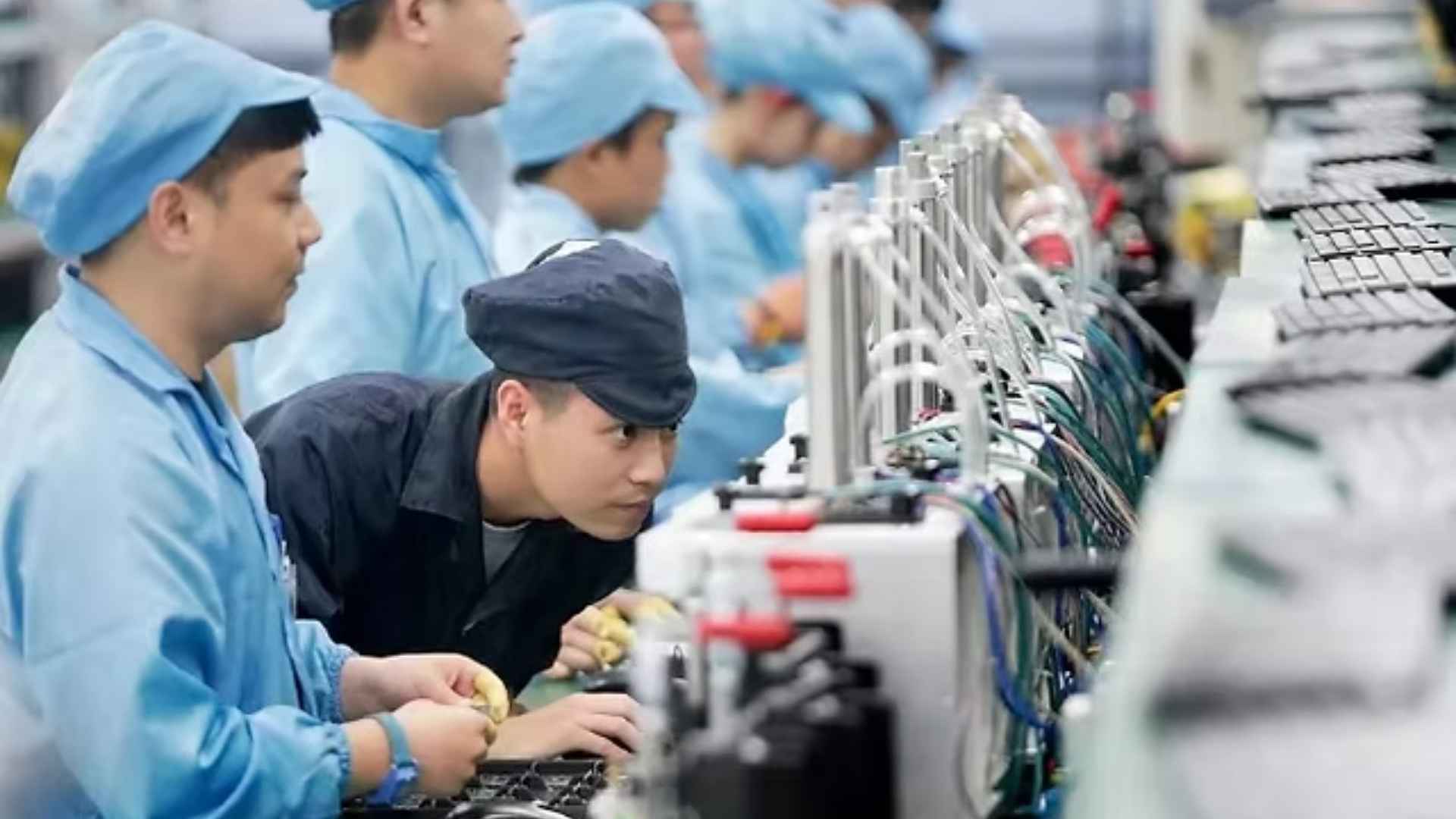
Electronics, Computers & Components
Electronics, computers, and components are currently Vietnam’s top manufacturing sectors. In 2025, the industry led the country to export value, reaching USD 107.75 billion. That marks a sharp increase of about 48.4% compared to 2024 in additional exports.
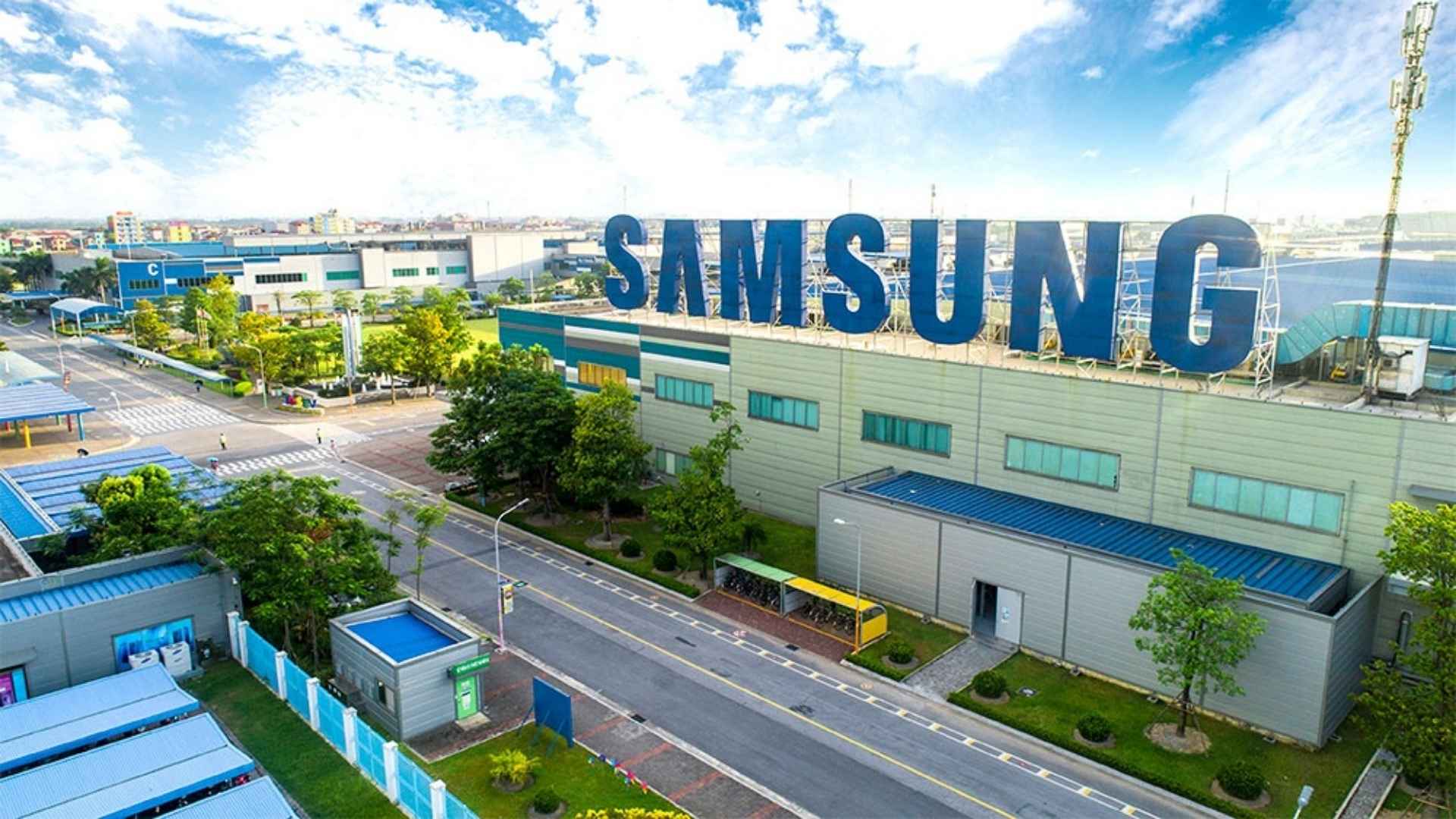
The sector has also attracted massive foreign investment, with total registered FDI exceeding USD 30 billion in 2025 alone. Major global brands like Samsung, Intel, LG, and Foxconn have all invested heavily in manufacturing here.
Vietnam’s real strength in electronics is in mid to high-value assembly, especially for AI hardware, 5G devices, and consumer electronics. Compared to China, Vietnam offers much lower labor costs and a more flexible cost structure, making it a strong option for buyers who want to reduce per-unit costs without giving up quality.
Main export markets: United States (about 42.09 billion USD), China (about 16.89 billion USD).
Major exported products: personal computers, laptops, motherboards, electronic chips, monitors, keyboards, and printer components.
Main production areas: BacNinh, ThaiNguyen, Ho Chi Minh City, and HaiPhong.
-
Machinery, Equipment, Tools & Spare Parts
Machinery, equipment, tools, and spare parts make up the second-largest manufacturing sector in Vietnam. This industry plays a key role in boosting the overall value of the country’s industrial production.
In 2025, exports from this sector reached around USD 59 billion. That figure accounted for roughly 12% of Vietnam’s total export value, which stood at about USD 475 billion for the year.
>Vietnamese manufacturers are very strong at building exactly to spec, with rapidly growing capabilities in CNC machining, industrial tooling, and automation components. Compared with China, Vietnam faces lower tariff exposure and fewer geopolitical risks, which makes it especially attractive for businesses selling into the U.S., EU, and Japan.
Several major European and Japanese companies have invested heavily in Vietnam’s manufacturing base. These include Bosch, Siemens, Mitsubishi, and Honda for spare parts, as well as Fanuc and ABB in the automation and robotics space.
Primary Export Destinations: United States, EU, China, Japan
Main exported products: heavy industry, weaving machines, presses, CNC machines, industrial robots, control systems, automated production lines, and mechanical spare parts.
Key Industrial Hubs: Binh Duong, Dong Nai, Bac Ninh, Hai Phong, Thai Nguyen, Ho Chi Minh City, and various southern industrial zones.
-
Phones & components
Phones and components are one of the pillars of Vietnam’s manufacturing sector. Vietnam has established itself as a global center for final assembly and module integration in the smartphone industry. In 2025, this sector reached about USD 56.7 billion, making Vietnam one of the world’s top assembly hubs for Samsung and Apple products.
While many components are still imported, mostly from China, the country stands out for its speed, consistent output, and strong manufacturing discipline. Compared with China’s rising costs and India’s more fragmented supply chain, Vietnam offers a more balanced setup for large-scale, export-focused phone production.
Key Export Markets: the United States and China.
Export Specialization: Smartphones (fully assembled units); Phone components (motherboards, screens, cameras, batteries, sensors, wireless earphones, and cases); Related accessories (earphones, chargers, and assembly parts).
Strategic Manufacturing Clusters:
- Bac Ninh and Thai Nguyen are Samsung’s main manufacturing hubs and handle the bulk of phone and component output.
- Bac Giang and Hai Phong host Foxconn and Luxshare facilities that focus on Apple products and components.
- Ho Chi Minh City and Binh Duong support component manufacturing and secondary assembly, with large industrial parks like Yen Phong in Bac Ninh, VSIP, and Amata housing extensive production lines.
-
Textiles & garments
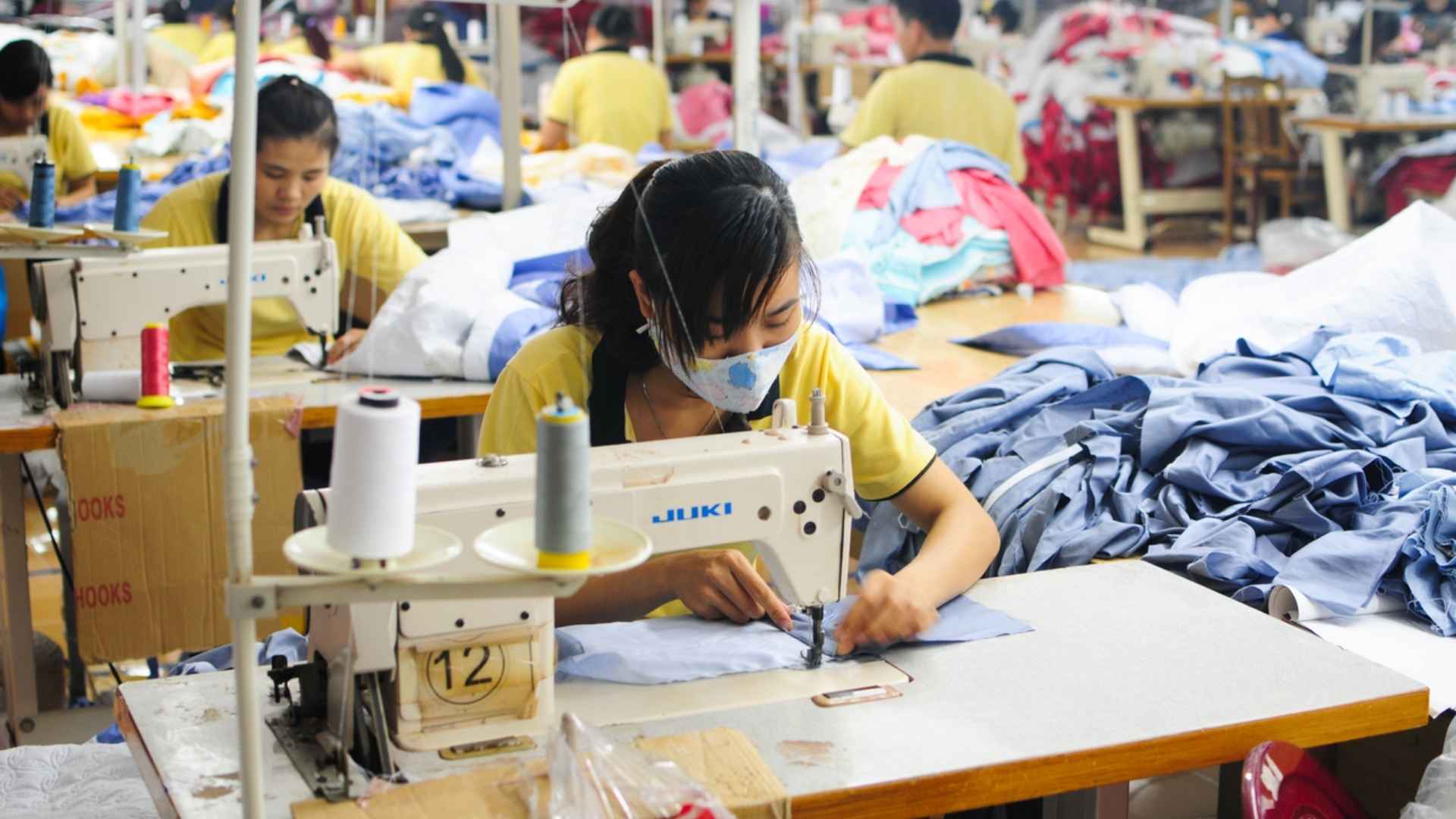
Textiles and garments have long been one of the backbone industries of Vietnam’s economy, playing a major role in both job creation and exports. According to VITAS reports, the export value reached around USD 46 billion in 2025, marking a 5.6% increase over 2024. This keeps Vietnam #3 globally after China and Bangladesh.
The industry supports roughly 6,000-7,000 businesses and employs about 2.5 to 3 million workers, the majority of whom are women. Thanks to its strong manufacturing capabilities, the sector attracts both fast fashion and premium brands from Europe, the United States, and Japan. Well-known names include H&M, Uniqlo, Zara, Gap, The North Face, and Patagonia.
Vietnam’s strength in textiles comes from its cut-make-trim capabilities and mid-stream fabric processing, backed by a skilled and experienced workforce. Even though many raw materials are imported, Vietnamese factories are known for their consistent quality, dependable timelines, and solid compliance standards.
Compared with Bangladesh, Vietnam offers faster lead times and more flexibility. Compared with India, it stands out for stronger sustainability controls, better labor compliance, and smoother integration with Western supply chains.
Top Trading Partners: United States, EU, Japan, and South Korea.
Main exported product groups: Fashion and everyday clothing (t-shirts, jeans, jackets, shirts, dresses); Sportswear and outdoor gear (workout apparel, windbreakers, adventure clothing); Other garments (shorts, sleepwear, underwear, and accessories like hats and small bags)
Main production areas:
- Northern areas (Hanoi, Nam Dinh, Thai Binh, Hung Yen): Home to large knitting and garment factories, conveniently near Hai Phong port
- Southern regions (Ho Chi Minh City, Binh Duong, Dong Nai, Long An): The biggest industrial cluster, with thousands of sewing, weaving, and dyeing plants close to Cat Lai port and the airport
For global buyers, textiles and garments are also one of the easiest ways to start sourcing from Vietnam. Preferential tariffs under trade agreements like the EVFTA and CPTPP make the country even more attractive, especially for brands selling into Europe and other high-standard markets.
-
Footwear
Vietnam is widely known as a global hub for athletic and performance footwear, supplying many of the world’s biggest sportswear brands. Major players like Nike, which makes about 50 to 51% of its shoes in Vietnam, and Adidas, which relies on Vietnam for roughly 39 to 43% of its global footwear production, both manufacture heavily in the country. According to Lefaso, Vietnam’s footwear exports reached around USD 29 billion in 2025, up about 5% compared to 2024.
The country stands out for its ability to run complex production lines, maintain strict quality control, and deliver high volumes across multiple factories. Compared to China, Vietnam offers lower production costs and a more specialized footwear ecosystem.
Export Destinations: United States (11-12 billion USD), EU (6.88 billion USD), China (1.78 billion USD), Japan, and South Korea.
Key Commodities: Athletic footwear (sneakers, running shoes, sports shoes)-the dominant segment; Leather footwear (shoes and boots); Sandals, and fashion footwear; Textile and rubber/plastic shoes
Strategic Hubs: Southern Vietnam (Ho Chi Minh City, Binh Duong, Dong Nai, Long An); Northern areas (Hanoi, Hai Duong, Nam Dinh): Handle some production near Hai Phong port.
Beyond the industries listed above, several other manufacturing sectors also stand out as top exporters. Below is a ranking of the eight product groups that made the list.
| # | Product/Industry | Export Value 2025 (USD) |
| 1 | Computers, electronic products & components | ~107.7 billion |
| 2 | Machinery, equipment, tools & spare parts | ~59 billion |
| 3 | Phones and components | ~56.7 billion |
| 4 | Textiles & garments | ~39.6 billion |
| 5 | Footwear | ~24.2 billion |
| 6 | Transport vehicles, spare parts | ~17.53 billion |
| 7 | Wood, wood products | ~17.2 billion |
| 8 | Aquatic products | ~11.2 billion |
Why Vietnam Is Becoming a Major Manufacturing Hub?
Vietnam has quickly emerged as one of the world’s newest manufacturing powerhouses. In 2025, manufactured goods accounted for over USD 450 billion in exports, making up about 94 percent of the country’s total export value. This rapid growth is driven by several key factors.
-
Economic Factors
Labor costs in Vietnam are significantly lower than in China. In 2025, average wages sit at around USD 3 per hour, compared to roughly USD 6.5 in China. This gap allows companies in labor-intensive industries to cut production costs by about 40 to 50%.
On top of that, Vietnam has a young and flexible workforce. Around 70% of the population is under the age of 35, which makes it easier for manufacturers to scale and adapt quickly.
-
Trade Policies and Free Trade Agreements (FTAs)
Vietnam currently participates in 16 active free trade agreements, including CPTPP, EVFTA, RCEP, and UKVFTA. These agreements provide preferential or even zero tariffs when exporting to major markets such as the EU, Japan, South Korea, Canada, and Australia.
A clear example is the EVFTA, which removes 99% of tariffs. This has significantly boosted Vietnam’s exports of textiles, footwear, and electronics to Europe.
-
Geographical Advantage and Supply Chain Dynamics
Vietnam’s close proximity to China makes it easier and more cost-effective to source raw materials, components, and intermediate goods. The country also benefits from modern deep-water ports like Cai Mep – Thi Vai, which ranked among the world’s top 30 ports in 2025 and handles over 7 million TEUs each year, supporting efficient global exports.
Since 2018, U.S.–China trade tensions have accelerated the “China plus one” strategy. As a result, many global brands have shifted part of their production from China to Vietnam to avoid higher tariffs.
Conclusion
By 2025, Vietnam had firmly positioned itself as one of the world’s most important and fastest-growing manufacturing hubs. Driven by global shifts in production, strong investment from multinational companies, and solid government support through incentives, tax breaks, infrastructure improvements, and workforce training, Vietnam has built a strong foundation as Asia’s leading export-focused manufacturing destination.
For global buyers, however, finding reliable suppliers in Vietnam can still be a major challenge. That is where VinaSources comes in. VinaSources is a Vietnam-focused sourcing platform designed to help international buyers connect with verified manufacturers across key industries like textiles, footwear, agriculture, handicrafts, and consumer goods. It makes it much easier to find and work with the right partners.
Beyond just finding suppliers, VinaSources also connects buyers with logistics providers, warehousing partners, insurance companies, secure payment systems, customs brokers, and inspection services. This all-in-one support helps businesses manage the entire sourcing process more smoothly and efficiently.
To learn more about sourcing opportunities tailored to your business, contact VinaSources by phone at 1900.4356 or by email at [email protected].