
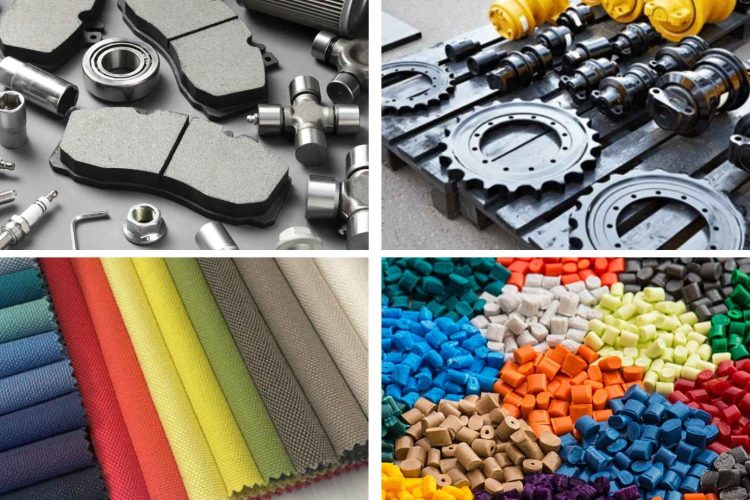
Beyond strong export performance, Vietnam relies on imported products to support manufacturing and industrial expansion. From electronic components to raw materials, imports remain essential to the country’s trade structure. This article explores Vietnam’s top import categories and key trade partners.
Overview of Vietnam Import Structure
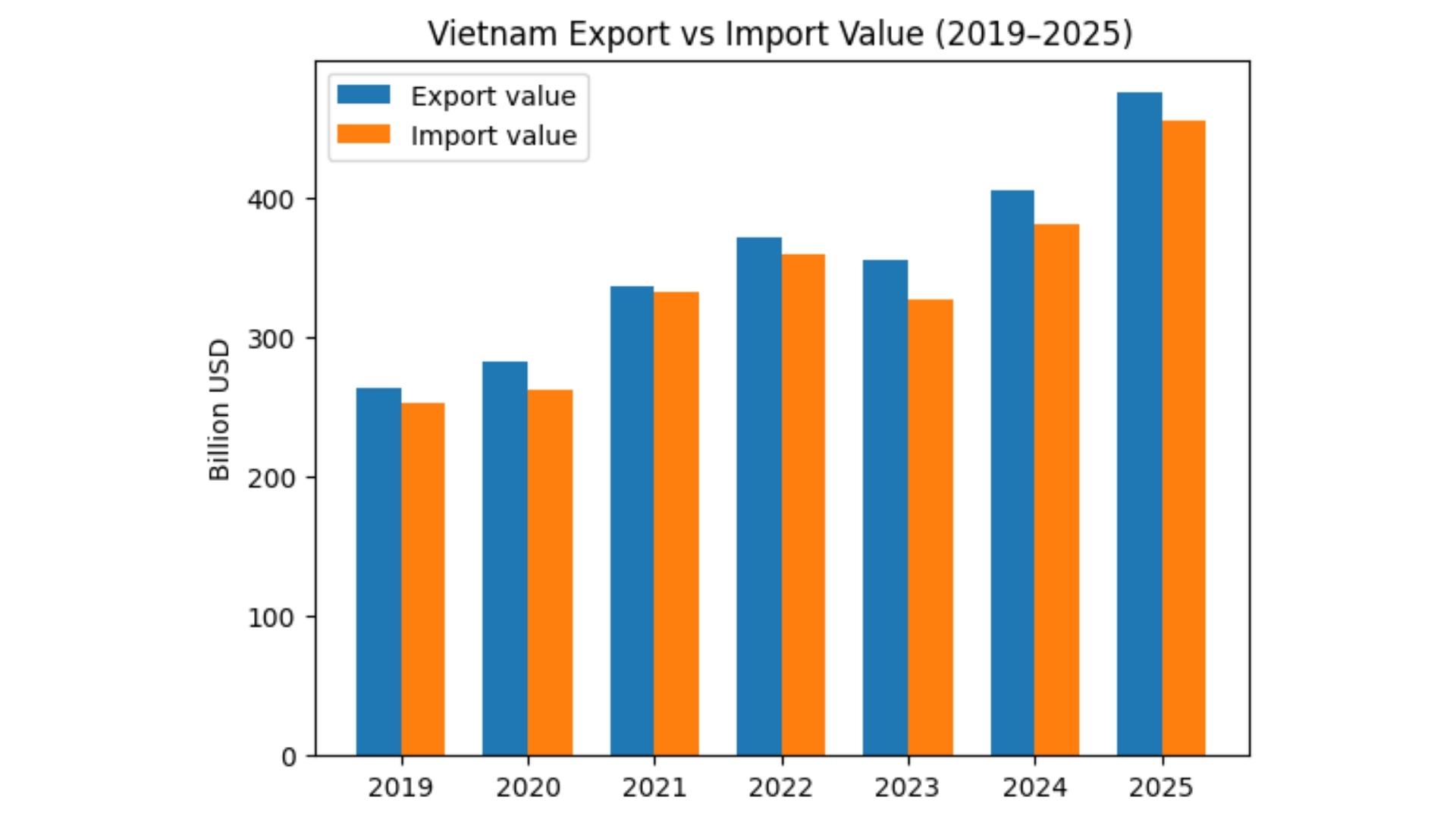
Vietnam’s import landscape in 2025 is a direct reflection of its position as a global manufacturing hub. The country reached a historic trade milestone with total import turnover hitting $455.01 billion, a 19.4% increase compared to 2024. This growth signals robust domestic demand and an expanding industrial base.
In 2025, Vietnam imported 47 product groups, each valued atover 1 billion USD, which together accounted for 93.8% of the country’s total import turnover. Among these, 9 product groups had import values exceeding 10 billion USD each, representing 64.8% of the overall import value.
The import structure remains heavily skewed toward production-oriented goods. According to the General Department of Vietnam Customs, materials for further manufacturing and capital equipment for production accounted for 93.8% of the total import turnover. By contrast, consumer goods comprised only 6.2% of the volume. This division highlights Vietnam’s reliance on external supply chains to feed its export-driven economy.
4 primary sectors drive the majority of import value, including: Electronics and Computers, Machinery and Industrial Equipment, Textiles and Raw Materials, Plastics and Chemicals.
Foreign direct investment (FDI) enterprises are the primary drivers of these figures. The FDI sector accounted for $317.63 billion (69.8%) of total imports in 2025, experiencing a significant growth rate of 31.9%. Meanwhile, the domestic economic sector saw a slight contraction of 2.0%, contributing $137.38 billion.
Below is the bar chart to show the comparison between the total export value and the total import value in the period from 2019-2025.
Vietnam’s Top Import by Product Category
Vietnam’s major imports are heavily focused on electronics, machinery, fabrics, and raw materials to fuel its manufacturing export sector.
The table below shows the top 10 imported product categories by import value in 2025.
| # | Products Category | Import value (billion USD) | Growth rate vs 2024 (%) |
| 1 | Computers, electronic products, spare-parts and components | 150.70 | 40.7% |
| 2 | Machinery, equipment, tools, and spare parts | 61.03 | 28.7% |
| 3 | Fabrics of all kinds | 15.20 | 2.0% |
| 4 | Plastic raw materials | 12.53 | 7.1% |
| 5 | Other base metals | 11.37 | 18.9% |
| 6 | Phones and components | 11.26 | 8.3% |
| 7 | Iron and steel products | 11.21 | -10.8% |
| 8 | Plastic products | 10.87 | 22.7% |
| 9 | Articles of iron and steel | 8.31 | 27.8% |
| 10 | Chemical products | 8.11 | 4.8% |
Why Vietnam needs to import these key product categories:
- Computers, Electronic Products, and Components: Vietnam focuses on final assembly for export. Most factories do not produce core components such as semiconductors, advanced chips, display panels, or precision circuit boards. These inputs require deep upstream capabilities that are still concentrated in other countries. Imports are essential to sustain large-scale electronics exports.
- Fabrics: Vietnam is a leading garment exporter, but its textile supply chain is incomplete. Domestic fabric production cannot meet demand for volume, variety, and technical standards. To fulfill large apparel orders, factories rely heavily on imported fabrics, mainly from China.
- Plastic Raw Materials: Vietnam has strong plastic processing industries but limited petrochemical capacity. Even with recent investments, local production meets only a small share of resin demand. Most plastic resins are imported to support packaging, consumer goods, electronics, and automotive manufacturing. Imports ensure supply stability and cost control.
- Iron and Steel: Domestic steel output mainly serves construction needs. Manufacturing industries require specialized steel grades, coatings, and alloys that are not sufficiently available locally. Imports provide the required materials for machinery, automotive, shipbuilding, and industrial production.
Vietnam’s Top Imports by Country
-
China market
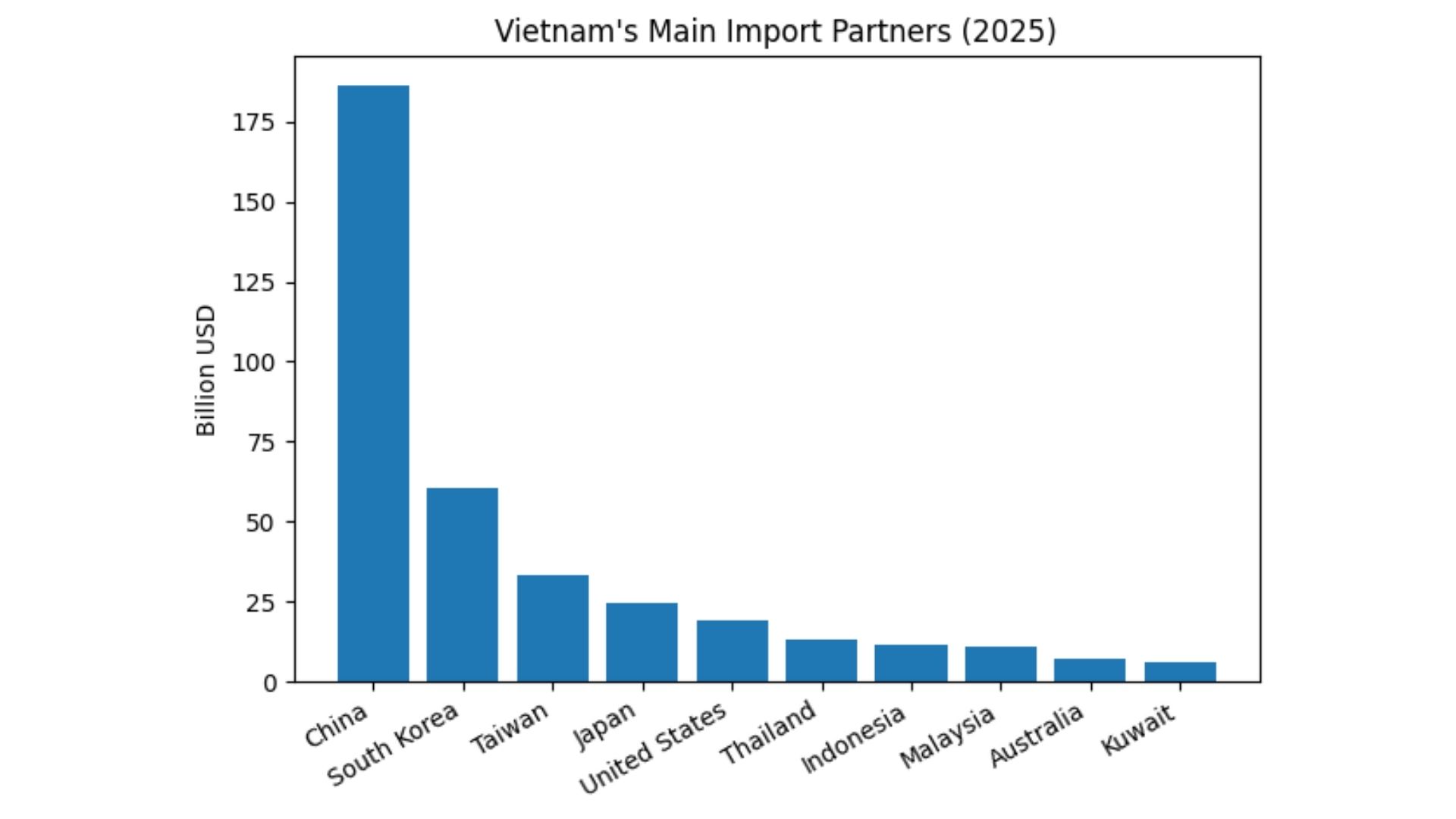
China remains Vietnam’s most critical sourcing partner. Imports from China totaled $186.03 billion in 2025, a significant increase from $144 billion in 2024. This growth solidifies China’s position as the supplier of nearly 40.9% of Vietnam’s total import value.
Vietnam imports from China mainly raw materials, including:
- Computers, electronic products, and components: China has a large and mature electronics supply ecosystem. It produces semiconductors, circuit boards, connectors, display panels, and micro assemblies at scale. These inputs provide the core materials Vietnam needs to assemble finished electronic products.
- Machinery and equipment: Chinese machinery and equipment are more affordable for Vietnamese businesses than products from Western countries. This price advantage aligns with the budgets of many Vietnamese manufacturers, especially small and medium-sized enterprises with limited capital.
- Input materials for manufacturing industries include fertilizers, plastics, chemicals, rubber, and fibers. Although Vietnam is a strong exporter of textiles and footwear, most raw materials used in final production are still imported, with China remaining the primary source.
China has been Vietnam’s largest import source for many consecutive years. This position reflects structural realities in manufacturing capacity, supply chain design, and regional trade integration.
China’s dominance is driven by several core factors.
- Geographic proximity creates a strong logistics advantage: Vietnam and China share a long land border. This reduces transport costs and delivery time for Vietnamese manufacturers. Factories in Northern Vietnam, such as Bac Ninh and Hai Phong, can receive components from Chinese industrial hubs like Shenzhen and Guangzhou within 24 to 48 hours. This speed supports just-in-time production and lowers inventory risk.
- Supply chain relocation: Many global companies have shifted final assembly from China to Vietnam to reduce exposure to United States tariffs. However, these firms often retain their upstream suppliers in China. As a result, factories in Vietnam continue to import machinery, components, and core materials from parent plants and long-term partners in China.
- China offers unmatched scale and pricing flexibility: Chinese suppliers combine massive production capacity with competitive pricing. For small and medium Vietnamese enterprises, China provides access to a wide range of industrial parts and consumer goods. Low minimum order quantities allow smaller buyers to source efficiently without high upfront capital.
Overall, the deep integration of supply chains between China and Vietnam allows Vietnamese factories to source cost-effective inputs for export-oriented production.
-
South Korea
South Korea is the second-largest supplier of goods to Vietnam. In 2025, import turnover from South Korea reached $62.8 billion, up 7.6% compared to the previous year.
Vietnam imported 5 main product groups from South Korea:
- Computers, electronic products, and components, including semiconductors, integrated circuits, displays, and other electronic parts.
- Machinery and Industrial Equipment
- Industrial Raw Materials, such as plastics, iron, steel, and chemicals
- Petroleum products
- Plastic products
The high volume of imports is driven by these key factors:
- Vietnam has become a major manufacturing hub for giant technology firms from South Korea, such as Samsung and LG. These companies ship high-value intermediate goods, including semiconductors, display panels, and specialized machinery from South Korea to large-scale factories in Vietnam. Vietnam uses these inputs to assemble finished products, such as smartphones and electronic devices, which are then exported to global markets. As a result, computers, electronic products, and components account for a very large share of Vietnam’s total imports in 2025.
- While China is often the source for affordable tools, South Korea is the preferred source for precision and high-durability machinery. Besides, the Vietnam-Korea Free Trade Agreement (VKFTA) makes importing much more profitable for businesses than sourcing from non-FTA countries. Most industrial inputs and machinery enter Vietnam with 0% or significantly reduced import duties.
Below are notable investments from Korea Enterprises:
| # | Company name | Location | Year | Investment project |
| 1 | Samsung | Bac Ninh | 2024 | Samsung Display invested $1.8 billion in a new OLED manufacturing plant for automobile and tech equipment displays. |
| 2 | LG | Hai Phong | 2025 | LG Innotek invested $1 billion to double its camera module capacity, aiming to make Vietnam the hub for 70-80% of its global camera module output. |
| 3 | LG | Hai Phong | 2024 | LG Display secured a license for an additional $1 billion expansion of its OLED screen factory in Hai Phong |
| 4 | Hana Micron | Bac Giang | 2025 | Hana Micron increased its total investment to over $1 billion for advanced chip packaging. |
| 5 | GS Energy | Long An | 2021 | GS Energy invested $3 billion in a 3,000 MW LNG power station in Long An. |
| 6 | SK Group | Hai Phong | 2024 | SK Group invested $500 million in a biodegradable materials plant in Hai Phong |
-
Taiwan
Taiwan serves as a critical source of intermediate electronics and precision parts for the Vietnamese market. The import value from Taiwan in 2025 reached 33.03 billion USD, with a strong increase of 45.1% compared to the previous year.
Imports from Taiwan rose sharply, mainly due to imports of the group of computers, electronic products, and components from this market reaching 23.71 billion USD, up by as much as 71% compared to the previous year.
Vietnamese businesses import from Taiwan for the following strategic reasons:
- Taiwan is the world leader in high-end semiconductor manufacturing, electronics, and computing. As Vietnam tries to move up the value chain from simple assembly to advanced electronics, it relies on Taiwanese components
- A significant portion of imports is for Taiwanese-owned factories operating in Vietnam, fostering a strong supply chain network. Taiwan is the 4th largest source of FDI, with over $42 billion in cumulative investment as of early 2026. Major Taiwanese electronics giants like Foxconn, Pegatron, Compal, and Wistron have massive operations in Vietnam.
- FTA between Vietnam makes importing raw materials from Taiwan more cost-effective.
-
Japan
Japan is a critical strategic partner for Vietnamese businesses, providing high-end technology and heavy-industrial inputs that allow Vietnam to compete in global export markets. In 2025, the import value from Japan in 2025 reached 24.68 billion USD, an increase of 13.6% compared to the previous year.
Below are the product categories that Vietnam imports the most from Japan:
- Computers, Electronic Products & Components
- Machinery, Equipment & Spare Parts
- Iron & Steel
- Plastics & Chemicals
Japan’s “strength” in Vietnam is characterized by three unique pillars:
- High-quality and precision: Japanese products are recognized by high standards, which are essential for Vietnamese firms looking to upgrade production lines and comply with international quality requirements.
- Deep supply chain integration: As of 2026, there are over 5,600 Japanese projectsin Vietnam. Japanese companies in Vietnam (like Toyota, Honda, or Mitsubishi) import specialized parts from their parent companies in Japan to assemble goods in Vietnam.
- Trade Balance: Vietnam and Japan share multiple Free Trade Agreements, including the Vietnam-Japan Economic Partnership Agreement (VJEPA) and the CPTPP. These agreements have removed tariffs on nearly all industrial machinery and electronic components.
-
United States
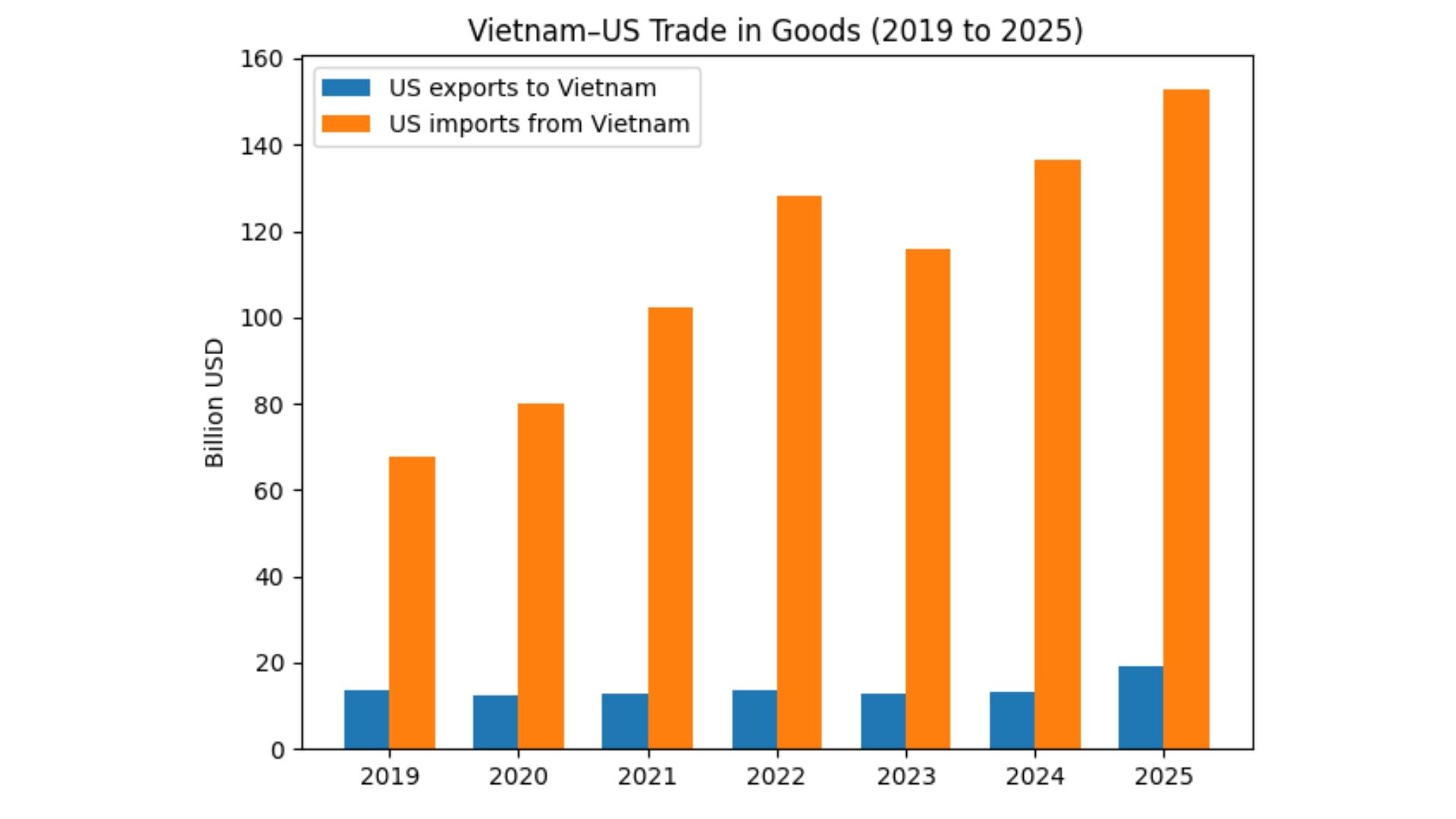
Vietnam’s imports from the United States reached a record $19.29 billion in 2025. This represented an increase of USD 4.17 billion compared with 2024, reflecting stronger demand for industrial and agricultural inputs.
In 2023, Vietnam and the United States upgraded their relationship to a Comprehensive Strategic Partnership. This upgrade strengthened cooperation in supply chains, technology, and industrial development. It also created a more stable framework for collaboration on critical and long-term economic priorities for both countries.
Key import categories from the United States include:
- Computers, electronic products, and components: This was the largest import group. Total imports reached USD 5.46 billion, up 25.9 percent year on year, equivalent to an increase of USD 1.12 billion.
- Raw cotton: The United States remained a major supplier of cotton for Vietnam’s textile industry. Import value reached USD 1.37 billion in 2025.
- Machinery and equipment: Imports of machinery and equipment were valued at approximately USD 1.3 billion, supporting Vietnam’s manufacturing and processing sectors.
Final Thoughts
Vietnam shows a strong export performance in finished consumer products, but it still relies on imported raw materials and industrial inputs to sustain its manufacturing base. Machinery, electronic components, and core materials remain essential to maintaining production capacity and meeting international standards.
To secure a stable supply and long-term growth, Vietnam continues to build strategic relationships with key trade partners. These partnerships help ensure reliable access to critical inputs and reinforce Vietnam’s role as a competitive manufacturing hub.