
When it comes to manufacturing, cost is a critical factor, but which location offers the best value: China or the US?
In this guide, we take an in-depth look at manufacturing costs in China and the US, examining everything from labor and materials to logistics and shipping, to help you determine which option offers the greatest value for your business.
Overview of Manufacturing Costs in China and the US
Before we dive into the specific details, here is a general overview of the cost of manufacturing landscape in both China and the US.
| # | Cost Driver | Chifna | USA |
| 1 | Labor | Low labor costs, about $17 to $28 USD per hour. | High labor costs, about $45.65 per hour. |
| 2 | Material Prices | 10%–50% lower | Significantly higher |
| 3 | Overhead costs | Lower | Higher |
| 4 | QC & Compliance | Evolving | High cost |
| 5 | Logistics | High cost, long lead time, tariffs | Lower cost, short lead time, no import tariffs |
| 6 | Best for | Low cost, flexible early stage product, high volume production, labor-intensive industries | Final assembly, quality assurance, high precision manufacturing, compliance-driven industries, fast turnaround |
Manufacturing Cost Comparison: China vs. US
1. Labor Cost Comparison
Labor remains the most visible cost disparity, though the gap is closing.
In the US, the average employer cost for private-sector workers reached approximately $45.65 per hour
in 2025.
Conversely, wages in Chinese manufacturing have been steadily rising. The average hourly wage for manufacturing workers in China now ranges from approximately
$17 to $28, depending on the region.
The gap is driven by three main structural pillars:
- Cost of living: In the US, expenses for housing, healthcare, and education are significantly higher than in China. Housing, healthcare, and services are more expensive. So, employers must pay higher wages to match these costs. In China, the national average for essential goods remains lower, allowing manufacturers to offer lower wages that still provide similar local purchasing power.
- Labor Market Structure and Supply: China possesses a massive, specialized manufacturing ecosystem. The sheer volume of migrant and urban labor creates a competitive market that stabilizes wages for mid-skill roles. In contrast, the US is currently facing a labor shortage in the manufacturing sector, which forces companies to bid higher for a shrinking pool of qualified workers.
- Productivity and Skill Levels: Higher wages in the US are partly justified by higher productivity. US manufacturing workers typically produce more output per hour due to better training, advanced machinery, and process optimization. This reduces the effective labor cost per unit.
However, the labor cost gap between China and the US is not equal across all sectors. It varies significantly, depending on the industry’s technical requirements, specifically:
- Labor-intensive industries (apparel, footwear simple assembly): This is a big gap. These sectors require a massive workforce, so the US cannot compete on a cost-per-hour basis in these categories.
- High-tech and financial services: The gap is narrowing. For specialized roles like AI researchers, software engineers, or senior executives in hubs like Shenzhen or Shanghai, salaries are rapidly approaching Western levels. Chinese firms now offer aggressive compensation packages to retain top-tier global talent.
- Heavy Industry and Energy Intensive Sectors: These industries depend more on energy and raw materials than labor. In some cases, the US can be competitive due to a stable energy supply. In others, China remains cheaper due to scale and infrastructure.
2. Raw Materials and Input Costs
Raw material costs depend on local availability, supply chain integration, and import reliance.
China is the world’s largest manufacturing hub and accounts for about 28% of global manufacturing output. China maintains a dominant grip on the upstream supply chain. For example, according to the International Energy Agency (IEA), it controls over 70% of global refining capacity for 19 strategic minerals. Another example, China controls over 70% global polyester fiber production. This allows manufacturers to source materials locally at lower cost and with shorter lead time.
In contrast, many US manufacturers rely on imported intermediate goods. A significant share of US manufacturing inputs is imported, which adds transportation and tariff costs. For example, as of early 2026, the U.S. continues to rely heavily on foreign manufacturing for semiconductors, producing just under 10% of its consumption while having virtually no domestic production for the most advanced chips.
The United States’ reliance on imported intermediate goods has become a significant financial hurdle due to evolving trade policies and geographical constraints. Many essential components are subject to heavy government duties upon entering the U.S. market. For instance, the 25% tariff on imported semiconductors has directly increased the input costs for manufacturing computers and medical devices within the United States.
Beyond policy barriers, the vast distance between East Asian suppliers and U.S. factories adds a substantial layer of expense. Freight costs, insurance, and the long lead times associated with trans-Pacific shipping contribute significantly to the total cost of materials.
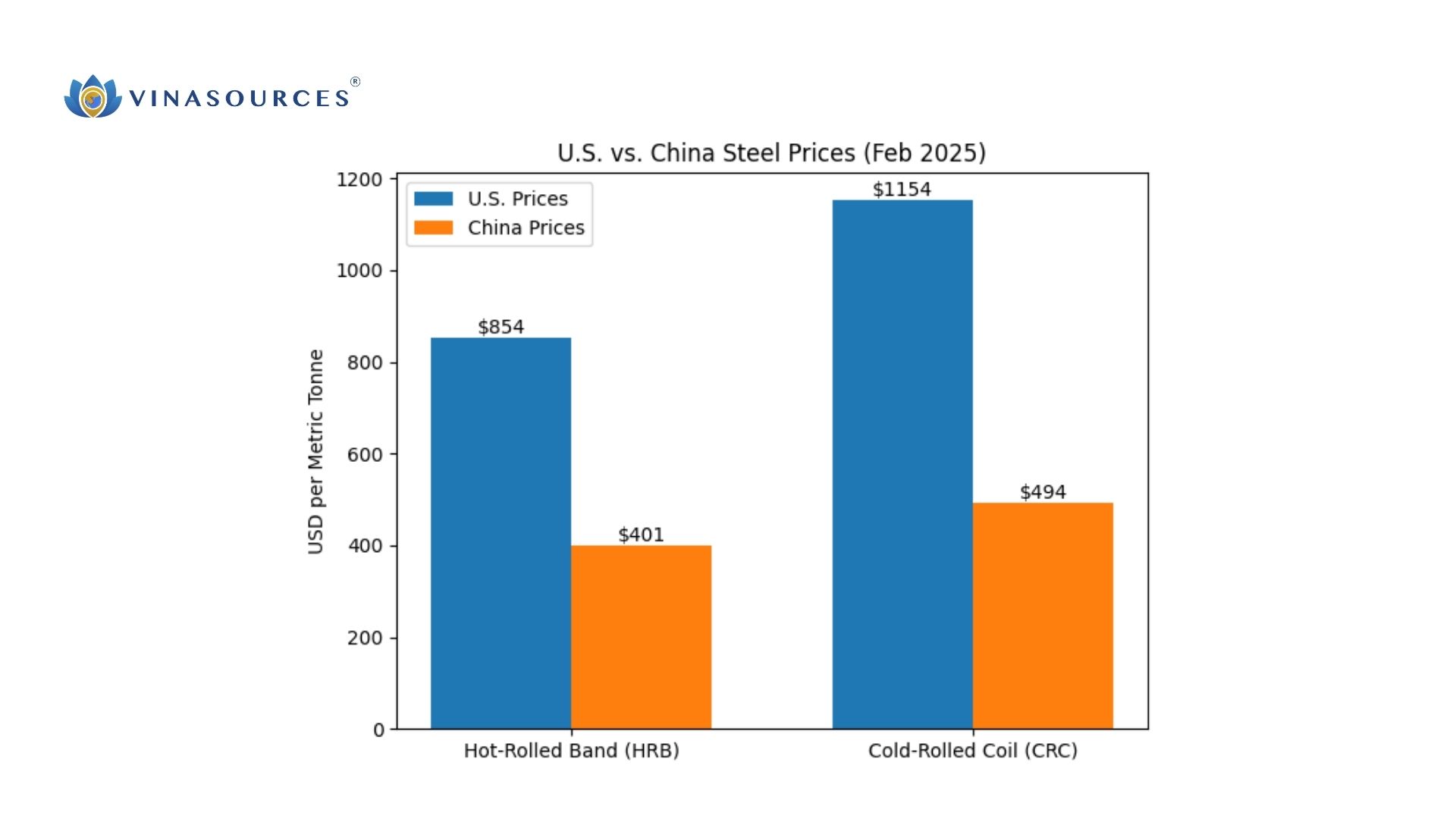
For example, in early 2026, steel rebar futures in China were trading at approximately $430-$460 per metric ton. In contrast, U.S. Steel prices reached as high as $920–970 per short ton due to protectionist tariffs and higher domestic production costs. For a manufacturer of heavy machinery or construction components, sourcing steel in China provides an immediate 20% to 23% raw material cost saving compared to Western markets.
Overall, China maintains a significant advantage in input costs, which are typically 10% to 50% lower in specific sectors than those in the United States.
3. Overhead and Utility Costs
Overhead costs include energy, industrial real estate, and administrative expenses. These costs differ significantly between China and the US.
Industrial electricity prices in China are generally lower than in the US, typically averaging around $0.08 per kWh. In the US, the average sits between $0.15 and $0.17 per kWh, depending on the state.
However, the US has a strong advantage in natural gas. In early 2026, natural gas prices averaged $3.80 per MMBtu in the US. In contrast, Chinese manufacturers, reliant on imports, often pay $9 to $13 per MMBtu.
Factory rental and land costs also differ. In major US industrial zones, real estate costs are significantly higher than in most Chinese manufacturing regions. For example, in Tier-1 Chinese manufacturing hubs like Shanghai, factory rentals average $5.30 – $5.50 per sq. ft. In contrast, prime US industrial markets (e.g., the Inland Empire in California or New Jersey) have seen rents soar to $13.50–$15 per sq. ft.
Administrative overhead, including management salaries and insurance, also affects manufacturing costs. Administrative costs in the US are often higher than in China due to a complex regulatory environment and higher white-collar compensation.
Summary table: Overhead Cost Comparison
| Overhead Category | China (Average) | United States (Average) | Edge |
| Industrial Electricity | $0.08 / kWh | $0.15 / kWh | China (Slightly) |
| Natural Gas | $9-$13 / MMBtu | $3.80 / MMBtu | United States |
| Factory Rent (sq. ft./month) | $5.30 – $5.50 | $13.50–$15 | China |
| Admin & Insurance | Low (Subsidized) | High (Regulatory/ESG) | China |
4. Logistics and Shipping Costs
Logistics and shipping play a critical role in the total cost of manufacturing.
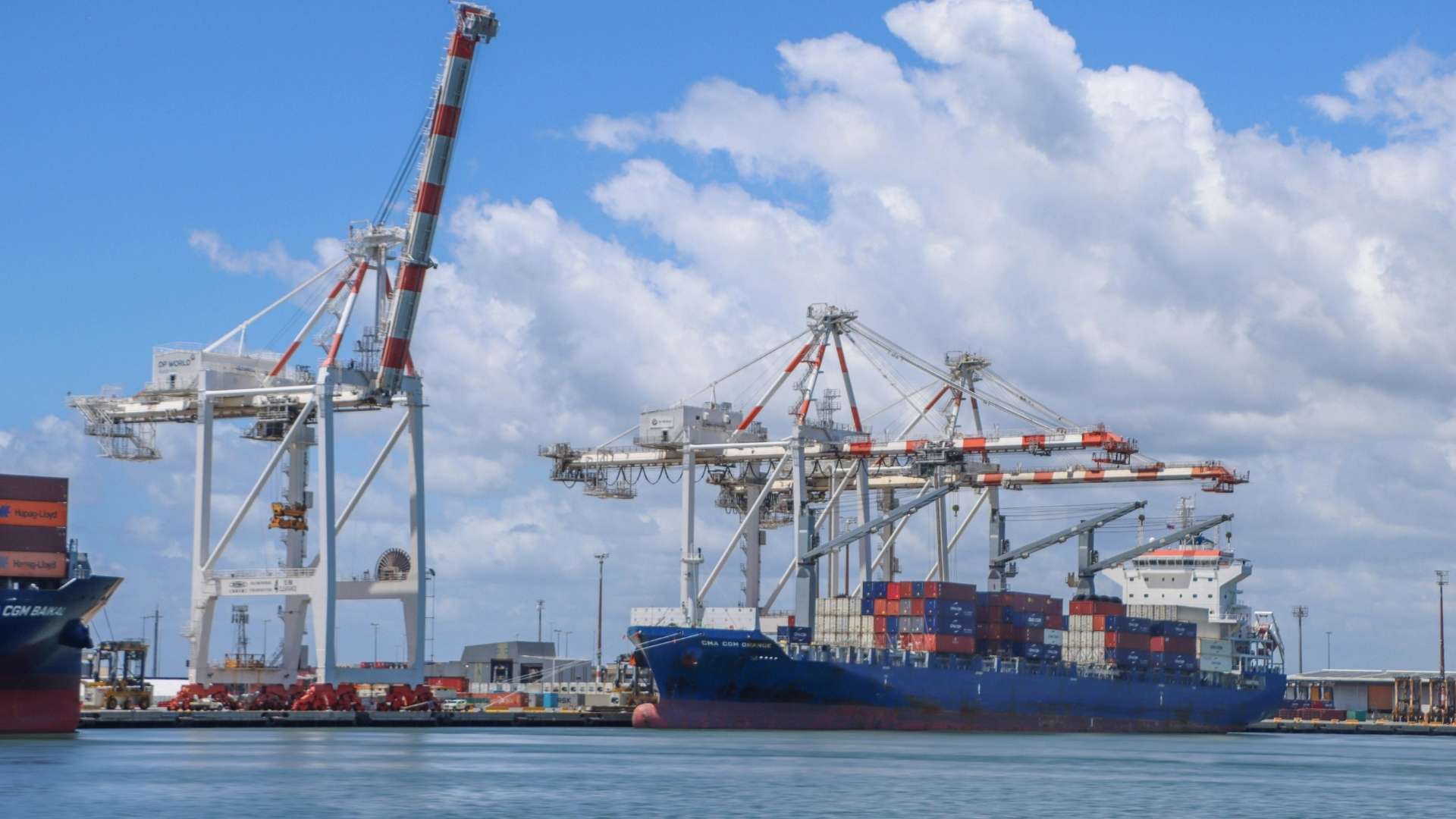
Shipping from China to the US is mainly done by ocean freight. In early 2026, the average cost to ship a 40-foot container (FEU) from China to the US West Coast stabilized at approximately $1,889 to $2,650, depending on the week and carrier. Rates to the East Coast ranged from $2,688 to $3,900. Once goods reach US ports, domestic trucking rates average $2.47 per mile for standard vans. Air freight for urgent or small shipments costs $5 to $8 per kilogram.
Transit time is another key factor. Ocean shipping from China to the US typically takes 20 to 40 days. Longer lead times increase inventory holding costs and require higher safety stock.
In contrast, US-based manufacturing avoids international shipping and tariffs. Domestic US trucking or rail moves goods faster and at a lower cost once produced onshore. For time-sensitive or high-value products, this advantage can outweigh higher production costs.
Tariffs also impact shipping costs. For many Chinese goods, US import tariffs can range from 7.5% to 25%, depending on product category.
5. Regulatory and Compliance Costs
Manufacturing in the U.S. involves stringent compliance with OSHA, EPA, and FDA regulations, which significantly impacts operational costs. These mandates, covering worker safety, environmental protection, and product quality, increase expenses for wages, benefits, and specialized equipment. The cumulative effect of these regulations can add approximately 2% – 4% to total overhead
Historically, China’s lower costs were partly due to lax enforcement of environmental and labor laws. This allowed manufacturers to operate with lower overhead. One primary driver of these savings was the use of mass-produced safety equipment. Chinese firms typically utilize standardized safety kits that meet national GB standards. These kits are often 40% to 60% cheaper than US-certified (ANSI) or European (CE) equivalents.
However, the Work Safety Law was updated in 2025-2026 to be stricter, representing a significance in China’s regulatory landscape. These regulations mandate that companies establish specialized safety funds. These funds must be used exclusively to improve workplace safety and working conditions.
Compliance requirements are tightening for both Foreign-Invested Enterprises (FIEs) and domestic Chinese firms. Regulatory bodies increasingly demand that safety equipment adhere to specific national GB or ISO international standards. As these enforcement mechanisms mature, the cost gap between Chinese and Western-certified equipment is beginning to narrow.
6. Technology and Automation Impact
The adoption of AI and technology functions as a major lever that narrows the labor cost gap between the US and China.
Both China and the US invest in technology and automation to mitigate rising labor costs and enhance production precision. However, the strategies for deployment differ significantly between the two markets.
US manufacturers are increasing investments in AI-driven robotics and automation to boost productivity by reducing labor hours per unit. Automation handles repetitive and routine tasks, while companies upskill employees for supervisory, maintenance, and data-driven roles. This approach enables higher productivity and reduces labor hours required per unit produced.
China is accelerating the adoption of large-scale industrial robotics to maintain its massive production volumes. By integrating these systems, China effectively counteracts its rising domestic labor costs. This transition allows the country to maintain its competitive edge while moving higher up the global value chain.
Overall, China continues to hold a cost advantage for high-volume and labor-intensive manufacturing. In contrast, the United States offers a more cost-effective environment for automated or smaller-scale production runs.
When to Choose China vs the US for Manufacturing
The choice between these two manufacturing powerhouses hinges on your specific strategic objectives.
Best Cases for Manufacturing in China
Pros
- Cost-efficient for high-volume production
- Highly integrated supply chains with local sourcing advantages
- Lower baseline cost, but enforcement can vary, requiring audits and monitoring
Cons
- Long shipping time and higher logistics risk due to international shipping, typically 20 to 40 days
- Higher exposure to geopolitical risk, tariffs, and long-distance disruptions
Best for: Large-volume production and labor-intensive industries such as apparel, standardized furniture, and basic consumer electronics assembly.
Best Cases for Manufacturing in the US
Pros
- Faster delivery with domestic shipping, often within days
- Higher product quality and stronger intellectual property protection
- Advanced technology, automation, and an innovative ecosystem
Pros
- High costs
- Limited scalability
- Small and fragmented supplier networks
Best for: High-precision components, medical devices, aerospace technology, small-batch customized products, or brands where “Speed-to-Market” is the primary competitive advantage.
Conclusion
Choosing between China and the US for manufacturing ultimately depends on your business priorities, production scale, and product type.
China remains highly cost-competitive for labor-intensive, high-volume manufacturing, thanks to lower wages, integrated supply chains, and access to raw materials. The US, on the other hand, offers advantages in automation, high-precision production, quality assurance, and faster domestic delivery, making it ideal for small-batch, high-tech, or time-sensitive products.
By carefully weighing labor, materials, overhead, logistics, compliance, and technology considerations, businesses can select the location that aligns with both cost efficiency and strategic goals.